
The transition towards sustainable energy is one of the defining challenges of our era. At the heart of this transition, particularly for electric mobility and grid storage, lies the relentless pursuit of advanced electrochemical energy storage solutions. Among the plethora of technologies vying for dominance, the solid-state battery has emerged as the most promising successor to the conventional lithium-ion battery, heralding a potential paradigm shift in safety, energy density, and longevity.
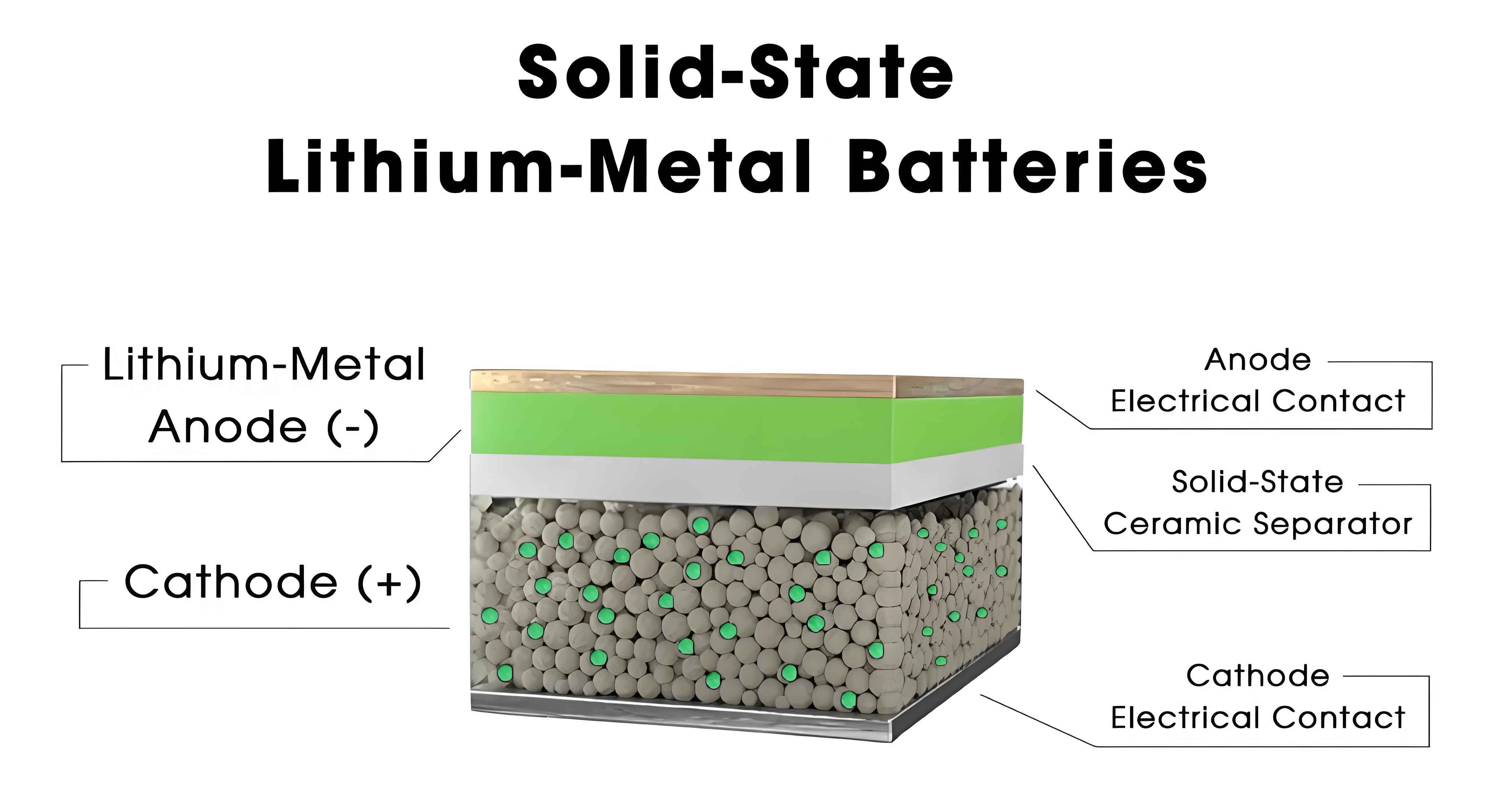
The fundamental distinction of a solid-state battery is the replacement of the flammable liquid organic electrolyte with a solid electrolyte. This single change cascades into profound performance improvements. However, the path to commercialization is paved with intricate materials science and engineering challenges. From my perspective, having closely followed the field’s evolution, the recent progress in bridging the gap between laboratory research and pilot-scale production is the most exciting development, signaling that the era of the solid-state battery is finally on the horizon.
1. The Core Promise and Fundamental Principles
The limitations of current lithium-ion batteries are well-documented: energy density ceilings, cycle life degradation, thermal runaway risks, and cost pressures. The solid-state battery directly addresses these by design. The primary advantages can be summarized as follows:
- Enhanced Safety: The removal of volatile liquid electrolytes eliminates the primary fuel for fires and explosions.
- Higher Energy Density: The use of a solid electrolyte enables the integration of high-capacity lithium metal anodes, theoretically pushing energy densities beyond 500 Wh/kg.
- Longer Cycle Life: Solid electrolytes can suppress lithium dendrite growth, a major failure mode in cells with lithium metal anodes.
- Wider Operating Temperature Range: Many solid electrolytes exhibit stable ionic conductivity across broader temperature spans.
The operating principle remains based on lithium-ion intercalation/de-intercalation, but the charge carrier transport mechanism within the solid electrolyte differs. Ionic conductivity ($\sigma_i$) in a solid is governed by the number of charge carriers ($n$), their charge ($q$), and mobility ($\mu$), as described by:
$$\sigma_i = n q \mu$$
The challenge has been to design solid materials where $n$ and $\mu$ are sufficiently high at room temperature to rival liquid electrolytes (typically ~10 mS/cm).
| Parameter | Conventional Li-ion | Lithium Metal (Liquid) | Solid-State Battery (Target) |
|---|---|---|---|
| Anode | Graphite / Silicon | Lithium Metal | Lithium Metal |
| Electrolyte | Liquid Organic | Liquid Organic / Gel | Solid Ceramic/Polymer |
| Energy Density (Wh/kg) | 250 – 300 | 300 – 400 | 400 – 500+ |
| Safety | Moderate (Flammable) | Low (Dendrite risk) | High |
| Cycle Life (at 80% capacity) | 1000 – 2000 | 500 – 1000 | >1000 (Target) |
2. The Materials Science Frontier: Electrolytes and Interfaces
The performance of a solid-state battery is critically dependent on the properties of the solid electrolyte and the quality of the interfaces it forms with the electrodes. The three main families of solid electrolytes are:
| Electrolyte Type | Example Materials | Ionic Conductivity (RT, S/cm) | Advantages | Challenges |
|---|---|---|---|---|
| Oxide-based | LLZO (Li$_7$La$_3$Zr$_2$O$_{12}$), LATP | 10$^{-4}$ – 10$^{-3}$ | High stability, wide potential window | Brittle, high grain boundary resistance |
| Sulfide-based | LPS (Li$_3$PS$_4$), LGPS | 10$^{-4}$ – 10$^{-2}$ | High conductivity, good deformability | Sensitivity to moisture, interfacial stability |
| Polymer-based | PEO-LiTFSI | 10$^{-6}$ – 10$^{-4}$ | Flexible, easy processing | Low conductivity at RT, narrow voltage window |
The most formidable hurdle is not just bulk conductivity but the interfacial instability. The contact between the rigid solid electrolyte and the solid electrodes is often poor, leading to high interfacial resistance ($R_{int}$). This resistance is a composite of charge transfer resistance ($R_{ct}$) and the resistance from space charge layers or decomposition products. The total cell impedance ($Z_{cell}$) can be modeled as:
$$Z_{cell} = R_{bulk} + R_{int} + Z_{W}$$
where $R_{bulk}$ is the bulk resistance of the electrolyte, and $Z_{W}$ represents the Warburg diffusion impedance. For a viable solid-state battery, minimizing $R_{int}$ is paramount.
This is where innovations in cathode materials become crucial. As seen in recent industry advancements, a key strategy involves engineering the cathode active material (CAM) particle surface. For a high-nickel NCM cathode interfacing with a solid electrolyte, parasitic reactions must be suppressed. A functional composite coating acts as a buffer layer. The effectiveness of such a coating can be related to its ability to reduce the interfacial reaction overpotential ($\eta_{int}$), which is part of the total cell polarization:
$$\Delta V = \frac{I}{A} (R_{bulk} + R_{int}) + \eta_{int} + \eta_{conc}$$
where $I$ is current, $A$ is area, and $\eta_{conc}$ is concentration overpotential. A superior coating minimizes $\eta_{int}$ and the growth of $R_{int}$ over cycles.
3. The Path to Industrialization: From Semi-Solid to All-Solid-State
The leap from a lab-scale coin cell to a manufacturable, large-format solid-state battery is immense. A pragmatic and prevalent approach is the intermediate “semi-solid” or “hybrid” strategy. This design typically incorporates a small amount of liquid or gel electrolyte within the cathode composite or at critical interfaces to ensure good ionic contact, while still using a solid separator to block dendrites from the lithium metal anode.
The energy density ($E_d$) of such a cell can be estimated by considering the mass of active components:
$$E_d \approx \frac{V_{cell} \times Q_{cathode}}{m_{anode} + m_{cathode} + m_{electrolyte} + m_{inactive}}$$
where $V_{cell}$ is the average discharge voltage, $Q_{cathode}$ is the specific capacity of the cathode, and $m$ terms are the masses of various components. The goal of advanced CAM and electrolyte design is to maximize $Q_{cathode}$ and $V_{cell}$ while minimizing $m_{electrolyte}$ and $m_{inactive}$.
The production of a solid-state battery involves novel processes. For sulfide-based solid electrolytes, dry room environments are mandatory. Electrode fabrication may shift from slurry casting to lamination or cold pressing of solid layers. The table below outlines key manufacturing challenges and potential solutions.
| Process Step | Challenge for Solid-State | Potential Solutions |
|---|---|---|
| Electrolyte Synthesis | Scalable production of high-purity, conductive powders | Mechanochemical synthesis, solution processes |
| Electrode Fabrication | Creating dense, crack-free composite cathodes with good solid-solid contact | Isostatic pressing, solvent-free electrode techniques, infiltrated scaffolds |
| Cell Stacking | Maintaining uniform pressure and contact between solid layers | Precise lamination, integrated stack design with internal pressure |
| Formation & Cycling | Managing initial interface formation and volume changes | Controlled pressure application, optimized cycling protocols |
4. Application Horizons and Future Outlook
The solid-state battery is not a one-size-fits-all solution. Its initial adoption will be driven by applications where its premium properties justify the initial cost. Electric vehicles (EVs) are the primary target, offering extended range and inherent safety. Other high-value applications include aerospace (eVTOLs, satellites), premium consumer electronics, and specialized military equipment.
| Application Sector | Key Driver | Expected Timeframe for Meaningful Adoption |
|---|---|---|
| Consumer Electronics | Safety, form factor flexibility | Mid-term (3-5 years) |
| Electric Vehicles | Energy density, safety, fast-charge capability | Long-term (5-10 years) |
| Aerospace & eVTOL | High specific energy, safety under varying pressure | Long-term (7+ years) |
| Grid Storage | Long cycle life, safety | Long-term, dependent on cost reduction |
The future development of the solid-state battery will be multidisciplinary. It requires continuous improvement in solid electrolyte conductivity and stability, innovative electrode architectures (e.g., 3D interdigitated designs), advanced characterization tools to probe buried interfaces in operando, and finally, the development of cost-effective, gigawatt-scale manufacturing lines.
In conclusion, the solid-state battery represents the most logical and impactful evolution of battery technology. While significant hurdles in materials interfaces and manufacturing persist, the accelerating pace of industrial collaboration and pilot-scale production indicates a turning point. The transition from liquid to solid is more than a component swap; it is a reimagining of the battery’s internal architecture. As these foundational challenges are systematically overcome, the solid-state battery will undoubtedly unlock new frontiers in energy storage, powering a safer and more energy-dense future. The journey of the solid-state battery from a laboratory curiosity to an industrial reality is now firmly underway, and its success will be a cornerstone of the global sustainable energy transition.