
As a representative of our global materials and engineering group, I am thrilled to share insights into a groundbreaking advancement in renewable energy: the large-scale production and innovation of thin film solar panels. The recent groundbreaking ceremony for a major manufacturing project marks a pivotal moment in our commitment to sustainable technology. This initiative focuses on copper indium gallium selenide (CIGS) based thin film solar panels, which represent a transformative leap beyond traditional silicon solar cells. Thin film solar panels are not just an alternative; they are the future of solar energy, offering unparalleled efficiency, flexibility, and environmental benefits. In this article, I will delve into the technical marvels, market applications, and strategic importance of thin film solar panels, using detailed tables and formulas to underscore their potential. Our journey into this realm is driven by a vision to accelerate the global transition to clean energy, and I am excited to elucidate how thin film solar panels are set to redefine the energy landscape.
Thin film solar panels are a class of photovoltaic devices characterized by their lightweight, flexible structures and efficient light absorption layers that are only micrometers thick. Unlike conventional crystalline silicon panels, thin film solar panels are fabricated by depositing thin layers of photovoltaic materials onto substrates such as glass, plastic, or metal. This process reduces material usage and enables novel applications. The core advantage of thin film solar panels lies in their high spectral utilization, low temperature coefficient, and superior performance under low-light conditions. Among various thin film technologies, CIGS-based thin film solar panels stand out due to their theoretical photoelectric conversion efficiency, which exceeds that of other thin film variants. The efficiency of thin film solar panels can be expressed using the photoelectric conversion formula: $$ \eta = \frac{P_{\text{out}}}{P_{\text{in}}} \times 100\% $$ where $\eta$ is the efficiency, $P_{\text{out}}$ is the electrical power output, and $P_{\text{in}}$ is the incident solar power. For thin film solar panels, advancements in material science have pushed $\eta$ to impressive levels, with champion modules achieving over 18% efficiency in full-size configurations.
The significance of thin film solar panels extends beyond efficiency. They enable photovoltaic building integration (BIPV), where panels are seamlessly incorporated into rooftops, facades, and windows, turning structures into power generators. Additionally, thin film solar panels are ideal for portable electronics, automotive applications, and smart agriculture due to their flexibility and durability. Our project aims to scale up production of these innovative thin film solar panels, leveraging state-of-the-art equipment and proprietary techniques. To illustrate the comparative benefits, consider the following table that contrasts thin film solar panels with traditional crystalline silicon panels:
| Parameter | Thin Film Solar Panels (CIGS) | Crystalline Silicon Panels |
|---|---|---|
| Thickness | 1-3 micrometers | 150-200 micrometers |
| Weight | Lightweight (~5 kg/m²) | Heavy (~15 kg/m²) |
| Efficiency (Module) | Up to 18.2% | 15-20% |
| Temperature Coefficient | -0.3%/°C | -0.4%/°C |
| Low-Light Performance | Excellent | Moderate |
| Manufacturing Process | Green, low-energy deposition | Energy-intensive |
| Application Flexibility | High (BIPV, curved surfaces) | Limited (rigid mounts) |
From my perspective, the development of thin film solar panels aligns with our group’s evolution from a traditional materials supplier to a leader in advanced technologies. Over the years, we have diversified into high-performance composites, electronic glasses, and energy storage solutions, with thin film solar panels becoming a cornerstone of our新材料 portfolio. The investment in this project reflects our confidence in thin film solar panels as a disruptive force. During the recent ceremony, I emphasized how thin film solar panels embody innovation, merging cutting-edge research with industrial scalability. Our team has spent a decade perfecting the CIGS technology, resulting in thin film solar panels that set new benchmarks for efficiency and sustainability. The project’s first phase involves a significant capital injection to establish a 300 MW production line, with plans to expand to a GW-scale base, underscoring our commitment to mass-producing thin film solar panels.
To understand the physics behind thin film solar panels, let’s explore the bandgap engineering in CIGS materials. The bandgap energy $E_g$ of CIGS can be tuned by adjusting the gallium-to-indium ratio, optimizing absorption across the solar spectrum. The optimal bandgap for single-junction thin film solar panels is around 1.4 eV, given by: $$ E_g = 1.04 + 0.67x – 0.24x(1-x) $$ where $x$ is the gallium fraction. This tunability enhances the spectral response of thin film solar panels, making them more efficient than fixed-bandgap technologies. Furthermore, the absorption coefficient $\alpha$ of CIGS is high, allowing thin layers to capture most incident light. The Lambert-Beer law describes this: $$ I(z) = I_0 e^{-\alpha z} $$ where $I(z)$ is the intensity at depth $z$, and $I_0$ is the surface intensity. For thin film solar panels, $\alpha$ values exceed $10^5$ cm⁻¹, enabling effective light harvesting in sub-micrometer films. These principles fuel the superiority of thin film solar panels in real-world conditions.
The applications of thin film solar panels are vast and transformative. Below is a table summarizing key domains where thin film solar panels are making an impact:
| Application Area | Benefits of Thin Film Solar Panels | Example Use Cases |
|---|---|---|
| Building-Integrated PV | Aesthetic integration, lightweight, high efficiency in diffuse light | Rooftop shingles, curtain walls |
| Residential Power | Easy installation, durability, low maintenance | Home solar systems, off-grid solutions |
| Smart Agriculture | Flexibility for greenhouse covers, powering sensors | Solar-powered irrigation, crop monitoring |
| Transportation | Lightweight, conformable surfaces | Solar car roofs, EV charging stations |
| Consumer Electronics | Portability, low-profile design | Solar chargers, wearable devices |
| Utility-Scale Farms | Cost-effectiveness over time, scalable production | Large solar parks with thin film arrays |
Our project’s location in a thriving economic zone exemplifies the synergy between industrial innovation and regional development. The local government’s support for green initiatives has been instrumental, fostering an environment where thin film solar panels can flourish. During the ceremony, officials highlighted how thin film solar panels align with urban transformation goals, promoting ecological sustainability and high-tech job creation. We are grateful for this partnership, which accelerates the deployment of thin film solar panels. The manufacturing base will not only produce thin film solar panels but also develop advanced equipment, creating a holistic ecosystem for thin film technology. This dual focus on production and machinery ensures that thin film solar panels benefit from continuous innovation.
From a strategic standpoint, thin film solar panels represent a key pillar in our group’s growth. With assets valued at hundreds of billions and annual revenues exceeding significant thresholds, we have consistently ranked among global leaders. Our shift toward新材料, including thin film solar panels, underscores a commitment to high-quality development. The integration of thin film solar panels into our portfolio complements existing strengths in carbon fibers, ultra-thin glasses, and battery separators. We envision thin film solar panels driving future revenue streams, especially as global demand for renewable energy surges. The following table outlines our projected milestones for thin film solar panels:
| Timeline | Goals for Thin Film Solar Panels | Expected Impact |
|---|---|---|
| Short-term (1-2 years) | Ramp up 300 MW production, achieve >18% module efficiency | Supply thin film solar panels for BIPV projects |
| Mid-term (3-5 years) | Expand to GW capacity, reduce production costs by 20% | Penetrate utility-scale markets with thin film solar panels |
| Long-term (5+ years) | Pilot next-gen tandem thin film solar panels, global partnerships | Establish thin film solar panels as mainstream PV solution |
The economic and environmental calculus for thin film solar panels is compelling. Consider the levelized cost of electricity (LCOE) for thin film solar panels, which factors in installation, operation, and efficiency. The formula is: $$ \text{LCOE} = \frac{\sum_{t=1}^n \frac{I_t + M_t}{(1+r)^t}}{\sum_{t=1}^n \frac{E_t}{(1+r)^t}} $$ where $I_t$ is investment in year $t$, $M_t$ is maintenance cost, $E_t$ is energy output, $r$ is discount rate, and $n$ is lifetime. For thin film solar panels, lower material and installation costs reduce $I_t$, while high durability minimizes $M_t$, yielding a competitive LCOE. Moreover, the carbon footprint of thin film solar panels is lower due to energy-efficient manufacturing, aligning with circular economy principles. We are pioneering recycling methods for thin film solar panels to further enhance sustainability.
In the context of global energy trends, thin film solar panels offer a resilient solution. Their weak-light performance ensures consistent power generation in cloudy regions, broadening geographic applicability. Innovations in encapsulation techniques have boosted the lifespan of thin film solar panels to over 25 years, rivaling traditional panels. Our research team is exploring perovskite-CIGS tandem structures to push efficiencies beyond 25%, a frontier for thin film solar panels. The synergy between materials science and engineering is key; for instance, we use magnetron sputtering and co-evaporation to deposit uniform CIGS layers, critical for high-yield thin film solar panels. Quality control involves real-time monitoring via spectroscopic ellipsometry, ensuring each thin film solar panel meets stringent standards.
The social implications of thin film solar panels are profound. By enabling decentralized power generation, thin film solar panels empower communities, especially in remote areas. Our outreach programs include deploying thin film solar panels for rural electrification, leveraging their ease of transport and installation. Educational initiatives highlight how thin film solar panels work, inspiring next-generation engineers. The project ceremony welcomed hundreds of stakeholders, reflecting broad interest in thin film solar panels. Moving forward, we will collaborate with academic institutions to advance thin film solar panel research, focusing on scalability and affordability.
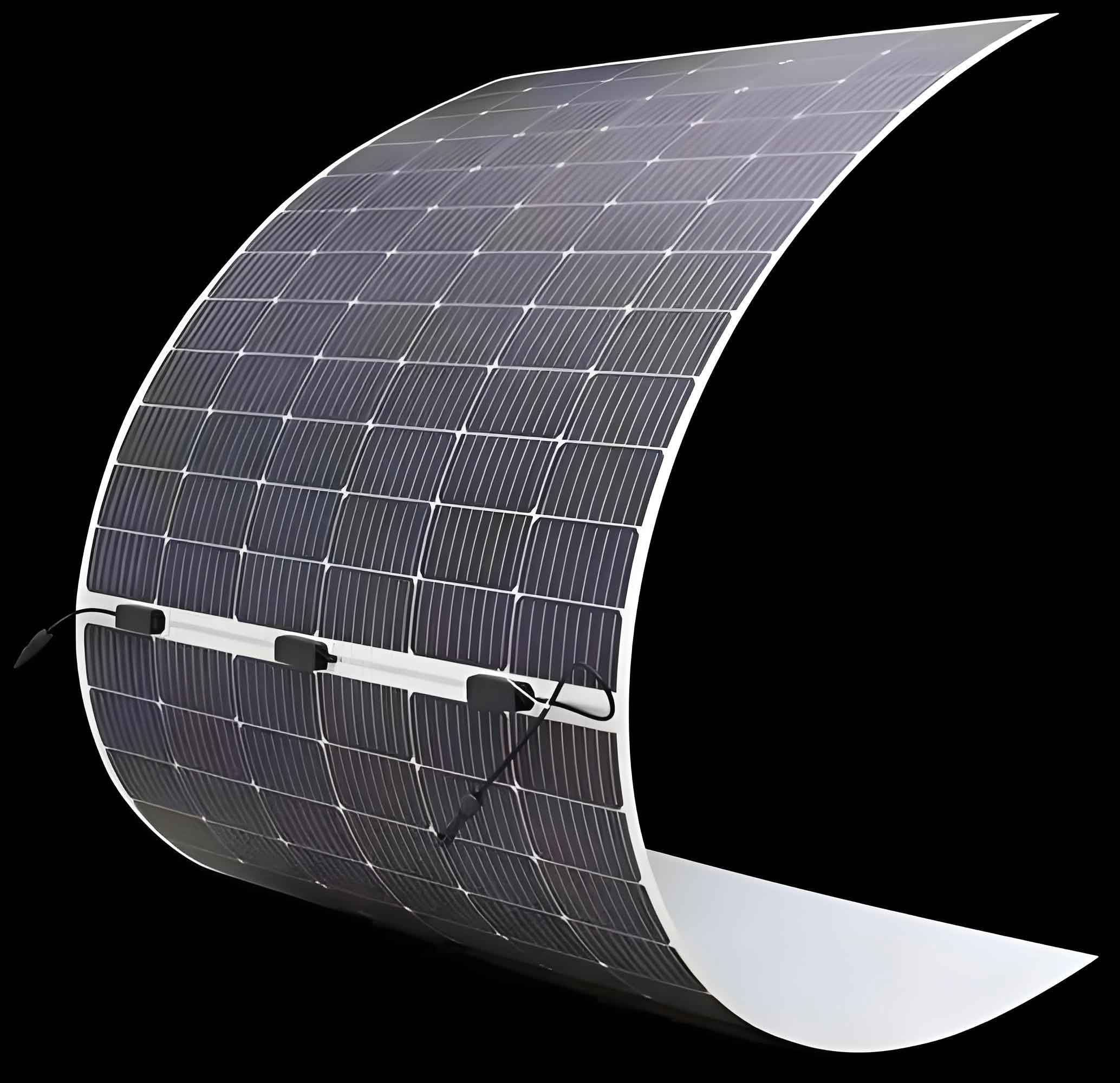
Looking ahead, the trajectory for thin film solar panels is exceptionally bright. Market analysts predict that thin film solar panels will capture an increasing share of the photovoltaic market, driven by advancements in efficiency and cost reduction. Our investment in GW-scale production positions us at the forefront of this shift. We anticipate that thin film solar panels will become ubiquitous in smart cities, where integrated energy systems rely on versatile solar solutions. The convergence of IoT and thin film solar panels opens avenues for energy-harvesting sensors and self-powered devices. In summary, thin film solar panels are not merely a product but a paradigm shift—a testament to human ingenuity in harnessing solar energy. As we break ground on this ambitious project, I am confident that thin film solar panels will illuminate a sustainable future, one panel at a time.
To encapsulate the technical prowess of thin film solar panels, let’s revisit the efficiency metrics. The Shockley-Queisser limit defines the maximum efficiency for single-junction solar cells under standard conditions. For a bandgap of 1.34 eV (optimal for CIGS thin film solar panels), the theoretical limit is approximately 33%. Current champion thin film solar panels approach 55% of this limit, indicating substantial room for growth. Our R&D focuses on defect passivation and interface engineering to close this gap. The diode equation models the current-voltage characteristics of thin film solar panels: $$ I = I_0 \left( e^{\frac{qV}{nkT}} – 1 \right) – I_{\text{ph}} $$ where $I_0$ is reverse saturation current, $q$ is electron charge, $V$ is voltage, $n$ is ideality factor, $k$ is Boltzmann constant, $T$ is temperature, and $I_{\text{ph}}$ is photocurrent. Optimizing these parameters is crucial for enhancing thin film solar panel performance.
In conclusion, the dawn of thin film solar panels heralds a new era in renewable energy. From their technical advantages to broad applications, thin film solar panels embody innovation and sustainability. Our project is a milestone in scaling this technology, and I am proud to contribute to a future powered by thin film solar panels. As we advance, continuous improvement in thin film solar panels will drive global decarbonization efforts, proving that thin film solar panels are indeed the cornerstone of tomorrow’s energy infrastructure.