
In the rapidly evolving landscape of energy storage, I have observed a significant shift in focus from traditional lithium-ion batteries to alternative technologies. While lithium-ion batteries have dominated the market for years, their limitations—such as high cost, poor low-temperature performance, and safety risks like fire or explosion—have spurred intense research into substitutes. Two promising contenders are sodium-ion batteries and solid-state batteries. The former is often seen as a cost-effective alternative to lithium-ion, while the latter represents a groundbreaking upgrade. In this analysis, I will delve into the technical aspects,产业化 timelines, and market potential of these technologies, with a particular emphasis on solid-state batteries, which I believe hold transformative potential for the future.
The quest for better batteries stems from the growing demand for electric vehicles, renewable energy storage, and portable electronics. Lithium resources are finite and geographically concentrated, leading to supply chain vulnerabilities and price volatility. Sodium, on the other hand, is abundant and inexpensive, making sodium-ion batteries an attractive option. Meanwhile, solid-state batteries offer a leap in performance by replacing liquid electrolytes with solid materials, promising higher energy density and enhanced safety. As I explore these technologies, I will use tables and formulas to summarize key points, ensuring a comprehensive understanding.
Understanding Sodium-Ion Batteries
Sodium-ion batteries operate on a principle similar to lithium-ion batteries: ions move between the cathode and anode during charge and discharge cycles. The key difference lies in the use of sodium ions, which are more plentiful than lithium ions. This abundance translates to lower material costs. For instance, the cathode materials in sodium-ion batteries, such as iron-manganese-nickel compounds, can cost about half as much as the lithium-nickel-cobalt-manganese or lithium-nickel-cobalt-aluminum oxides used in lithium-ion batteries. Additionally, sodium-ion batteries employ low-concentration electrolytes with higher conductivity—approximately 20% higher than lithium electrolytes—balancing cost and efficiency. From a safety perspective, sodium ions are more stable than lithium ions, reducing risks of thermal runaway.
The energy density of sodium-ion batteries, however, remains lower than that of lithium-ion batteries. This is a fundamental limitation due to the larger ionic radius of sodium, which affects electrode design. The energy density can be expressed as:
$$ \text{Energy Density} = \frac{\text{Specific Capacity} \times \text{Voltage}}{\text{Mass or Volume}} $$
For sodium-ion batteries, typical values range from 100 to 150 Wh/kg, compared to 150–250 Wh/kg for lithium-ion batteries. Despite this, the cost advantage is substantial. I estimate that the total cost per kilowatt-hour for sodium-ion batteries could be 30–40% lower than for lithium-ion batteries, driven by cheaper raw materials and simpler manufacturing processes.
Table 1 summarizes the key properties of sodium-ion batteries compared to lithium-ion batteries:
| Property | Sodium-Ion Battery | Lithium-Ion Battery |
|---|---|---|
| Energy Density (Wh/kg) | 100–150 | 150–250 |
| Cost (per kWh) | Low (est. $50–70) | High (est. $100–120) |
| Safety | Higher (stable ions) | Lower (risk of fire) |
| Low-Temperature Performance | Good (faster ion transport) | Poor (slower kinetics) |
| Resource Abundance | High (sodium is widespread) | Limited (lithium is scarce) |
The产业化 of sodium-ion batteries is accelerating. Industry reports suggest that 2023 could mark the beginning of大规模 production. Leading battery suppliers have already announced roadmaps for sodium-ion battery products, with prototypes capable of powering vehicles for ranges up to 400 kilometers. Innovations like integrated battery technologies aim to extend this range to over 500 kilometers. Moreover,政策 support in various regions is fostering commercialization, with applications expected in electric vehicles, energy storage systems, and communication base stations. I foresee sodium-ion batteries gaining significant market share in the next five years, particularly in cost-sensitive segments.
The Promise of Solid-State Batteries
Turning to solid-state batteries, I find this technology particularly exciting due to its potential to revolutionize energy storage. A solid-state battery replaces the liquid electrolyte and separator in a lithium-ion battery with a solid electrolyte. This change offers multiple benefits: higher energy density, improved safety, and better thermal stability. The energy density enhancement comes from the ability to use high-capacity electrodes, such as lithium metal anodes, without the risk of dendrite formation that plagues liquid electrolytes. The solid electrolyte acts as a physical barrier, preventing short circuits.
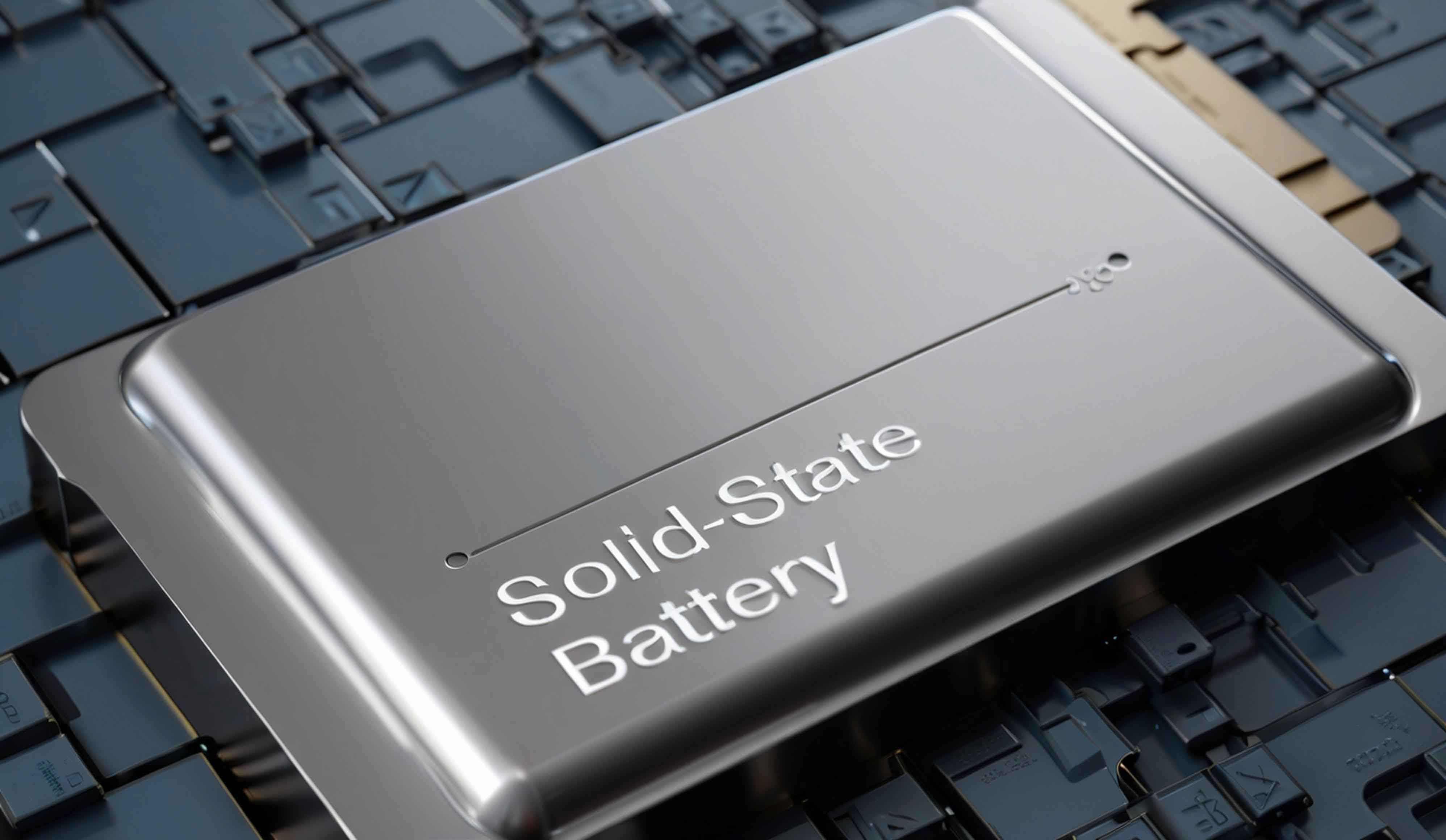
The fundamental equation for energy density in solid-state batteries can be extended to account for the solid electrolyte’s properties:
$$ \text{Energy Density}_{\text{solid-state}} = \frac{\text{Capacity}_{\text{cathode}} \times \text{Voltage}}{\text{Mass}} + \Delta E_{\text{electrolyte}} $$
where \(\Delta E_{\text{electrolyte}}\) represents the contribution from the solid electrolyte’s ionic conductivity and stability. Current projections indicate that solid-state batteries can achieve energy densities of 500 Wh/kg or more at the cell level, doubling the performance of today’s lithium-ion batteries. This leap is crucial for extending the range of electric vehicles and reducing battery weight and volume.
Safety is another critical advantage of solid-state batteries. With no flammable liquid electrolyte, the risk of fire or explosion is minimized. The solid electrolyte’s thermal stability allows for operation at higher temperatures, enhancing performance in extreme conditions. I often emphasize that solid-state batteries could eliminate one of the major drawbacks of current battery systems. However, challenges remain, such as interfacial resistance between solid components and manufacturing scalability.
Table 2 compares solid-state batteries with conventional lithium-ion batteries:
| Property | Solid-State Battery | Lithium-Ion Battery |
|---|---|---|
| Energy Density (Wh/kg) | 300–500 (projected) | 150–250 |
| Safety | Very High (non-flammable) | Moderate (flammable electrolyte) |
| Cycle Life | Potentially longer (stable interfaces) | Limited (degradation over time) |
| Cost (per kWh) | High currently, but decreasing | Moderate to High |
| Manufacturing Complexity | High (new processes required) | Established (mature processes) |
The产业化 timeline for solid-state batteries is a topic of much discussion. According to industry forecasts, global capacity for solid-state batteries could reach 40 GWh by 2023, with energy densities hitting 500 Wh/kg. Over the next five years, cost reductions are expected as production scales up. Several leading battery manufacturers and startups have outlined clear roadmaps to commercialize solid-state batteries within a decade. For instance, partnerships between automakers and solid-state battery developers are accelerating progress. I predict that the first generation of全固态 batteries will achieve around 1% market penetration by 2030, with broader adoption by 2035 as next-generation variants emerge.
In the automotive sector, solid-state batteries are seen as a game-changer. Automakers are investing heavily in this technology to enable longer-range, faster-charging electric vehicles. One notable collaboration involves a major automaker working with a U.S.-based solid-state battery startup to develop and apply全固态 batteries. The automaker plans to integrate solid-state battery production lines into its facilities, with prototypes expected by 2025 and mass production by 2030. This underscores the growing commitment to solid-state battery innovation.
Technical Deep Dive: Materials and Mechanisms
To appreciate the advancements in solid-state batteries, it’s essential to understand the materials involved. Solid electrolytes can be categorized into three types: polymer-based, oxide-based, and sulfide-based. Each has trade-offs in ionic conductivity, mechanical strength, and compatibility with electrodes. For example, sulfide electrolytes offer high conductivity but may react with moisture, requiring dry-room manufacturing. The ionic conductivity \(\sigma\) of a solid electrolyte is given by:
$$ \sigma = \frac{n e \mu}{k_B T} $$
where \(n\) is the carrier concentration, \(e\) is the electron charge, \(\mu\) is the mobility, \(k_B\) is Boltzmann’s constant, and \(T\) is the temperature. Achieving high \(\sigma\) at room temperature is a key research goal for solid-state batteries.
For sodium-ion batteries, the cathode materials often involve layered oxides or polyanionic compounds. The specific capacity \(C\) of a cathode can be calculated as:
$$ C = \frac{z F}{M} $$
where \(z\) is the number of electrons transferred per formula unit, \(F\) is Faraday’s constant, and \(M\) is the molar mass. Sodium-based cathodes typically have lower \(M\) than lithium counterparts, contributing to cost savings but also lower energy density.
I have compiled Table 3 to summarize the key materials for both technologies:
| Battery Type | Cathode Materials | Anode Materials | Electrolyte |
|---|---|---|---|
| Sodium-Ion | NaFeMnNiO₂, Na₃V₂(PO₄)₃ | Hard carbon, titanium oxides | Liquid organic (Na salts) |
| Solid-State (Li-based) | LiNiMnCoO₂, LiFePO₄ | Lithium metal, silicon | Solid (e.g., Li₇La₃Zr₂O₁₂) |
Manufacturing processes for solid-state batteries differ significantly from liquid electrolyte batteries. Techniques like thin-film deposition and sintering are used to create solid electrolyte layers. The cost per kilowatt-hour for solid-state batteries currently exceeds that of lithium-ion batteries, but economies of scale and process improvements are expected to drive costs down. A simplified cost model is:
$$ \text{Cost}_{\text{solid-state}} = \frac{\text{Material Cost} + \text{Processing Cost}}{\text{Energy Output}} $$
With innovations in material synthesis and assembly, I anticipate a 50% reduction in cost over the next decade.
Market Dynamics and Future Projections
The battery market is poised for disruption by both sodium-ion and solid-state batteries. Sodium-ion batteries are likely to capture niches where cost and safety are prioritized over energy density, such as in stationary storage or low-speed electric vehicles. In contrast, solid-state batteries are targeting high-performance applications like premium electric vehicles and aerospace. I project that by 2030, sodium-ion batteries could account for 10–15% of the global battery market, while solid-state batteries might reach 5–10%, depending on technological breakthroughs.
Policy initiatives are playing a crucial role. Governments worldwide are promoting research and development for next-generation batteries, with funding for solid-state battery projects increasing annually. Standards and regulations for safety and performance are also evolving to accommodate these new technologies. I encourage stakeholders to monitor these developments closely.
To illustrate the growth trajectories, I have created Table 4 with projected market shares:
| Year | Sodium-Ion Battery Market Share (%) | Solid-State Battery Market Share (%) | Lithium-Ion Battery Market Share (%) |
|---|---|---|---|
| 2023 | <1 | <1 | ~98 |
| 2030 | 10–15 | 5–10 | 75–85 |
| 2040 | 20–30 | 20–30 | 40–60 |
The innovation in solid-state batteries is particularly rapid. Startups and established companies are racing to solve technical hurdles, such as improving cycle life and reducing interfacial resistance. I have seen numerous patents filed on solid electrolyte compositions and cell designs. The potential for solid-state batteries to enable fast charging—reaching 80% capacity in under 15 minutes—is another area of active research. This could address range anxiety for electric vehicle users.
Challenges and Opportunities
Despite the optimism, both technologies face challenges. For sodium-ion batteries, the primary issue is energy density. While improvements are being made through nanostructured electrodes and advanced electrolytes, it may never match lithium-ion levels. However, in applications where weight is less critical, such as grid storage, this may not be a deal-breaker. The supply chain for sodium-ion batteries is also simpler, reducing geopolitical risks.
For solid-state batteries, the challenges are more technical. Manufacturing at scale is difficult due to the need for precise control over solid interfaces. Dendrite formation, though reduced, can still occur in some solid electrolytes. Cost remains high, but as I mentioned earlier, this is expected to decline with innovation. The opportunity for solid-state batteries lies in their ability to unlock new applications, such as electric aviation or wearable electronics, where safety and energy density are paramount.
I believe that hybrid approaches, such as semi-solid-state batteries or sodium-based solid-state batteries, could emerge as intermediate solutions. These combine the benefits of both worlds, offering a pragmatic path to commercialization. Research into potassium, magnesium, and lithium-sulfur batteries also continues, but solid-state batteries currently lead in terms of industry commitment.
Conclusion
In summary, the race for next-generation batteries is heating up, with sodium-ion and solid-state batteries at the forefront. Sodium-ion batteries offer a cost-effective and safe alternative for mass-market applications, while solid-state batteries promise a revolutionary leap in performance and safety. As I have detailed, both technologies are progressing toward产业化, with solid-state batteries attracting significant investment and attention due to their high potential. The future of energy storage will likely be diverse, with multiple battery types coexisting to meet different needs. I urge industry players to continue investing in research and collaboration to accelerate this transition. The journey toward better batteries is not just about technology—it’s about building a sustainable and secure energy future for all.
To further quantify the advantages, consider the overall system efficiency \(\eta\) of a battery pack, which includes factors like thermal management and packaging. For solid-state batteries, \(\eta\) can be higher due to reduced cooling requirements. The formula is:
$$ \eta = \frac{\text{Useful Energy Out}}{\text{Energy In}} \times 100\% $$
With ongoing advancements, I am confident that solid-state batteries will play a pivotal role in the coming decades, transforming how we store and use energy.