
In the contemporary era, the global discourse on energy security is increasingly dominated by the imperative to transition towards sustainable sources. Among the plethora of green energy alternatives, the power harnessed directly from our sun stands as the most primordial and abundant. The development and refinement of solar photovoltaic (PV) technology, which facilitates the direct conversion of sunlight into electricity, is therefore not merely an engineering pursuit but a cornerstone for future energy sustainability. From my perspective, the trajectory of this field is intrinsically tied to the innovation in the very building blocks of the technology: the photovoltaic materials. The efficiency, cost, durability, and applicability of a solar system are fundamentally dictated by the properties of these materials. This analysis delves into the current landscape, technical underpinnings, and future potential of these critical components, emphasizing their role in shaping the next generation of solar system deployments.
The core principle behind any photovoltaic device is the photoelectric effect, specifically the photovoltaic effect. When photons from sunlight strike a semiconductor material with energy greater than its bandgap ($E_g$), they excite electrons from the valence band to the conduction band, creating electron-hole pairs. If this excitation occurs within the built-in electric field of a p-n junction, the carriers are separated and driven to their respective contacts, generating a direct current (DC). The fundamental equation governing the maximum theoretical efficiency of a single-junction solar cell under unconcentrated sunlight is given by the Shockley-Queisser limit. This limit calculates the maximum possible efficiency as a function of the semiconductor’s bandgap, considering losses due to blackbody radiation and the spectrum of the sun. The detailed balance limit efficiency ($\eta_{max}$) can be expressed as:
$$
\eta_{max} = \frac{\int_{E_g}^{\infty} P_{sun}(E) \, dE}{\int_{0}^{\infty} P_{sun}(E) \, dE} \times \left(1 – \frac{\sigma T_c^4 \int_{E_g}^{\infty} \frac{E^2/(\exp(E/kT_c)-1)}{P_{sun}(E)} \, dE}{\int_{E_g}^{\infty} P_{sun}(E) \, dE} \right)
$$
where $P_{sun}(E)$ is the spectral photon flux density of sunlight, $E_g$ is the bandgap energy, $\sigma$ is the Stefan-Boltzmann constant, $T_c$ is the cell’s temperature, and $k$ is Boltzmann’s constant. For an optimal bandgap around 1.34 eV, this limit is approximately 33.7%. This theoretical framework sets the ultimate goal for all single-junction photovoltaic material research.
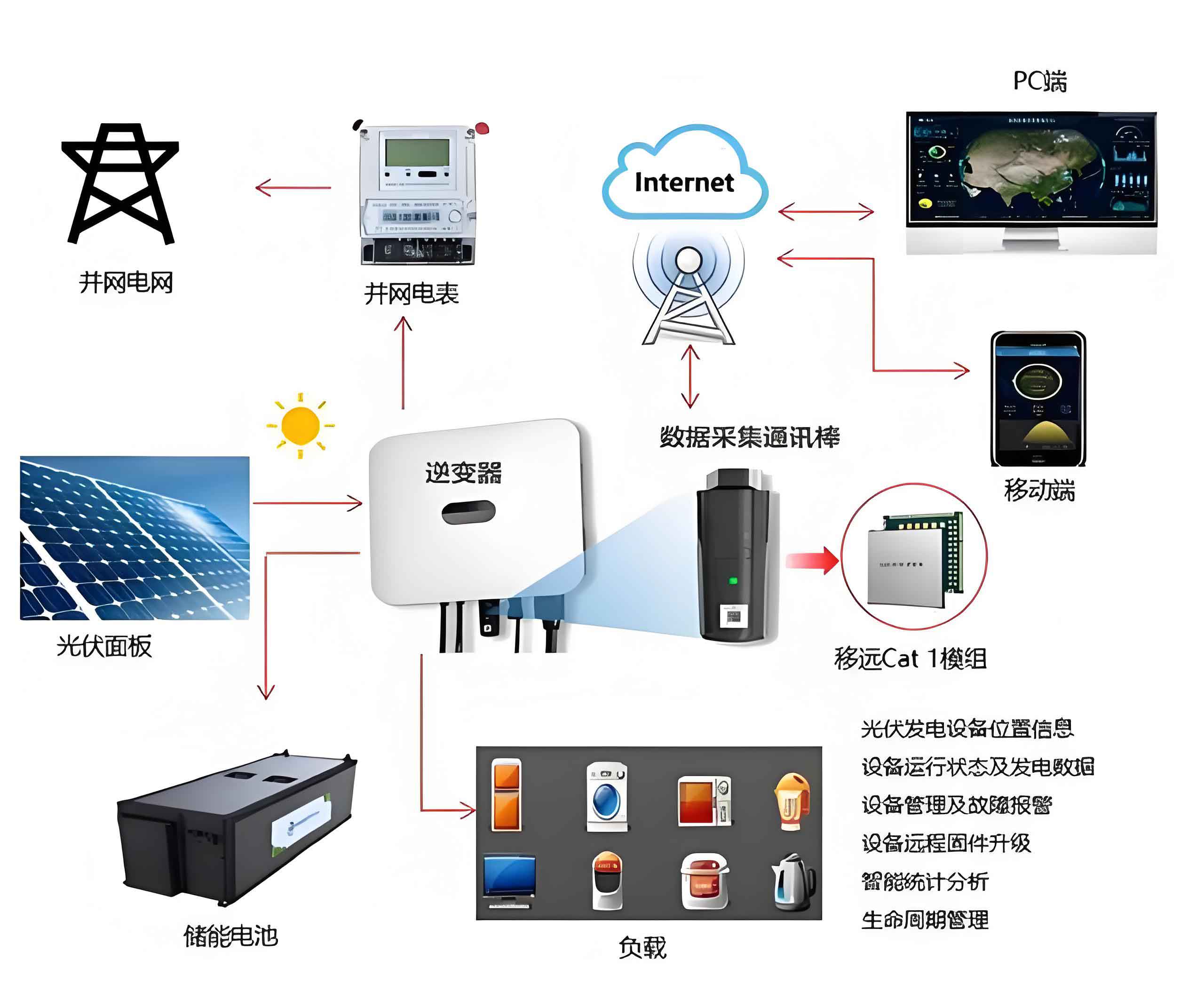
The significance of advancing photovoltaic materials extends far beyond academic interest. A robust and efficient solar system infrastructure addresses multiple global challenges simultaneously. Primarily, it provides a pathway to decarbonize the electricity sector. Unlike conventional thermal power generation, a well-designed PV solar system operates with zero direct greenhouse gas emissions during its use phase. Furthermore, solar energy is ubiquitous; while the intensity varies geographically, no region is entirely devoid of this resource. This democratizes energy access, particularly for remote and off-grid communities, enabling a decentralized power generation model. The operational characteristics of a PV solar system are also highly favorable: they are silent, have no moving parts (minimizing mechanical wear), and require relatively low maintenance once installed. The lifecycle energy payback time—the time a solar system must operate to generate the amount of energy used in its production—has decreased dramatically for modern modules, often to less than two years, underscoring their net positive energy contribution.
Current Landscape of Photovoltaic Materials: A Technical Deep Dive
The photovoltaic materials market and research landscape are predominantly stratified into two broad categories: inorganic (predominantly silicon and thin-film compounds) and emerging materials (including organics and perovskites). Each class presents a unique set of trade-offs between efficiency, stability, manufacturing cost, and application suitability.
1. Inorganic Crystalline Silicon (c-Si) Dominance
Crystalline silicon continues to command over 95% of the global PV market, a testament to its reliability, high efficiency, and the immense scale of industrial learning achieved. Its properties are well-understood, and manufacturing processes are highly optimized. The key performance parameter for a solar system module, the power conversion efficiency (PCE), is given by:
$$
PCE = \eta = \frac{V_{oc} \times I_{sc} \times FF}{P_{in}}
$$
where $V_{oc}$ is the open-circuit voltage, $I_{sc}$ is the short-circuit current, $FF$ is the fill factor, and $P_{in}$ is the incident solar power density (typically 1000 W/m² under standard test conditions). For silicon, $V_{oc}$ is fundamentally limited by its bandgap (~1.1 eV), but sophisticated device engineering has pushed laboratory cell efficiencies to remarkable levels.
- Mono-crystalline Silicon (mono-Si): Fabricated from high-purity single-crystal ingots (typically via the Czochralski process), mono-Si cells offer the highest efficiencies among commercial silicon technologies, with laboratory records exceeding 26%. The near-perfect crystal structure minimizes charge carrier recombination. However, the energy-intensive ingot growth and subsequent wafering steps (kerf loss from sawing) contribute to a higher cost and carbon footprint. The quest to reduce material use has led to thinner wafers, now commonly below 170 µm.
- Multi-crystalline Silicon (multi-Si): Cast from silicon melt into ingots containing multiple crystals, this material is cheaper to produce. However, grain boundaries act as recombination centers, typically capping efficiencies 1-2% absolute lower than mono-Si. While its market share has declined in favor of mono-Si due to a narrowing cost differential, it played a crucial historical role in scaling up the global solar system supply chain.
A critical advancement for silicon technology has been the transition from a simple Al-Back Surface Field (BSF) structure to the Passivated Emitter and Rear Cell (PERC) design. PERC technology incorporates a dielectric passivation layer at the rear, which dramatically reduces electron recombination, boosting $V_{oc}$ and efficiency. Most modern utility-scale and residential solar system installations now utilize PERC or its advanced derivatives (TOPCon, HJT).
2. Inorganic Thin-Film Technologies
Thin-film PV materials are deposited in layers only a few micrometers thick onto substrates like glass, metal, or plastic, offering potential advantages in material usage, weight, and flexible applications. Their absorption coefficients are generally much higher than silicon’s, meaning they absorb light effectively in a much thinner layer.
| Material System | Typical Structure | Champion Lab Efficiency | Key Advantages | Key Challenges | Commercial Status |
|---|---|---|---|---|---|
| Cadmium Telluride (CdTe) | Superstrate: Glass/TCO/CdS/CdTe/Back Contact | ~22.1% | Low-cost deposition (CSS, vapor transport), good spectral match, highest commercial thin-film market share. | Toxicity of Cd (lifecycle management required), scarcity of Te. | Mature, deployed in large-scale utility solar system projects. |
| Copper Indium Gallium Selenide (CIGS) | Substrate: Mo/CIGS/CdS (or alternative)/i-ZnO/ZnO:Al | ~23.4% | Highest efficiency among thin-films, flexible substrates possible, tunable bandgap via Ga/(In+Ga) ratio. | Complex multi-element composition, sensitive process control, use of rare elements (In, Ga). | Mature niche, used in building-integrated PV (BIPV) and specialized applications. |
| Amorphous Silicon (a-Si) | Single or multi-junction p-i-n layers | ~14.0% (stable) | Non-toxic, abundant materials, good low-light performance. | Light-induced degradation (Staebler-Wronski effect), lower stable efficiency. | Largely supplanted in power generation; used in consumer electronics (calculators). |
The performance of a thin-film solar system module is heavily influenced by the quality of the absorber layer and the interfaces. Defect states within the bandgap can act as traps, reducing carrier lifetime ($\tau$) and diffusion length ($L_D = \sqrt{D\tau}$, where $D$ is the diffusion coefficient). Advanced characterization and defect passivation are ongoing research foci.
3. The Emergence of Organic and Perovskite Photovoltaics
This category represents the most dynamic frontier in PV material science, driven by the promise of ultra-low-cost, solution-processable, and mechanically flexible solar cells.
- Organic Photovoltaics (OPVs): Based on carbon-based molecules or polymers. They function on the donor-acceptor heterojunction principle, where photo-excitation creates an exciton (bound electron-hole pair) that must dissociate at an interface. The maximum voltage is related to the energy levels of the Highest Occupied Molecular Orbital (HOMO) of the donor and the Lowest Unoccupied Molecular Orbital (LUMO) of the acceptor:
$$
qV_{oc} \approx |E_{HOMO(D)}| – |E_{LUMO(A)}| – 0.3 \text{ eV}
$$
The field has been revolutionized by non-fullerene acceptors (NFAs), which have overcome the limitations of traditional fullerene-based acceptors (like PCBM), pushing lab efficiencies beyond 19%. Their key appeal lies in the potential for roll-to-roll printing on flexible substrates, enabling novel applications for a lightweight, adaptable solar system. - Perovskite Solar Cells (PSCs): These materials, with the general crystal structure ABX$_3$ (e.g., methylammonium lead iodide, CH$_3$NH$_3$PbI$_3$), have witnessed an unprecedented rise in efficiency from 3.8% in 2009 to over 25.7% today. They exhibit exceptional optoelectronic properties: high absorption coefficient, long carrier diffusion lengths (exceeding 1 µm), and tunable bandgap via composition engineering. The current density in a perovskite device can be modeled by considering both drift and diffusion:
$$
J = q \mu n E + q D \frac{dn}{dx}
$$
where $\mu$ is mobility, $n$ is carrier density, $E$ is electric field, and $D$ is the diffusion constant. However, the paramount challenge for perovskite-based solar system commercialization remains operational stability under heat, moisture, and continuous illumination. Encapsulation and compositional engineering (e.g., using mixed cations/anions, 2D/3D structures) are critical research paths. - Tandem and Multi-Junction Cells: To break the single-junction Shockley-Queisser limit, materials are stacked. A perovskite-on-silicon tandem cell, for instance, uses a wide-bandgap perovskite top cell to absorb high-energy photons and a silicon bottom cell for lower-energy photons, with a theoretical efficiency limit >40%. The current matching condition is vital:
$$
J_{top}(V) = J_{bottom}(V)
$$
Recent prototypes have demonstrated efficiencies exceeding 33%, signaling a probable future direction for high-performance solar system modules.
Performance Metrics and Future Trajectory
The evolution of photovoltaic materials can be succinctly tracked through key metrics. The following table summarizes the state-of-the-art across material classes, highlighting the efficiency-stability-cost triangle that defines their application potential.
| Material Class | Best Lab Cell Efficiency | Best Module Efficiency | Estimated Module Cost (USD/W) | Stability (Target for Commercialization) | Technology Readiness Level (TRL) |
|---|---|---|---|---|---|
| Mono-crystalline Silicon (PERC/TOPCon) | >26% | ~24% | 0.20 – 0.30 | >25 years | 9 (Commercial) |
| Cadmium Telluride (CdTe) | ~22.1% | ~19.5% | 0.25 – 0.35 | >25 years | 9 (Commercial) |
| Perovskite (Single Junction) | >25.7% | ~18% (small area) | Projected <0.20 | Needs to prove >20-25 years | 6-7 (Pilot Lines) |
| Perovskite-Silicon Tandem | >33% | ~26% (small module) | Projected 0.30 – 0.40 | Under intensive testing | 5-6 (Advanced R&D) |
| Organic PV (OPV) | >19% | ~15% (flexible) | Projected very low for niche apps | >10 years (indoor), less for outdoor | 4-5 (R&D to Pilot) |
Looking forward, the development trajectory for photovoltaic materials is clear: higher efficiency, lower levelized cost of energy (LCOE), unprecedented form factors, and circular sustainability. The LCOE, a critical metric for any energy solar system, is calculated as:
$$
LCOE = \frac{\sum_{t=1}^{n} \frac{I_t + M_t}{(1+r)^t}}{\sum_{t=1}^{n} \frac{E_t}{(1+r)^t}}
$$
where $I_t$ is investment cost in year $t$, $M_t$ is operations and maintenance cost, $E_t$ is energy produced, $r$ is the discount rate, and $n$ is the system lifetime. Advanced materials directly reduce $I_t$ (cheaper production) and increase $E_t$ (higher efficiency/longer life), driving LCOE down.
Specific future avenues include:
- Perovskite Commercialization and Tandems: The primary hurdle is stabilizing perovskite materials to meet industrial warranty standards. Successful stabilization will unlock not only single-junction applications but, more importantly, the widespread adoption of perovskite-silicon tandems. This architecture promises to boost the efficiency of a standard solar system installation by 30-50% relative to today’s best silicon modules without a proportional increase in area-related balance-of-system costs.
- Earth-Abundant and Non-Toxic Thin Films: Research into materials like kesterites (CZTSSe), copper zinc tin sulfide/selenide) and Sb$_2$Se$_3$ aims to replicate the manufacturing advantages of CdTe and CIGS without their supply chain or toxicity concerns. While efficiencies lag, they offer a promising path for sustainable, large-volume thin-film production.
- Ultra-Flexible and Lightweight PV: OPVs and certain thin-film technologies will enable PV integration into vehicles, wearable electronics, IoT sensors, and building façades (BIPV). This expands the definition of a solar system from a fixed power plant to an integrated, ubiquitous energy-harvesting layer.
- Advanced Silicon Technology: Silicon is not a stagnant field. Innovations like interdigitated back contact (IBC), silicon heterojunction (HJT), and wafer thinning continue to push performance boundaries. The integration of silicon with other materials (e.g., as a bottom cell in a tandem) secures its relevance for decades.
- Quantum Dot and Novel Absorbers: Colloidal quantum dots (CQDs) offer bandgap tunability via quantum confinement and solution processability. They could serve in infrared-harvesting layers for multi-junction cells or as low-cost printable inks.
In conclusion, the landscape of photovoltaic materials is one of both remarkable maturity and exhilarating innovation. The incumbent silicon-based solar system provides a reliable, high-performance, and continuously improving workhorse that is fundamentally reshaping global electricity generation. Concurrently, the emergence of perovskite and organic semiconductors heralds a future where solar conversion can be deployed in previously unimaginable ways, at potentially disruptive costs. The convergence of these material streams—particularly through tandem architectures—represents the most potent pathway to ultra-high-efficiency solar conversion. The ongoing research imperative is clear: to translate laboratory breakthroughs in stability, efficiency, and processability into manufacturable, durable, and sustainable products. The success of this endeavor will determine the pace at which photovoltaic technology can fulfill its destiny as the bedrock of a clean, secure, and decentralized global energy solar system.