
The evolution of modern agriculture is fundamentally intertwined with the strategic adoption of advanced technological systems. Across diverse geographical regions, a concerted effort is underway to enhance efficiency, ensure safety, reduce environmental impact, and secure food production chains. This movement represents a holistic transition from fragmented, labor-intensive practices to integrated, intelligent, and sustainable operations. A critical and recurring theme within this transformation is the integration of renewable energy, most prominently the adoption of the photovoltaic solar system. The application of such solar systems transcends mere energy substitution; it represents a paradigm shift towards autonomous, clean, and economically viable agricultural infrastructure.
1. Foundational Infrastructure and Safety Enhancements
The bedrock of any efficient agricultural region is its logistical and transportation network. Prior to major events or during seasonal peaks, ensuring the safety and clarity of this network is paramount. Comprehensive audits and repairs of road safety apparatus—including signage, barriers, and markings—are routinely conducted. These initiatives are not merely reactive but form part of a proactive strategy to mitigate accident risks for both local traffic and visiting participants. This focus on foundational safety creates a stable environment conducive to further technological investments, including those powered by off-grid solar systems for remote monitoring and lighting.
The economic rationale for such infrastructure upgrades can be modeled by considering the reduction in potential accident costs. If we let \( C_a \) represent the average cost of a road accident (including medical, repair, and productivity losses), \( P_b \) the probability of an accident before improvements, and \( P_a \) the reduced probability after improvements, the annual expected savings \( S \) for a stretch of road with an estimated traffic volume \( N \) incidents can be expressed as:
$$ S = N \times C_a \times (P_b – P_a) $$
This simple model highlights how upfront investment in safety yields continuous economic and social returns.
2. Innovations in Post-Harvest Processing: The Case of Grain Drying
A significant vulnerability in the food production chain occurs immediately after harvest. Reliance on natural sun-drying is susceptible to weather volatility, leading to substantial post-harvest losses due to mold, sprouting, and contamination. The establishment of centralized grain drying centers marks a critical step in mitigating this risk. These centers, often pioneered by agricultural cooperatives, utilize high-capacity, continuous-flow dryer machines to rapidly reduce the moisture content of grains to safe storage levels.
The benefits are multifold and can be quantified:
| Metric | Traditional Sun-Drying | Mechanical Drying Center |
|---|---|---|
| Drying Time | 3-5 days (weather dependent) | 4-8 hours (consistent) |
| Labor Intensity | High (spreading, turning, collecting) | Low (automated handling) |
| Loss Rate (Spoilage/Theft) | 5-15% | < 1% |
| Grain Quality Consistency | Variable | High & Uniform |
| Space Requirement | Very Large (concrete yards) | Compact (vertical infrastructure) |
The economic viability of these centers is accelerated by government subsidy programs for agricultural machinery. As these hubs become demonstration sites, they catalyze wider adoption. Furthermore, their energy-intensive operation presents a prime opportunity for integration with a renewable solar system. A hybrid energy setup, where the drying facility is powered partially by a dedicated photovoltaic solar system coupled with grid or generator backup, can dramatically reduce operational fuel costs and carbon footprint.
3. Mechanization in Plant Protection: Precision and Efficiency
Crop protection is another domain experiencing rapid technological advancement. The shift from manual, backpack sprayers to mechanized, self-propelled spray boom systems represents a leap in precision agriculture. These modern sprayers allow for uniform application of pesticides or fertilizers over large areas, with adjustable boom heights and pressures to optimize droplet size and coverage.
The advantages are significant from both agronomic and environmental perspectives. Precise application minimizes chemical drift, reduces the total volume of agrochemicals used, and lowers operator exposure risk. The efficacy \( E \) of such a system can be conceptualized in terms of application quality and resource efficiency:
$$ E = \frac{C_t \times A_u}{V_a \times T_a} $$
Where \( C_t \) is the target crop coverage uniformity (%), \( A_u \) is the area treated per unit time (hectares/hour), \( V_a \) is the volume of active ingredient used (liters/hectare), and \( T_a \) is the operator labor time (hours). Higher \( E \) values indicate a more effective and efficient system. The power requirements for these large sprayers, often used in remote fields, again point to the potential of an auxiliary mobile or stationary solar system for charging or even direct power supply.
4. The Integrated Solar System: A Core of Sustainable Agricultural Infrastructure
Among all technological integrations, the implementation of photovoltaic solar systems stands out for its transformative potential. The concept is elegantly simple: harness abundant solar radiation to power essential agricultural processes, creating a decentralized, resilient, and clean energy network. A prime application is in irrigation, where solar system-powered pumps replace diesel generators or grid-connected electric pumps.
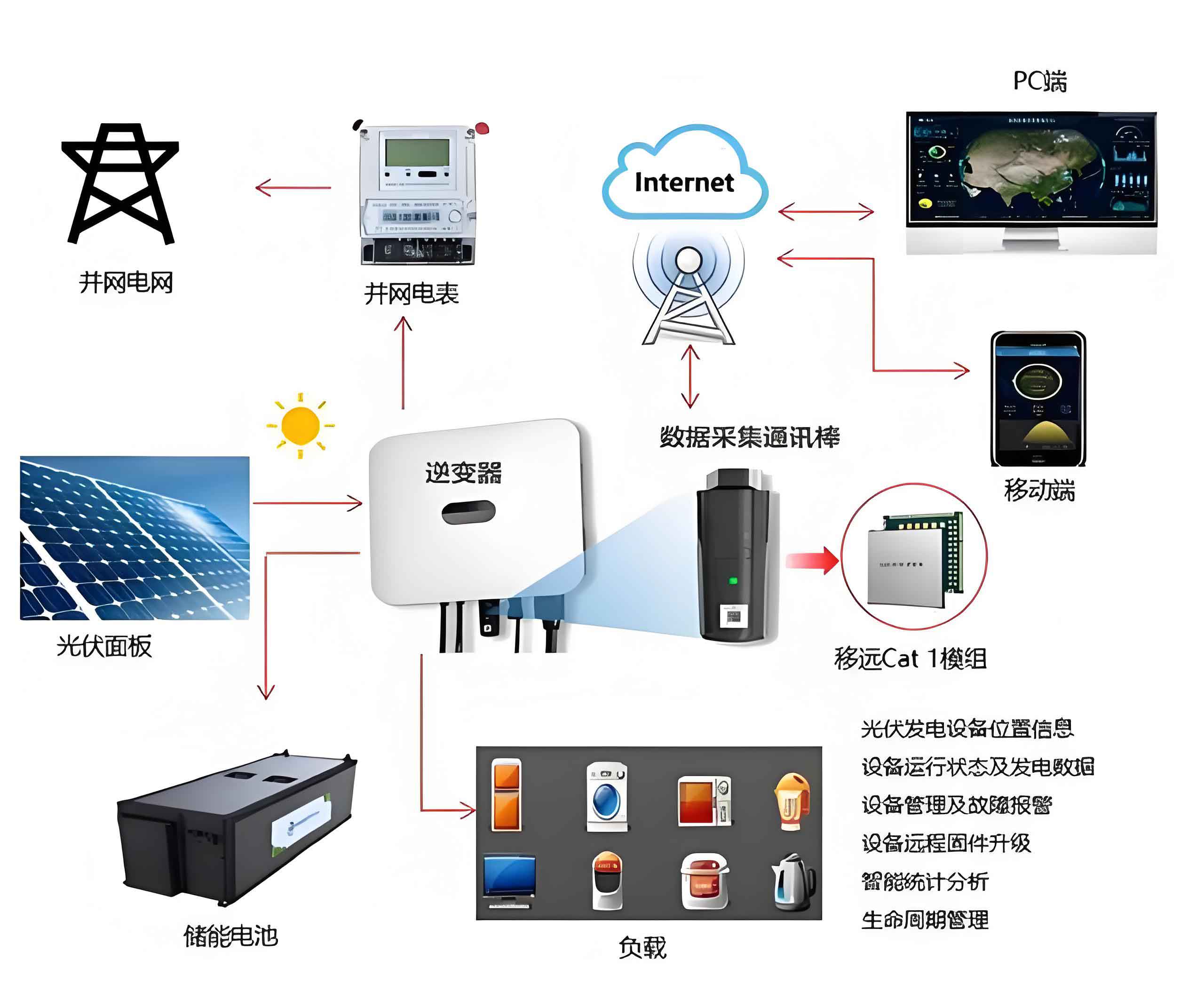
The technical operation involves photovoltaic panels converting sunlight into direct current (DC) electricity. This electricity drives a pump, often via a dedicated solar pump controller that matches the power output to the pump’s requirements without the need for batteries. The system’s output is a function of solar irradiance \( G \) (W/m²), panel area \( A_p \) (m²), and overall system efficiency \( \eta_{sys} \) (combining panel, controller, and pump efficiencies). The hydraulic power \( P_h \) delivered to the water is given by:
$$ P_h = \rho \cdot g \cdot Q \cdot H $$
where \( \rho \) is water density, \( g \) is gravity, \( Q \) is flow rate (m³/s), and \( H \) is total dynamic head (m). The required electrical input from the solar system, \( P_e \), is \( P_h / \eta_{sys} \).
4.1 Economic and Environmental Analysis
The financial case for a solar-powered irrigation solar system is compelling, characterized by high initial capital expenditure but negligible operating costs and long system life. Let us compare a diesel-powered pump with a photovoltaic solar system pump for a typical scenario.
| Parameter | Diesel Pump System | Solar Photovoltaic Pump System |
|---|---|---|
| Initial Capital Cost | Moderate | High |
| Operational Fuel/Cost | High (Diesel fuel) | ~Zero (Sunlight) |
| Maintenance Cost | Moderate-High (engine upkeep) | Very Low (minimal moving parts) |
| System Lifespan | ~5-10 years | > 25 years (panels) |
| Carbon Emissions | High (~2.68 kg CO₂/liter diesel) | Zero during operation |
| Noise & Local Pollution | Significant | None |
The Net Present Value (NPV) and Payback Period (PP) are key decision metrics. For a solar system with initial cost \( I_0 \), annual savings on diesel/electricity \( S \), annual maintenance cost \( M_s \) (low), discount rate \( r \), and lifetime \( n \), the NPV is:
$$ NPV = -I_0 + \sum_{t=1}^{n} \frac{S – M_s}{(1+r)^t} $$
The system becomes profitable when NPV > 0. The Payback Period is the time \( t \) when cumulative savings equal \( I_0 \). In many agricultural settings, the payback period for a robust solar system can be as short as 4-7 years, after which the energy is virtually free for the remaining system life.
4.2 Quantified Environmental Impact
The environmental benefits of a widespread solar system adoption are staggering. Consider a single photovoltaic pumping solar system servicing a 25-hectare farm over a 25-year lifespan. The cumulative displacement of grid electricity or diesel fuel translates into massive reductions in emissions.
The total energy generated \( E_{total} \) by the solar system over its lifespan can be estimated as:
$$ E_{total} = P_{rated} \times \text{Peak Sun Hours/day} \times 365 \times 25 \times \eta_{performance} $$
Where \( P_{rated} \) is the installed capacity in kW. The avoided emissions are then calculated using regional grid or diesel emission factors. For instance, if displacing coal-based grid electricity with an emission factor \( EF_{CO_2} \) (kg CO₂/kWh), the total CO₂ mitigation is:
$$ \text{CO}_2\ \text{Saved} = E_{total} \times EF_{CO_2} $$
Similar calculations can be performed for SO₂, NOx, and particulate matter. The aggregated impact across hundreds or thousands of farms presents a powerful pathway for the agricultural sector to become a net contributor to environmental sustainability. This integrated, clean-energy solar system approach is central to the concept of “green agriculture.”
5. Synthesis and Future Trajectory
The modernization of agriculture is not a singular intervention but a synergistic integration of multiple technological streams. Improved infrastructure enables efficient movement, mechanized processing secures harvests, and precision application optimizes inputs. Running as a common thread through all these advancements is the increasing viability and integration of the photovoltaic solar system.
The future trajectory points towards even greater integration and intelligence. We can envision:
- Smart Microgrids: Agricultural cooperatives operating their own energy microgrids, based primarily on a large-scale solar system, with battery storage and smart management to power drying centers, cold storage, and processing plants.
- IoT-Enabled Solar Systems: Photovoltaic pumps and sensors integrated into the Internet of Things (IoT), allowing remote monitoring of both water delivery and energy production from the solar system, optimizing irrigation schedules based on real-time data and weather forecasts.
- Agrivoltaics: The dual use of land for solar energy generation and crop production, where carefully designed photovoltaic panel arrays provide partial shade, potentially reducing water evaporation for certain crops while generating clean energy.
In conclusion, the contemporary agricultural revolution is being driven by a pragmatic combination of mechanical, digital, and energy technologies. The renewable energy solar system, in particular, has evolved from a niche demonstration to a core component of economically sound and environmentally responsible farm management. Its ability to provide decentralized, reliable, and cost-effective power for critical operations like irrigation, drying, and processing makes it a cornerstone of the resilient and sustainable agricultural systems needed for the future. The continued convergence of these technologies promises not only enhanced productivity and food security but also a significant positive transformation in agriculture’s environmental footprint.