
In recent years, the rapid expansion of the electric vehicle market has driven unprecedented demand for Li-ion batteries, which are pivotal due to their high energy density, long cycle life, and efficiency. The cathode material, constituting approximately 30–35% of the manufacturing cost of a Li-ion battery, is a critical factor influencing overall battery pack affordability. Among various cathode materials, high-nickel ternary compounds like LiNi0.8Co0.1Mn0.1O2 (NCM811) are particularly attractive for Li-ion batteries because of their superior specific capacity and reduced cobalt content. However, conventional production methods, such as co-precipitation and solid-state synthesis, involve high energy consumption, lengthy processes, and significant environmental impacts. To address these challenges, we explore flame spray pyrolysis (FSP) as an innovative alternative for synthesizing NCM811 cathode materials for Li-ion batteries. This study aims to provide a comprehensive techno-economic analysis from a first-person perspective, evaluating the feasibility of FSP in terms of mass-energy balances, cost structures, and financial viability for large-scale production of materials used in Li-ion batteries.
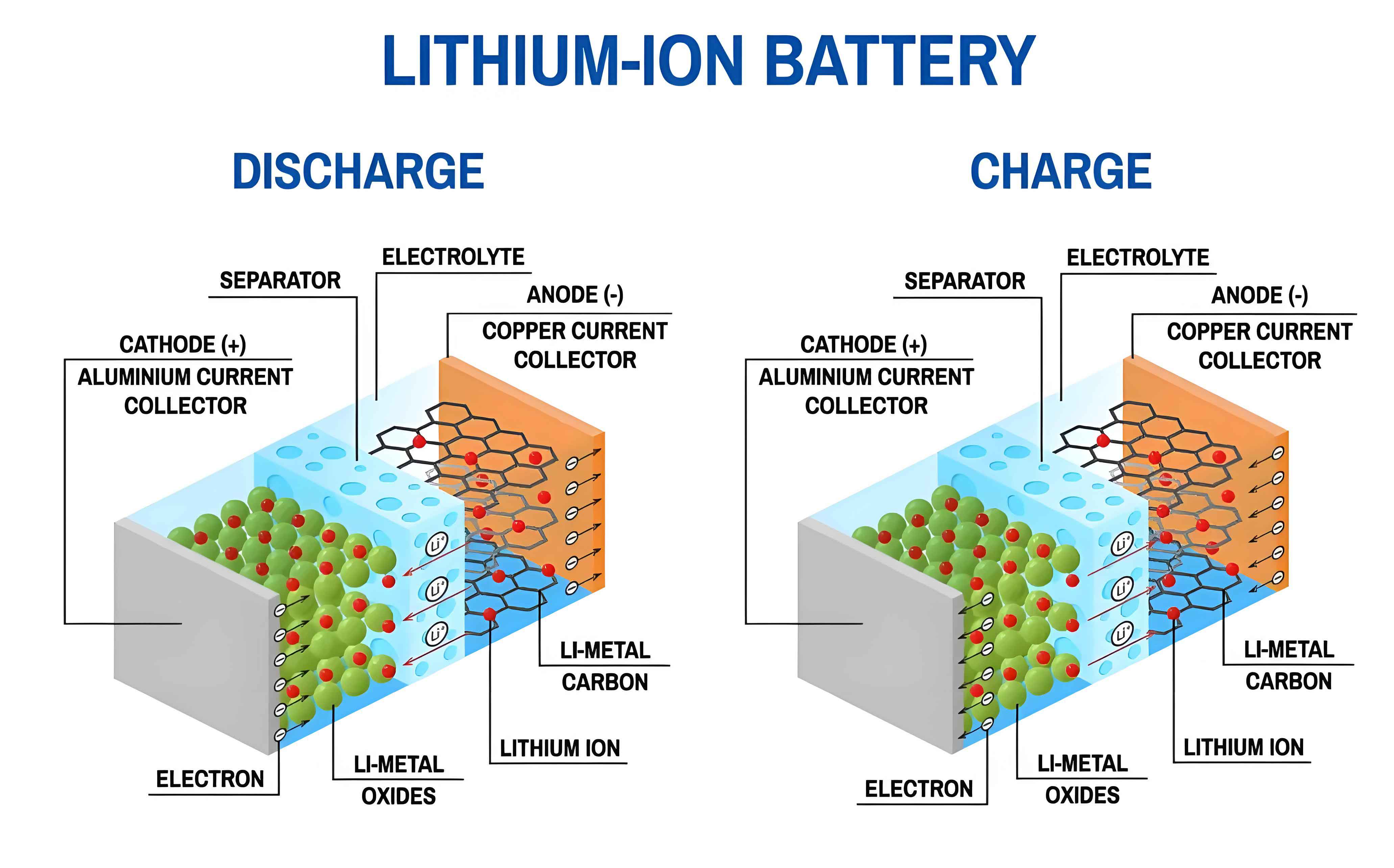
We begin by detailing the technical methodology behind flame spray pyrolysis for producing NCM811 cathode materials for Li-ion batteries. The FSP process involves atomizing a precursor solution into fine droplets, which are then introduced into a high-temperature flame field generated by a combustor. This enables rapid synthesis of nanocrystalline particles with uniform morphology and minimal impurities. Our production scale is set at 6,000 tons per year (18.75 tons per day) of NCM811, comparable to industrial standards for Li-ion battery cathode materials. The precursor solution consists of lithium nitrate (LiNO3), nickel nitrate [Ni(NO3)2], cobalt nitrate [Co(NO3)2], manganese nitrate [Mn(NO3)2], urea [CO(NH2)2], and deionized water, mixed in molar ratios of Li:Ni:Co:Mn = 1.1:0.8:0.1:0.1 to account for lithium volatility. The process includes seven steps: mixing, flame spray pyrolysis, high-temperature calcination, grading and crushing, blending, iron removal, and packaging. For comparison, we also analyze the traditional carbonate co-precipitation pathway, which uses sulfates and carbonates, with the same production capacity for Li-ion battery materials.
To assess the technical performance, we conduct mass and energy balance calculations. The mass balance accounts for raw material inputs, product outputs, and emissions, while the energy balance evaluates fuel and electricity consumption. For the FSP process, the combustor operates at 900°C with natural gas as fuel, and the calcination step uses electric heating at 750°C for 1.5 hours. The key reactions in the combustor include pyrolysis of metal nitrates and urea, as summarized below:
| Reaction | Initial Temperature (°C) | Reaction Temperature (°C) |
|---|---|---|
| 4LiNO3 → 2Li2O + 4NO2 + O2 | 25 | 600 |
| 2Ni(NO3)2 → 2NiO + 4NO2 + O2 | 25 | 310 |
| Mn(NO3)2 → MnO2 + 2NO2 | 25 | 230 |
| 2Co(NO3)2 → 2CoO + 4NO2 + O2 | 25 | 450 |
| CO(NH2)2 → HCNO + NH3 | 25 | 160 |
The enthalpy change for NCM811 formation is calculated using thermodynamic models. The standard molar enthalpy of formation, ΔfHθ,298, for NCM811 is -695.67 kJ/mol, and the constant-pressure heat capacity, cp,298, is 75.72 J/(mol·K). The temperature-dependent heat capacity is given by:
$$
c_{p,T} = 84.2898376 + 0.0212257461 T – 1257145.6 T^{-2} + 6122704.9 \times 10^{-6} T^2
$$
where T is in Kelvin. The enthalpy change at temperature T is derived from Kirchhoff’s law:
$$
\Delta_f H_m(T) = \Delta_f H_m(298 \text{ K}) + \int_{298}^{T} \Delta_f c_{p,m} dT
$$
This allows us to compute the energy required for synthesis. Our calculations show that producing 1 ton of NCM811 via FSP consumes 1.6 tons of liquefied natural gas and 4,224 kWh of electricity per day, leading to a comprehensive energy consumption of 2,960 kgce/t (kilograms of standard coal equivalent per ton), which meets green design standards for Li-ion battery cathode materials. In contrast, the co-precipitation method requires 28,620 kWh of electricity daily and higher water usage. We summarize the daily resource consumption and emissions for both methods in the following tables, highlighting the advantages of FSP for Li-ion battery production.
| Item | Consumption/Emission Rate |
|---|---|
| LiNO3 | 5.8 tons |
| Ni(NO3)2 | 28.2 tons |
| Co(NO3)2 | 3.5 tons |
| Mn(NO3)2 | 3.5 tons |
| Urea | 1.0 ton |
| Deionized Water | 10.7 tons |
| Liquefied Natural Gas | 29.4 tons |
| Electricity | 42,236.7 kWh |
| CO2 Emissions | 5.6 tons |
| NOx Emissions (treated with SCR) | Requires ammonia injection |
| Item | Consumption/Emission Rate |
|---|---|
| NiSO4 | 28.2 tons |
| CoSO4 | 3.5 tons |
| MnSO4 | 3.5 tons |
| Na2CO3 | 15.1 tons |
| Li2CO3 | 4.9 tons |
| Deionized Water | 15.1 tons |
| Electricity | 286,204.6 kWh |
| CO2 Emissions | 9.4 tons |
| Wastewater and Solids | Significant from filtration |
From these tables, we observe that FSP reduces CO2 emissions by approximately 41%, electricity consumption by 85%, and water usage by 29% compared to co-precipitation for producing Li-ion battery cathode materials. This underscores the environmental benefits of FSP, making it a greener alternative for the Li-ion battery industry. Moreover, the absence of liquid waste streams in FSP minimizes pollution, aligning with sustainable production goals for Li-ion batteries.
Moving to economic analysis, we evaluate the financial feasibility of FSP for NCM811 production. Our approach involves estimating total project investment, operating costs, and conducting a discounted cash flow analysis to determine the minimum cathode material selling price (MCSP) under breakeven conditions. The project investment includes construction investment, construction interest, and working capital. We assume a production capacity of 6,000 tons/year over a 20-year operational life, with a 2-year construction period and a 1-year trial operation. The discount rate is set at 20%, reflecting the technical risks associated with FSP for Li-ion battery materials. Loan financing covers 20% of total investment at a nominal interest rate of 4.95% over 10 years. The cost structure comprises variable costs (raw materials, fuel, power) and fixed costs (labor, maintenance, depreciation).
The construction investment for FSP is detailed in the table below, showing a total of 13.46 million USD, with equipment procurement being the largest component at 46.9%. This is lower than co-precipitation due to fewer process steps and simpler equipment, reducing upfront costs by 33.5% for Li-ion battery cathode material production.
| Component | Cost (Million USD) | Percentage |
|---|---|---|
| Equipment Procurement | 6.31 | 46.9% |
| Installation Engineering | 0.86 | 6.4% |
| Construction Engineering | 3.30 | 24.5% |
| Land Acquisition | 0.64 | 4.7% |
| Other Construction Costs | 0.50 | 3.7% |
| Bidding Fees | 0.04 | 0.3% |
| Future Operating Costs | 0.09 | 0.7% |
| Basic Reserve Fund | 1.10 | 8.1% |
| Inflation Reserve Fund | 0.63 | 4.7% |
| Total Construction Investment | 13.46 | 100.0% |
Annual operating costs are dominated by raw materials, which account for 96.8% of total costs, as shown in the next table. For FSP, nitrate salts are the primary expense, while electricity and natural gas contribute minimally. Maintenance costs are lower due to simpler equipment, such as the FSP combustor, which requires less repair than the continuous stirred tank reactors used in co-precipitation for Li-ion battery cathode synthesis.
| Cost Item | Cost (Million USD) | Percentage |
|---|---|---|
| Raw Materials (Nitrates, Urea) | 114.45 | 96.8% |
| Electricity | 1.20 | 1.0% |
| Labor | 0.60 | 0.5% |
| Supervision and Advertising | 0.21 | 0.2% |
| Research and Development | 0.58 | 0.5% |
| Maintenance (Annual Average) | 0.87 | 0.7% |
| Safety Expenses | 0.36 | 0.3% |
| Total Annual Operating Cost | 118.28 | 100.0% |
To determine the MCSP, we perform a net present value (NPV) analysis. The NPV is calculated as:
$$
\text{NPV} = \sum_{t=1}^{n} \frac{R_t}{(1 + i)^t}
$$
where Rt is the net cash flow in year t, i is the discount rate (20%), and n is the project life (20 years). At breakeven, NPV = 0, yielding an MCSP of 221.1 CNY/kg (approximately 30.8 USD/kg) for NCM811 produced via FSP. This is 18% lower than the current market price of 270.0 CNY/kg for Li-ion battery cathode materials, indicating strong economic competitiveness. For comparison, co-precipitation-based MCSP is estimated at 265.0 CNY/kg, based on literature data, highlighting the cost advantage of FSP for Li-ion battery applications.
We further conduct sensitivity analysis to assess how key parameters affect the MCSP for Li-ion battery cathode materials. The most sensitive factors are raw material prices, particularly lithium and nickel nitrates, as they constitute the bulk of costs. Other factors include discount rate, production capacity, and tax rates. The results are summarized in the table below, showing percentage changes in MCSP relative to base-case variations.
| Parameter | Change | MCSP (CNY/kg) | Change from Base |
|---|---|---|---|
| Base Case | — | 221.1 | — |
| Lithium Nitrate Price | -25% | 215.5 | -2.5% |
| Nickel Nitrate Price | -25% | 216.0 | -2.3% |
| Cobalt Nitrate Price | -25% | 220.5 | -0.3% |
| Manganese Nitrate Price | -25% | 220.8 | -0.1% |
| All Nitrate Prices | -25% | 172.0 | -22.2% |
| Discount Rate | 15% | 216.5 | -2.1% |
| Production Capacity | 9,000 tons/year | 214.8 | -2.9% |
| Corporate Tax Rate | -5% | 220.5 | -0.3% |
| Project Life | 30 years | 220.7 | -0.2% |
The sensitivity analysis reveals that a 25% reduction in all nitrate prices could lower the MCSP to 172.0 CNY/kg, making FSP even more attractive for Li-ion battery manufacturers. Additionally, scaling up production to 9,000 tons/year reduces the MCSP to 214.8 CNY/kg, demonstrating economies of scale. These insights emphasize that raw material cost control is crucial for enhancing the profitability of FSP in the Li-ion battery sector.
In terms of environmental impact, FSP offers significant reductions in carbon footprint for Li-ion battery production. The CO2 emissions per ton of NCM811 are calculated as:
$$
\text{CO}_2 \text{ Emissions} = \text{Fuel Consumption} \times \text{Emission Factor}
$$
For natural gas, the emission factor is approximately 2.75 kg CO2/kg fuel. Thus, for FSP producing 1 ton of NCM811:
$$
\text{CO}_2 \text{ from Fuel} = 1.6 \text{ tons} \times 2.75 = 4.4 \text{ tons}
$$
Including electricity-related emissions (based on grid intensity), total CO2 emissions for FSP are about 5.6 tons per day, compared to 9.4 tons for co-precipitation. This aligns with global efforts to decarbonize Li-ion battery supply chains. Furthermore, FSP eliminates wastewater generation, reducing treatment costs and environmental liabilities associated with Li-ion battery material production.
From a technical perspective, the quality of FSP-derived NCM811 is comparable to conventional materials for Li-ion batteries. Studies report initial discharge capacities of 180–200 mAh/g and capacity retention over 85% after 100 cycles, meeting performance standards for high-energy Li-ion batteries. The rapid synthesis (1.5 hours vs. 10–12 hours for co-precipitation) also enhances production flexibility, allowing faster response to market demands for Li-ion batteries.
In conclusion, our techno-economic analysis demonstrates that flame spray pyrolysis is a viable and advantageous method for producing high-nickel ternary cathode materials like NCM811 for Li-ion batteries. Technically, FSP reduces energy consumption, water usage, and CO2 emissions significantly compared to traditional co-precipitation, contributing to sustainable Li-ion battery manufacturing. Economically, the minimum selling price of 221.1 CNY/kg under breakeven conditions is 18% lower than market prices, offering cost savings for Li-ion battery producers. Sensitivity analysis highlights that raw material costs are the most critical factor, and strategies such as bulk purchasing or process optimization could further reduce prices. We recommend further research into precursor formulation to eliminate NOx emissions and exploration of FSP for other Li-ion battery materials, such as lithium iron phosphate or sodium-ion battery cathodes. Overall, adopting FSP could strengthen the competitiveness and environmental profile of the Li-ion battery industry, supporting the global transition to electric mobility and energy storage solutions.
To reiterate, the integration of flame spray pyrolysis into Li-ion battery cathode production not only addresses cost and efficiency challenges but also aligns with circular economy principles. As demand for Li-ion batteries continues to soar, innovative synthesis methods like FSP will play a pivotal role in ensuring affordable, high-performance, and eco-friendly energy storage systems. Our findings provide a foundation for industry stakeholders to consider FSP as a transformative technology for the next generation of Li-ion batteries.