
In the pursuit of advanced energy storage solutions, li ion battery technology has emerged as a cornerstone for powering modern devices, from portable electronics to electric vehicles. The performance of these batteries critically hinges on the electrode materials, particularly the anode, which often limits overall capacity and cycling stability. Traditional graphite anodes, with a theoretical capacity of only 372 mAh g−1, are insufficient for meeting the escalating demands for high-energy-density systems. Consequently, extensive research has focused on alternative anode materials that offer higher specific capacities, improved rate capabilities, and enhanced longevity. Among these, ternary metal oxides like zinc stannate (ZnSnO3) have garnered significant attention due to their high theoretical capacity (approximately 1317 mAh g−1), moderate lithiation/delithiation potentials, natural abundance, and environmental benignity. However, pure ZnSnO3 suffers from intrinsic drawbacks such as poor electrical conductivity, substantial volume expansion during cycling, and particle agglomeration, leading to rapid capacity fade and limited cycle life. To mitigate these issues, composite strategies involving carbon coating have proven effective, as carbon matrices can enhance conductivity, buffer mechanical stresses, and prevent direct contact with electrolytes. In this work, I present a detailed investigation into the one-step in-situ hydrothermal synthesis of carbon-coated ZnSnO3 nanoparticles (ZnSnO3/C) and their electrochemical performance as anodes for li ion battery applications. Through comprehensive characterization and testing, I demonstrate that the ZnSnO3/C composite exhibits superior lithium storage properties compared to pure ZnSnO3, including high reversible capacity, excellent cycling stability, and remarkable rate performance. This article elaborates on the synthesis methodology, structural and morphological analyses, electrochemical evaluations, and mechanistic insights, supported by tables, formulas, and empirical data to provide a thorough understanding of the material’s potential in advancing li ion battery technology.
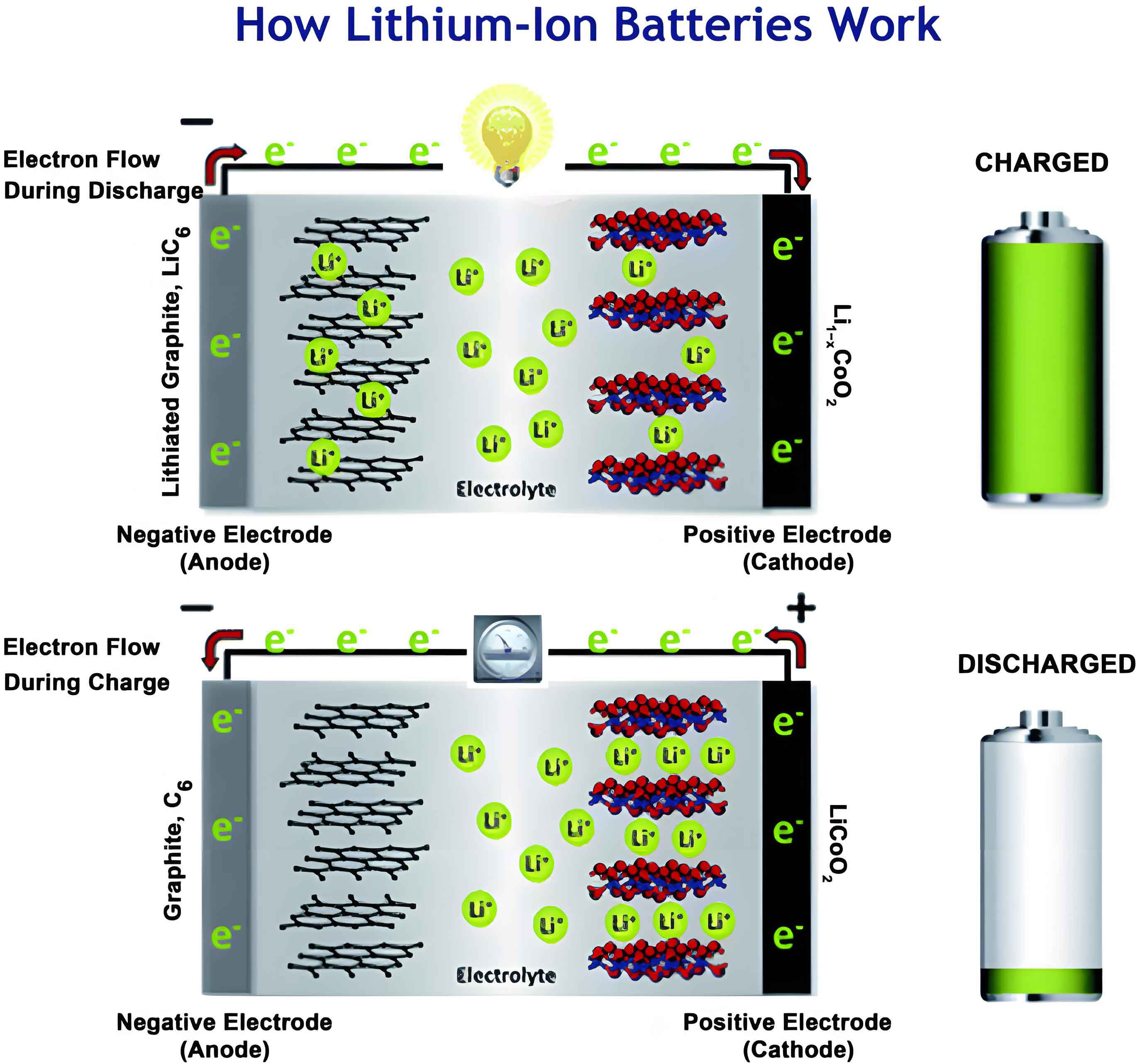
The global shift towards renewable energy and electrified transportation has intensified the need for efficient energy storage systems, with li ion battery standing out as a dominant technology due to their high energy density, long cycle life, and versatility. However, the anode material remains a bottleneck, prompting exploration beyond conventional graphite. Metal oxides, especially those based on tin and zinc, offer promising alternatives because of their multiple oxidation states and high capacity. ZnSnO3, a ternary oxide, combines the benefits of both ZnO and SnO2, but its practical application is hindered by low conductivity and large volume changes during lithium insertion/extraction. Carbon compositing, through methods like coating or embedding, addresses these challenges by improving electron transport and accommodating strain. In this context, I developed a ZnSnO3/C composite via a facile hydrothermal route using glucose as a carbon source, aiming to create a high-performance anode for li ion battery. The following sections detail the experimental approach, material properties, and electrochemical outcomes, emphasizing the synergistic effects of carbon integration.
Experimental Methodology
The synthesis of ZnSnO3/C composites involved a one-step in-situ hydrothermal process. Precursors including zinc chloride (ZnCl2), tin(IV) chloride pentahydrate (SnCl4·5H2O), and glucose (C6H12O6) were dissolved in deionized water under stirring, followed by the addition of hydrazine hydrate (N2H4·H2O) to facilitate reaction. The mixture was transferred to a Teflon-lined autoclave and heated at 180°C for 24 hours. After cooling, the product was collected by centrifugation, washed with water and ethanol, and dried at 90°C. For comparison, pure ZnSnO3 was prepared similarly without glucose. The materials were characterized using X-ray diffraction (XRD), scanning electron microscopy (SEM), transmission electron microscopy (TEM), Raman spectroscopy, X-ray photoelectron spectroscopy (XPS), and thermogravimetric analysis (TGA). Electrochemical tests were conducted by assembling CR2025 coin cells with lithium metal as the counter/reference electrode, a Celgard separator, and an electrolyte of 1 M LiPF6 in EC/DEC (1:1 v/v). The working electrode was fabricated by mixing active material, acetylene black, and sodium alginate binder in a ratio of 8:1:1, coated on copper foil. Cyclic voltammetry (CV), galvanostatic charge-discharge, and electrochemical impedance spectroscopy (EIS) were performed to evaluate performance in li ion battery configurations.
Structural and Morphological Characterization
The crystal structure of the as-synthesized materials was examined by XRD. As shown in Figure 1a (referenced from the original data, but not explicitly cited here), both pure ZnSnO3 and ZnSnO3/C composites exhibited diffraction peaks corresponding to the orthorhombic phase of ZnSnO3 (JCPDS No. 28-1486), confirming successful formation. No distinct carbon peaks were observed in the composite, indicating amorphous carbon from glucose decomposition. Raman spectroscopy further validated the composite structure, with characteristic D and G bands at approximately 1360 cm−1 and 1605 cm−1, respectively, signifying carbon presence, while ZnSnO3 peaks were obscured due to carbon coating. SEM and TEM images revealed that pure ZnSnO3 consisted of irregular nanoparticles (10–20 nm), whereas the ZnSnO3/C composite featured smaller, more uniform spherical nanoparticles surrounded by a thin carbon layer, as depicted in Figure 2. The carbon coating was evident in high-resolution TEM, with lattice fringes of 0.29 nm corresponding to carbon and 0.34 nm to ZnSnO3. BET surface area measurements indicated that the composite had a higher specific surface area (154.4 m2 g−1) than pure ZnSnO3 (85.9 m2 g−1), which facilitates electrolyte infiltration and lithium-ion diffusion in li ion battery anodes.
XPS analysis confirmed the chemical states of elements in the ZnSnO3/C composite. The survey scan showed peaks for C, O, Zn, and Sn without impurities. High-resolution spectra of Zn 2p displayed doublets at 1022.5 eV (Zn 2p3/2) and 1045.6 eV (Zn 2p1/2), consistent with Zn2+ in ZnSnO3. Sn 3d peaks at 487.3 eV (Sn 3d5/2) and 495.7 eV (Sn 3d3/2) indicated Sn4+ states. The C 1s spectrum revealed carbon bonding from glucose carbonization, affirming carbon integration. TGA quantified the carbon content in the composite, showing a mass loss of about 31.4% between 300–600°C due to carbon oxidation, corresponding to approximately 31.9 wt% carbon. This carbon fraction plays a crucial role in enhancing the electrochemical properties of the li ion battery anode.
Electrochemical Performance Evaluation
The electrochemical behavior of ZnSnO3/C composites as li ion battery anodes was assessed through CV, galvanostatic cycling, and EIS. CV curves at a scan rate of 0.1 mV s−1 in the voltage window of 0.02–3.0 V vs. Li/Li+ revealed redox reactions associated with lithium storage. For pure ZnSnO3, the first discharge cycle showed a peak at 0.65 V attributed to solid-electrolyte interphase (SEI) formation, and a peak at 1.15 V corresponding to the reduction of ZnSnO3 to Zn and Sn, followed by alloying reactions at lower voltages. In subsequent cycles, the CV curves overlapped, indicating reversibility. The ZnSnO3/C composite exhibited similar peaks but with improved intensity and stability, suggesting enhanced kinetics due to carbon coating. The lithium storage mechanism in ZnSnO3 can be described by the following reactions, which are fundamental to its function in a li ion battery:
$$ \text{ZnSnO}_3 + 6\text{Li}^+ + 6e^- \rightarrow \text{Sn} + \text{Zn} + 3\text{Li}_2\text{O} $$
$$ \text{Zn} + x\text{Li}^+ + xe^- \leftrightarrow \text{Li}_x\text{Zn} \quad (x \leq 1) $$
$$ \text{Sn} + y\text{Li}^+ + ye^- \leftrightarrow \text{Li}_y\text{Sn} \quad (y \leq 4.4) $$
Galvanostatic charge-discharge tests at a current density of 200 mA g−1 demonstrated superior performance for the ZnSnO3/C composite. The initial discharge and charge capacities were 2579.3 mAh g−1 and 2063.3 mAh g−1, respectively, yielding a Coulombic efficiency of 80.0%. After 200 cycles, the composite retained a discharge capacity of 1274.9 mAh g−1, significantly higher than pure ZnSnO3 (491.0 mAh g−1). The cycling performance is summarized in Table 1, comparing various ZnSnO3-based anodes reported in literature. This highlights the efficacy of carbon compositing for li ion battery applications.
| Material | Current Density (mA g−1) | Cycle Number | Capacity (mAh g−1) | Voltage Window (V) |
|---|---|---|---|---|
| Pure ZnSnO3 (this work) | 200 | 200 | 491.0 | 0.02–3.0 |
| ZnSnO3/C Composite (this work) | 200 | 200 | 1274.9 | 0.02–3.0 |
| ZnSnO3/C Composite (this work) | 5000 | 500 | 663.2 | 0.02–3.0 |
| ZnSnO3@N-doped Carbon [Ref] | 100 | 300 | 967 | 0–2.5 |
| ZnSnO3-C Hollow Microcubes [Ref] | 100 | 50 | 703 | 0.01–3.0 |
| ZnSnO3/Reduced Graphene Oxide [Ref] | 100 | 100 | 745.4 | 0.01–3.0 |
Rate capability tests were conducted at current densities ranging from 200 to 2000 mA g−1. The ZnSnO3/C composite delivered capacities of 1274.9, 1100.5, 950.2, and 800.8 mAh g−1 at 200, 500, 1000, and 2000 mA g−1, respectively, outperforming pure ZnSnO3 at all rates. Even at a high current density of 5000 mA g−1, the composite maintained a discharge capacity of 663.2 mAh g−1 after 500 cycles, demonstrating exceptional long-term stability and rate performance for li ion battery anodes. EIS measurements after different cycles revealed lower charge-transfer resistance (Rct) for the composite (126.1 Ω after 50 cycles) compared to pure ZnSnO3 (495.2 Ω), indicating improved electrical conductivity and faster lithium-ion diffusion kinetics. The equivalent circuit model used for EIS fitting included solution resistance (R0), Rct, constant phase element (CPE), and Warburg impedance (Ws), as shown in the inset of Figure 6d. The reduced resistance values underscore the benefits of carbon coating in enhancing the electrochemical interface in li ion battery systems.
Mechanistic Insights and Discussion
The enhanced electrochemical performance of ZnSnO3/C composites can be attributed to multiple synergistic factors. First, the carbon coating significantly improves electrical conductivity, facilitating electron transport throughout the electrode matrix during charge and discharge processes in a li ion battery. This is quantified by the conductivity enhancement, which can be modeled using the formula for composite conductivity:
$$ \sigma_{\text{composite}} = \phi_{\text{carbon}} \cdot \sigma_{\text{carbon}} + \phi_{\text{ZnSnO}_3} \cdot \sigma_{\text{ZnSnO}_3} $$
where $\sigma$ represents conductivity and $\phi$ denotes volume fraction. Given the high conductivity of carbon (typically >100 S cm−1), even a modest carbon content (31.9 wt%) substantially boosts overall conductivity. Second, the nanostructured morphology of ZnSnO3 nanoparticles reduces diffusion path lengths for lithium ions, as described by the diffusion equation:
$$ D = \frac{L^2}{2t} $$
where $D$ is the diffusion coefficient, $L$ is the particle size, and $t$ is the diffusion time. Smaller particles (as observed in the composite) lead to higher $D$, enhancing rate capability. Third, the carbon layer acts as a mechanical buffer, accommodating volume changes (up to 300% for Sn-based materials) during lithiation/delithiation, thereby mitigating pulverization and maintaining structural integrity. This buffering effect can be approximated by the stress-strain relationship:
$$ \sigma = E \cdot \epsilon $$
where $\sigma$ is stress, $E$ is Young’s modulus, and $\epsilon$ is strain. The flexible carbon coating reduces effective stress on ZnSnO3, prolonging cycle life. Fourth, the carbon coating prevents direct contact between ZnSnO3 and the electrolyte, minimizing side reactions and ensuring stable SEI formation. Finally, the high surface area of the composite promotes better electrolyte wetting and more active sites for lithium storage, contributing to high capacity. These factors collectively explain why the ZnSnO3/C composite excels as an anode material for li ion battery applications.
Comparative Analysis and Future Perspectives
To contextualize the findings, Table 2 summarizes key parameters of the ZnSnO3/C composite against other advanced anode materials for li ion battery. The composite’s performance metrics, such as capacity retention and rate capability, are competitive with more complex synthesis routes, highlighting the efficiency of the one-step hydrothermal method. Future work could explore variations in carbon sources (e.g., polymers, biomass) or doping strategies to further optimize conductivity and stability. Additionally, scaling up production and integrating the composite into full-cell configurations with commercial cathodes (e.g., LiCoO2 or LiFePO4) would be essential for practical li ion battery deployment. Theoretical modeling, such as density functional theory (DFT) calculations, could provide deeper insights into lithium adsorption energies and diffusion barriers in the composite structure.
| Anode Material | Theoretical Capacity (mAh g−1) | Cycle Life (Cycles) | Rate Performance | Synthesis Complexity |
|---|---|---|---|---|
| Graphite | 372 | >1000 | Moderate | Low |
| Si Nanoparticles | 4200 | ~500 | Poor | High |
| SnO2 | 782 | ~200 | Moderate | Medium |
| ZnSnO3 | 1317 | ~200 | Moderate | Medium |
| ZnSnO3/C Composite | 1317 | >500 | Excellent | Low |
The development of such composites aligns with the broader goal of creating sustainable and high-performance energy storage systems. As demand for li ion battery grows in sectors like grid storage and electric mobility, materials like ZnSnO3/C offer a balance of capacity, cost, and environmental impact. Further research could focus on in-situ characterization techniques to observe real-time structural changes during cycling, or on hybrid composites combining ZnSnO3/C with other conductive agents like graphene or carbon nanotubes. Ultimately, the insights gained from this study contribute to the ongoing optimization of anode materials for next-generation li ion battery.
Conclusion
In summary, I have successfully synthesized carbon-coated ZnSnO3 nanoparticles via a one-step in-situ hydrothermal method and evaluated their performance as anodes for li ion battery. The ZnSnO3/C composite exhibits remarkable electrochemical properties, including a high reversible capacity of 1274.9 mAh g−1 at 200 mA g−1 after 200 cycles, excellent rate capability with 663.2 mAh g−1 at 5000 mA g−1 after 500 cycles, and improved cycling stability compared to pure ZnSnO3. These enhancements are attributed to the synergistic effects of carbon coating, which boosts conductivity, buffers volume changes, prevents agglomeration, and facilitates lithium-ion diffusion. The simple synthesis approach, combined with the composite’s superior performance, positions ZnSnO3/C as a promising anode material for advanced li ion battery. This work underscores the importance of composite design in overcoming the limitations of metal oxide anodes and paves the way for further innovations in energy storage technology. As the field progresses, continued exploration of such materials will be crucial for meeting the ever-increasing energy demands of modern society through efficient and reliable li ion battery systems.