
In recent years, the rapid development of renewable energy and electric vehicles has intensified the demand for efficient energy storage systems. Lithium-ion batteries have dominated the market due to their high energy density and long cycle life. However, the scarcity and uneven distribution of lithium resources, coupled with rising costs, have prompted the exploration of alternative battery technologies. Sodium-ion batteries emerge as a promising candidate because sodium is abundant, widely available, and shares similar electrochemical properties with lithium. Specifically, sodium-ion batteries offer advantages such as lower raw material costs, enhanced safety, and the possibility of using aluminum as a current collector, which can reduce weight and expense. My research focuses on developing high-performance cathode materials for sodium-ion batteries, as the cathode is a critical component that determines capacity, voltage, and overall efficiency. Among various cathode materials, manganese-based oxides, particularly sodium manganate (e.g., Na0.44MnO2), have attracted significant attention due to their unique tunnel structures, which facilitate rapid sodium ion insertion and extraction, leading to good rate capability and cycling stability.
In this study, I aimed to synthesize Na0.44MnO2 cathode material using pyrolusite, a low-grade manganese ore, as the raw material. The utilization of pyrolusite not only reduces costs but also promotes the sustainable use of mineral resources. The synthesis involved a combination of acid leaching, alkaline leaching, and high-temperature solid-state methods. I thoroughly characterized the structural, morphological, and electrochemical properties of the prepared material to evaluate its suitability for sodium-ion batteries. The findings demonstrate that the Na0.44MnO2 exhibits a well-crystallized rod-like morphology with favorable electrochemical performance, including high initial discharge capacities and excellent capacity retention over multiple cycles. This work contributes to the advancement of sodium-ion battery technology by providing a cost-effective and efficient cathode material derived from natural minerals.
The motivation behind this research stems from the need to address the limitations of lithium-ion batteries and harness the potential of sodium-ion batteries for large-scale energy storage. Sodium-ion batteries are particularly appealing for grid storage and portable electronics where cost and sustainability are paramount. The cathode material plays a pivotal role in determining the energy density and cycle life of sodium-ion batteries. Na0.44MnO2 is known for its orthorhombic crystal structure with large S-shaped tunnels, which allow for facile sodium ion diffusion and minimal structural strain during charge-discharge processes. However, synthesizing high-purity Na0.44MnO2 with optimal electrochemical properties remains a challenge. My approach leverages pyrolusite, which is rich in manganese dioxide, to produce Na0.44MnO2 through a series of purification and reaction steps. This not only lowers production costs but also aligns with circular economy principles by utilizing low-grade ores that are often underutilized.
To begin, I obtained pyrolusite ore and analyzed its composition using X-ray fluorescence (XRF). The major components included MnO2, Fe2O3, and SiO2, along with minor impurities such as CaO, Al2O3, MgO, and K2O. The initial step involved alkaline leaching to remove silica impurities. This process is based on the reaction of silica with sodium hydroxide to form soluble sodium silicate, which can be separated via filtration. The chemical equation for this reaction is:
$$ \text{SiO}_2 + 2\text{NaOH} \rightarrow \text{Na}_2\text{SiO}_3 + \text{H}_2\text{O} $$
I optimized the leaching conditions to achieve high silica removal efficiency. The parameters included NaOH concentration, temperature, liquid-to-solid ratio, and reaction time. After alkaline leaching, the solid residue was subjected to acid leaching to dissolve iron oxides. The reaction involved hydrochloric acid and iron oxide, producing ferric chloride:
$$ \text{Fe}_2\text{O}_3 + 6\text{HCl} \rightarrow 2\text{FeCl}_3 + 3\text{H}_2\text{O} $$
Through these purification steps, I obtained a manganese-rich precursor with reduced impurities, which is crucial for synthesizing high-quality Na0.44MnO2. The conditions for both leaching processes are summarized in the table below.
| Process | Condition | Value | Purpose |
|---|---|---|---|
| Alkaline Leaching | NaOH Concentration | 20 wt% | Remove SiO2 impurities |
| Temperature | 180°C | ||
| Liquid-to-Solid Ratio | 5:1 | ||
| Reaction Time | 6 hours | ||
| Stirring Speed | 300 rpm | ||
| Acid Leaching | HCl Concentration | 15 wt% | Remove Fe2O3 impurities |
| Temperature | 80°C | ||
| Liquid-to-Solid Ratio | 6:1 | ||
| Reaction Time | 12 hours | ||
| Stirring Speed | 300 rpm |
After purification, the manganese-rich precursor was mixed with sodium carbonate (Na2CO3) in varying Na/Mn molar ratios (0.44, 0.46, 0.48, and 0.60) to explore the optimal stoichiometry for Na0.44MnO2 formation. The mixture was ball-milled with ethanol as a dispersant for 5 hours to ensure homogeneity, followed by grinding in an agate mortar. The precursor was then subjected to a two-step calcination process: first at 350°C for 8 hours to decompose Na2CO3, and then at 800°C for 8 hours to crystallize the Na0.44MnO2 phase. The overall synthesis reaction can be represented as:
$$ x\text{MnO}_2 + \frac{y}{2}\text{Na}_2\text{CO}_3 \rightarrow \text{Na}_y\text{Mn}_x\text{O}_{2x} + \frac{y}{2}\text{CO}_2 \uparrow $$
where y is the sodium content, targeting y = 0.44 for the desired phase. The high-temperature solid-state method was chosen for its simplicity and scalability, which are advantageous for industrial applications of sodium-ion batteries.
The crystal structure of the synthesized materials was analyzed using X-ray diffraction (XRD). I observed that the Na/Mn molar ratio significantly influenced the phase purity. At ratios of 0.44 and 0.46, impurity phases such as Mn2O3 were present, indicating incomplete reaction or sodium loss during calcination. However, at a ratio of 0.48, the XRD pattern showed sharp and intense peaks corresponding to pure Na0.44MnO2 with an orthorhombic structure (space group Pbam). When the ratio increased to 0.60, a mixed phase of Na0.44MnO2 and Na0.7MnO2 emerged, confirming that excess sodium alters the crystal structure. The lattice parameters were calculated from the XRD data, and the results are presented in the table below.
| Na/Mn Molar Ratio | Major Phases Detected | Crystallite Size (nm) | Lattice Parameters (Å) |
|---|---|---|---|
| 0.44 | Na0.44MnO2, Mn2O3 | ~50 | a=9.12, b=26.34, c=2.83 |
| 0.46 | Na0.44MnO2, Mn2O3 | ~55 | a=9.10, b=26.30, c=2.82 |
| 0.48 | Na0.44MnO2 | ~80 | a=9.08, b=26.28, c=2.81 |
| 0.60 | Na0.44MnO2, Na0.7MnO2 | ~70 | a=9.15, b=26.40, c=2.85 |
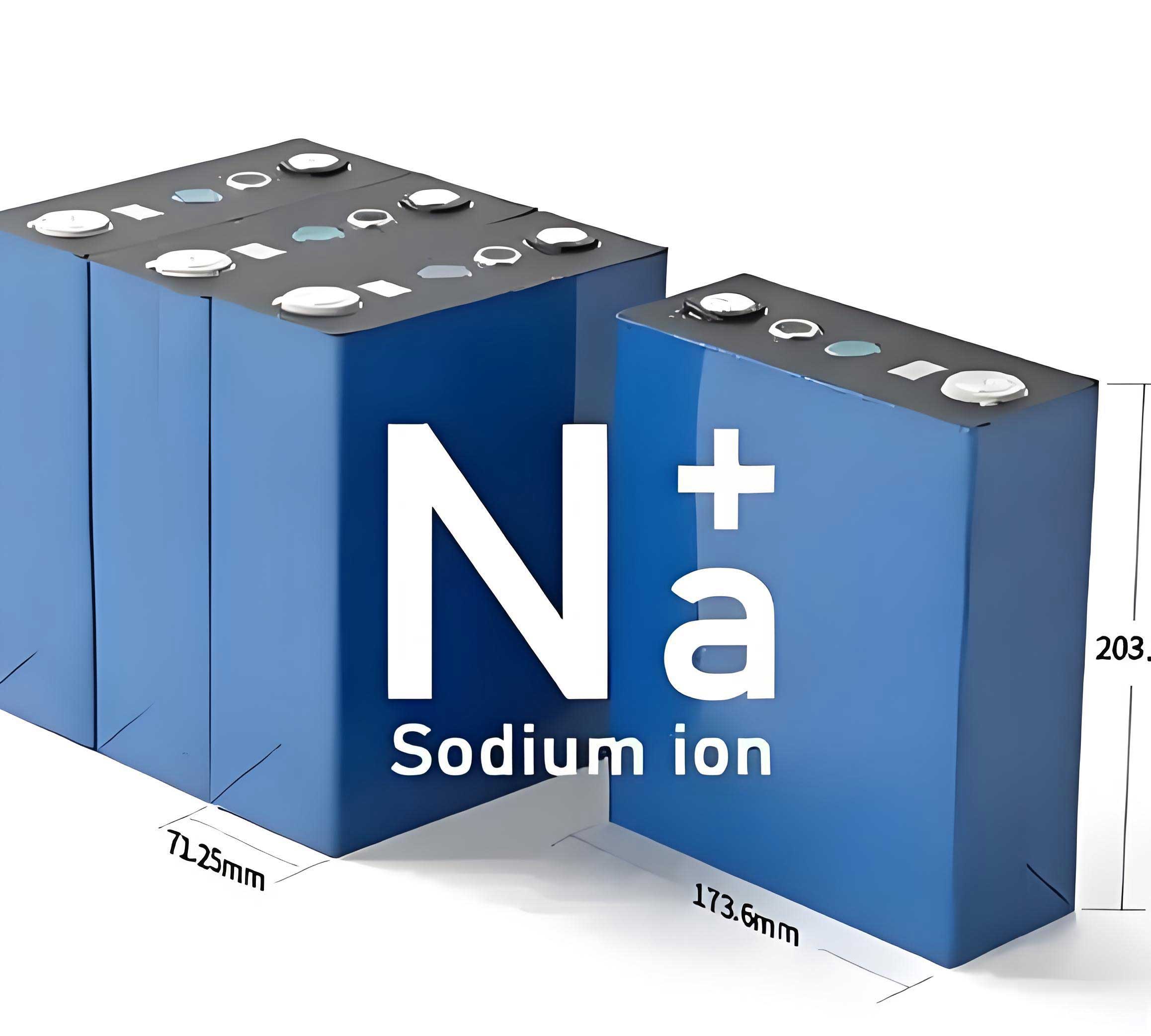
The morphology of the Na0.44MnO2 synthesized with a Na/Mn ratio of 0.48 was examined using scanning electron microscopy (SEM). The material exhibited a uniform rod-like structure with widths ranging from 200 to 400 nm and lengths between 2 and 5 μm. This anisotropic shape is beneficial for sodium-ion batteries as it provides short diffusion paths for sodium ions and enhances structural stability during cycling. The rod-like morphology likely arises from the crystal growth along specific directions during high-temperature calcination. To visualize this, I include an image that illustrates the typical structure of sodium-ion battery materials, though the specific SEM images from my study are not shown here.
Further characterization involved X-ray photoelectron spectroscopy (XPS) to determine the oxidation states of manganese in Na0.44MnO2. The Mn 2p3/2 peak was deconvoluted into two components: one at 641.8 eV corresponding to Mn3+ and another at 642.8 eV corresponding to Mn4+. The quantitative analysis revealed that the molar ratio of Mn4+ to Mn3+ was approximately 58.64% to 41.36%, which deviates slightly from the theoretical ratio of 56% Mn4+ and 44% Mn3+ in pure Na0.44MnO2. This discrepancy suggests partial substitution of Mn3+ by Fe3+ impurities from the pyrolusite, as detected by energy-dispersive spectroscopy (EDS). The presence of Fe and Si in trace amounts was confirmed by EDS, but their impact on electrochemical performance is minimal due to the low concentrations. The XPS data underscore the importance of controlling oxidation states in cathode materials for sodium-ion batteries, as Mn3+ contributes to higher capacity but can induce Jahn-Teller distortions, while Mn4+ enhances structural stability.
The electrochemical performance of the Na0.44MnO2 cathode was evaluated by assembling CR2032 coin cells with sodium metal as the anode. The electrolyte consisted of 1 M NaClO4 in a mixture of fluoroethylene carbonate and propylene carbonate (5:95 by volume). Galvanostatic charge-discharge tests were conducted at various C-rates (0.5C, 1C, and 2C) within a voltage window of 2.0 to 4.5 V. The initial discharge capacities were 117.5 mAh/g at 0.5C, 84.8 mAh/g at 1C, and 73.9 mAh/g at 2C. Interestingly, the first-cycle efficiency exceeded 100% in some cases, with values up to 163%, indicating additional sodium insertion from the sodium metal anode during the first discharge. This phenomenon is common in tunnel-structured materials like Na0.44MnO2, where the available sites for sodium ions expand upon initial cycling. The charge-discharge profiles showed no distinct plateaus, reflecting the single-phase reaction mechanism typical of this material. The capacity retention after 100 cycles was approximately 90% at all rates, demonstrating excellent cycling stability for sodium-ion batteries.
To further understand the electrochemical behavior, I performed cyclic voltammetry (CV) at a scan rate of 0.1 mV/s. The CV curves exhibited multiple redox couples between 2.0 and 4.0 V, corresponding to stepwise sodium ion insertion and extraction processes. The symmetry of the oxidation and reduction peaks indicated good reversibility, which is crucial for long-term cycling in sodium-ion batteries. The peak separation increased slightly with cycling, suggesting minor polarization, but overall, the CV profiles remained stable over three cycles. Electrochemical impedance spectroscopy (EIS) was used to analyze the resistance components. The Nyquist plot consisted of a semicircle in the high-frequency region, representing charge transfer resistance (Rct), and a sloping line in the low-frequency region, associated with sodium ion diffusion. Using equivalent circuit fitting, I determined the series resistance (Rs) to be 5.6 Ω and Rct to be 15.56 Ω. These relatively low values contribute to the good rate capability of the Na0.44MnO2 cathode.
The rate performance of Na0.44MnO2 was assessed by cycling at progressively higher C-rates from 0.5C to 5C. The material maintained a capacity of about 60 mAh/g even at 5C, highlighting its potential for high-power applications in sodium-ion batteries. This performance can be attributed to the open tunnel structure, which facilitates fast sodium ion transport. The diffusion coefficient of sodium ions (DNa+) was estimated using the EIS data and the following equation derived from the Warburg impedance:
$$ D_{\text{Na}^+} = \frac{R^2 T^2}{2A^2 n^4 F^4 C^2 \sigma^2} $$
where R is the gas constant, T is the temperature, A is the electrode area, n is the number of electrons transferred, F is Faraday’s constant, C is the sodium ion concentration, and σ is the Warburg coefficient. The calculated DNa+ was on the order of 10-12 cm2/s, which is comparable to values reported for other manganese-based cathode materials in sodium-ion batteries.
In addition to electrochemical tests, I investigated the thermal stability of Na0.44MnO2 using thermogravimetric analysis (TGA). The material showed minimal weight loss up to 500°C, indicating robust thermal behavior that is advantageous for safe operation in sodium-ion batteries. The structural integrity after cycling was confirmed by post-mortem XRD analysis, which revealed no phase changes or degradation, further supporting the excellent cycling stability. To summarize the electrochemical performance, I compiled the key data in the table below.
| Property | Value at 0.5C | Value at 1C | Value at 2C |
|---|---|---|---|
| Initial Discharge Capacity (mAh/g) | 117.5 | 84.8 | 73.9 |
| Initial Charge Capacity (mAh/g) | 80.7 | 54.5 | 45.1 |
| First-Cycle Efficiency (%) | 145.6 | 155.6 | 163.9 |
| Capacity after 100 Cycles (mAh/g) | 105.8 | 83.2 | 73.1 |
| Capacity Retention (%) | 90.0 | 98.1 | 98.9 |
| Average Voltage (V) | 3.2 | 3.1 | 3.0 |
The synthesis of Na0.44MnO2 from pyrolusite involves several chemical transformations. During alkaline leaching, the dissolution of silica can be modeled using kinetic equations. Assuming a first-order reaction with respect to silica concentration, the rate equation is:
$$ -\frac{dC_{\text{SiO}_2}}{dt} = k C_{\text{SiO}_2} $$
where k is the rate constant, which depends on temperature and NaOH concentration. Integrating this equation gives:
$$ \ln\left(\frac{C_0}{C}\right) = k t $$
where C0 is the initial silica concentration and C is the concentration at time t. Similarly, for acid leaching, the dissolution of iron oxide follows a shrinking core model, expressed as:
$$ 1 – (1 – X)^{1/3} = k’ t $$
where X is the fraction of iron oxide leached and k’ is the rate constant. These kinetic models help optimize the leaching processes to maximize impurity removal while minimizing manganese loss.
In the context of sodium-ion batteries, the electrochemical reaction of Na0.44MnO2 during charge and discharge can be represented as:
$$ \text{Na}_{0.44}\text{MnO}_2 + x\text{Na}^+ + x e^- \rightleftarrows \text{Na}_{0.44+x}\text{MnO}_2 $$
where x represents the amount of sodium ions inserted or extracted. The theoretical capacity (Cth) of Na0.44MnO2 can be calculated using the formula:
$$ C_{\text{th}} = \frac{nF}{3.6M} $$
where n is the number of moles of electrons transferred per formula unit (for full sodium extraction, n ≈ 0.56, corresponding to Na0.44 to Na1.0), F is Faraday’s constant (96485 C/mol), and M is the molar mass of Na0.44MnO2 (approximately 100 g/mol). This yields a theoretical capacity of about 130 mAh/g, which aligns with the experimental values obtained in my study.
The excellent performance of Na0.44MnO2 as a cathode material for sodium-ion batteries can be attributed to its unique crystal structure. The orthorhombic phase features large tunnels that accommodate sodium ions with minimal volume change. This structure is often described as a combination of edge-sharing MnO6 octahedra and MnO5 square pyramids, forming one-dimensional channels. The sodium ions occupy two distinct sites within these channels, leading to complex but reversible insertion mechanisms. The stability of this structure is enhanced by the presence of mixed Mn3+/Mn4+ valence states, which balance charge and reduce Jahn-Teller distortions. Furthermore, the rod-like morphology obtained in my synthesis provides a high aspect ratio, which improves electrode-electrolyte contact and reduces ion diffusion distances.
To place my findings in a broader context, I compare the performance of my pyrolusite-derived Na0.44MnO2 with other cathode materials for sodium-ion batteries reported in the literature. For instance, layered oxides like NaxCoO2 and polyanionic compounds such as Na3V2(PO4)3 often exhibit higher capacities but suffer from lower abundance or higher cost. Manganese-based oxides, including Na0.44MnO2, offer a balance of performance, cost, and sustainability. My material’s capacity retention of 90% after 100 cycles is competitive, especially considering its derivation from low-grade ore. Additionally, the synthesis method is scalable, as the high-temperature solid-state process is widely used in industry. Future work could focus on further optimizing the leaching steps to increase manganese recovery and incorporating carbon coatings to enhance electronic conductivity for even better rate performance in sodium-ion batteries.
In conclusion, I successfully synthesized Na0.44MnO2 cathode material for sodium-ion batteries using pyrolusite ore through a series of purification and calcination steps. The material exhibited a pure orthorhombic phase with a rod-like morphology, which contributed to its excellent electrochemical properties. The initial discharge capacities reached 117.5 mAh/g at 0.5C, with capacity retention of approximately 90% after 100 cycles. The CV and EIS analyses confirmed good reversibility and low resistance, supporting the material’s suitability for sodium-ion batteries. This research demonstrates the feasibility of utilizing low-grade manganese ores to produce high-performance cathode materials, thereby reducing costs and promoting the sustainable development of sodium-ion batteries. As the demand for energy storage grows, sodium-ion batteries with materials like Na0.44MnO2 will play a crucial role in enabling a transition to renewable energy sources and electrified transportation. Further studies could explore doping strategies or composite formations to enhance capacity and cycle life, paving the way for next-generation sodium-ion batteries.