
The relentless pursuit of higher energy density in electrochemical energy storage has positioned the li-ion battery as the cornerstone technology for electric vehicles and portable electronics. Among various cathode candidates, high-nickel layered oxide materials, such as LiNixCoyMnzO2 (NCM, x > 0.6, x+y+z=1) and LiNixCoyAlzO2 (NCA), are considered the most promising due to their high specific capacity. However, their commercialization is significantly hampered by intrinsic structural and interfacial instabilities. These challenges necessitate effective modification strategies, with surface coating being one of the most direct and impactful approaches. This article, from my perspective, systematically reviews the recent progress in surface modification of high-nickel ternary cathodes, categorizing coating materials, elucidating their mechanisms, and discussing future directions.
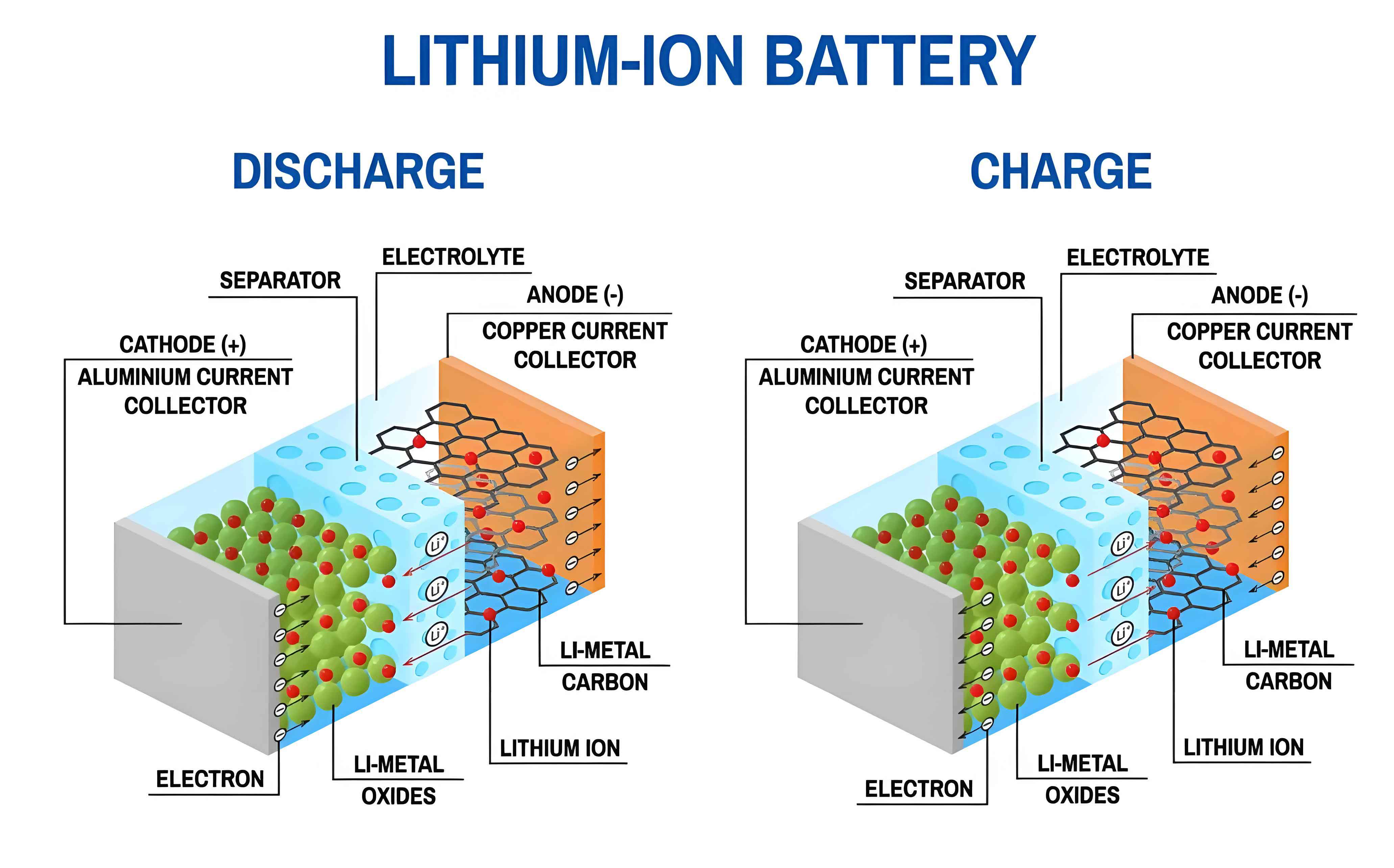
The core challenges of high-nickel cathodes in a li-ion battery are multifaceted. First, the high reactivity of Ni3+/4+ leads to accelerated surface degradation upon exposure to ambient atmosphere (forming residual lithium compounds like Li2CO3 and LiOH) and during electrochemical cycling. Second, parasitic reactions at the cathode-electrolyte interface (CEI), especially under high voltage, cause electrolyte oxidation and transition metal dissolution. Third, the pronounced anisotropic lattice contraction and expansion during (de)lithiation induce microcracks within secondary particles, exposing fresh surfaces to electrolytes and exacerbating degradation. Fourth, the tendency for Li+/Ni2+ cation mixing, driven by the similar ionic radii of Li+ (0.76 Å) and Ni2+ (0.69 Å), blocks Li+ diffusion channels. A stable and functional surface coating layer is designed to act as a physical barrier and chemical modifier to mitigate these issues.
1. Electrochemically Inert Coating Materials
These coatings primarily function as passive barriers. Their main role is to physically separate the active cathode material from the corrosive electrolyte, thereby suppressing side reactions and improving structural integrity, albeit often at the cost of slightly increased impedance.
1.1 Metal Oxides (Al2O3, ZrO2, TiO2, WO3, SiO2)
Metal oxides are widely studied due to their chemical stability and ability to scavenge harmful hydrofluoric acid (HF) generated from LiPF6 salt decomposition. The general scavenging reaction can be represented as:
$$ \text{MO}_x + 2x\text{HF} \rightarrow \text{MF}_{2x} + x\text{H}_2\text{O} $$
This reaction lowers the acidity of the electrolyte, protecting the bulk structure. For instance, Al2O3 coatings, applied via methods like sol-gel or atomic layer deposition (ALD), effectively enhance cycle life by stabilizing the interface. However, their low ionic and electronic conductivity can increase polarization. ZrO2 coatings offer high chemical inertness. Innovative work has shown that reducing white monoclinic ZrO2 to black oxygen-deficient ZrO2-x can lower its band gap energy, improving charge transfer and effectively suppressing gas evolution at high voltages (>4.5 V) in a li-ion battery. TiO2 coatings often react with surface lithium residues to form Li2TiO3, which acts as a Li+ conductor while providing a隔离 layer. Furthermore, Ti4+ can diffuse inward, expanding the lattice spacing and facilitating Li+ migration. WO3, an acidic oxide with relatively high electronic conductivity (~1.76 S cm-1), exhibits better HF resistance and can neutralize surface alkaline residues. SiO2 coatings, applied via methods leveraging electrostatic attraction, form a uniform protective layer that minimizes direct electrolyte contact and reduces interfacial impedance, even at high cut-off voltages.
| Coating Material | Primary Function | Key Advantage | Potential Drawback | Typical Performance Improvement |
|---|---|---|---|---|
| Al2O3 | HF scavenger, physical barrier | Excellent stability, widely studied | Low ionic/electronic conductivity | ~20-30% improved capacity retention after long cycles |
| ZrO2 / ZrO2-x | Chemical barrier, electronic modifier | High chemical stability, reduced band gap for better charge transfer | Processing complexity for controlled reduction | Suppressed gas evolution at high voltage (>4.5V) |
| TiO2 | Reactive barrier forming Li2TiO3 | Enhances Li+ migration, stabilizes structure | May require precise control of reaction depth | Improved rate capability and cycling stability |
| WO3 | Acidic barrier, HF scavenger | Good electronic conductivity, neutralizes Li residues | Limited studies on long-term stability | Enhanced rate and cycle performance |
| SiO2 | Physical barrier | Low cost, environmentally friendly, good conformality | Insulating nature | Reduced impedance growth, stable high-voltage cycling |
1.2 Metal Fluorides (AlF3)
AlF3 is a prominent coating material that combines the benefits of a physical barrier and a structure stabilizer. It effectively mitigates lattice expansion, suppresses Li+/Ni2+ cation mixing, and reduces surface residual alkali. Advanced techniques like ALD enable the deposition of uniform, nanoscale AlF3 layers with precise thickness control, which is crucial for maximizing protection while minimizing Li+ transport hindrance. The improvement in the electrochemical performance of a li-ion battery using AlF3-coated cathodes is attributed to a more stable CEI and preserved bulk crystallinity.
1.3 Metal Phosphates (AlPO4, MnPO4)
Metal phosphates tend to form amorphous phases at the interface, which can inhibit undesirable phase transitions. During high-temperature annealing, AlPO4 often reacts with the cathode surface to form a composite layer of Li3PO4 and LiAlO2. Li3PO4 is a good Li+ conductor, while LiAlO2 provides structural stability. This dual-phase coating significantly enhances cycling stability, particularly at elevated temperatures, by preventing surface rock-salt phase formation and HF attack.
2. Ionically and/or Electronically Conductive Coating Materials
This category focuses on coatings that actively participate in the charge transfer process, aiming to reduce interfacial resistance and improve kinetics, which is vital for high-power li-ion battery applications.
2.1 Fast Ion Conductors (Li2MnO3, LiAlO2, Li2TiO3, Perovskites)
Integrating fast Li+ conductors addresses the intrinsic kinetic limitations of layered oxides. Introducing Li2MnO3 nano-domains creates a 3D Li+ diffusion network with numerous domain boundaries, bypassing the blocked 2D pathways and significantly boosting rate performance. LiAlO2 and Li2TiO3 coatings provide excellent Li+ transport channels while stabilizing the surface structure. More sophisticated coatings involve dual-ion conductors or structurally integrated phases. For example, a La4NiLiO8 perovskite coating not only provides ionic and electronic conductivity but also stabilizes lattice oxygen through engineered oxygen vacancies, suppressing oxygen release and associated structural degradation. The mechanism can be linked to reducing the chemical potential of oxygen at the surface:
$$ \mu_{\text{O}} (\text{surface}) = \mu_{\text{O}}^0 + RT \ln(P_{\text{O}_2}) + \text{terms from defects} $$
By introducing stable vacancies, the driving force for oxygen loss is diminished. Another innovative strategy employs a “mortise-tenon” spinel structure integrated into the layered lattice to act as a strain-retardant framework, reducing mechanical degradation during cycling.
2.2 Electronically Conductive Materials (Graphene, Carbon Nanotubes, Conductive Polymers)
Enhancing electronic conductivity across the electrode is crucial for achieving high rate capability. Graphene, with its high surface area and excellent conductivity, can wrap secondary particles or form a 3D porous network. This network facilitates rapid electron transport, improves electrolyte infiltration, and accommodates volume changes. For instance, a graphene aerogel encapsulating NCM nanoparticles provides an interconnected conductive matrix that dramatically enhances rate performance. Carbon coatings from organic precursors (e.g., sucrose, glucose) are simpler to apply; their effectiveness depends on the resulting porosity and graphitization degree. Conductive polymers like polyaniline-polyethylene glycol (PANI-PEG) composites offer a dual function: PEG segments enhance Li+ transport, while PANI provides electronic conductivity and elastic buffering against particle strain. The improved performance in a li-ion battery with such coatings is often quantified by lower charge-transfer resistance ($R_{ct}$) in electrochemical impedance spectroscopy (EIS).
| Coating Material | Type of Conductivity | Primary Role | Key Benefit | Challenge |
|---|---|---|---|---|
| Graphene / rGO | Electronic | 3D conductive network, volume change buffer | Dramatically improved rate capability, structural integrity | Uniform dispersion and strong adhesion to particles |
| Carbon Nanotubes (CNTs) | Electronic | 1D conductive wire, penetrative network | Low percolation threshold, excellent long-range conductivity | Potential agglomeration, cost |
| Conductive Polymers (e.g., PANI-PEG) | Ionic & Electronic | Multifunctional buffer and conductor | Elasticity buffers strain, dual conduction lowers $R_{ct}$ | Thermal and electrochemical stability over long cycles |
| LiAlO2, Li2TiO3 | Ionic | Fast Li+ transport layer | Reduces interfacial Li+ transfer resistance, stabilizes surface | Precise control of thickness to avoid blocking electron path |
| Perovskite (e.g., La4NiLiO8) | Ionic & Electronic | Dual-conductor, oxygen stabilizer | Suppresses oxygen release, enhances kinetics, “pins” structure | Complex synthesis, interfacial compatibility |
3. Composite and Multifunctional Coatings
The most advanced strategies combine materials to simultaneously address multiple degradation pathways in a li-ion battery. These composite coatings aim to create a synergistic effect superior to any single-component layer.
3.1 Electronic Conductor + Metal Oxide
Combining materials like Y2O3 and graphene merges the protective function of an oxide with the conductive enhancement of carbon. The Y2O3 layer stabilizes the surface against side reactions, while the graphene network ensures efficient electron collection throughout the electrode. This results in significantly improved capacity retention and rate performance compared to coatings with either component alone.
3.2 Ionic Conductor + Electronic Conductor
This approach creates a truly bifunctional interface. A prominent example is constructing a hybrid layer of Li3PO4 (ionic conductor) penetrated by carbon nanotubes (electronic conductor). This design establishes a “four-phase” interphase among the active material, Li3PO4, CNT, and electrolyte, ensuring rapid transport for both Li+ and e–. The corresponding reduction in total interfacial resistance ($R_{\text{interface}}$) can be modeled as a parallel combination of ionic and electronic pathways:
$$ \frac{1}{R_{\text{interface}}} \approx \frac{1}{R_{\text{ionic}}} + \frac{1}{R_{\text{electronic}}} $$
Such coatings lead to extraordinary cycle life, even under demanding conditions like high voltage (4.5 V) and elevated temperature (55°C). Similarly, composites like Li1.3Al0.3Ti1.7(PO4)3 (LATP, an ionic conductor) with CNTs also demonstrate superior rate and cycling performance.
3.3 Ionic Conductor + Metal Oxide
Combinations such as Al2O3 and LiAlO4/NaAlO4 applied via ALD can uniquely modify surface electrochemistry. These coatings not only provide a barrier but also may induce a beneficial reduction of surface Mn4+ to a lower valence state, altering the redox activity and improving overall capacity retention over hundreds of cycles in a li-ion battery.
4. Challenges, Mechanisms, and Future Perspectives
Despite significant progress, critical challenges remain in the surface engineering of high-nickel cathodes for advanced li-ion batteries.
Interfacial Strain and Adhesion: A fundamental issue is the mechanical mismatch between the coating and the host material during repeated lithiation/delithiation. The volumetric change of the cathode ($\Delta V$) can be significant:
$$ \Delta V \approx \frac{V_{\text{charged}} – V_{\text{discharged}}}{V_{\text{discharged}}} $$
If the coating is brittle or poorly adhered, this strain can cause coating fracture or delamination, exposing the underlying material and negating the protective effect. Future designs must focus on coatings with intrinsic elasticity or architectures that can accommodate this strain, such as porous or graded structures.
Multifunctional, Ultra-Thin, and Conformal Coatings: The ideal coating is ultra-thin (to minimize weight/volume penalty), perfectly conformal (to cover all surface facets and cracks), and multifunctional. Techniques like ALD and molecular layer deposition (MLD) are promising but need to become more cost-effective for large-scale li-ion battery production. In situ formation of coatings via controlled electrolyte additives is another attractive, scalable direction.
Deep Understanding of Interface Dynamics: The true nature of the coating-host interface and its evolution during long-term cycling is complex. Advanced in situ/operando characterization techniques (TEM, XAS, XRD) are needed to probe the chemical, structural, and mechanical states of these interfaces in real time. This knowledge will guide the rational design of next-generation coatings.
Integration with Other Strategies: Surface coating is most effective when combined with bulk doping (e.g., with Al, Mg, Zr) and morphological control (e.g., single-crystal growth, radial grain orientation). Doping strengthens the bulk lattice, while optimized morphology reduces internal stress and crack formation. The coating then protects this engineered bulk material, creating a holistic solution for stable, high-energy-density li-ion batteries.
In conclusion, surface modification via coating is an indispensable and highly effective strategy to unlock the full potential of high-nickel ternary cathode materials. From passive inert layers to active conductive networks and sophisticated composite systems, the evolution of coating technology mirrors the increasing demands on li-ion battery performance. The future lies in designing intelligent, multifunctional, and strain-tolerant interfacial layers through advanced synthesis and a fundamental understanding of interface science. Success in this area will be pivotal in developing the next generation of li-ion batteries with higher energy, longer life, and enhanced safety.