
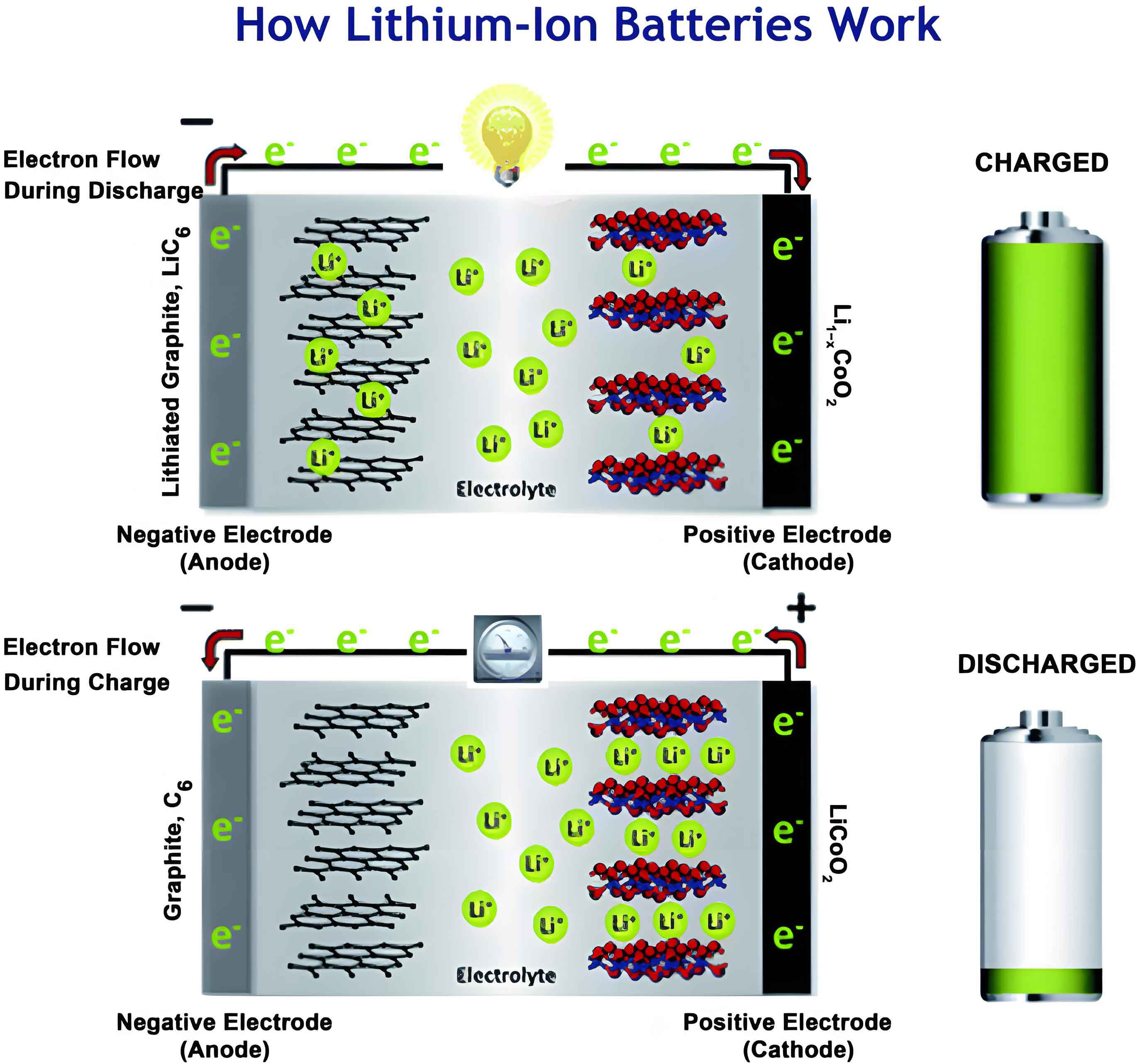
The pursuit of advanced energy storage technologies is inextricably linked to the development of high-performance li ion battery systems. As a dominant power source for portable electronics and electric vehicles, the li ion battery offers a compelling combination of high energy density, long cycle life, and minimal memory effect. However, the relentless advancement of technology demands ever-higher energy and power densities from these storage devices. The anode material, serving as the host for lithium-ion intercalation and de-intercalation, plays a pivotal role in determining the overall capacity and rate capability of the li ion battery.
While graphite remains the commercial standard due to its excellent conductivity and stability, its relatively low theoretical capacity (372 mAh g⁻¹) is becoming a bottleneck. This limitation has spurred intense research into alternative anode materials for the next-generation li ion battery. Among various candidates, transition metal oxides (TMOs) have garnered significant attention owing to their high theoretical capacities based on conversion reactions. For instance, Co₃O₄ exhibits a high theoretical capacity of 890 mAh g⁻¹ through the following reversible reaction:
$$ \text{Co}_3\text{O}_4 + 8\text{Li}^+ + 8\text{e}^- \rightleftharpoons 3\text{Co} + 4\text{Li}_2\text{O} $$
Despite this advantage, the practical application of Co₃O₄ in a li ion battery is severely hampered by two intrinsic drawbacks: (1) poor electronic conductivity, which impedes charge transfer, and (2) large volume expansion (up to ~200%) during lithiation/delithiation, leading to particle pulverization, loss of electrical contact, and rapid capacity fading. These issues ultimately degrade the cycle life and rate performance of the li ion battery.
To overcome these challenges, a synergistic design strategy focusing on nanostructuring and conductive matrix integration is paramount. Nanostructuring, such as creating nanoparticles, can shorten the Li⁺ diffusion path, increase the electrode/electrolyte contact area, and better accommodate mechanical strain. Integrating active materials into a three-dimensional (3D) conductive carbon network (e.g., graphene and carbon nanotubes) can significantly enhance electron transport and buffer the volume changes. Metal-Organic Frameworks (MOFs), particularly Zeolitic Imidazolate Frameworks (ZIFs), have emerged as exceptional self-sacrificial templates for synthesizing such intricate nanostructures. Their highly tunable composition and porous nature allow for the derivation of metal oxides with controlled porosity and morphology.
In this work, we present a comprehensive study on the rational design and synthesis of a hierarchical Co₃O₄-based composite for high-performance li ion battery anodes. Our strategy involves a multi-step process: first, engineering bimetallic ZIF-8@ZIF-67 cores with tunable Zn/Co ratios to control the ultimate oxide particle size; second, employing a dual carbon source (melamine and g-C₃N₄) to construct an in-situ grown, interlinked 3D conductive network of graphene-wrapped cores and carbon nanotube bridges during pyrolysis; and finally, a controlled oxidation step to convert metallic cobalt to active Co₃O₄ while leveraging zinc evaporation to create additional porosity. We systematically investigate the influence of the Zn/Co precursor ratio on the resulting material’s physicochemical properties and its consequent electrochemical performance as an anode in a li ion battery. The optimized architecture demonstrates exceptional cycling stability and outstanding rate capability, showcasing a viable pathway for engineering robust TMO-based anodes.
Material Design and Synthesis Philosophy
The synthesis pathway is designed to concurrently address the conductivity, volume change, and kinetics limitations of Co₃O₄ in a li ion battery. The core idea is to create a “particle-in-carbon-network” structure.
Step 1: Tunable Bimetallic MOF Template. ZIF-67 (based on Co) and ZIF-8 (based on Zn) share the same zeolitic topology and organic linker (2-methylimidazole), enabling the formation of homogeneous bimetallic ZIF-8@ZIF-67 particles. By varying the molar ratio of Zn²⁺/Co²⁺ in the precursor solution, we control the final particle size of the derived oxide. This is governed by the differential nucleation and growth kinetics of the two ZIFs. ZIF-8 has a higher nucleation rate but slower growth, while ZIF-67 has a lower nucleation rate but faster growth. A higher Zn²⁺/Co²⁺ ratio favors the formation of smaller composite particles. Upon subsequent high-temperature treatment, the volatile Zn species evaporate, leaving behind voids and pores within the carbon framework, effectively increasing the specific surface area and creating additional space to buffer volume expansion during li ion battery operation.
Step 2: Construction of the 3D Conductive Carbon Network. Simply pyrolyzing ZIFs yields metal/carbon composites, but the carbon matrix often lacks long-range connectivity and sufficient conductivity. To address this, we introduced melamine and pre-formed g-C₃N₄ as additional solid carbon/nitrogen sources. During pyrolysis, g-C₃N₄ decomposes at around 550°C, releasing nitrogen-rich carbon species that condense and wrap around the ZIF-derived particles, forming a nitrogen-doped graphene-like shell (GN). Simultaneously, the metallic Co nanoparticles reduced from the ZIF framework at higher temperatures (e.g., 800°C) act as catalysts. The carbonaceous gases released from the decomposition of the organic linkers and melamine dissolve into these Co nanoparticles and precipitate out as carbon nanotubes (CNTs), which radially grow and connect adjacent particles. This process creates an integrated 3D network where GN provides a conductive shell and CNTs act as conductive bridges, ensuring rapid electron transport throughout the electrode.
Step 3: Activation to Co₃O₄. The pyrolyzed product contains metallic Co encapsulated in carbon. A subsequent mild oxidation step in air at 300°C selectively converts the metallic Co to electrochemically active spinel Co₃O₄ while preserving the carbon network. The final product is thus a porous Co₃O₄-GN-CNT composite, denoted as (Z)NCOC-311-A, where “A” represents the Zn/Co mass ratio (e.g., 3-7, 5-5, 7-3).
| Zn(NO₃)₂ / Co(NO₃)₂ Mass Ratio | ZIF-8@ZIF-67 Designation | Final Composite Designation (Z)NCOC-311-A | Targeted Feature |
|---|---|---|---|
| 7 : 3 | ZIF-8@ZIF-67-7-3 | (Z)NCOC-311-7-3 | Smaller particle size, higher porosity |
| 5 : 5 | ZIF-8@ZIF-67-5-5 | (Z)NCOC-311-5-5 | Balanced composition |
| 3 : 7 | ZIF-8@ZIF-67-3-7 | (Z)NCOC-311-3-7 | Larger particle size, higher Co₃O₄ content |
Structural and Morphological Evolution
The crystal structure of all final composites was confirmed by X-ray diffraction (XRD). All patterns exclusively showed characteristic peaks of the spinel Co₃O₄ phase (JCPDS No. 42-1467). No traces of Zn or its oxides were detected, verifying the complete evaporation of Zn during pyrolysis. A key observation was the broadening of the diffraction peaks with increasing Zn content in the precursor. Using the Debye-Scherrer formula, the average crystallite size (D) was calculated:
$$ D = \frac{K \lambda}{\beta \cos\theta} $$
where K is the shape factor (0.89), λ is the X-ray wavelength (0.15418 nm), β is the full width at half maximum (FWHM), and θ is the Bragg angle. The calculated sizes were approximately 22 nm, 15 nm, and 10 nm for (Z)NCOC-311-7-3, (Z)NCOC-311-5-5, and (Z)NCOC-311-3-7, respectively. This confirms the successful particle size reduction strategy via the incorporation of Zn²⁺, which modulates the crystallization dynamics of the bimetallic MOF.
Morphological analysis revealed the successful formation of the hierarchical structure. The pristine bimetallic ZIF particles exhibited a rhombic dodecahedron shape, with their size decreasing as the Zn/Co ratio increased. After pyrolysis and oxidation, the SEM images clearly showed that the original polyhedral morphology was largely retained but was now interconnected by a web-like network of carbon nanotubes. TEM analysis provided further nanoscale insights. Individual particles were tightly encapsulated by few-layer graphene shells. High-resolution TEM (HR-TEM) of samples like (Z)NCOC-311-5-5 revealed lattice fringes corresponding to the (311) and (400) planes of Co₃O₄, confirming the crystallization of the oxide phase within the carbon envelope. The co-existence of CNTs and GN was evident, forming the desired 3D conductive pathway.
Nitrogen adsorption-desorption isotherms revealed the porous nature of the composites. All samples exhibited type-IV isotherms with H3-type hysteresis, indicating the presence of mesopores (2-50 nm). The specific surface areas (SSA) calculated by the BET method are summarized below:
| Composite | BET Surface Area (m² g⁻¹) | Average Pore Size (nm) | Primary Pore Type |
|---|---|---|---|
| (Z)NCOC-311-3-7 | ~182.5 | ~5 | Mesoporous |
| (Z)NCOC-311-5-5 | ~239.9 | ~5 | Mesoporous |
| (Z)NCOC-311-7-3 | ~304.8 | ~5 | Mesoporous |
| ZIF-67 derived Co₃O₄/C (Control) | ~103.5 | Broad Distribution | Micro/Mesoporous |
The data shows a clear trend: a higher initial Zn content leads to a larger specific surface area in the final composite. This is a direct consequence of zinc evaporation creating additional voids. Furthermore, all MOF-derived composites possess significantly higher SSA than the control sample derived from pure ZIF-67. This enhanced porosity is beneficial for a li ion battery anode as it facilitates electrolyte infiltration, provides more active sites for Li⁺ storage, and offers extra space to accommodate volume changes.
Electrochemical Performance in Li Ion Battery Half-Cells
The electrochemical properties of the composites were evaluated as anodes in a li ion battery configuration (vs. Li/Li⁺). Cyclic voltammetry (CV) was first conducted to understand the reaction mechanisms. For a typical sample like (Z)NCOC-311-7-3, the first cathodic scan showed three reduction peaks at approximately 1.75 V, 1.26 V, and 0.92 V. These correspond to the sequential reduction of Co³⁺ to Co²⁺, the formation of a solid-electrolyte interphase (SEI) layer, and the further reduction of Co²⁺ to metallic Co, respectively. The anodic scan showed a prominent peak near 2.07 V, corresponding to the oxidation of Co to Co²⁺/Co³⁺. The reaction can be described in two steps:
$$ \text{Co}_3\text{O}_4 + 2\text{Li}^+ + 2\text{e}^- \rightleftharpoons 3\text{CoO} + \text{Li}_2\text{O} \quad \text{(Step 1)} $$
$$ 3\text{CoO} + 6\text{Li}^+ + 6\text{e}^- \rightleftharpoons 3\text{Co} + 3\text{Li}_2\text{O} \quad \text{(Step 2)} $$
In subsequent cycles, the CV curves overlapped well, indicating good reversibility of the conversion reactions. For composites with lower Co₃O₄ content (e.g., (Z)NCOC-311-5-5), the intensity of these redox peaks diminished, and the capacitive contribution from the carbon network became more pronounced.
Cycling Stability and Capacity
Galvanostatic charge-discharge tests were performed to assess the practical capacity and longevity. The long-term cycling performance at different current densities is critically important for evaluating a li ion battery anode.
At 0.5 A g⁻¹: The (Z)NCOC-311-5-5 composite delivered an initial discharge capacity of 1247.3 mAh g⁻¹. After 200 cycles, it retained a high capacity of 1139.7 mAh g⁻¹, corresponding to a capacity retention of 91.4%. In contrast, the sample with larger particles, (Z)NCOC-311-7-3, started with a higher initial capacity (1306.6 mAh g⁻¹) but showed faster decay, retaining 1134.5 mAh g⁻¹ (86.8% retention). The sample with the smallest particles but lowest active material content, (Z)NCOC-311-3-7, showed moderate capacity (~533 mAh g⁻¹) but excellent retention (92.1%). A control sample of Co₃O₄/C derived from pure ZIF-67 suffered from severe capacity fade, retaining only 26.3% of its initial capacity after 200 cycles. This dramatic contrast underscores the effectiveness of the 3D carbon network and nanostructuring in stabilizing the electrode.
At 2 A g⁻¹ (High Rate Cycling): The superior stability of the optimized network was even more evident under high-rate cycling, a demanding condition for a li ion battery. The (Z)NCOC-311-5-5 composite exhibited an initial capacity of 1065.5 mAh g⁻¹. Remarkably, after 800 cycles, it still delivered 1002.1 mAh g⁻¹, with a retention rate of 94.1%. The (Z)NCOC-311-7-3 sample, while starting at a similar capacity (1068.3 mAh g⁻¹), faded to 852.1 mAh g⁻¹ after 800 cycles. The control sample failed rapidly under these conditions.
| Composite | Current Density | Initial Capacity (mAh g⁻¹) | Capacity after N cycles (mAh g⁻¹) | Capacity Retention (%) | Cycles (N) |
|---|---|---|---|---|---|
| (Z)NCOC-311-5-5 | 0.5 A g⁻¹ | 1247.3 | 1139.7 | 91.4 | 200 |
| 2.0 A g⁻¹ | 1065.5 | 1002.1 | 94.1 | 800 | |
| (Z)NCOC-311-7-3 | 0.5 A g⁻¹ | 1306.6 | 1134.5 | 86.8 | 200 |
| 2.0 A g⁻¹ | 1068.3 | 852.1 | 79.8 | 800 | |
| Control (ZIF-67 derived) | 0.5 A g⁻¹ | 820.3 | 215.6 | 26.3 | 200 |
Rate Capability
Rate capability, which reflects the ability of a li ion battery to deliver energy at high charge/discharge rates, is another crucial metric. The composites were tested at progressively increasing current densities from 0.2 A g⁻¹ to 10 A g⁻¹ and then back to 0.2 A g⁻¹. The (Z)NCOC-311-5-5 composite demonstrated exceptional rate performance. It delivered 1326.8 mAh g⁻¹ at 0.2 A g⁻¹. As the current density increased by factors of 2.5, 5, 10, 25, and 50, it retained 94.0%, 88.5%, 80.6%, 71.9%, and 47.2% of its 0.2 A g⁻¹ capacity, respectively. Notably, even at an ultra-high rate of 10 A g⁻¹, it maintained a substantial capacity of 626.2 mAh g⁻¹. When the current density was returned to 0.2 A g⁻¹, the capacity recovered to 1259.4 mAh g⁻¹, representing 94.9% of the initial value. This outstanding recoverability indicates minimal structural degradation or polarization after high-rate testing.
In comparison, the (Z)NCOC-311-7-3 sample, with larger Co₃O₄ particles and a less pervasive carbon network, showed more significant capacity drop at high rates, retaining only 37.9% at 10 A g⁻¹. Its recovery was also lower (74.0%). This highlights the importance of nanoscale active material and a robust, omnipresent conductive network for achieving high power in a li ion battery.
Mechanistic Insights into Performance Enhancement
The superior electrochemical performance of the optimized composite, particularly (Z)NCOC-311-5-5, can be attributed to the synergistic effects of its multi-scale architecture:
1. Nanosizing Effect and Strain Relaxation: The reduction of Co₃O₄ crystallite size to the nanoscale (≈15 nm) is pivotal. According to materials mechanics, the critical particle size (r_c) below which fracture is suppressed can be estimated by balancing the strain energy release rate with the surface energy created by cracking. A simplified relation highlights the benefit of smaller particles:
$$ \Delta G_{\text{mech}} \propto \frac{E (\Delta V)^2}{r} $$
where ΔG_mech is the mechanical energy driving fracture, E is the Young’s modulus, ΔV is the volume strain, and r is the particle radius. For smaller particles (r < r_c), the energy required to create new surface area exceeds the energy released by stress relaxation, making the particle less prone to pulverization. Thus, the nano-sized Co₃O₄ in our composite experiences less mechanical degradation during cycling.
2. 3D Conductive and Confining Network: The in-situ grown GN shell and CNT bridges create a highly conductive matrix that ensures efficient electron transport to every active nanoparticle. This addresses the intrinsic poor conductivity of Co₃O₄. Furthermore, this carbon network acts as a flexible but strong mechanical buffer. It physically confines the Co₃O₄ nanoparticles, prevents their aggregation, and accommodates their volume expansion/contraction, maintaining the structural integrity of the entire electrode. This is why the capacity retention is exceptionally high even after 800 cycles at 2 A g⁻¹.
3. Enhanced Reaction Kinetics and Pseudocapacitive Contribution: The shortened Li⁺ diffusion length in nanoparticles (L) significantly improves reaction kinetics, as the diffusion time (τ) scales with L² (τ ∝ L²/D, where D is the diffusion coefficient). The large specific surface area and mesoporous structure provide abundant electrode/electrolyte contact area, facilitating rapid ionic transport. Moreover, the surface-dominated processes and Li⁺ storage in mesopores contribute a pseudocapacitive-like behavior, which is highly reversible and rate-capable. This contribution becomes more significant in nanostructured materials and can be quantified by analyzing CV data at different scan rates (v), where the current (i) obeys a power-law relationship: i = a v^b. A b-value of 0.5 indicates diffusion-controlled (battery) behavior, while a value of 1.0 indicates surface-controlled (capacitive) behavior. The composites here exhibit b-values between 0.7 and 0.9, indicating a mixed but dominant surface-controlled process, explaining the excellent rate performance.
4. Porosity Engineering via Zinc Evaporation: The deliberate use of Zn in the MOF precursor, which volatilizes during pyrolysis, creates a secondary pore system within the carbon matrix. This “self-templating” porosity increases the specific surface area and provides void space to locally buffer volume changes without compromising the overall conductive network. It also exposes more active sites for lithium storage.
Conclusion and Perspective
In summary, we have demonstrated a rational and effective materials engineering strategy to overcome the fundamental limitations of conversion-type transition metal oxide anodes for li ion battery applications. By employing a tunable bimetallic MOF (ZIF-8@ZIF-67) as a self-sacrificing template and a dual carbon source (melamine/g-C₃N₄), we successfully fabricated a hierarchical composite architecture. This architecture features nano-sized Co₃O₄ particles intimately encapsulated within a three-dimensional, interlinked conductive network of nitrogen-doped graphene and carbon nanotubes, with additional porosity generated from zinc evaporation.
The optimized composite, (Z)NCOC-311-5-5, exhibits a remarkable combination of high capacity, exceptional long-term cycling stability (94.1% retention after 800 cycles at 2 A g⁻¹), and outstanding rate capability (626 mAh g⁻¹ at 10 A g⁻¹, 94.9% capacity recovery). These properties stem from the synergistic interplay of several key design principles: (1) particle nanosizing to mitigate fracture, (2) constructing a pervasive and robust 3D carbon network for rapid electron conduction and mechanical confinement, (3) engineering mesoporosity for efficient ion transport and additional capacitive storage, and (4) precise composition control to balance active material content with conductive/buffering matrix.
This work provides a generalized blueprint for designing high-performance electrode materials not only for li ion battery systems but also for other energy storage technologies such as sodium-ion batteries and supercapacitors, where volume change and poor conductivity are common challenges. Future work may focus on extending this MOF-mediated, nanocarbon-network strategy to other binary or ternary metal oxides/sulfides/phosphides, further optimizing the carbon shell thickness and heteroatom doping, and scaling up the synthesis for practical li ion battery manufacturing.