
In the context of global energy transition and sustainable development, optimizing energy structures and innovating smart grid technologies have become pivotal forces driving social progress. Energy storage systems, as critical components for balancing grid supply and demand and improving energy utilization efficiency, are increasingly prominent. Among various battery technologies, the lifepo4 battery stands out due to its excellent safety performance, long cycle life, and wide applications in smart grids, home energy storage systems, and electric vehicles. However, as application scenarios expand and become more complex, safety concerns in battery energy storage systems remain a focal point. Stress variations induced by battery module structural constraints have gradually emerged as key factors limiting battery performance and safety. During charging and discharging processes, internal stress generation in lifepo4 battery cells can lead to structural deformation and even trigger safety incidents. Therefore,深入研究 the stress characteristics of lifepo4 batteries, exploring the intrinsic relationship between stress changes and battery states, and developing state estimation algorithms that integrate stress and electrical parameters are essential for enhancing the digital twin capabilities and safety management of energy storage systems. This article presents a comprehensive analysis of stress characteristics in lifepo4 batteries and proposes a novel state estimation approach based on machine learning, aiming to contribute to the advancement of battery management technologies.
The lifepo4 battery exhibits wide voltage plateaus in both positive and negative electrodes, making state of charge (SOC) estimation challenging when operating within these plateau regions, especially given limited voltage sensor accuracy in battery management systems. Additionally, stable current profiles in energy storage applications hinder parameter observability in battery models, further complicating SOC estimation. Since SOC cannot be directly measured by sensors, it must be inferred from physical quantities such as current, voltage, temperature, and stress. Existing methods for SOC estimation include ampere-hour integration, open-circuit voltage (OCV) methods, model-based filtering, and machine learning approaches. Ampere-hour integration, a fundamental method, estimates SOC by integrating current over time but suffers from error accumulation due to initial SOC inaccuracies and current measurement drift. OCV methods rely on stable OCV-SOC relationships, but the lifepo4 battery’s flat voltage plateau leads to reduced reliability. Model-based approaches, such as Kalman filters and their variants (e.g., extended Kalman filter, unscented Kalman filter), leverage equivalent circuit or electrochemical models but require precise parameterization. Recently, data-driven methods, including machine learning and deep learning, have gained traction by establishing mapping models between battery data and SOC. This study focuses on integrating stress characteristics with electrical parameters to enhance SOC estimation accuracy for lifepo4 batteries, leveraging the digital twin framework for multi-source data fusion.
Stress characteristics in lifepo4 batteries arise from electrochemical reactions during charging and discharging. Electrodes undergo lithiation and delithiation, causing volume changes. Without external constraints, battery thickness varies; however, in practical modules, mechanical constraints convert these deformations into stress. Research indicates that the positive and negative electrodes of lifepo4 batteries exhibit distinct deformation behaviors. During charging, the lithium iron phosphate positive electrode shows an approximately linear decrease in volume, with thickness reduction up to 7%, while the graphite negative electrode experiences non-monotonic volume changes, with thickness increasing by about 8%. The combined effect results in non-monotonic battery thickness variations. Correspondingly, under mechanical constraints, surface stress during charging also displays non-monotonic trends, generally increasing overall. Discharge processes mirror this, with stress decreasing non-monotonically. The relationships between electrode thickness, battery stress, and SOC provide a stable mapping, enabling stress data to complement other parameters for state estimation. This article explores these relationships through experimental analysis and model development.
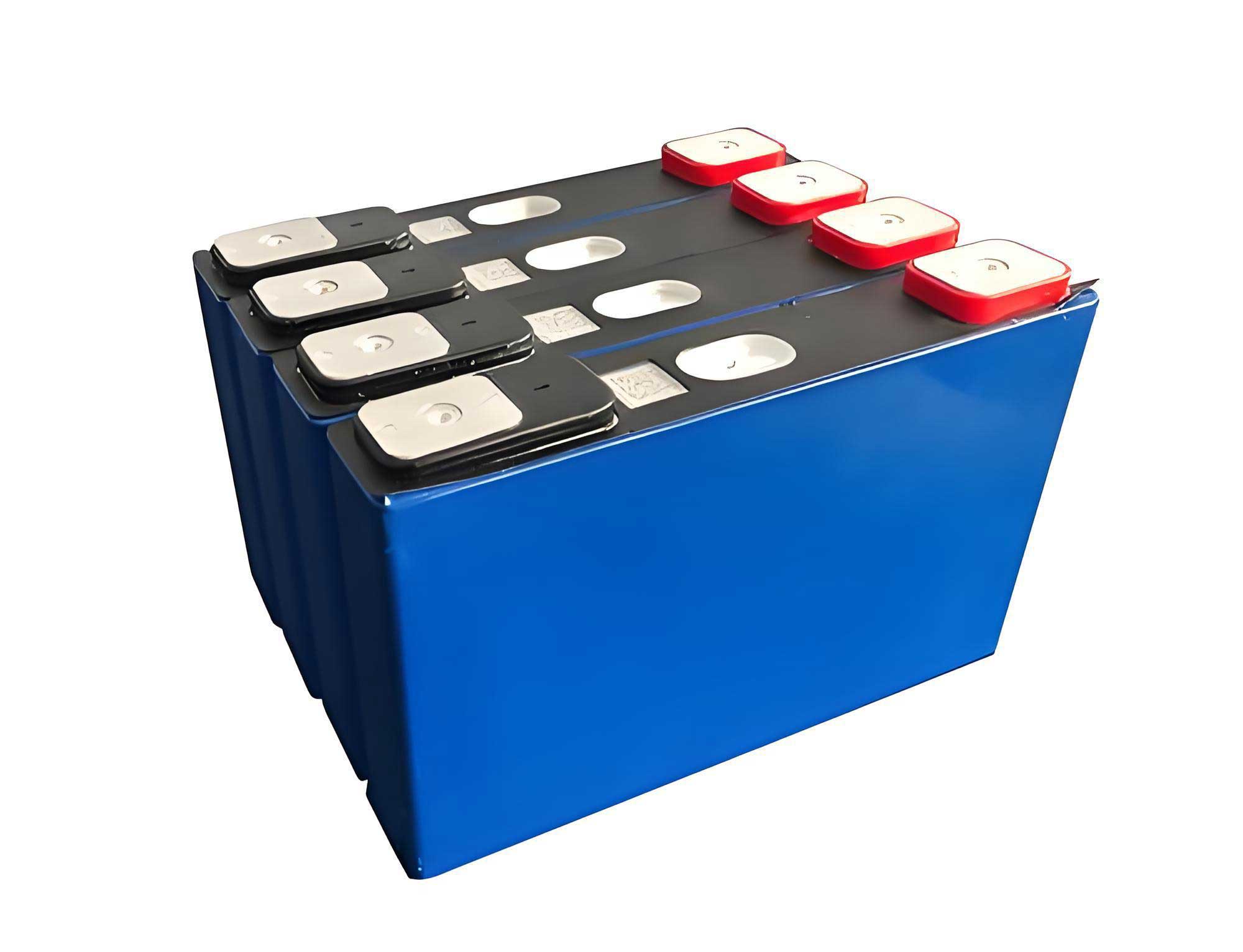
To investigate the stress characteristics of lifepo4 batteries, we conducted experiments under different charge-discharge rates and pre-stress conditions. The test setup involved commercial lifepo4 battery cells, specifically model GSP7514238 from Guangzhou Penghui Energy, with key parameters summarized in Table 1. The battery has a nominal capacity of 25 Ah, nominal voltage of 3.2 V, dimensions of 238.0 mm × 140.0 mm × 7.6 mm, and maximum charge/discharge rates of 1 C and 2 C, respectively. The charging cutoff voltage is 3.65 V, and discharging cutoff voltage is 2.5 V. The experimental apparatus comprised three steel plates, with battery samples placed between two plates. A spoke-type pressure sensor was installed to apply and measure pre-stress forces, and a multi-channel digital acquisition instrument (Rigol M300) recorded stress and temperature data at 10-second intervals. Voltage and current data were collected by a charge-discharge tester. The experimental procedure, outlined in Table 2, included applying a pre-stress force of 500 kg, followed by cyclic charge-discharge tests at 1 C charge and 1.5 C discharge rates for 40 cycles, with rest periods in between.
| Parameter | Value |
|---|---|
| Nominal Capacity | 25 Ah |
| Nominal Voltage | 3.2 V |
| Dimensions | 238.0 mm × 140.0 mm × 7.6 mm |
| Maximum Charge Rate | 1 C |
| Maximum Discharge Rate | 2 C |
| Charge Cutoff Voltage | 3.65 V |
| Discharge Cutoff Voltage | 2.5 V |
| Step | Description |
|---|---|
| 1 | Apply 500 kg pre-stress force to battery samples |
| 2 | Conduct charge-discharge characterization tests with 1 s sampling |
| 3 | Constant current charge at 1 C rate to 3.65 V |
| 4 | Rest for 1 hour |
| 5 | Constant current discharge at 1.5 C rate to 2.5 V |
| 6 | Rest for 1 hour |
| 7 | Repeat steps 3-6 for 40 cycles |
| 8 | End experiment |
Data preprocessing is crucial for robust model training. We aligned timestamps from multiple data sources, removed outliers during startup, shutdown, and rest periods, and segmented data into charge and discharge sequences. Features extracted included state of charge (SOC), current (I), voltage (V), temperature (T), and stress (F). To enhance dynamic characteristics, we computed differential features: charge variation (ΔQ) and stress variation (ΔF). For ΔF, we used a large interval (ΔSOC = 5%) to ensure continuity, assigning values of 1 for monotonic increase and -1 for decrease. Data cleaning involved outlier removal using the 3-sigma rule and smoothing via moving average filters to reduce noise. This processed dataset, comprising six-dimensional features (ΔQ, ΔF, V, I, F, T), served as input for the state estimation model.
The core of our approach is a CNN-BiLSTM model that integrates stress and electrical parameters for SOC estimation in lifepo4 batteries. Convolutional neural networks (CNN) excel at extracting local morphological features from multi-dimensional data, addressing the SOC estimation instability caused by wide voltage plateaus in lifepo4 battery cells. Specifically, in the mid-SOC range (e.g., 40%–90%), where voltage changes are minimal, CNN leverages stress parameters to distinguish between similar voltage values. Bidirectional long short-term memory (BiLSTM) networks capture temporal dependencies by processing sequences in both forward and backward directions, modeling the evolution of battery states. The BiLSTM unit employs gating mechanisms—forget gate, input gate, and output gate—to selectively retain or discard information. The mathematical formulations for these gates are as follows:
Forget gate: $$f_t = \sigma(W_f [h_{t-1}, x_t] + b_f)$$
Input gate: $$i_t = \sigma(W_i [h_{t-1}, x_t] + b_i)$$
Candidate cell state: $$\tilde{C}_t = \tanh(W_c [h_{t-1}, x_t] + b_c)$$
Cell state update: $$C_t = f_t \odot C_{t-1} + i_t \odot \tilde{C}_t$$
Output gate: $$o_t = \sigma(W_o [h_{t-1}, x_t] + b_o)$$
Hidden state: $$h_t = o_t \odot \tanh(C_t)$$
Here, \( \sigma \) denotes the sigmoid activation function, \( \tanh \) is the hyperbolic tangent, \( W \) and \( b \) are weight matrices and bias vectors, \( \odot \) represents element-wise multiplication, \( h_{t-1} \) is the previous hidden state, and \( x_t \) is the current input. In BiLSTM, forward and backward LSTM layers process the sequence independently, and their outputs are concatenated to form the final hidden state, capturing bidirectional temporal dependencies.
The proposed CNN-BiLSTM model architecture, as illustrated in Figure 2 (conceptual representation), consists of an input layer accepting six features: ΔQ, ΔF, V, I, F, and T. These are fed into a 1D-CNN layer with a 3×1 convolution kernel, 64 output channels, ReLU activation, and pooling to extract local features such as voltage plateau inflection points and stress change slopes. The CNN output is passed to a two-layer BiLSTM network, each with 128 memory units, generating a 256-dimensional temporal feature vector after concatenation. A dropout layer (30% rate) is added before the fully connected layer to prevent overfitting. The output layer produces SOC estimates. Model training uses mean squared error (MSE) loss, Adam optimizer with a learning rate of 0.001 and momentum of 0.9, gradient clipping at 5.0, and batch size of 64 over 200 epochs. Data is split into 60% training, 20% validation, and 20% test sets. Normalization via min-max scaling maps features and SOC labels to [0,1].
Experimental results from stress characterization reveal key insights into lifepo4 battery behavior. Figure 4 shows voltage and stress data during a single charge-discharge cycle. The lifepo4 battery exhibits flat voltage plateaus in mid-charge and mid-discharge phases, with significant changes only at extremes. Stress data, starting from ~495 kg, varies by ~35 kg, peaking at ~530 kg. Non-monotonic stress changes occur in mid-cycles, where identical stress values correspond to different SOC levels but with distinct trends, enabling differentiation when combined with electrical features. Over 40 cycles, as shown in Figure 5, voltage consistency remains high, while stress stabilizes after initial cycles, indicating settling between battery and fixture. Long-term aging effects, though not discussed here, involve irreversible deformation and increasing stress. Rate-dependent stress behavior, depicted in Figure 6, shows that at low rates (0.1 C), stress curves have two拐点 near SOC=30% and 60%; as rate increases to 1 C, these拐点 diminish due to polarization, highlighting the impact of current on stress response in lifepo4 battery systems.
The CNN-BiLSTM model’s performance for SOC estimation is evaluated on test data from cycles 30-40. For charging processes, SOC estimates align closely with experimental values, except near SOC=1 where errors increase slightly. The root mean square error (RMSE) is 1.5% for charging, as shown in Figure 7(a). Discharge processes, in Figure 7(b), yield an RMSE of 5.6%, with larger errors at SOC extremes. For partial charge-discharge scenarios (e.g., 60%–90% SOC during charge or 40%–90% during discharge), the model maintains reliability, as in Figure 7(c). To validate the integration of stress parameters, we compare against a baseline method using only voltage, current, and temperature (three-parameter input). As summarized in Table 3, the baseline exhibits higher errors, especially in mid-SOC plateaus where voltage features are less discriminative. The full six-parameter model with CNN-BiLSTM achieves lower RMSE and mean absolute error (MAE), demonstrating the value of stress data for lifepo4 battery state estimation.
| Method | Model | RMSE (%) | MAE (%) |
|---|---|---|---|
| Proposed (6 parameters) | LSTM | 3.6 | 2.4 |
| BiLSTM | 2.5 | 2.1 | |
| CNN-BiLSTM | 1.5 | 1.1 | |
| Baseline (3 parameters) | LSTM | 6.8 | 5.7 |
| BiLSTM | 6.4 | 5.1 | |
| CNN-BiLSTM | 5.4 | 4.5 |
The superiority of the CNN-BiLSTM model stems from its dual capability: CNN layers extract local morphological features from voltage and stress curves, resolving ambiguity in the lifepo4 battery voltage plateau region, while BiLSTM layers capture bidirectional temporal evolution of battery states. Incorporating stress parameters enriches the feature space, compensating for the flat voltage-SOC relationship. This multi-physics fusion aligns with digital twin paradigms, where virtual models integrate diverse sensor data for accurate state estimation. The lifepo4 battery, with its inherent safety and longevity, benefits from such advanced estimation techniques, enhancing system reliability and safety management. Future work could explore long-term aging effects, real-time implementation, and integration with battery management systems for widespread deployment.
In conclusion, this study investigates stress characteristics and state estimation methods for lifepo4 energy storage batteries. Through experimental analysis under varying rates and pre-stress conditions, we identify non-monotonic stress behaviors that correlate with SOC, providing a new dimension for estimation. We develop a CNN-BiLSTM model that integrates electrical and stress parameters, leveraging CNN for feature extraction and BiLSTM for temporal modeling. Results show that the proposed method achieves an RMSE of 1.5% for charging SOC estimation, outperforming conventional approaches that rely solely on electrical parameters. By combining stress characteristics with machine learning, this research offers a novel pathway for accurate SOC estimation in lifepo4 batteries, supporting digital twin applications and improved safety management in energy storage systems. The lifepo4 battery continues to be a cornerstone of modern energy solutions, and advancements in state estimation will further solidify its role in sustainable energy infrastructures.