
The pursuit of breakthrough innovation represents a fundamental drive in technological advancement. Unlike incremental improvements, breakthrough innovations introduce discontinuous changes in methods, products, or functionalities, leading to significant performance leaps and potentially disrupting markets and business models. These innovations are characterized not only by their high impact and economic value but also by their frequent emergence from the convergence of knowledge from distinct, often disparate, technological or scientific fields. Identifying these nascent, high-potential areas early is crucial for strategic R&D planning and resource allocation. This article presents a methodological framework for identifying breakthrough innovation topics by measuring the technological convergence of core patents within a specific domain, using the solar photovoltaic (PV) sector as a case study. The core premise is that within a field’s most valuable and influential patents—the core patents—those exhibiting strong knowledge fusion from diverse technological origins are prime candidates for harboring breakthrough potential.
The methodology integrates three main components: the identification of core patents, the quantitative measurement of their technological convergence, and the semantic analysis of the most convergent patents to extract prevailing technical themes. This multi-step approach aims to move beyond simple co-occurrence metrics and provide a more nuanced, multi-dimensional view of knowledge fusion at the patent level.
Defining and Identifying Core Patents
Breakthrough innovations are expected to be highly influential and valuable. Therefore, the search for breakthrough topics logically begins with the subset of patents that already demonstrate these characteristics: the core patents. A core patent is typically defined as one that protects key technological content within a domain, possesses high strategic value, and exerts significant influence on subsequent technological development. While there is no single definitive metric, core patents are generally identified using a composite of indicators reflecting technical, legal, and market strength.
Common indicators include:
- Citation Count: The number of times a patent is cited by later patents, indicating its technological influence.
- Patent Family Size: The number of jurisdictions in which patent protection is sought, reflecting its perceived commercial value and geographic market importance.
- Number of Claims: The breadth of legal protection sought, often correlating with the invention’s scope and significance.
- Legal Status: Active maintenance and payment of renewal fees signal ongoing commercial utility.
- Litigation History: Involvement in patent disputes can indicate its critical role in a competitive landscape.
For practical analysis, platforms like Innography synthesize these and other factors (e.g., backward citations, forward citations, prosecution length) into a composite “Patent Strength” score ranging from 0 to 100. Patents scoring above a certain threshold (e.g., 80) are often classified as core patents. This study adopts such a composite score approach to define the initial patent pool for analysis, ensuring the focus is on high-value, high-impact assets within the chosen technological domain.
Measuring Technological Convergence: The Rao-Stirling Diversity Index
The hypothesis that breakthrough innovation often stems from the recombination of knowledge from different fields necessitates a robust method to measure the degree of technological convergence within a single patent. Traditional methods, such as simply counting the number of distinct International Patent Classification (IPC) codes assigned to a patent, capture only the variety of technological fields. They fail to account for the balance between these fields (whether knowledge is drawn evenly from them) and the disparity or “distance” between them (how conceptually different the fields are). A fusion between closely related fields (e.g., two sub-classes of semiconductor devices) is conceptually different from a fusion between distant fields (e.g., semiconductor technology and building construction).
To address this, we employ the Rao-Stirling diversity index, a measure originating from ecology and economics that incorporates all three dimensions: variety, balance, and disparity. Its application to scientometrics and patent analysis provides a more accurate gauge of interdisciplinarity or technological convergence. The formula for the Rao-Stirling index (\(\Delta\)) for a patent is given by:
$$ \Delta = \sum_{i, j (i \neq j)}^{n} (p_i p_j) \cdot d_{ij} $$
Where:
- \( n \) is the number of distinct technological categories (e.g., IPC subclasses) associated with the patent.
- \( p_i \) and \( p_j \) are the proportional contributions of categories \(i\) and \(j\) to the patent. In the simplest case, if a patent has \(n\) IPC codes with equal weight, \( p_i = p_j = 1/n \).
- \( d_{ij} \) is the measure of dissimilarity or distance between technological categories \(i\) and \(j\). This distance is derived from the relatedness of the categories, often calculated from large-scale patent citation networks. A value of 0 indicates identical categories, while a value of 1 indicates maximal dissimilarity.
The index increases with a greater number of distinct fields (variety), a more even distribution of emphasis among those fields (balance), and a greater average “distance” between the combined fields (disparity). Therefore, a patent with a high Rao-Stirling score represents a meaningful fusion of diverse technological knowledge. For patent analysis, the 4-digit IPC subclass is a suitable level of granularity for defining technological categories. Pre-calculated distance matrices between IPC subclasses, based on millions of patent citations, provide the necessary \( d_{ij} \) values.
Topic Modeling for Theme Extraction: Latent Dirichlet Allocation (LDA)
Identifying patents with high technological convergence is only the first step. To understand the content and direction of these potentially breakthrough innovations, we need to analyze the technical discourse within them. Latent Dirichlet Allocation (LDA) is an unsupervised probabilistic generative model well-suited for this task. It treats each patent’s textual data (typically from the title and abstract) as a mixture of a small number of latent “topics,” each of which is characterized by a distribution over words.
In the LDA model:
- Each document (patent) is represented as a probability distribution over \(K\) topics.
- Each topic is represented as a probability distribution over all words in the vocabulary.
- The generative process assumes that words in a document are produced by randomly selecting a topic from the document’s topic distribution and then randomly selecting a word from that topic’s word distribution.
The goal is to reverse this process: given a corpus of documents (the high-convergence core patents), infer the latent topic structure—the set of topics and each document’s topic composition. The mathematical formulation involves the joint distribution of observed and hidden variables:
$$ p(\phi_{1:K}, \theta_{1:D}, z_{1:D} | w_{1:D}) = \frac{p(\phi_{1:K}, \theta_{1:D}, z_{1:D}, w_{1:D})}{p(w_{1:D})} $$
Where \(D\) is the set of documents, \(\phi_{1:K}\) are the word distributions for topics \(1\) to \(K\), \(\theta_{1:D}\) are the topic distributions for documents \(1\) to \(D\), \(z_{1:D}\) are the topic assignments for all words in all documents, and \(w_{1:D}\) are the observed words. The parameters are typically estimated using algorithms like Gibbs sampling. By applying LDA to the corpus of high-convergence patents, we can identify and label the predominant technical themes that are driving breakthrough innovation at the intersection of diverse fields.
The following table summarizes and compares the key methodological components for identifying breakthrough innovation topics discussed in related literature and used in this framework.
| Methodological Focus | Key Metrics/Approach | Advantages | Limitations |
|---|---|---|---|
| Knowledge Novelty | Citation of new prior art, scientific linkage. | Directly measures novelty of knowledge base. | May miss innovations recombining existing knowledge in novel ways. |
| Network Structure Analysis | Complex network metrics, dynamics of knowledge networks. | Captures systemic impact and structural change. | Can be computationally complex; interpretation may be abstract. |
| Simple IPC Co-occurrence | Count of distinct IPC codes per patent. | Simple, intuitive measure of variety. | Ignores balance and disparity between fields. |
| Proposed Fusion-Core Method | Core patent screening + Rao-Stirling index + LDA topic modeling. | Combines value, multi-dimensional convergence, and semantic content analysis. | Depends on quality of patent strength score and IPC distance matrix. |
Empirical Analysis: Breakthrough Innovation in Solar Photovoltaics
The solar PV domain serves as an ideal case study due to its rapid evolution, strong interdisciplinary nature (spanning materials science, electronics, optics, chemistry, and engineering), and critical importance in the global transition to sustainable energy. The goal is to identify the specific technical themes within this field that are characterized by high value and strong technological fusion, signaling breakthrough potential.
1. Defining Core Patents in Solar PV
A comprehensive search for U.S. patents in the solar PV domain from 1971 to 2020 was conducted using a validated query combining IPC and UPC codes (e.g., IPC: H01L for semiconductor devices, UPC: 136 for solar energy). From the resulting set of over 23,000 patents, core patents were filtered using a Patent Strength threshold of 80+, yielding 1,954 core patents. This set forms the foundational pool for subsequent convergence analysis.
2. Technological Convergence of Core Patents
Each core patent’s assigned IPC subclasses were extracted. The distribution revealed that core technological knowledge in solar PV is concentrated not just in electrical engineering (e.g., H01L for semiconductor devices) but also significantly intersects with classes from optics (G02B), building construction (E04D, E04B), mechanical engineering (F24J, F25B), and others. This immediately suggests that breakthroughs in solar energy often involve integrating PV technology into broader solar systems for heat, power, and architectural function.
The Rao-Stirling index was calculated for each of the 1,954 core patents using the IPC subclass distance matrix. A threshold was applied to isolate patents with a high degree of technological convergence (e.g., \(\Delta > 0.05\)). This process identified 298 high-convergence core patents, which are hypothesized to be the carriers of breakthrough innovative concepts within the solar PV domain.
3. Identifying Breakthrough Innovation Topics
The titles and abstracts of these 298 high-convergence patents were processed (tokenization, removal of stopwords, stemming) to form a text corpus. The optimal number of topics for the LDA model was determined by evaluating topic coherence scores across different values of \(K\). A clear peak in coherence indicated that 12 was the optimal number of latent topics for this corpus.
Running the LDA model with \(K=12\) produced a set of topics, each defined by a ranked list of keywords. By examining these keywords and reviewing representative patents from each topic, the following 12 breakthrough innovation themes were identified and summarized. The themes clearly cluster into three overarching categories: advanced materials for PV, innovative PV applications, and hybrid thermal-electrical solar systems.
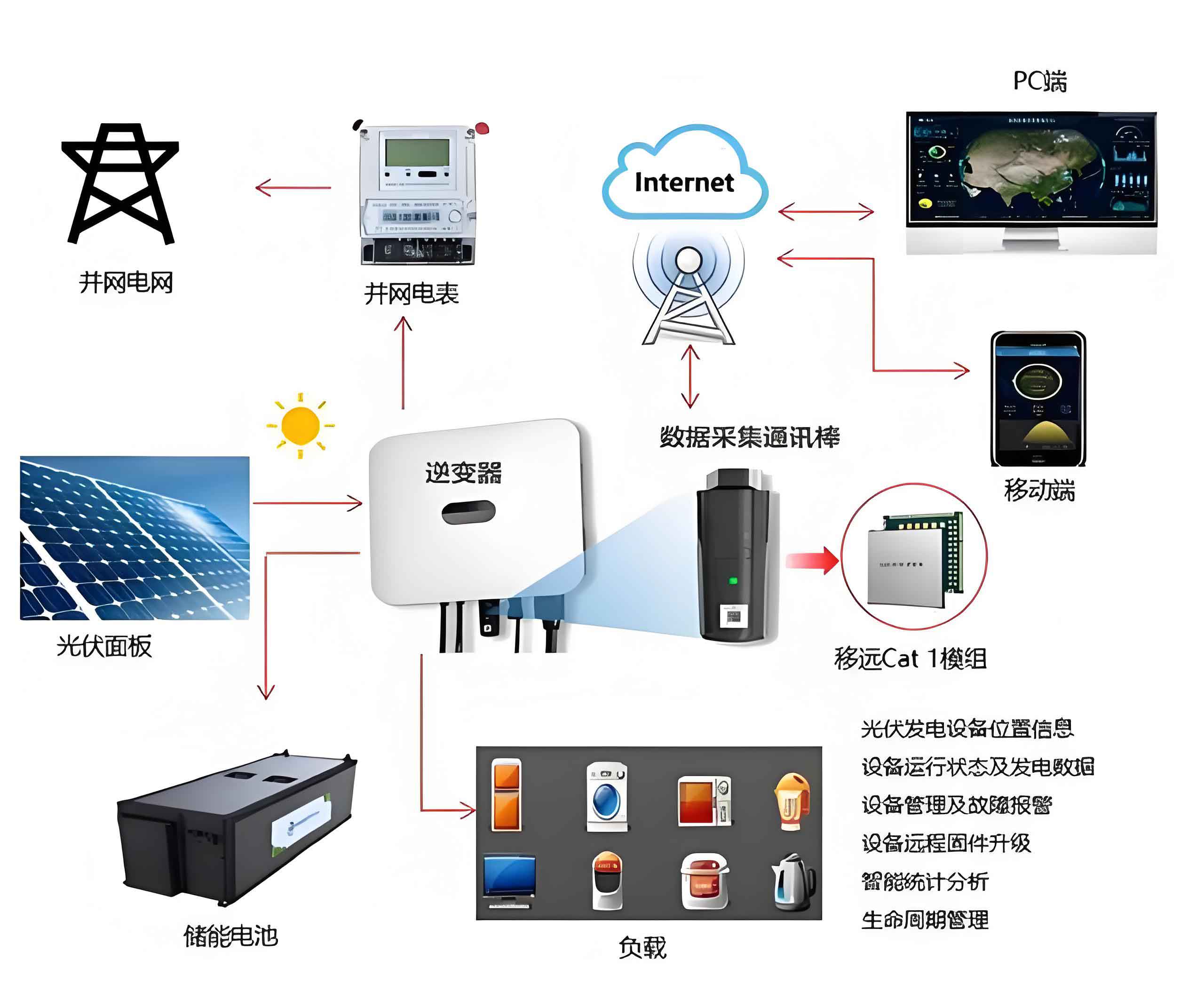
The image below exemplifies the integrative nature of modern solar technology, where photovoltaic modules become part of a larger, multifunctional energy system for buildings, agriculture, or utility-scale power, reflecting the convergence themes identified through the analysis.
| Theme Cluster | Identified Topic | Key Keywords & Focus |
|---|---|---|
| Advanced PV Materials & Cell Design | Carbon Nanotube Solar Cells | nanotube, quantum, barrier, structure, carbon, efficiency |
| Three-Dimensional Thin-Film Substrates | substrate, 3D, thin-film, coating, textured, light-trapping | |
| Amorphous Silicon Thin-Film Deposition | amorphous, silicon, deposition, plasma, layer, roll-to-roll | |
| Nanostructured Solar Cells | nanostructure, template, nanowire, plasmonic, scattering | |
| Flexible Nanomaterial Solar Cells | flexible, adhesive, substrate, rollable, wearable, printing | |
| Transparent Conductive Oxide (TCO) Films | TCO, ITO, AZO, transparent, electrode, etching, sputtering | |
| Organic Compound Solar Cells | organic, polymer, perovskite, donor, acceptor, solution-process | |
| PV Application & Integration | Modular/Tubular Solar Thermal Collectors | array, tube, absorber, manifold, modular, heat transfer fluid |
| Building-Integrated Photovoltaics (BIPV) | roof, façade, module, building, shingle, architectural, mounting | |
| Solar High-Voltage Power Transmission | voltage, converter, MPPT, grid, transmission, DC, micro-inverter | |
| Hybrid Thermal-Electrical Systems | Photovoltaic-Thermal (PV-T) Systems | hybrid, thermal, cogeneration, coolant, heat recovery, efficiency |
| Concentrated Solar Power (CSP) & Thermoelectric Systems | concentrator, tower, heliostat, receiver, thermoelectric, heat storage |
Discussion and Implications
The empirical results validate the proposed framework. The identified themes are not merely incremental improvements but represent areas where fundamental knowledge from chemistry (nanomaterials, organic compounds), physics (optics, photonics), electrical engineering, and mechanical/construction engineering converge to create novel solutions. For instance, the prominence of topics related to building-integrated photovoltaics (BIPV) and hybrid PV-T systems underscores a major trend: the solar cell is no longer viewed in isolation but as an integrated component of a larger building envelope or energy solar system, aiming to optimize overall energy capture, management, and consumption.
Similarly, the strong focus on various nanomaterial and thin-film approaches highlights the ongoing search for alternatives to traditional crystalline silicon, driven by goals of lower cost, higher efficiency, flexibility, and new form factors. The convergence of optics and material science is particularly evident in topics like nanostructured cells and 3D substrates designed for superior light management.
The methodological contributions are twofold. First, by combining core patent screening with the multi-dimensional Rao-Stirling convergence measure, the framework ensures a focus on both the value and the recombinant novelty of patents, aligning with the theoretical attributes of breakthrough innovation. Second, the use of LDA provides interpretability, translating a list of statistically convergent patents into actionable, labeled technological themes that R&D managers or policymakers can understand and act upon.
Several limitations should be acknowledged. The results are dependent on the chosen patent classification system (IPC) and the associated distance matrix. Different classification schemes (e.g., CPC) might yield variations in convergence scores. The patent strength score from commercial platforms, while composite, is a black-box metric. Furthermore, LDA, as a bag-of-words model, may not capture complex syntactic relationships, and topic labeling requires careful interpretation to avoid subjective bias.
Future research could explore the use of alternative or multiple classification systems for convergence measurement. Integrating expert validation to refine the topic labels and significance would enhance the practical utility of the findings. Applying this framework dynamically over time could also help track the evolution of breakthrough themes and predict emerging areas of convergence, such as the integration of solar PV with IoT for smart energy management or with agriculture in expansive solar system installations.
Conclusion
Identifying the seeds of breakthrough innovation is a complex but critical task. This article has outlined and demonstrated a replicable framework that approaches the problem by measuring the technological fusion within a domain’s most valuable patents. The case study of solar photovoltaics reveals that breakthrough activity is concentrated in themes that fundamentally combine diverse knowledge streams—particularly in advanced materials converging at the nanoscale, and in the systemic integration of PV technology into buildings and combined heat/power solar systems. By providing a quantitative and semantic pathway from a large patent corpus to a focused set of high-potential innovation themes, this methodology offers a valuable tool for technology foresight, strategic R&D portfolio management, and gaining a competitive edge in fast-evolving, interdisciplinary fields like sustainable energy.