
The relentless expansion of human activity into polar regions, deep space, and subterranean environments necessitates energy storage solutions capable of reliable operation under extreme thermal conditions. While lithium-ion batteries dominate portable electronics and electric vehicles, their performance severely degrades at low temperatures, primarily due to sluggish lithium-ion kinetics, increased electrolyte viscosity, and lithium plating on graphite anodes during fast charging. Sodium-ion batteries (SIBs) have emerged as a compelling complementary or alternative technology to the ubiquitous lithium-ion battery. Their appeal lies not only in the abundance and lower cost of sodium but also in their inherent potential for superior low-temperature and rate performance. This advantage stems from fundamental physicochemical differences: the weaker solvation of Na+ ions leads to a smaller Stokes radius and lower desolvation energy compared to Li+, while anode materials like hard carbon possess larger interlayer spacing favorable for rapid Na+ (de)intercalation. These characteristics position SIBs as a promising candidate for applications demanding robust all-climate performance. However, realizing practical low-temperature fast-charging SIBs remains a significant challenge, constrained by multiple interrelated factors at the material and interfacial levels. This article systematically reviews the core mechanisms limiting SIB performance under such conditions and elaborates on the material design and optimization strategies—encompassing electrode engineering and advanced electrolyte formulation—that are pivotal for unlocking their full potential.
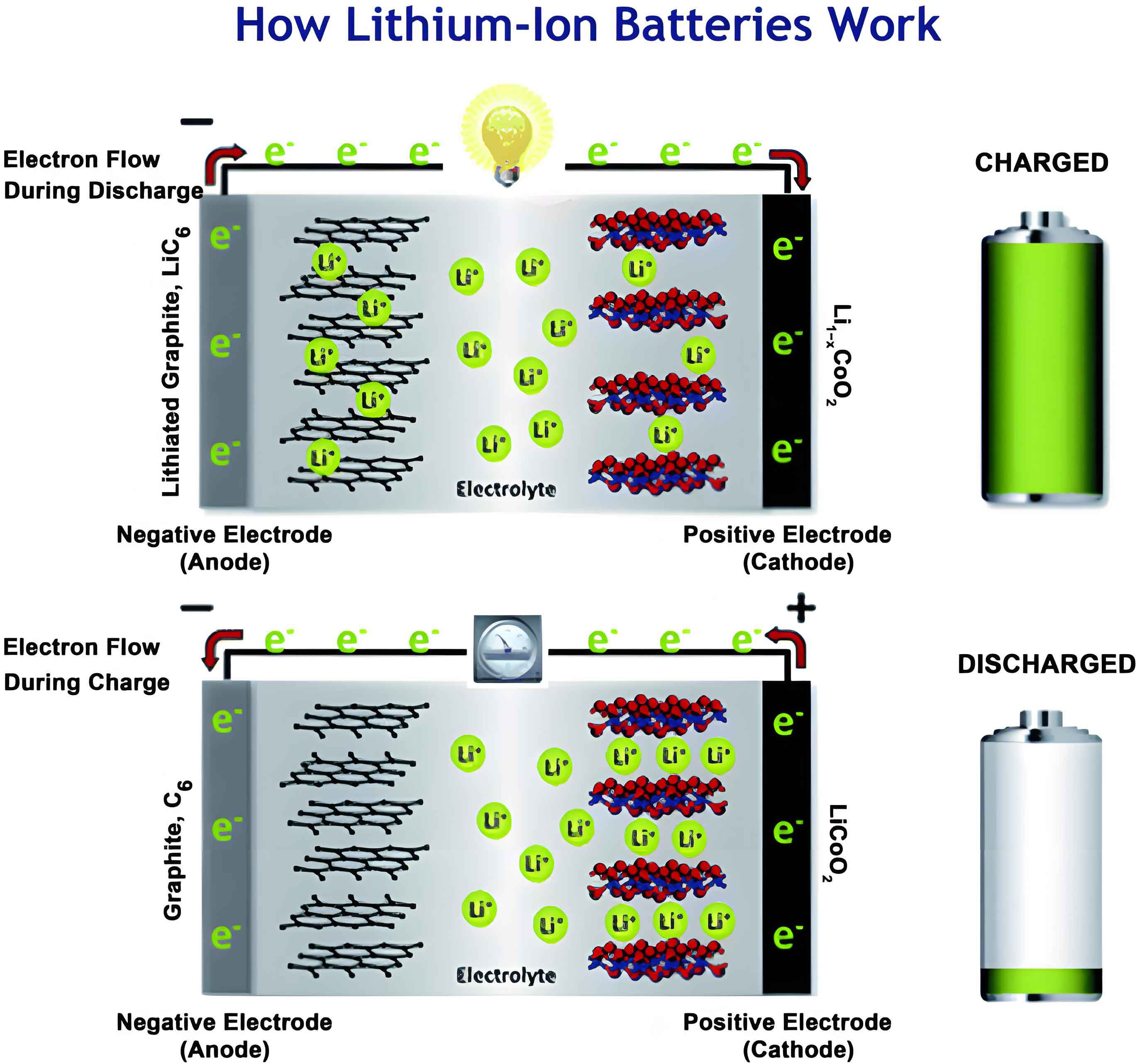
1. Primary Limiting Factors for Fast Charging at Low Temperatures
The pursuit of fast-charging SIBs at low temperatures encounters a confluence of kinetic and thermodynamic barriers that are more severe than those in a standard lithium-ion battery. The performance limitation is not attributable to a single factor but rather a cascade of impediments across the cell. Firstly, the ionic conductivity (σ) of the electrolyte plummets as temperature decreases, governed by an Arrhenius-type relationship:
$$ \sigma = A \exp\left(-\frac{E_a}{kT}\right) $$
where \(E_a\) is the activation energy for ion migration, \(k\) is the Boltzmann constant, and \(T\) is the temperature. Conventional carbonate-based electrolytes, inherited from lithium-ion battery technology, suffer from a dramatic increase in viscosity upon cooling, severely hampering Na+ bulk transport.
Secondly, and often most critically, the charge-transfer kinetics at the electrode-electrolyte interface become exceedingly slow. The process of Na+ desolvation—where the ion sheds its solvent shell before entering the solid electrolyte interphase (SEI)—requires overcoming a significant energy barrier (\(E_{des}\)). This barrier increases substantially at low temperatures:
$$ k_{ct} \propto \exp\left(-\frac{E_{des}}{kT}\right) $$
where \(k_{ct}\) is the charge-transfer rate constant. A high \(E_{des}\) becomes the rate-determining step, leading to severe polarization and capacity loss.
Thirdly, the properties of the SEI and cathode electrolyte interphase (CEI) degrade. At low temperatures, these passivation layers tend to grow thicker, more resistive, and mechanically brittle. An unstable SEI fails to prevent continuous electrolyte reduction and cannot accommodate the rapid Na+ flux during fast charging, leading to increased impedance and safety risks like sodium dendrite formation on the anode.
Finally, the bulk solid-state diffusion of Na+ within electrode active materials also slows down. While the diffusion coefficient \(D\) has a temperature dependence similar to ionic conductivity, the larger ionic radius of Na+ compared to Li+ makes the design of host structures with facile diffusion pathways even more crucial for low-temperature operation.
2. Electrode Material Modification Strategies
The electrode materials dictate the fundamental energy density and ion transport efficiency of SIBs. Optimizing them for low-temperature fast-charging requires enhancing electronic conductivity, accelerating Na+ diffusion kinetics, and ensuring structural stability against the stresses induced by rapid (de)sodiation and thermal contraction.
2.1 Cathode Materials
The major cathode families for SIBs—layered transition metal oxides (NaxTMO2), polyanionic compounds, and Prussian blue analogues (PBAs)—each face unique challenges that are exacerbated at low temperatures, such as sluggish bulk diffusion, multi-phase transitions, and framework instability.
2.1.1 Structural Optimization
Tailoring the crystal structure is paramount to improve intrinsic Na+ mobility and structural resilience. Strategies include cation doping to stabilize lattice frameworks, designing nanoarchitectures to shorten diffusion paths, and controlling crystallographic orientation.
Table 1: Optimization Strategies for Major Cathode Material Systems
| Material System | Structural Strategy | Core Mechanism | Impact on Low-Temperature / Rate Performance |
|---|---|---|---|
| Layered Oxides | High-entropy doping; Gradient doping | Suppresses phase transitions, expands Na-layer spacing, stabilizes TM layers, lowers Na+ migration barrier. | Enhanced specific capacity and ion transport rate at low temperature. |
| Polyanionic Compounds (e.g., Na3V2(PO4)3) | Nanocompositing with conductive carbon; Crystal facet engineering | Builds 3D conductive network, optimizes ion diffusion pathways via interlayer/pore channels, enhances structural stability. | Significantly improved electronic/ionic conductivity and rate capability. |
| Prussian Blue Analogues | Dehydration treatment; Defect control during synthesis | Reduces lattice water to suppress side reactions and channel blocking; repairs structural defects to stabilize the open framework. | Improved cycling stability and initial Coulombic efficiency. |
For instance, high-entropy doping in layered oxides can simultaneously expand the sodium layer and contract the transition metal layer, creating a more stable and open pathway for Na+ diffusion. In polyanionic compounds, confining active nanoparticles within a graphene matrix creates nanochannels that facilitate rapid ion access while the carbon network ensures fast electron transport—a dual approach more critical for SIBs than for typical lithium-ion battery cathodes due to Na+‘s larger size.
2.1.2 Surface Engineering
Surface modifications aim to protect the bulk material from electrolyte corrosion, facilitate charge transfer, and guide uniform Na+ flux. Common techniques include coating with conductive carbon, metal oxides, or fast-ion conductors.
$$ R_{ct} = \frac{RT}{nF} \cdot \frac{1}{j_0} $$
where \(R_{ct}\) is the charge-transfer resistance, \(j_0\) is the exchange current density, \(n\) is the number of electrons, \(F\) is Faraday’s constant. A robust, ion-conductive coating can increase the effective \(j_0\) at the interface, thereby reducing \(R_{ct}\), which is vital for operation in cold environments. For example, an in-situ formed Cr2O3 layer on NaCrO2 effectively blocks direct contact with the electrolyte, suppressing deleterious side reactions without impeding Na+ diffusion, thereby enhancing cycling stability—a lesson learned from surface treatments in advanced lithium-ion battery cathodes.
2.2 Anode Materials
The anode side presents a critical bottleneck due to the larger ionic radius of Na+ and the lack of a highly reversible, high-capacity intercalation host like graphite in lithium-ion batteries. The key is to design materials that combine high electronic conductivity, short and open Na+ diffusion paths, and resilience against large volume changes.
2.2.1 Material Structure Design and Modification
Table 2: Anode Material Systems and Key Optimization Approaches
| Anode System | Examples | Challenges at Low-T/Fast Charge | Optimization Strategy |
|---|---|---|---|
| Carbon-Based | Hard Carbon, Graphene | Limited capacity, slow solid-state diffusion, pore flooding. | Heteroatom doping (N, P, S) to expand interlayer spacing and increase active sites; pore structure engineering. |
| Alloying | Bi, Sn, Sb, P | Large volume expansion (>300%), particle pulverization, unstable SEI. | Nanostructuring; Confinement in carbon matrices (e.g., MOF-derived); Creating porous or yolk-shell structures. |
| Conversion | Metal Oxides/Sulfides/Phosphides | Large voltage hysteresis, poor cycling stability, slow kinetics. | |
| Organic/MOF-based | Conductive polymers, MOF derivatives | Low electronic conductivity, dissolution in electrolyte. | Compositing with conductive carbon; Designing stable porous frameworks for fast surface-driven storage. |
For alloying anodes like Bismuth, constructing a “breathing” quasi-array structure where Bi nanoparticles are hierarchically distributed within a nitrogen-doped carbon nanosheet framework is highly effective. This design provides continuous electron pathways, buffers volume strain, and offers abundant electrolyte-accessible surfaces, enabling high-rate capability. The synthesis of such composites often draws from methods developed for silicon anodes in high-energy lithium-ion batteries.
Another promising route is leveraging pseudocapacitive charge storage, which is a surface/near-surface process with faster kinetics than bulk diffusion. Materials like functionalized nanocellular carbon foams store Na+ via reactions with surface oxygen functional groups, avoiding slow solid-state diffusion and structural changes, thus granting excellent rate performance even at low temperatures.
2.2.2 Conductivity Enhancement Strategies
Enhancing electronic conductivity is non-negotiable for fast charging. This is typically achieved through:
- Carbon Coating/Compositing: Encapsulating active materials in graphene or carbon nanotubes establishes a percolating network for electrons.
- Doping: Heteroatom doping (e.g., B, P, N) in carbonaceous materials alters the electronic structure and often expands interlayer spacing, benefiting both electron and ion transport.
- Intrinsic Conductivity Tuning: For materials like MoS2, restructuring the lattice (e.g., forming Mo2S3 by inserting [Mo-S] chains) can collapse small polarons and dramatically increase intrinsic electronic conductivity by several orders of magnitude, while also lowering the Na+ diffusion barrier.
2.2.3 Anode-Free Configuration for Low-Temperature Fast Charging
The anode-free configuration, where Na metal plates directly onto a bare current collector during charging, represents the ultimate step towards high energy density, akin to anode-free lithium-ion battery concepts. It eliminates the need for a pre-lithiated/sodiated anode material, simplifying manufacturing. For SIBs, it is particularly attractive because sodium does not alloy with aluminum, allowing the use of low-cost Al foil for both current collectors.
However, this configuration intensifies the challenges at low temperatures: the reversibility of Na plating/stripping plummets, and the SEI formed on the bare collector is even more prone to be non-uniform, brittle, and unstable. Strategies to enable low-temperature anode-free SIBs involve synergistic electrolyte and current collector design:
- Current Collector Modification: Creating a sodiophilic surface (e.g., via nitrogen-doped carbon coating or plasma treatment) promotes uniform Na nucleation and growth, preventing dendrites.
- Weakly-Solvating Electrolyte: Employing electrolytes that facilitate easy Na+ desolvation and form inorganic-rich, stable SEI layers (rich in NaF, Na2O, etc.) is critical. This directly lowers the energy barrier for the initial Na deposition step.
Such a holistic approach has enabled Ah-level anode-free SIB soft packs to achieve remarkable energy densities at temperatures as low as -40°C, showcasing a path forward that diverges from traditional intercalation anodes.
3. Electrolyte Design for Low-Temperature Fast Charging
The electrolyte is the bloodstream of the battery, and its design is arguably the most critical factor for enabling low-temperature and fast-charging operation. While early SIB electrolytes mimicked the carbonate-based formulas of lithium-ion batteries, their high viscosity and freezing points are ill-suited for cold environments. Modern strategies focus on fundamentally tailoring the solvation structure and interfacial chemistry.
3.1 Key Research Directions
The primary goals are: 1) Maintaining high ionic conductivity (\(\sigma\)) at low T; 2) Minimizing the Na+ desolvation energy (\(E_{des}\)); 3) Fostering the formation of a thin, ionically conductive, and mechanically stable SEI/CEI. Ether-based solvents (e.g., diglyme, DME) have gained prominence over carbonates due to their lower viscosity, lower melting point, and weaker solvating power, which inherently reduces \(E_{des}\). The research has thus pivoted towards deliberate solvation structure engineering.
3.2 Reducing Desolvation Barrier and Synergistic Interface Optimization
The charging process involves sequential steps: (1) Bulk diffusion of solvated Na+, (2) Desolvation at the SEI interface, (3) Diffusion through the SEI, (4) Solid-state diffusion in the electrode. At low temperatures and high rates, step (2), desolvation, often becomes the rate-limiting step. The activation energy for this process is directly related to the strength of ion-dipole interactions in the solvation sheath.
$$ \text{Solvation Energy} \propto \frac{\mu_{\text{solvent}} \cdot q_{\text{ion}}}{r^2} $$
where \(\mu_{\text{solvent}}\) is the solvent dipole moment, \(q_{\text{ion}}\) is the ion charge, and \(r\) is the interaction distance. Weaker solvating solvents (lower \(\mu_{\text{solvent}}\)) lead to lower desolvation energy.
3.2.1 Co-Solvent Strategy
This involves formulating electrolytes with mixtures of solvents and/or diluents to achieve a balance of properties. A classic recipe for low-temperature SIBs includes:
- A film-forming solvent like Fluoroethylene Carbonate (FEC), which has a lower donor number than EC and promotes inorganic-rich SEI.
- A low-viscosity, low-freezing-point linear solvent like Ethyl Methyl Carbonate (EMC).
- A highly fluorinated, non-solvating diluent like 1,1,2,2-Tetrafluoroethyl 2,2,3,3-tetrafluoropropyl ether (HFE). The diluent further weakens the overall solvent-Na+ affinity without participating in the solvation shell, drastically lowering \(E_{des}\) and viscosity. The resulting weakly-solvating electrolyte can maintain high capacity retention at temperatures as low as -30°C to -50°C.
3.2.2 Weakly-Solvating and Localized High-Concentration Electrolytes (LHCEs)
This advanced concept moves beyond simple mixing. The aim is to design a solvation structure where anions participate significantly in the primary solvation shell of Na+. This is achieved in Localized High-Concentration Electrolytes (LHCEs).
Table 3: Electrolyte Design Strategies for Low-Temperature SIBs
| Strategy | Composition Example | Mechanism | Benefit |
|---|---|---|---|
| Conventional Co-Solvent | NaPF6 in FEC/EMC/HFE | Diluent reduces overall solvating power and viscosity. | Lower \(E_{des}\), wider liquid range. |
| Weakly-Solvating Solvent | NaOTf in Diglyme/1,3-Dioxolane | Dipolar interaction between solvents weakens Na+-O coordination; anion-rich solvation sheath forms. | Promotes facile desolvation and anion-derived inorganic SEI. |
| Localized High-Concentration Electrolyte (LHCE) | High [NaSalt] in Acetonitrile + Fluorinated ether diluent | Diluent is non-coordinating, creating local clusters of high salt concentration with anion-coordinated Na+. | Maintains high-concentration benefits (good SEI, high oxidation stability) with low overall viscosity. |
In an LHCE based on acetonitrile, the high local concentration ensures a solvation structure dominated by anions, which facilitates the formation of a robust, inorganic-rich SEI (e.g., high NaF content). The non-coordinating diluent brings the viscosity down to practical levels. This synergy results in excellent rate performance (e.g., 223 mAh/g at 5C for hard carbon) and long cycle life at room temperature, with inherent benefits for low-temperature operation due to the lowered \(E_{des}\).
3.2.3 Additive Engineering for SEI/CEI Tuning
Small amounts of functional additives can profoundly alter interfacial chemistry. Their role is even more critical in SIBs than in mature lithium-ion battery systems because the native SEI on materials like hard carbon or sodium metal is often less stable.
- SEI Reinforcers: Additives like Al(EtO)3 can decompose to form an SEI with an Al-O-Al rigid skeleton, increasing its elastic modulus and suppressing dendrite growth on Na metal. On the cathode side, it can form an Al-O-P containing CEI that adapts to volume change.
- Anion Choice: The salt anion itself is a key additive. NaBF4, compared to NaPF6, has a stronger coordinating ability with Na+, which helps weaken solvent coordination and leads to SEI/CEI rich in NaF and BxOy species, improving stability in ether-based electrolytes at high voltages.
The ideal additive promotes the formation of a bilayer or gradient SEI: a thin, dense inorganic inner layer (e.g., NaF, Na2O) for fast ion conduction and mechanical strength, and a flexible organic outer layer to accommodate volume changes. The growth of such an SEI can be described by models considering the competition between electrolyte reduction kinetics and ion diffusion:
$$ \text{SEI Growth} \propto \sqrt{D_{\text{eff}} \cdot t} $$
where \(D_{\text{eff}}\) is the effective diffusion coefficient of species through the SEI and \(t\) is time. Additives that promote the early formation of a passivating layer reduce \(D_{\text{eff}}\), leading to a self-limiting, stable SEI.
4. Conclusion and Future Perspectives
The development of low-temperature fast-charging sodium-ion batteries represents a frontier in electrochemical energy storage, aiming to complement and in specific niches surpass the capabilities of the standard lithium-ion battery. This review has elucidated the multifaceted challenges—spanning sluggish bulk and interfacial ion transport, unstable electrode/electrolyte interfaces, and inadequate material kinetics—and the corresponding material-centric optimization strategies. Progress hinges on a holistic, synergistic approach: engineering electrode materials with optimized bulk and surface structures for rapid Na+ and electron transport, coupled with designing advanced electrolytes that feature weakly-solvating structures to minimize desolvation penalties and foster robust interphases.
Looking forward, several key research avenues promise to further break the low-temperature barriers:
- Deepened Understanding of Interfacial Processes: While desolvation is recognized as critical, a precise, quantitative dissection of the rate-limiting steps (desolvation vs. SEI diffusion) under real low-temperature, fast-charging conditions is needed. In-situ and operando techniques like cryo-electron microscopy, X-ray photoelectron spectroscopy, and solid-state NMR, combined with molecular dynamics simulations, will be indispensable to map the evolution of solvation sheaths and the chemical/mechanical properties of interphases as a function of temperature and current density.
- Integrated Electrode Architecture Design: Beyond active material modification, the macroscopic electrode architecture requires attention. Engineering 3D electrode scaffolds with hierarchical porosity and integrated conductive networks (e.g., using carbon nanotubes or graphene foam) can ensure efficient electron percolation and electrolyte infiltration at low temperatures, reducing overall polarization. This is a lesson well-applied in high-power lithium-ion battery designs.
- Artificial Intelligence and High-Throughput Discovery: The vast chemical space for electrolyte solvents, salts, additives, and electrode compositions is too large for traditional trial-and-error. Machine learning and AI-driven models, trained on existing electrochemical data and quantum chemical calculations, can predict promising formulations for low-temperature performance, dramatically accelerating the discovery cycle. This data-knowledge-dual-driven approach is already showing promise in lithium-ion battery electrolyte design and is directly transferable to SIBs.
- Advancing Anode-Free Systems: The anode-free configuration offers a compelling path to maximize energy density. Future work must focus on:
- Developing current collectors with ultra-sodiophilic, patterned surfaces to guide absolutely uniform Na deposition at high rates and low temperatures.
- Designing “electrolyte cocktails” that simultaneously guarantee ultra-high Coulombic efficiency for Na plating/stripping (>99.95%) and form a mechanically resilient, low-impedance SEI on the pristine collector.
- Creating specialized battery management system (BMS) algorithms that can manage the unique charge profile of anode-free cells, preventing sodium depletion and ensuring safety.
In conclusion, the journey towards practical low-temperature fast-charging SIBs is a concerted effort in molecular engineering, interfacial science, and system integration. By drawing insights from, yet moving beyond, the paradigms established for the lithium-ion battery, and by leveraging the unique properties of the sodium ion, this technology is poised to become a reliable and cost-effective energy storage solution for the full spectrum of terrestrial and extraterrestrial climates.