
Accurate estimation of the State of Health (SOH) for li-ion batteries is crucial for ensuring the safety and stability of battery management systems. As a researcher in the field of energy storage, I have observed that existing methods often involve cumbersome feature extraction and complex models, which can hinder practical applications in resource-constrained environments. In this article, I propose a lightweight approach for SOH estimation of li-ion batteries, leveraging multi-source indicator dimensionality reduction and the Walrus Optimization Algorithm (WaOA) optimized Extreme Learning Machine (ELM). This method aims to streamline feature extraction from voltage, current, and temperature curves during charging and discharging phases, reduce redundancy through Principal Component Analysis (PCA), and enhance model accuracy with WaOA. My work demonstrates that this approach achieves high precision, with Mean Absolute Error (MAE) and Root Mean Square Error (RMSE) within 1%, using publicly available datasets. Throughout this discussion, I will emphasize the importance of li-ion battery health monitoring and how my method addresses key challenges.
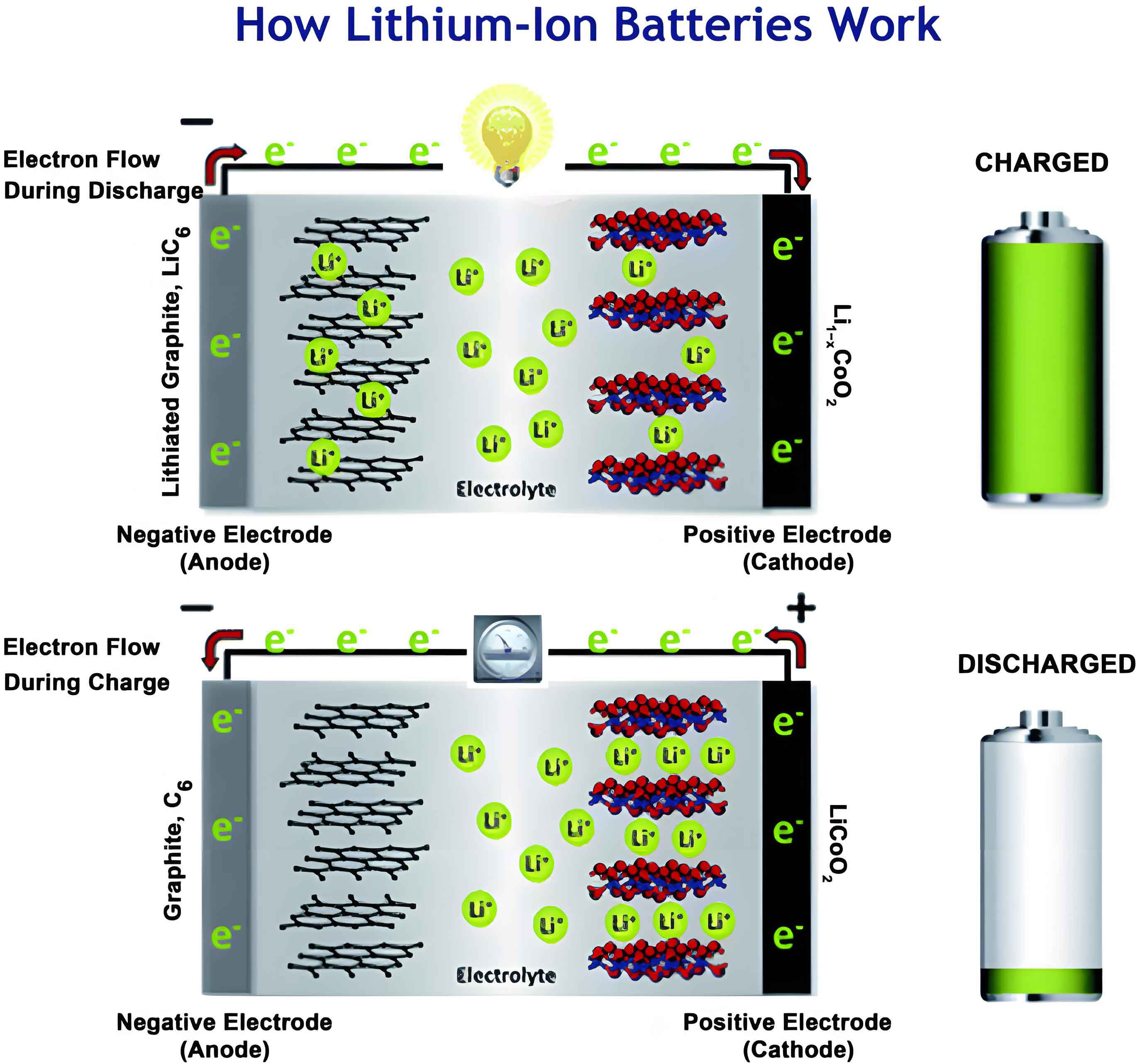
The widespread adoption of li-ion batteries in electronics, transportation, and aerospace stems from their long cycle life, low self-discharge rate, and broad operating temperature range. However, li-ion batteries inevitably degrade over time due to factors like charge-discharge cycles, rates, and depth of discharge, leading to performance decline. Once the SOH of a li-ion battery falls below a threshold, continued use poses safety risks. Thus, reliable SOH estimation is essential for predictive maintenance and optimal operation. Traditional model-based methods, such as equivalent circuit or electrochemical models, often struggle with parameter identification and robustness. In contrast, data-driven approaches, which map observable parameters like voltage and temperature to SOH, have gained popularity for their accuracy and adaptability. Yet, many existing data-driven methods rely on intricate feature extraction processes and complex neural networks, which can be computationally expensive. My goal is to develop a more efficient solution that balances simplicity and performance for li-ion battery SOH estimation.
In my methodology, I begin by extracting potential features directly from the charging and discharging curves of li-ion batteries. During the charging phase, I derive four features: the constant current charging time, constant voltage charging time, maximum temperature, and the time at which maximum temperature occurs. Similarly, from the discharging phase, I extract four features: the constant current discharging time, constant voltage discharging time, maximum temperature, and its corresponding time. This yields eight potential features (PF1 to PF8) from multi-source indicators—voltage, current, and temperature—providing a comprehensive view of li-ion battery behavior. To select the most relevant features for SOH, I employ Spearman’s rank correlation coefficient, defined as:
$$ \rho = \frac{\sum_{i=1}^{n} (x_i – \bar{x})(y_i – \bar{y})}{\sqrt{\sum_{i=1}^{n} (x_i – \bar{x})^2 \sum_{i=1}^{n} (y_i – \bar{y})^2}} $$
where \( x_i \) and \( \bar{x} \) represent the feature values and their mean, \( y_i \) and \( \bar{y} \) denote the SOH values and their mean, and \( n \) is the number of samples. For li-ion batteries in the NASA dataset (e.g., B0005, B0006, B0007), I find that six features (PF1, PF2, PF4, PF5, PF6, PF8) show correlation coefficients close to 1, indicating strong relationships with SOH. These are selected as health features (HF1 to HF6). However, to address multicollinearity among these features, I use the Variance Inflation Factor (VIF) to assess redundancy. The VIF for each feature is calculated as:
$$ \text{VIF}_j = \frac{1}{1 – R_j^2} $$
where \( R_j^2 \) is the coefficient of determination when feature \( j \) is regressed against other features. In my analysis, VIF values exceed 183, indicating severe multicollinearity. To mitigate this, I apply PCA for dimensionality reduction. PCA transforms the original features into orthogonal principal components, with the cumulative contribution rate guiding component selection. For instance, the first principal component often retains over 99% of the variance, effectively reducing the feature set to a single, non-redundant input for the model. This step not only simplifies the data but also enhances the computational efficiency for subsequent SOH estimation of li-ion batteries.
Next, I focus on building the prediction model using ELM, a single-hidden-layer feedforward neural network known for its fast training and good generalization. The ELM output for \( N \) samples is given by:
$$ \mathbf{Y} = \mathbf{H} \boldsymbol{\beta} $$
where \( \mathbf{Y} \) is the target matrix, \( \mathbf{H} \) is the hidden layer output matrix with activation function \( g(\cdot) \), and \( \boldsymbol{\beta} \) is the weight matrix between the hidden and output layers. The hidden layer parameters—input weights \( \mathbf{w}_i \) and biases \( b_i \)—are typically randomly initialized, which can lead to suboptimal performance. To optimize these parameters, I integrate the WaOA, a metaheuristic algorithm inspired by walrus behavior, including exploration, migration, and exploitation phases. The WaOA updates candidate solutions iteratively to minimize the objective function, which in this case is the prediction error for li-ion battery SOH. The algorithm’s ability to balance global and local search helps avoid local optima, ensuring robust parameter tuning for ELM. The combined WaOA-ELM model, which I refer to as PCA-WaOA-ELM, is trained on datasets split into training and testing sets, with SOH defined as:
$$ \text{SOH} = \frac{C_i}{C_0} \times 100\% $$
where \( C_i \) is the capacity at cycle \( i \) and \( C_0 \) is the initial capacity. This formulation is standard for assessing li-ion battery degradation.
For experimental validation, I use the NASA Ames Prognostics Center li-ion battery dataset, which includes cycles under constant current and voltage conditions. I select batteries B0005, B0006, and B0007, each with a nominal capacity of 2 Ah, and evaluate my method under different training set ratios (30%, 50%, 70%). To benchmark performance, I compare PCA-WaOA-ELM against baseline models like standard ELM, PCA-ELM (ELM with PCA but no optimization), Long Short-Term Memory (LSTM) networks, and Support Vector Regression (SVR). Evaluation metrics include MAE and RMSE, computed as:
$$ \text{MAE} = \frac{1}{n} \sum_{i=1}^{n} |y_i – \hat{y}_i| $$
$$ \text{RMSE} = \sqrt{\frac{1}{n} \sum_{i=1}^{n} (y_i – \hat{y}_i)^2} $$
where \( y_i \) is the actual SOH, \( \hat{y}_i \) is the estimated SOH, and \( n \) is the number of test samples. The results demonstrate that my PCA-WaOA-ELM method consistently outperforms others across all li-ion batteries and training set sizes. For example, with battery B0005 at 30% training data, PCA-WaOA-ELM achieves MAE and RMSE values of 0.003730 and 0.004820, respectively, showing significant improvements over ELM, PCA-ELM, LSTM, and SVR. These findings underscore the effectiveness of combining multi-source feature extraction, dimensionality reduction, and optimized ELM for accurate SOH estimation in li-ion batteries.
To further illustrate the results, I summarize key data in tables. Table 1 presents the correlation coefficients between potential features and SOH for selected li-ion batteries, highlighting the strong relationships used for feature selection. Table 2 compares the performance metrics of different methods across various training set ratios, emphasizing the superiority of my proposed approach. Additionally, I include formulas to clarify the mathematical foundations of the methods discussed.
| Battery | PF1 | PF2 | PF3 | PF4 | PF5 | PF6 | PF7 | PF8 |
|---|---|---|---|---|---|---|---|---|
| B0005 | 0.9943 | 0.9941 | -0.8903 | 0.9936 | 0.9992 | 0.9996 | -0.8903 | 0.9995 |
| B0006 | 0.9962 | 0.9959 | -0.8212 | 0.9956 | 0.9998 | 0.9998 | -0.8212 | 0.9998 |
| B0007 | 0.9946 | 0.9950 | -0.7163 | 0.9941 | 0.9991 | 0.9987 | -0.7163 | 0.9986 |
This table shows that features PF1, PF2, PF4, PF5, PF6, and PF8 have high positive correlations with SOH, making them suitable for health estimation in li-ion batteries. The negative correlations for PF3 and PF7 indicate inverse relationships, but they are not selected due to lower absolute values.
| Battery | Method | 30% Training MAE | 30% Training RMSE | 50% Training MAE | 50% Training RMSE | 70% Training MAE | 70% Training RMSE |
|---|---|---|---|---|---|---|---|
| B0005 | ELM | 0.009047 | 0.013017 | 0.004204 | 0.005689 | 0.004984 | 0.006551 |
| PCA-ELM | 0.004773 | 0.005636 | 0.002677 | 0.003574 | 0.002105 | 0.003290 | |
| PCA-WaOA-ELM | 0.003730 | 0.004820 | 0.002600 | 0.003460 | 0.001960 | 0.003220 | |
| LSTM | 0.007439 | 0.008509 | 0.002645 | 0.003570 | 0.002126 | 0.003310 | |
| SVR | 0.025854 | 0.030212 | 0.012779 | 0.015112 | 0.006314 | 0.007608 | |
| B0006 | ELM | 0.019170 | 0.022563 | 0.008688 | 0.010612 | 0.005105 | 0.006699 |
| PCA-ELM | 0.009480 | 0.010897 | 0.006146 | 0.007108 | 0.004871 | 0.005810 | |
| PCA-WaOA-ELM | 0.008110 | 0.008910 | 0.004060 | 0.005160 | 0.003170 | 0.004230 | |
| LSTM | 0.010913 | 0.012370 | 0.006047 | 0.007030 | 0.004882 | 0.005819 | |
| SVR | 0.022411 | 0.026268 | 0.013956 | 0.016430 | 0.010854 | 0.012536 | |
| B0007 | ELM | 0.015808 | 0.017717 | 0.004557 | 0.005324 | 0.004184 | 0.005318 |
| PCA-ELM | 0.007443 | 0.008959 | 0.003016 | 0.003792 | 0.001985 | 0.002832 | |
| PCA-WaOA-ELM | 0.006020 | 0.007510 | 0.002550 | 0.003420 | 0.001960 | 0.002780 | |
| LSTM | 0.007953 | 0.008661 | 0.002918 | 0.003752 | 0.002030 | 0.002882 | |
| SVR | 0.023362 | 0.024549 | 0.008906 | 0.010706 | 0.005144 | 0.006415 |
The table clearly indicates that PCA-WaOA-ELM achieves the lowest errors across most scenarios, validating its efficacy for li-ion battery SOH estimation. To further test generalizability, I applied my method to li-ion batteries under different temperatures (e.g., B0030 at 43°C and B0056 at 4°C), obtaining MAE and RMSE below 0.015, which confirms its robustness across varying operating conditions for li-ion batteries.
In discussion, I analyze why my approach excels. First, the multi-source feature extraction from charging and discharging curves captures comprehensive degradation signals in li-ion batteries, avoiding reliance on single indicators. Second, PCA reduction eliminates multicollinearity, streamlining the input without losing essential information. Third, WaOA optimization fine-tunes ELM parameters, enhancing prediction accuracy compared to random initialization or other optimization algorithms. This combination results in a lightweight model suitable for real-time battery management systems, where computational resources are often limited. Moreover, the method’s ability to maintain low errors with small training sets (e.g., 30%) makes it practical for early-stage SOH monitoring of li-ion batteries. I also note that the WaOA’s exploration-exploitation balance prevents overfitting, a common issue in complex neural networks for li-ion battery applications.
To mathematically formalize the WaOA-ELM integration, let the ELM hidden layer output be represented as \( \mathbf{H} = g(\mathbf{X} \mathbf{W} + \mathbf{b}) \), where \( \mathbf{X} \) is the input matrix, \( \mathbf{W} \) is the weight matrix, and \( \mathbf{b} \) is the bias vector. The WaOA optimizes \( \mathbf{W} \) and \( \mathbf{b} \) by minimizing the objective function \( F = \text{MSE}(\mathbf{Y}, \hat{\mathbf{Y}}) \), where MSE is the mean squared error. The update equations in WaOA involve phases like exploration:
$$ \mathbf{X}_{i,j}^{\text{P1}} = \mathbf{X}_{i,j} + \text{rand} \cdot (\mathbf{SW} – \mathbf{I} \cdot \mathbf{X}_{i,j}) $$
and exploitation:
$$ \mathbf{X}_{i,j}^{\text{P3}} = \mathbf{X}_{i,j} + \text{local bounds} \cdot \text{rand} $$
These ensure diverse search patterns, ultimately leading to optimal parameters for ELM in li-ion battery SOH estimation. The overall process underscores the importance of algorithmic synergy in improving model performance.
In conclusion, my proposed method for li-ion battery SOH estimation—based on multi-source indicator dimensionality reduction and WaOA-ELM—offers a lightweight, accurate solution. By extracting features directly from voltage, current, and temperature curves, applying PCA for redundancy reduction, and leveraging WaOA for ELM optimization, I achieve MAE and RMSE under 1% across various datasets. This work addresses the limitations of cumbersome feature extraction and complex models, providing a practical tool for battery management systems. Future directions could involve extending this approach to other battery types or integrating real-time data streams for adaptive SOH monitoring of li-ion batteries. As the demand for reliable energy storage grows, such innovations will play a key role in enhancing the safety and efficiency of li-ion battery applications worldwide.