
The proliferation of lithium-ion batteries (LIBs), particularly in the electric vehicle sector, has led to a corresponding surge in end-of-life batteries. Among these, lithium iron phosphate (LiFePO4) batteries constitute a significant portion due to their inherent safety, long cycle life, and cost-effectiveness. Sustainable management of these spent LiFePO4 batteries is imperative, not only to mitigate environmental hazards from toxic electrolytes and heavy metals but also to reclaim valuable resources like lithium, iron, phosphorus, and copper. This article explores an integrated hydrometallurgical process designed for the macro-scale recycling of spent LiFePO4 batteries, specifically addressing the industrially relevant scenario where positive and negative electrode sheets are processed together after mechanical crushing.
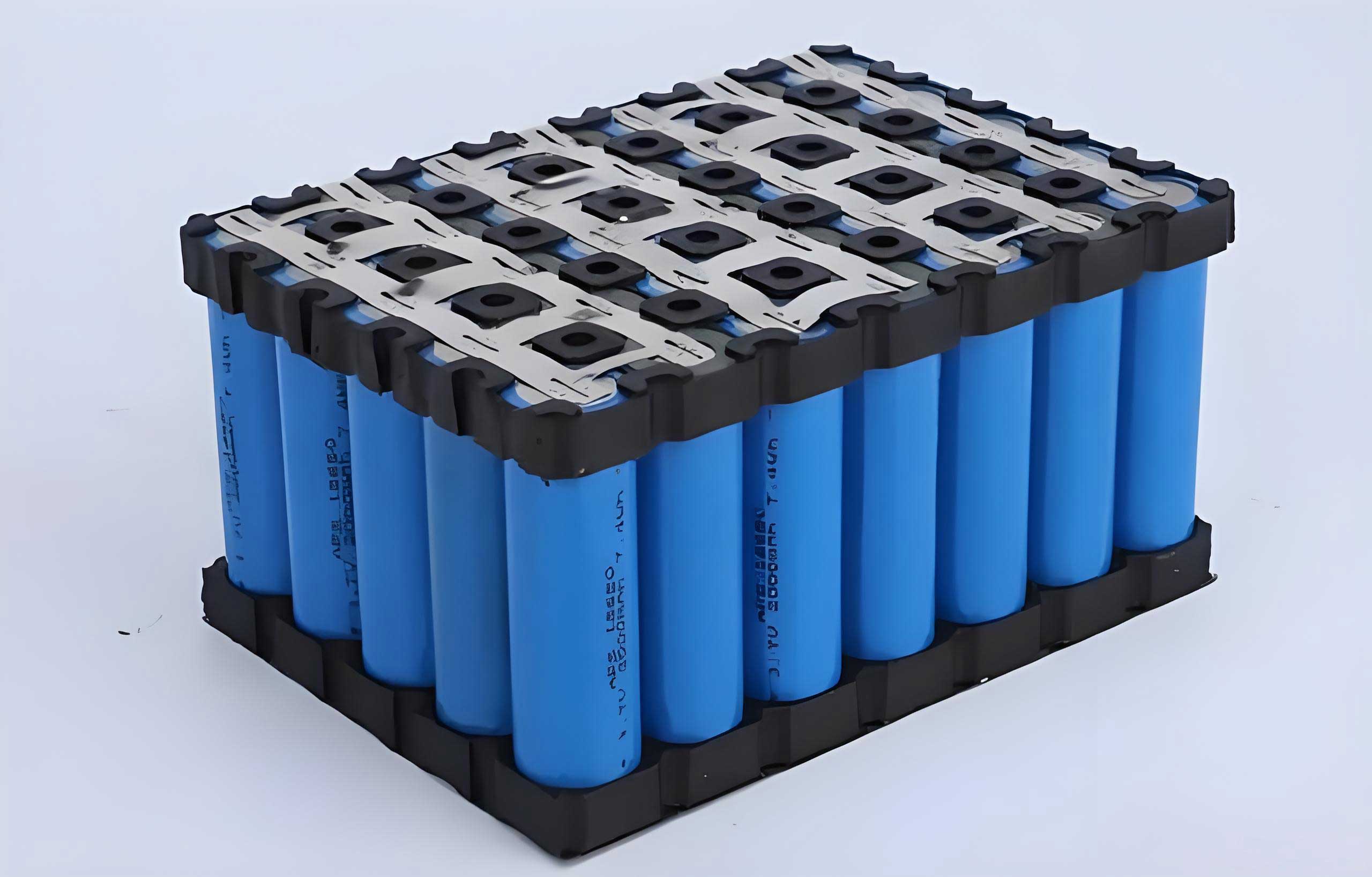
Conventional recycling research often focuses on separated cathode materials, requiring additional steps for electrode delamination. In practical, large-scale operations, complete separation is often inefficient or impossible for severely damaged cells. Therefore, processing the mixed electrode mass is a more realistic and economically viable approach. The core challenge lies in the selective recovery of valuable elements from this complex mixture, which contains LiFePO4 cathode material, graphite anode material, aluminum from the cathode current collector, and copper from the anode current collector.
Process Overview and Feedstock Characterization
The proposed recycling flowsheet begins with the discharge and dismantling of spent LiFePO4 battery packs. The harvested mixed electrode sheets are dried, mechanically crushed, and sieved to obtain a fine powder. This mixed powder presents a composition distinct from pure cathode material, as confirmed by elemental analysis.
| Element | Content (wt.%) |
|---|---|
| Li | 2.13 |
| Fe | 18.35 |
| P | 10.68 |
| Cu | 1.75 |
| Al | 0.089 |
| F | 6.56 |
| C | 40.52 |
The high carbon content originates from the graphite anode, while copper and aluminum are introduced from the shredded current collectors. This composition necessitates a tailored process for effective separation. The first critical step is thermal pretreatment. Calcining the mixed powder at 700°C for 5 hours in air achieves two primary objectives: removal of organic components (carbon and PVDF binder) and oxidation of Fe(II) in LiFePO4. The primary reaction during calcination can be represented as:
$$12\text{LiFePO}_4 + 3\text{O}_2 \rightarrow 4\text{Li}_3\text{Fe}_2(\text{PO}_4)_3 + 2\text{Fe}_2\text{O}_3$$
This transformation is crucial. The olivine structure of LiFePO4 is robust and resistant to acid leaching. Converting it to Li3Fe2(PO4)3 and Fe2O3 disrupts this structure, making lithium more accessible for subsequent extraction. Furthermore, this step efficiently removes carbon and fluorine, with elimination rates exceeding 99%. The resulting calcine, or “clinker,” has a concentrated composition as shown below.
| Element | Content (wt.%) |
|---|---|
| Li | 3.79 |
| Fe | 30.81 |
| P | 17.94 |
| Cu | 2.96 |
| Al | 0.170 |
Stage 1: Selective Acid Leaching of Lithium
The cornerstone of this recycling strategy is the staged selective leaching of metals. The first stage targets the selective dissolution of lithium from the calcined clinker using dilute sulfuric acid (H2SO4). The goal is to maximize Li extraction while minimizing the co-dissolution of iron, copper, and aluminum. The leaching efficiency is governed by several operational parameters, which were systematically investigated.
The leaching reaction for lithium can be simplified as the interaction of acid with the lithium-containing phases (primarily Li3Fe2(PO4)3):
$$\text{Li}_3\text{Fe}_2(\text{PO}_4)_3 + 3\text{H}^+ \rightarrow 3\text{Li}^+ + 2\text{FePO}_4 + \text{H}_3\text{PO}_4$$
Simultaneously, the thermodynamics and kinetics of impurity dissolution must be controlled. For instance, the dissolution of copper (present as CuO after calcination) is highly pH-dependent:
$$\text{CuO} + 2\text{H}^+ \rightarrow \text{Cu}^{2+} + \text{H}_2\text{O} \quad \Delta G^\circ = – \text{[value]}$$
The leaching of iron from FePO4 or Fe2O3 is negligible under the chosen acidic conditions due to the very low solubility product of FePO4 (\(K_{sp} \approx 10^{-22}\)). The optimization of parameters is summarized below.
| Parameter | Range Studied | Optimal Value | Effect on Li Leaching |
|---|---|---|---|
| Molar Ratio H⁺/Li⁺ | 0 – 1.5 | 0.7 | Controls acidity. Lower ratios limit Li dissolution; higher ratios promote Cu and Al leaching. At 0.7, pH≈1.8. |
| Temperature | 25 – 99 °C | 90 °C | Enhances reaction kinetics and diffusion rates. Higher temperatures favor Li extraction but increase energy cost. |
| Time | 0.5 – 5 h | 3 h | Allows reaction to reach near-completion. Prolonged time has marginal benefit. |
| Liquid-to-Solid (L/S) Ratio | 2:1 – 8:1 | 3:1 | Affects reagent concentration and slurry viscosity. Lower ratios conserve water and yield more concentrated leachate but may hinder mixing. |
Under the optimal conditions, the leaching distribution was highly selective. The extraction efficiency for each element is given by:
$$\eta_i = \frac{C_i \times V}{m_{clinker} \times w_i} \times 100\%$$
where \(\eta_i\) is the leaching efficiency of element \(i\), \(C_i\) is its concentration in the leachate, \(V\) is the leachate volume, \(m_{clinker}\) is the mass of clinker, and \(w_i\) is the mass fraction of element \(i\) in the clinker. The achieved efficiencies were:
- Lithium (Li): 91.88%
- Iron (Fe): 0.0024%
- Copper (Cu): 4.71%
- Aluminum (Al): 0.11%
This successful separation provides a lithium-rich solution (PLS) with minimal impurities, paving the way for high-purity lithium recovery. The residual solids, now enriched in iron, phosphorus, and copper, proceed to the next stage.
Recovery of Battery-Grade Lithium Carbonate
The lithium-bearing leachate from the first stage is processed to recover lithium as battery-grade carbonate. The recovery involves purification, concentration, and precipitation steps. First, residual phosphate and metal impurities (Fe³⁺, Cu²⁺, Al³⁺) are removed by pH adjustment. Adding a calculated amount of ferric sulfate precipitates phosphate as FePO₄. Subsequently, the pH is raised to approximately 5 using sodium hydroxide (NaOH) to precipitate the remaining Fe³⁺, Cu²⁺, and Al³⁺ as their respective hydroxides or basic salts.
The purified solution is then concentrated by evaporation to increase the Li⁺ concentration, which improves the precipitation efficiency of the subsequent step. Lithium carbonate (Li₂CO₃) is precipitated by adding a saturated sodium carbonate (Na₂CO₃) solution at elevated temperature (95°C), leveraging the inverse solubility of Li₂CO₃.
$$\text{2Li}^+ + \text{CO}_3^{2-} \rightarrow \text{Li}_2\text{CO}_3 \downarrow$$
The crude Li₂CO₃ is further refined through a carbonation-decarbonation process to achieve high purity. The final product meets the specifications for battery-grade material, with a purity exceeding 99.5%. The particle size distribution, morphology, and crystal structure confirm its suitability for use in new lithium-ion battery production, closing the loop for lithium within the lifecycle of a LiFePO4 battery.
Stage 2: Selective Leaching of Copper from the Residue
The solid residue from the lithium leaching stage is rich in iron (as FePO₄), phosphorus, and copper (metallic or as oxide). To recover copper, a second selective leaching step is employed. Prior to leaching, the residue is calcined at 450°C in air to ensure all copper is converted to cupric oxide (CuO), which is more readily soluble in dilute acid than metallic copper.
$$\text{Cu} + \frac{1}{2}\text{O}_2 \rightarrow \text{CuO}$$
The calcined material is then leached with dilute sulfuric acid under controlled pH conditions. The key is to select a pH where CuO dissolves but FePO₄ remains intact. The dissolution of CuO is represented as:
$$\text{CuO} + 2\text{H}^+ \rightarrow \text{Cu}^{2+} + \text{H}_2\text{O}$$
The solubility of FePO₄ remains extremely low across a wide pH range. The optimization of the copper leaching pH is critical, as shown in the summary below.
| pH | Copper Leaching Efficiency (%) | Iron Leaching Efficiency (%) |
|---|---|---|
| 0.2 | 96.88 | 71.82 |
| 1.0 | 94.25 | 12.45 |
| 1.5 | 92.54 | 0.29 |
| 1.7 | 71.46 | 0.03 |
At very low pH (0.2), both copper and iron dissolve. As the pH increases to 1.5, copper dissolution remains high (>92%) while iron leaching is suppressed to near zero. This represents the optimal window for selective copper recovery. The kinetics of copper leaching can be described by a shrinking core model. The rate may be controlled by surface chemical reaction or diffusion through a product layer, depending on conditions. The integrated rate law for surface reaction control is often expressed as:
$$1 – (1 – X)^{1/3} = k t$$
where \(X\) is the fraction of copper leached, \(k\) is the apparent rate constant, and \(t\) is time. Under optimal conditions (pH=1.5, 90°C, L/S=5:1, 3h), over 92% of copper is extracted, leaving an iron-phosphate-rich residue suitable for the final recovery step.
Regeneration of Battery-Grade Ferric Phosphate
The final residue, after lithium and copper extraction, is predominantly iron phosphate (FePO₄) with high purity. This material serves as a direct precursor for the synthesis of new LiFePO4 cathode material. To convert it into a readily usable form, the residue is first fully dissolved in a concentrated sulfuric acid solution.
$$\text{FePO}_4 + 3\text{H}^+ \rightarrow \text{Fe}^{3+} + \text{H}_3\text{PO}_4$$
From this homogenous solution, ferric phosphate dihydrate (FePO₄·2H₂O) is precipitated by carefully controlling the pH using ammonia solution (NH₃·H₂O). The precipitation reaction is:
$$\text{Fe}^{3+} + \text{H}_3\text{PO}_4 + 2\text{H}_2\text{O} \xrightarrow[\text{pH} \approx 1.8]{\text{NH}_3} \text{FePO}_4 \cdot 2\text{H}_2\text{O} \downarrow + 3\text{H}^+$$
The precise control of pH (~1.8) is crucial for obtaining a precipitate with the correct stoichiometry (P/Fe molar ratio ≈1) and good filterability. The precipitation yield can reach up to 95%. The thermodynamics of this precipitation can be understood through the solubility product constant and the formation of various iron-phosphate complexes, which are pH-dependent. The final step is the thermal dehydration of the dihydrate to produce anhydrous ferric phosphate (FePO₄), which is the commercial precursor for LiFePO4.
$$\text{FePO}_4 \cdot 2\text{H}_2\text{O} \xrightarrow{\Delta, 720^\circ\text{C}} \text{FePO}_4 + 2\text{H}_2\text{O} \uparrow$$
The regenerated FePO₄ product exhibits high purity (>99.4%), suitable particle morphology, and crystallinity matching the standard for battery-grade material. It can be directly mixed with a lithium source (such as the recovered Li₂CO₃) and a carbon source to synthesize new LiFePO4 cathode material via solid-state or other synthesis routes, thereby completing the full circular economy loop for the spent LiFePO4 battery.
Process Integration and Economic-Environmental Perspective
The integrated process described herein offers a pragmatic solution for the macro-scale recycling of spent LiFePO4 batteries. By accepting mixed electrode feed, it eliminates the need for complex and often inefficient mechanical separation steps, aligning with industrial realities. The staged selective leaching strategy, governed by fundamental thermodynamic and kinetic principles, allows for the sequential recovery of high-value products: battery-grade lithium carbonate, copper, and battery-grade ferric phosphate.
The economic viability hinges on the recovery efficiency, purity of final products, and operational costs (energy for calcination/evaporation, reagent consumption). The selective leaching approach minimizes acid consumption and subsequent neutralization costs compared to total dissolution methods. The environmental benefit is twofold: preventing hazardous waste and reducing the primary mining demand for lithium, copper, and iron—a critical consideration given the strategic importance of these resources and the environmental impact of their extraction.
Future developments may focus on further reducing energy inputs, perhaps by optimizing lower-temperature pretreatment methods or exploring alternative leaching agents. Furthermore, integrating this process with recycling streams for other battery chemistries could create a more robust and flexible recycling infrastructure. Nonetheless, this exploration of a mixed electrode, selective hydrometallurgical process provides a strong foundation for the sustainable and economically sound recovery of materials from spent LiFePO4 batteries, contributing significantly to the green energy ecosystem.