
In recent years, the proportion of electric vehicles in non-road applications has been steadily increasing. Among these, electric telescopic boom aerial work platforms, commonly used in construction and maintenance, offer advantages such as low noise, reduced energy consumption, and zero emissions. Moreover, operations like extension and lifting can be controlled via electrical signals, significantly enhancing operator efficiency and precision. However, due to the unique operating conditions of non-road vehicles, there is limited research on battery state of charge (SOC) estimation for such applications. The LiFePO4 battery, known for its safety, stability, and cost-effectiveness but lower energy density, is often employed in engineering vehicles. During discharge, the LiFePO4 battery exhibits a voltage plateau region where SOC decreases while voltage remains nearly constant, posing challenges for accurate SOC estimation. Therefore, improving SOC estimation techniques for LiFePO4 batteries is crucial for the development of electric non-road vehicles. In this work, we propose a novel SOC estimation model and method based on a bidirectional long short-term memory (Bi-LSTM) neural network, tailored for the special工况 of electric telescopic boom aerial work platforms. This approach addresses the limitations of existing methods and leverages the temporal dynamics of battery data to enhance accuracy across varying environmental temperatures.
Current SOC estimation methods can be broadly categorized into three types: battery experiment-based methods, model-based methods, and data-driven methods. Experiment-based methods, such as ampere-hour integration, open-circuit voltage, and impedance spectroscopy, require extensive testing and cannot provide online SOC estimation, limiting their practicality. Model-based methods, including Kalman filtering and particle filtering, rely on accurate battery models to describe internal structures and electrochemical processes, but they are often constrained by modeling assumptions, empirical parameters, and computational complexity. Data-driven methods, such as support vector machines and neural networks, establish mappings between battery measurement data and SOC. Since SOC estimation is inherently a time-series prediction problem, recurrent neural networks (RNNs) are more suitable for capturing temporal dependencies. However, traditional RNNs struggle with long sequences due to gradient vanishing or explosion issues. To overcome this, we employ a Bi-LSTM network, which processes sequences in both forward and backward directions, providing complete时序 information for SOC estimation. Our model inputs include battery operating voltage, current, and surface temperature, and it is designed to handle the fluctuating conditions typical of electric telescopic boom operations, where currents during lifting and extending actions far exceed those during normal driving, leading to high-frequency voltage and current variations.
The core of our approach is the Bi-LSTM neural network, which consists of two LSTM layers processing data in opposite directions. The LSTM unit incorporates memory cells and gating mechanisms to retain long-term information, addressing the gradient issues in standard RNNs. Each LSTM unit includes a forget gate, input gate, and output gate, which regulate information flow. The mathematical expressions for these gates are as follows:
Forget gate: $$f_t = \sigma(W_{xf} x_t + W_{hf} h_{t-1} + b_f)$$
Input gate: $$i_t = \sigma(W_{xi} x_t + W_{hi} h_{t-1} + b_i)$$
Candidate memory state: $$\tilde{c}_t = \tanh(W_{xc} x_t + W_{hc} h_{t-1} + b_c)$$
Output gate: $$o_t = \sigma(W_{xo} x_t + W_{ho} h_{t-1} + b_o)$$
Here, $x_t$ is the input at time $t$, $h_{t-1}$ is the hidden state from the previous time step, $W$ terms are weight matrices, $b$ terms are bias vectors, and $\sigma$ denotes the sigmoid activation function. The memory cell state $c_t$ and hidden state $h_t$ are updated as:
Memory cell update: $$c_t = c_{t-1} \odot f_t + i_t \odot \tilde{c}_t$$
Hidden state output: $$h_t = o_t \odot \tanh(c_t)$$
where $\odot$ represents element-wise multiplication. In the Bi-LSTM architecture, forward and backward LSTM layers process the sequence independently, and their outputs are concatenated to form the final hidden state:
$$H_t = \overrightarrow{h_t} \oplus \overleftarrow{h_t}$$
where $\oplus$ denotes concatenation. This bidirectional processing allows the model to capture dependencies from both past and future contexts, enhancing its ability to estimate SOC accurately. Our SOC estimation model uses battery voltage, current, and surface temperature as inputs, passed through the Bi-LSTM layers, and outputs the SOC value. We normalize all input data using mean-variance normalization to accelerate convergence: $$x’ = \frac{x – \mu}{S}$$ where $x’$ is the normalized value, $x$ is the original value, $\mu$ is the mean, and $S$ is the standard deviation of the dataset.
To evaluate model performance, we employ three metrics: root mean square error (RMSE), coefficient of determination ($R^2$), and mean absolute error (MAE). Their formulas are:
RMSE: $$\text{RMSE} = \sqrt{\frac{1}{m} \sum_{i=1}^{m} (y_i’ – y_i)^2}$$
$R^2$: $$R^2 = 1 – \frac{\sum_{i=1}^{m} (y_i’ – y_i)^2}{\sum_{i=1}^{m} \left(y_i – \frac{1}{m} \sum_{i=1}^{m} y_i\right)^2}$$
MAE: $$\text{MAE} = \frac{1}{m} \sum_{i=1}^{m} |y_i’ – y_i|$$
where $y_i’$ is the predicted SOC, $y_i$ is the true SOC, and $m$ is the number of samples. Lower RMSE and MAE values, and an $R^2$ closer to 1, indicate better estimation accuracy.
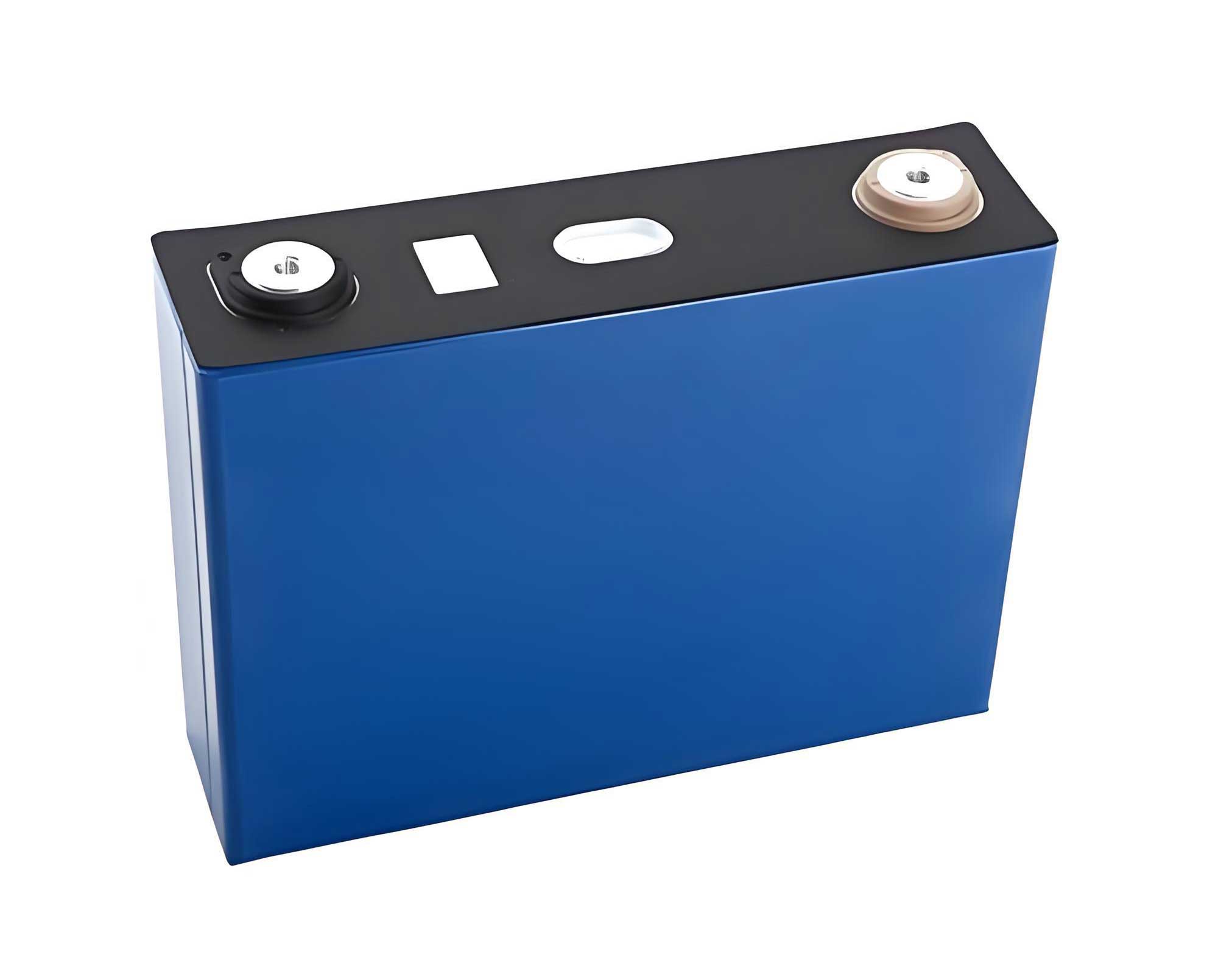
For experimental setup, we used LiFePO4 battery cells with a rated capacity of 302 Ah and voltage range of 2.5–3.65 V. Data were collected under controlled environmental temperatures from -10°C to 40°C to simulate real-world conditions. Each temperature setting included 10 discharge cycles at a 1/3C rate, with voltage, current, and surface temperature recorded every 0.5 seconds. True SOC was computed via ampere-hour integration. Additionally, we gathered actual operational data from an electric telescopic boom aerial work platform (model T38JE) at 25°C, involving driving, lifting, and extending actions until SOC dropped to 20%. The dataset was split into training and testing sets: 88 groups of laboratory data (8 per temperature) for training, and 22 groups of laboratory data plus 10 groups of real vehicle data for testing. Our Bi-LSTM model was configured with an input layer of 3 nodes (voltage, current, temperature), hidden layers of 50 nodes each for forward and backward LSTM, and an output layer of 1 node (SOC). We used sigmoid and tanh activation functions for gates and states, respectively, and employed the Adam optimizer with an initial learning rate of 0.005, reduced by a factor of 0.02 after 300 epochs. Dropout was applied with a rate of 0.1 to prevent overfitting.
| Parameter | Value |
|---|---|
| Battery Type | LiFePO4 battery |
| Rated Capacity | 302 Ah |
| Voltage Range | 2.5–3.65 V |
| Discharge Rate | 1/3C |
| Temperature Range | -10°C to 40°C |
| Sampling Interval | 0.5 seconds |
| Input Features | Voltage, Current, Temperature |
| LSTM Hidden Nodes | 50 |
| Dropout Rate | 0.1 |
| Optimizer | Adam |
We compared our Bi-LSTM model with traditional backpropagation (BP) neural network and unidirectional LSTM models to assess performance. The results under different environmental temperatures are summarized below, demonstrating the superiority of our approach for the LiFePO4 battery. Notably, the Bi-LSTM model consistently achieved lower errors and higher $R^2$ values across all temperatures, with optimal performance at 25°C. This is attributed to the stable electrochemical reactions in LiFePO4 battery at room temperature, facilitating better mapping between inputs and SOC.
| Temperature | Model | RMSE (%) | $R^2$ | MAE (%) |
|---|---|---|---|---|
| 0°C | Bi-LSTM | 0.8218 | 0.9988 | 0.2672 |
| LSTM | 2.2081 | 0.9919 | 1.5115 | |
| BP | 3.6572 | 0.9501 | 3.2521 | |
| 10°C | Bi-LSTM | 0.7297 | 0.9991 | 0.1761 |
| LSTM | 1.7582 | 0.9948 | 1.4138 | |
| BP | 3.2527 | 0.9792 | 2.9028 | |
| 25°C | Bi-LSTM | 0.6632 | 0.9992 | 0.1664 |
| LSTM | 1.6886 | 0.9951 | 1.2598 | |
| BP | 2.6759 | 0.9877 | 2.4966 | |
| 35°C | Bi-LSTM | 0.7342 | 0.9991 | 0.2865 |
| LSTM | 1.8442 | 0.9941 | 1.3870 | |
| BP | 3.0436 | 0.9745 | 2.6034 |
The SOC estimation curves for the Bi-LSTM model at representative temperatures (0°C, 10°C, 25°C, 35°C) closely followed the true SOC trends, with relative errors generally within ±1% for SOC levels between 25% and 98%. At SOC below 20%, accuracy slightly decreased due to the rapid voltage drop in the LiFePO4 battery near the end of discharge, characteristic of its voltage plateau. This highlights the model’s robustness in handling the nonlinearities of the LiFePO4 battery. Furthermore, we validated the model on actual operational data from the electric telescopic boom platform. The results showed excellent fit, with RMSE of 0.2189%, $R^2$ of 0.9994, and MAE of 0.1809%, confirming the model’s practicality for real-world applications where current and voltage fluctuate rapidly due to regenerative braking and load variations.
Our Bi-LSTM-based SOC estimation method offers several advantages. First, it eliminates the need for complex battery or vehicle modeling, reducing dependency on empirical parameters and computational burden. Second, by leveraging bidirectional processing, it captures long-term temporal dependencies more effectively than unidirectional networks, mitigating gradient issues. Third, the model generalizes well across different environmental temperatures, making it suitable for diverse operating conditions of electric telescopic boom platforms. The repeated emphasis on the LiFePO4 battery in this study underscores its relevance in non-road electric vehicles, where safety and cost are paramount. Future work could explore integrating additional features like battery aging effects or expanding the model to other battery types, but the current approach provides a reliable solution for accurate SOC estimation in challenging scenarios.
In conclusion, we have developed a Bi-LSTM neural network model for SOC estimation of LiFePO4 batteries in electric telescopic boom aerial work platforms. This data-driven method demonstrates high accuracy across varying temperatures and real operational conditions, outperforming traditional BP and LSTM models. By utilizing bidirectional序列 processing, it enhances feature extraction and temporal understanding, contributing to improved battery management and vehicle performance. The LiFePO4 battery, with its unique characteristics, benefits significantly from this approach, paving the way for safer and more efficient non-road electric vehicles.