
As I delve into the realm of advanced energy storage, the pursuit of solid-state battery technology stands out as a transformative frontier. The inherent challenges, such as lithium dendrite formation, have long hindered the commercialization of solid-state batteries. However, recent interdisciplinary advances in material synthesis and nanostructured carbon materials are offering novel pathways to overcome these hurdles. In this comprehensive overview, I will explore the critical aspects of solid-state battery development, emphasizing the integration of insights from graphene oxide research and alloy nanomaterial innovations to drive progress. Throughout this discussion, the term solid-state battery will be frequently highlighted to underscore its centrality in the energy storage landscape.
The core appeal of solid-state batteries lies in their potential to surpass traditional lithium-ion batteries in energy density, safety, and cycle life. By replacing liquid electrolytes with solid counterparts, solid-state batteries mitigate risks like leakage and thermal runaway. Yet, the formation of lithium dendrites—metallic lithium protrusions that can penetrate solid electrolytes—remains a significant barrier. Recent studies have shed light on the mechanical and electrochemical origins of these dendrites, paving the way for regulatory strategies. For instance, research indicates that nanoscale cracks in ceramic solid electrolytes serve as nucleation sites for lithium intrusion. A strain as minimal as 0.070% can alter dendrite propagation, highlighting the sensitivity of solid-state battery components to mechanical stress. This understanding is crucial for designing robust solid-state battery architectures.
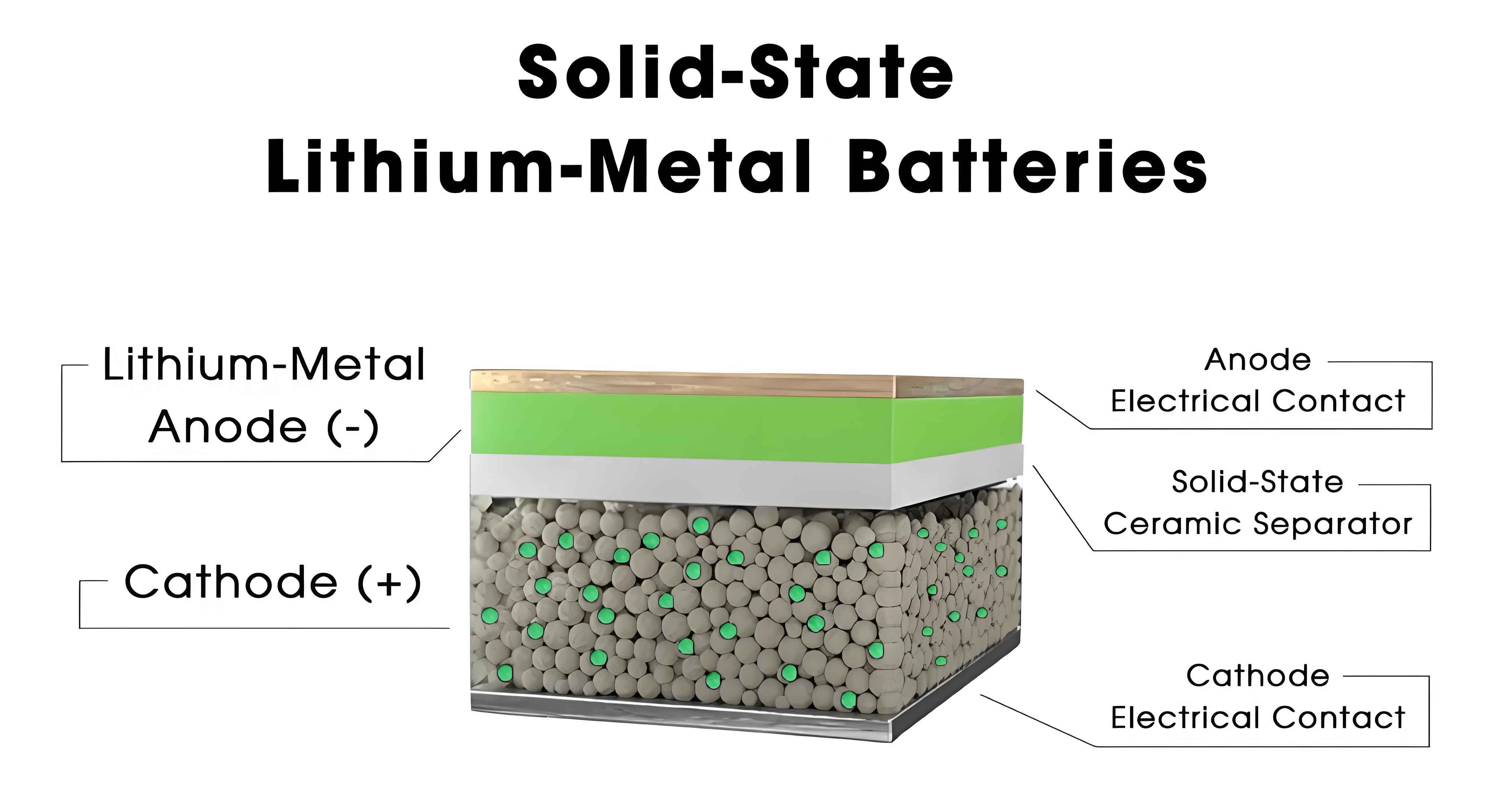
To contextualize these advancements, it is essential to consider the broader material science landscape. The synthesis of alloy nanomaterials, particularly those involving noble and non-noble metals, has seen paradigm shifts. Traditional wet-chemical co-reduction methods often struggle with kinetic disparities due to differing reduction potentials, leading to inhomogeneous alloys. A novel approach based on interfacial reduction via active hydrogen has emerged, where species like nitrous acid generate reactive hydrogen atoms at seed surfaces. This method enables precise co-reduction, allowing for tailored alloy compositions. While not directly applied to solid-state batteries, such synthetic strategies inspire the controlled fabrication of solid electrolyte interfaces and electrode materials. For example, the ability to tune alloy distributions could enhance the ionic conductivity or mechanical properties of components in a solid-state battery. The synergy between alloy nanomaterial synthesis and solid-state battery development underscores the importance of interdisciplinary innovation.
Similarly, the exploration of graphene oxide and reduced graphene oxide has opened avenues for functional materials in energy applications. Graphene oxide, with its tunable oxygenated groups, offers exceptional optical, electronic, and photonic properties. In the context of solid-state batteries, graphene oxide derivatives could serve as conductive additives, coating layers, or even solid electrolyte fillers to improve ion transport and suppress dendrite growth. The scalable production of graphene oxide aligns with the industrial needs of solid-state battery manufacturing. As research progresses, the integration of graphene oxide into solid-state battery designs may address challenges like interfacial resistance and mechanical stability. The evolution from laboratory curiosity to practical material mirrors the trajectory desired for solid-state battery technologies.
Focusing on the electrochemical mechanics of solid-state batteries, lithium dendrite formation is governed by a combination of factors, including electric field distribution, ionic conductivity, and mechanical stress. The probability of lithium intrusion can be modeled using statistical and continuum approaches. For instance, the likelihood of dendrite initiation at a crack tip can be expressed as:
$$ P_{\text{intrusion}} = \exp\left(-\frac{\Delta G^*}{k_B T}\right) $$
where \( \Delta G^* \) is the activation energy barrier, \( k_B \) is Boltzmann’s constant, and \( T \) is temperature. This energy barrier is influenced by local strain \( \epsilon \), as recent findings suggest. A linear approximation might relate strain to activation energy:
$$ \Delta G^* = \Delta G_0 – \alpha \epsilon $$
Here, \( \Delta G_0 \) is the intrinsic barrier, and \( \alpha \) is a material-specific coefficient. For a solid-state battery, controlling strain through electrolyte design—such as using composite materials or engineered interfaces—can thus modulate dendrite risk. This mechanistic insight is pivotal for advancing solid-state battery safety.
To illustrate the diversity of solid electrolyte materials and their properties, Table 1 summarizes key candidates for solid-state batteries, including their ionic conductivities and mechanical moduli. These parameters directly impact dendrite suppression and overall solid-state battery performance.
| Solid Electrolyte Type | Ionic Conductivity (S/cm) at 25°C | Young’s Modulus (GPa) | Dendrite Suppression Ability |
|---|---|---|---|
| Garnet (e.g., LLZO) | ~10⁻³ | ~150 | Moderate, improved with coatings |
| Sulfide (e.g., Li₃PS₄) | ~10⁻² | ~20 | High, but sensitive to moisture |
| Polymer (e.g., PEO) | ~10⁻⁵ | ~0.1 | Low, requires composite blends |
| Oxide (e.g., LATP) | ~10⁻⁴ | ~100 | Moderate, brittle nature |
| Composite (Graphene oxide-based) | ~10⁻³ (estimated) | ~50 (tunable) | High potential, under research |
The data in Table 1 highlight trade-offs between conductivity and mechanical strength. For a solid-state battery to thrive, electrolytes must balance high ion transport with resistance to dendrite penetration. Composite approaches, possibly incorporating graphene oxide, offer a promising route. Moreover, the strain regulation discussed earlier can be quantified for different materials. The critical strain \( \epsilon_c \) required to deflect dendrites might be derived from fracture mechanics:
$$ \epsilon_c = \frac{K_{\text{IC}}}{E \sqrt{\pi a}} $$
where \( K_{\text{IC}} \) is the fracture toughness, \( E \) is Young’s modulus, and \( a \) is crack length. In a solid-state battery, minimizing \( a \) through nanoscale engineering can reduce \( \epsilon_c \), making dendrite control more feasible. This equation underscores the interplay between material properties and battery design.
Beyond electrolytes, electrode materials in solid-state batteries benefit from alloy nanomaterial synthesis techniques. For instance, the active hydrogen-mediated reduction could be adapted to fabricate uniform alloy anodes (e.g., Li-Si or Li-Sn) that accommodate volume changes during cycling. The homogeneity achieved through such methods enhances cyclability, a common issue in solid-state batteries. Additionally, graphene oxide coatings on electrodes can improve interfacial contact and reduce polarization. The optical properties of graphene oxide, such as tunable bandgaps, might even be leveraged for in-situ monitoring of electrode states in a solid-state battery, though this remains speculative. The convergence of these material advances propels the solid-state battery field forward.
Another critical aspect is the manufacturing scalability of solid-state batteries. Laboratory successes in controlling graphene oxide quality and alloy nanomaterial composition must translate to industrial processes. Table 2 compares synthesis methods for key solid-state battery components, emphasizing scalability and performance.
| Component | Synthesis Method | Scalability | Impact on Solid-State Battery |
|---|---|---|---|
| Solid Electrolyte | Sol-gel, sintering | Moderate, energy-intensive | Determines ionic pathways and safety |
| Alloy Anode | Interfacial reduction (active hydrogen) | High potential, scalable solutions | Enhances capacity and cycle life |
| Graphene Oxide Additive | Modified Hummers’ method | High, established production | Improves conductivity and mechanical integrity |
| Composite Cathode | Co-precipitation, ball milling | Moderate to high | Optimizes energy density and rate capability |
From Table 2, it is evident that scalable synthesis is achievable for many components, yet integration into a cohesive solid-state battery requires further optimization. The active hydrogen approach, for example, could be applied to synthesize solid electrolyte precursors with controlled morphologies. Similarly, graphene oxide production lines could be repurposed to supply materials for solid-state battery electrodes. As I reflect on these possibilities, the solid-state battery ecosystem appears ripe for innovation, drawing from diverse material science streams.
The electrochemical performance of a solid-state battery can be modeled using governing equations. The ion transport through a solid electrolyte follows the Nernst-Planck equation, considering diffusion and migration:
$$ J_i = -D_i \nabla c_i + \frac{z_i F}{RT} D_i c_i \nabla \phi $$
where \( J_i \) is the flux of species \( i \) (e.g., Li⁺), \( D_i \) is the diffusion coefficient, \( c_i \) is concentration, \( z_i \) is charge number, \( F \) is Faraday’s constant, \( R \) is the gas constant, \( T \) is temperature, and \( \phi \) is electric potential. In a solid-state battery, inhomogeneities in \( D_i \) due to microcracks or interfaces can localize \( J_i \), promoting dendrite growth. By incorporating strain effects, as observed in recent studies, we can modify \( D_i \) to be strain-dependent: \( D_i = D_{i0} (1 + \beta \epsilon) \), where \( \beta \) is a coupling coefficient. This refinement helps in predicting dendrite hotspots in solid-state battery simulations.
Furthermore, the role of graphene oxide in modulating these parameters is intriguing. With its functional groups, graphene oxide can interact with lithium ions, potentially altering \( D_i \) at interfaces. Research suggests that reduced graphene oxide layers can act as ion-conductive bridges, enhancing overall kinetics in a solid-state battery. The optical properties of graphene oxide, such as photothermal response, might even enable novel charging methods, though this is beyond current solid-state battery norms. Nonetheless, the adaptability of graphene oxide exemplifies how material innovations cross-pollinate with solid-state battery development.
Looking ahead, the challenges in solid-state battery technology are multifaceted. Interfacial resistance between solid components remains a key issue, often leading to voltage polarization and capacity fade. Strategies like alloy nanomaterial coatings or graphene oxide interlayers show promise in mitigating this. For instance, a thin layer of engineered alloy could serve as a compliant interface, accommodating volume changes, while graphene oxide could provide conductive percolation networks. The mechanical regulation of dendrites, via strain engineering, adds another tool to the arsenal. In practice, implementing these in a solid-state battery requires precise control over material properties at multiple scales.
To quantify progress, we can consider performance metrics for next-generation solid-state batteries. Table 3 outlines target parameters based on current research trends, emphasizing the integration of advanced materials.
| Performance Metric | Current State (Solid-State Battery) | Target (2030) | Enabling Materials/Techniques |
|---|---|---|---|
| Energy Density (Wh/kg) | ~300 | >500 | Alloy anodes, high-voltage cathodes |
| Cycle Life (cycles) | ~500-1000 | >2000 | Strain-regulated electrolytes, graphene oxide coatings |
| Rate Capability (C-rate) | ~0.5-1C | >3C | Fast-ion conductors, nanocomposite designs |
| Dendrite Suppression | Partial, at low currents | Full, at high currents | Mechanical tuning, crack-free electrolytes |
| Manufacturing Cost ($/kWh) | ~500-1000 | <100 | Scalable synthesis, graphene oxide integration |
Achieving these targets will rely heavily on continued research into material synthesis and characterization. The solid-state battery community must leverage insights from fields like graphene oxide photonics and alloy nanomaterial catalysis. For example, the precise control over oxygen groups in graphene oxide could inspire similar precision in doping solid electrolytes to enhance conductivity. The active hydrogen reduction mechanism might be adapted to in-situ repair microcracks in solid-state battery components during operation. Such cross-disciplinary applications are the lifeblood of innovation.
In conclusion, the evolution of solid-state battery technology is inextricably linked to advances in material science. From understanding the mechanical roots of lithium dendrites to harnessing graphene oxide for improved interfaces, each step forward reduces the gap between theory and practice. As I synthesize these perspectives, it is clear that the solid-state battery of the future will be a composite of tailored materials, each contributing to safety, efficiency, and scalability. The journey from laboratory breakthroughs to industrial reality is challenging, but with collaborative efforts, the promise of solid-state batteries as a cornerstone of energy storage is within reach. The repeated emphasis on solid-state battery throughout this discussion underscores its pivotal role in shaping a sustainable energy landscape.