
As a researcher deeply immersed in the field of energy storage and functional materials, I have witnessed remarkable advancements in recent years. The drive toward more efficient, safer, and sustainable power sources has accelerated innovation across multiple fronts, from lithium-ion batteries to emerging technologies like solid-state batteries. In this article, I will explore key developments based on recent studies and news, emphasizing the transformative potential of solid-state battery systems. I will incorporate tables and formulas to summarize critical data and principles, aiming to provide a thorough overview that spans fundamental research to industrial applications. The integration of novel materials such as carbon fibers, supercapacitors, and high-temperature composites further enriches this landscape, highlighting interdisciplinary progress. Throughout, I will underscore the importance of solid-state battery technology as a cornerstone for future energy solutions.
The evolution of battery technology hinges on material science breakthroughs. Traditional lithium-ion batteries, while dominant, face challenges like capacity fade, safety concerns, and limited energy density. Solid-state batteries, which replace liquid electrolytes with solid counterparts, offer a promising alternative. They promise higher energy density, improved safety, and longer lifespan, making them a focal point for research and development. In this context, I will delve into various material innovations that support or complement solid-state battery advancements. For instance, electrode materials like LiFePO4/C have been extensively studied for their electrochemical and magnetic properties, which influence performance in energy storage devices. Moreover, recent news highlights developments in carbon fiber electrodes for neural interfaces, printable supercapacitors for wearable energy, and ultra-high-temperature composites for aerospace—all of which indirectly contribute to the solid-state battery ecosystem by advancing material capabilities.
Let me begin by discussing lithium-ion battery materials, as foundational knowledge informs solid-state battery design. Research on LiFePO4/C cathode materials has revealed intriguing magnetic behaviors that correlate with electrochemical performance. Studies indicate that antiferromagnetic ordering in LiFePO4 can affect lithium-ion diffusion and overall battery efficiency. The reduction of Fe³⁺ impurities during carbon deposition processes, as explored in earlier work, enhances material purity and conductivity. This is crucial for optimizing electrode performance in both conventional and solid-state battery configurations. To quantify these effects, I can present formulas related to capacity fade and self-discharge mechanisms. For example, the capacity retention over time can be modeled using an exponential decay function:
$$C(t) = C_0 \cdot e^{-kt}$$
where \(C(t)\) is the capacity at time \(t\), \(C_0\) is the initial capacity, and \(k\) is the degradation rate constant. This model helps predict battery lifespan under various storage conditions, relevant for both lithium-ion and solid-state battery systems. Self-discharge in graphite anodes, another critical aspect, can be described by a linear voltage drop:
$$V(t) = V_0 – \frac{I_{sd}}{C} t$$
where \(V(t)\) is the voltage at time \(t\), \(V_0\) is the initial voltage, \(I_{sd}\) is the self-discharge current, and \(C\) is the battery capacitance. Understanding these mechanisms is essential for improving solid-state battery designs, where minimizing self-discharge can enhance long-term storage capabilities.
To summarize key findings from recent studies, I have compiled a table comparing different cathode materials and their properties. This includes data on LiFePO4/C and other relevant compounds that could be adapted for solid-state battery applications.
| Material | Magnetic Property | Electrochemical Performance | Potential for Solid-State Battery |
|---|---|---|---|
| LiFePO4/C | Antiferromagnetic | High stability, moderate capacity | Yes, as cathode with solid electrolyte |
| Graphite | Diamagnetic | Good anode material | Yes, if paired with solid-state systems |
| Carbon-coated variants | Varies | Improved conductivity | High, for enhanced interfaces |
Moving beyond traditional batteries, innovations in electrode materials have expanded into biomedical and wearable domains. For instance, the development of implantable carbon fiber electrodes for brain-computer interfaces demonstrates how material advances can capture neural signals with minimal tissue damage. These electrodes, though not directly part of a solid-state battery, showcase the importance of carbon-based materials in enabling high-performance, miniaturized devices. The principles of signal acquisition and material biocompatibility can inspire similar approaches in solid-state battery design, such as using carbon fibers for current collection or as composite components. This interdisciplinary synergy underscores the broader impact of material science on energy technologies.
Another exciting area is the creation of fully printable, stretchable, and wearable supercapacitors that harvest energy from sweat. These devices combine biofuel cells and supercapacitors, offering self-charging capabilities through enzymatic oxidation of lactate. While distinct from solid-state batteries, they represent a parallel advancement in energy storage for portable applications. The technology relies on functional inks and flexible substrates, which could be adapted for solid-state battery manufacturing using printing techniques. For example, printing solid electrolytes onto flexible circuits might enable next-generation wearable solid-state battery packs. The energy storage dynamics can be expressed using formulas for supercapacitor charge-discharge:
$$P = \frac{1}{2} C V^2 f$$
where \(P\) is the power output, \(C\) is the capacitance, \(V\) is the voltage, and \(f\) is the frequency. This highlights the potential for integration with solid-state battery systems to provide peak power pulses in hybrid setups.
High-temperature materials have also seen significant progress, with carbon fiber/silicon carbide composites capable of withstanding up to 3500°C. Developed for applications like sun shields in space probes, these materials exhibit lightweight and low vapor pressure properties. Their robustness at extreme temperatures could benefit solid-state battery operations in harsh environments, such as aerospace or automotive settings. The mechanical strength retention can be modeled using a temperature-dependent stress equation:
$$\sigma(T) = \sigma_0 \cdot e^{-\frac{E_a}{kT}}$$
where \(\sigma(T)\) is the strength at temperature \(T\), \(\sigma_0\) is the reference strength, \(E_a\) is the activation energy, and \(k\) is Boltzmann’s constant. Incorporating such composites into solid-state battery casings or thermal management systems could enhance safety and durability, a key advantage for solid-state battery technology.
Now, let me focus on solid-state battery breakthroughs, which are central to this discussion. NASA’s Glenn Research Center, through its SABERS program, is developing a novel solid-state battery using sulfur-selenium chemistry. This solid-state battery design eliminates overheating and fire risks associated with liquid electrolytes, while offering higher energy density and compact size. The use of porous graphite, a lightweight and conductive material, further improves performance. This solid-state battery innovation is poised to revolutionize electric aviation by providing reliable power sources. The energy density of such a solid-state battery can be calculated as:
$$E_d = \frac{Q \cdot V}{m}$$
where \(E_d\) is the energy density, \(Q\) is the charge capacity, \(V\) is the voltage, and \(m\) is the mass. Compared to lithium-ion batteries, solid-state battery variants like this one can achieve values exceeding 500 Wh/kg, making them ideal for weight-sensitive applications. I will insert an image here to visually complement the discussion on solid-state battery technology.
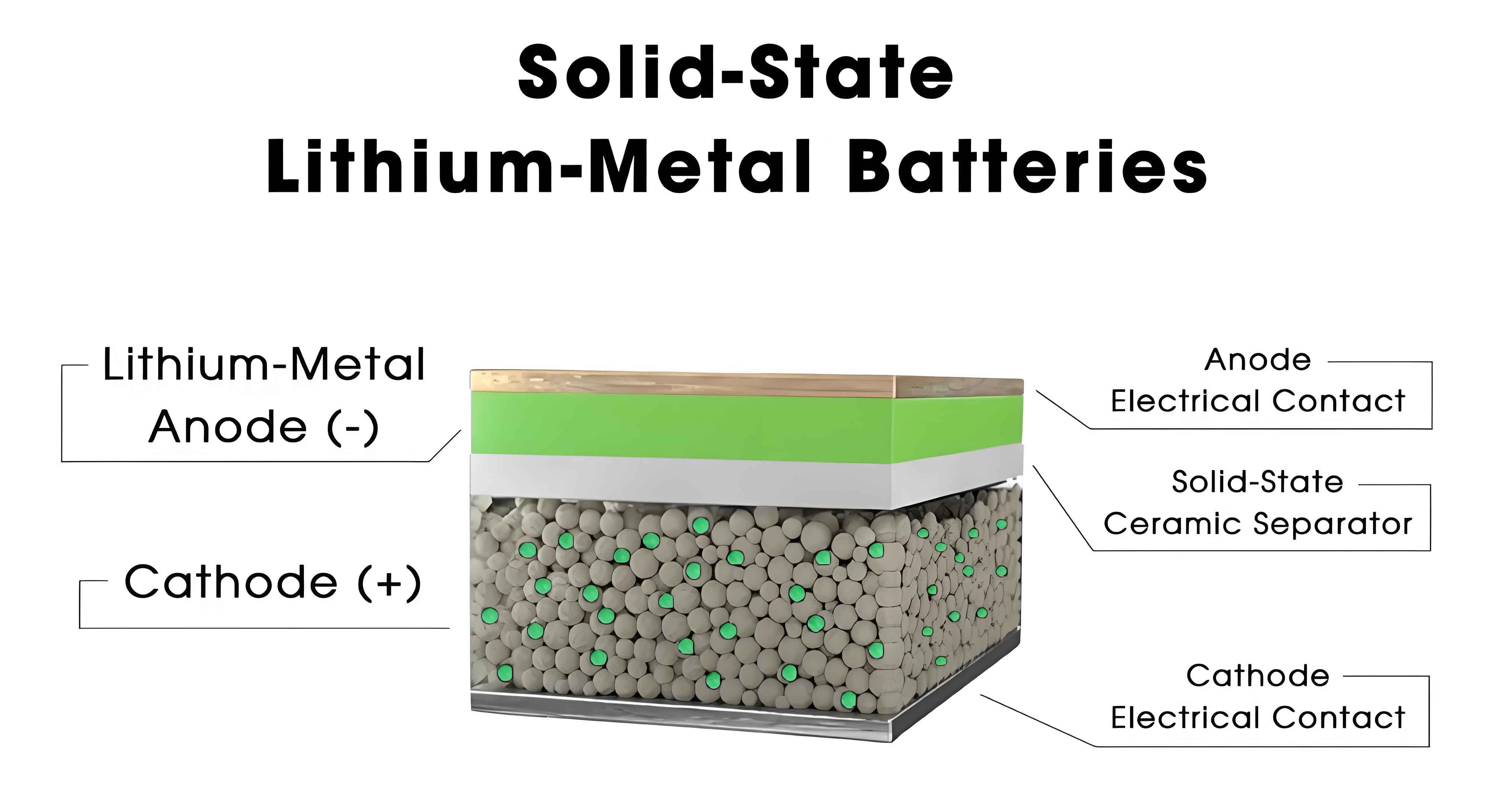
The solid-state battery development is not limited to aerospace; it has garnered substantial industrial interest. For instance, LG Chem has announced a massive investment of 87 billion dollars in battery material businesses, anticipating market growth driven by electric vehicle demand. This investment will likely accelerate research into solid-state battery components, such as solid electrolytes and advanced anodes. The market expansion for battery materials, projected to reach 100 trillion won by 2026, underscores the economic significance of solid-state battery advancements. To contextualize this, I present a table forecasting key material trends and their impact on solid-state battery adoption.
| Material Category | Current Market Size (2021) | Projected Market Size (2026) | Role in Solid-State Battery |
|---|---|---|---|
| Solid Electrolytes | 5 trillion won | 20 trillion won | Core component for ion conduction |
| Carbon Composites | 10 trillion won | 30 trillion won | Electrode supports and interfaces |
| High-Temperature Materials | 2 trillion won | 8 trillion won | Enabling operation in extreme conditions |
In-depth analysis of solid-state battery performance involves modeling parameter estimation and capacity fade. Reformulated models from recent studies allow for precise evaluation of solid-state battery behavior under various loads and temperatures. For example, the capacity fade in a solid-state battery can be described by a combined model incorporating cycling and calendar aging:
$$C_{fade}(t, N) = C_0 \left[ \alpha e^{-\beta t} + \gamma \ln(1 + \delta N) \right]$$
where \(C_{fade}\) is the capacity loss, \(t\) is time, \(N\) is the number of cycles, and \(\alpha, \beta, \gamma, \delta\) are fitting parameters. This approach helps optimize solid-state battery designs for longer lifespan, a critical factor for commercial viability. Moreover, the solid-state battery architecture often leverages multilayer structures to enhance energy density, which can be analyzed using series and parallel circuit analogies:
$$R_{total} = \sum R_{layer} \quad \text{and} \quad C_{total} = \frac{1}{\sum \frac{1}{C_{layer}}}$$
where \(R\) represents resistance and \(C\) capacitance per layer. Such formulas aid in tailoring solid-state battery configurations for specific applications, from consumer electronics to grid storage.
The interplay between material properties and electrochemical performance is further exemplified by work on LiFePO4/C, where magnetic studies inform spin-dependent transport mechanisms. In a solid-state battery, similar principles could apply if magnetic materials are integrated into electrodes to manipulate ion pathways. The Néel temperature for antiferromagnetic ordering, for instance, might influence solid-state battery operation at low temperatures:
$$T_N = \frac{J}{k} S(S+1)$$
where \(T_N\) is the Néel temperature, \(J\) is the exchange integral, \(S\) is the spin quantum number, and \(k\) is Boltzmann’s constant. Exploring these effects could lead to novel solid-state battery designs with tunable properties.
Another aspect is the self-discharge mechanism in lithium-ion systems, which has been extensively modeled. For solid-state batteries, self-discharge rates are typically lower due to reduced side reactions, but they still depend on material choices. The self-discharge current can be expressed as a function of temperature and electrode potential:
$$I_{sd} = I_0 \cdot e^{-\frac{E_a}{kT}} \cdot \sinh\left(\frac{zF\eta}{RT}\right)$$
where \(I_0\) is the exchange current, \(E_a\) is activation energy, \(z\) is the charge number, \(F\) is Faraday’s constant, \(\eta\) is overpotential, \(R\) is the gas constant, and \(T\) is temperature. Minimizing \(I_{sd}\) is a key goal for solid-state battery development, ensuring energy retention during storage.
To illustrate the progress in solid-state battery research, I have compiled a comprehensive table comparing different solid-state battery technologies based on recent advancements. This includes NASA’s sulfur-selenium system and other promising variants.
| Solid-State Battery Type | Electrolyte Material | Energy Density (Wh/kg) | Safety Features | Application Potential |
|---|---|---|---|---|
| Sulfur-Selenium (NASA) | Solid composite | 550 | Non-flammable, crash-resistant | Electric aircraft, EVs |
| Oxide-based | Garnet or perovskite | 400 | High thermal stability | Grid storage, devices |
| Polymer-based | Solid polymer electrolyte | 300 | Flexible, lightweight | Wearables, IoT |
The innovation in solid-state battery technology is also driven by computational models that predict material behavior. Density functional theory (DFT) calculations, for instance, help identify solid electrolytes with high ionic conductivity and low electronic conductivity, essential for solid-state battery efficiency. The ionic conductivity \(\sigma_i\) can be approximated using the Arrhenius equation:
$$\sigma_i = A \cdot e^{-\frac{E_a}{kT}}$$
where \(A\) is a pre-exponential factor. By screening materials like lithium thiophosphates or argyrodites, researchers accelerate solid-state battery development. Furthermore, machine learning algorithms are being employed to optimize solid-state battery manufacturing parameters, such as sintering temperature and pressure, to enhance interfacial contact between solid electrolyte and electrodes.
In the context of wearable energy, the integration of solid-state batteries with supercapacitors offers a hybrid solution for continuous power. The printable supercapacitor mentioned earlier could be coupled with a miniaturized solid-state battery to create self-sustaining systems for health monitors or smart textiles. The charge balance in such hybrids can be described by:
$$Q_{total} = Q_{battery} + Q_{capacitor} = \int I_{batt} dt + C V_{cap}$$
where \(Q\) denotes charge. This synergy exemplifies how solid-state battery advancements can complement other energy storage innovations.
High-temperature materials like carbon fiber/silicon carbide composites also have implications for solid-state battery safety. In electric vehicles, for example, solid-state batteries must endure high operational temperatures without degradation. Using composites as thermal shields or structural components can mitigate heat-related issues, prolonging solid-state battery life. The heat transfer in a solid-state battery pack can be modeled using Fourier’s law:
$$q = -k \nabla T$$
where \(q\) is heat flux, \(k\) is thermal conductivity, and \(\nabla T\) is temperature gradient. Materials with high \(k\) values, such as certain carbon composites, are ideal for thermal management in solid-state battery systems.
Industrial investments, like that of LG Chem, will likely fuel further research into solid-state battery materials. This includes developing scalable synthesis methods for solid electrolytes and electrode materials. The cost dynamics can be analyzed using learning curve models, where the price per kilowatt-hour for solid-state batteries decreases with cumulative production:
$$P(n) = P_0 \cdot n^{-b}$$
where \(P(n)\) is the price after \(n\) units, \(P_0\) is the initial price, and \(b\) is the learning rate. As production ramps up, solid-state battery technology may become economically competitive with incumbent lithium-ion batteries, driving widespread adoption.
Looking ahead, the solid-state battery landscape is poised for rapid evolution. Key challenges include improving ionic conductivity at room temperature, reducing interfacial resistance, and ensuring mechanical stability during cycling. Research into nanocomposite electrolytes, where nanoparticles are dispersed in solid matrices, shows promise for enhancing solid-state battery performance. The effective conductivity of such composites can be estimated using percolation theory:
$$\sigma_{eff} = \sigma_m \left( \frac{\phi – \phi_c}{1 – \phi_c} \right)^t$$
where \(\sigma_m\) is matrix conductivity, \(\phi\) is filler volume fraction, \(\phi_c\) is percolation threshold, and \(t\) is a critical exponent. Innovations like these could address current limitations, making solid-state batteries more viable for mass-market applications.
In conclusion, the progress in solid-state battery technology is intertwined with broader advancements in functional materials. From magnetic studies of LiFePO4 to carbon fiber electrodes and high-temperature composites, each development contributes to a richer ecosystem for energy storage. The solid-state battery, with its superior safety and energy density, stands as a pivotal innovation that will shape the future of transportation, electronics, and renewable energy integration. As research continues and industrial investments grow, I anticipate that solid-state battery systems will become increasingly prevalent, supported by the material science breakthroughs discussed here. By leveraging formulas, models, and comparative tables, we can better understand and optimize these technologies for a sustainable energy future.
To further elaborate, let me provide additional tables and formulas that summarize critical aspects of solid-state battery development. These will cover material properties, performance metrics, and economic factors, all relevant to solid-state battery innovation.
| Parameter | Lithium-Ion Battery | Solid-State Battery | Improvement Factor |
|---|---|---|---|
| Energy Density (Wh/L) | 600 | 900 | 1.5x |
| Cycle Life (cycles) | 1000 | 2000 | 2x |
| Safety Risk | High (thermal runaway) | Low (non-flammable) | Significant reduction |
| Operating Temperature Range (°C) | -20 to 60 | -40 to 100 | Extended range |
The solid-state battery performance can also be analyzed through electrochemical impedance spectroscopy (EIS), where the Nyquist plot reveals interfacial resistances. The total impedance \(Z\) of a solid-state battery cell can be modeled as a series of resistors and capacitors:
$$Z(\omega) = R_\Omega + \frac{R_{ct}}{1 + j\omega R_{ct} C_{dl}} + \frac{\sigma}{\sqrt{j\omega}}$$
where \(R_\Omega\) is ohmic resistance, \(R_{ct}\) is charge transfer resistance, \(C_{dl}\) is double-layer capacitance, \(\sigma\) is Warburg coefficient for diffusion, and \(\omega\) is angular frequency. Minimizing \(R_{ct}\) is crucial for enhancing solid-state battery power capability.
In terms of material synthesis, the direct conversion process used for carbon fiber/silicon carbide composites could inspire similar methods for solid-state battery components. For example, converting precursor materials into solid electrolytes via pyrolysis or sintering. The reaction kinetics can be described by the Johnson-Mehl-Avrami-Kolmogorov equation:
$$X(t) = 1 – e^{-(kt)^n}$$
where \(X(t)\) is the fraction transformed at time \(t\), \(k\) is rate constant, and \(n\) is Avrami exponent. Optimizing such processes can yield high-quality solid electrolytes for solid-state battery manufacturing.
Finally, the global impact of solid-state battery adoption can be projected using growth models. Assuming a compound annual growth rate (CAGR) of 25% for solid-state battery markets, the cumulative capacity \(G(t)\) over time \(t\) in years is:
$$G(t) = G_0 \cdot (1 + r)^t$$
where \(G_0\) is initial capacity and \(r\) is growth rate. This underscores the transformative potential of solid-state battery technology in the coming decades. As I reflect on these developments, it is clear that continued interdisciplinary collaboration will be key to unlocking the full potential of solid-state batteries and related advanced materials.