
The global transition towards sustainable transportation has placed new energy vehicles (NEVs) at the forefront of technological and environmental discourse. As the adoption of pure electric and hybrid electric vehicles accelerates, the limitations of conventional lithium-ion batteries become increasingly apparent. Issues surrounding energy density, safety risks from thermal runaway, lifespan degradation, and charging speed present significant barriers to the next wave of mass adoption. In this context, the emergence of solid-state battery technology represents a paradigm shift. From my perspective, this technology is not merely an incremental improvement but a fundamental re-engineering of the energy storage unit, promising to address the core challenges facing electric mobility today. This article delves into the technical foundations, material innovations, current applications, and future trajectory of solid-state batteries for automotive use, incorporating analytical frameworks and data to substantiate the discussion.
1. Technical Overview and Classification of Solid-State Batteries
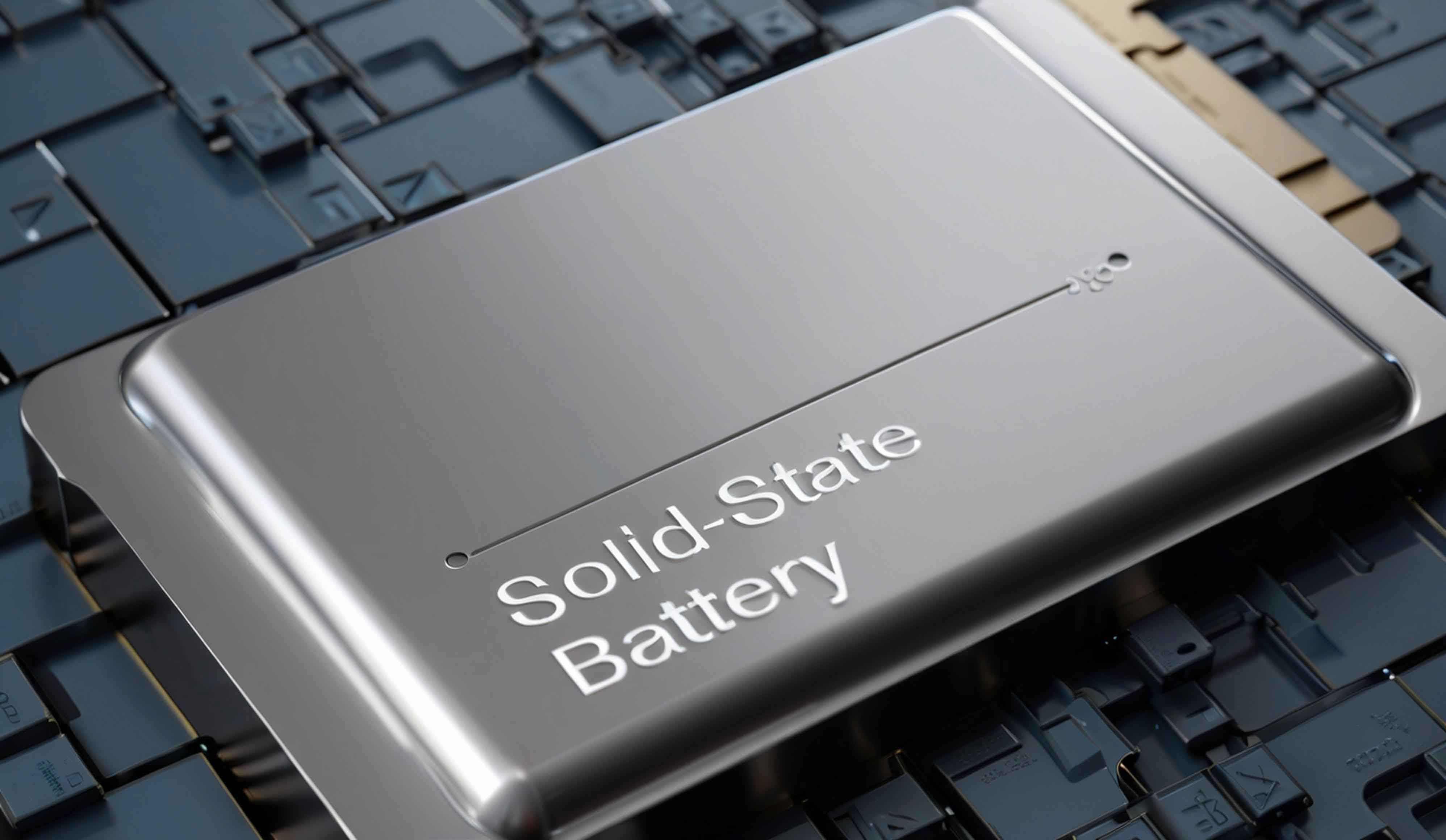
The fundamental distinction of a solid-state battery lies in its replacement of the liquid or gel polymer electrolyte with a solid ionic conductor. This simple yet profound change alters the entire operational electrochemistry. During charging, lithium ions (Li⁺) are extracted from the cathode material and migrate through the rigid lattice structure of the solid electrolyte to the anode, where they are incorporated (e.g., plated as lithium metal or alloyed). The electrons travel via an external circuit, doing useful work. The process is reversed during discharge. The absence of flammable liquid electrolytes inherently mitigates risks of leakage and violent thermal runaway.
The performance and viability of a solid-state battery are primarily dictated by the choice of solid electrolyte material. The main families are compared in Table 1.
| Electrolyte Class | Example Materials | Ionic Conductivity (RT, S/cm) | Key Advantages | Primary Challenges |
|---|---|---|---|---|
| Oxide | Garnet (LLZO), NASICON (LATP), Perovskite (LLTO) | 10⁻⁴ – 10⁻³ | Excellent chemical/thermal stability, wide electrochemical window, air-stable. | High rigidity leads to poor interfacial contact; grain boundary resistance. |
| Sulfide | LPS (Li₃PS₄), LGPS, Argyrodite (Li₆PS₅Cl) | 10⁻³ – 10⁻² | Highest ionic conductivity; soft mechanical properties enable good interfacial contact. | Poor air stability (H₂S release); narrow electrochemical window; cost of raw materials. |
| Polymer | PEO-LiTFSI, PAN, PVDF-based composites | 10⁻⁶ – 10⁻⁴ | Excellent flexibility, ease of processing, good electrode compatibility. | Low ionic conductivity at room temperature; poor mechanical strength; limited thermal stability. |
| Halide | Li₃YCl₆, Li₂ZrCl₆, Li₃InCl₆ | 10⁻⁴ – 10⁻³ | Good ionic conductivity, high-voltage stability, and relative moisture stability. | High cost of raw materials (e.g., Y, Zr); sensitivity to certain electrode materials. |
Table 1: Comparison of Major Solid Electrolyte Material Classes.
The development trajectory of the solid-state battery has seen several pivotal milestones. Early foundational work in the 1970s and 80s identified key material possibilities. The 2010s witnessed significant breakthroughs in sulfide and oxide electrolytes, pushing room-temperature conductivity to practical levels. Recently, the focus has shifted from lab-scale achievements to engineering solutions for mass production. For instance, the ionic conductivity ($\sigma$) of a solid electrolyte, a critical parameter, is governed by the number of charge carriers ($n$), their charge ($q$), and mobility ($\mu$), as described by:
$$\sigma = n q \mu$$
Enhancing $\sigma$ involves engineering the material’s crystal structure to increase $n$ (e.g., by creating lithium vacancies) and $\mu$ (by designing low-energy migration pathways). The temperature dependence typically follows the Arrhenius law:
$$\sigma T = A \exp\left(-\frac{E_a}{k_B T}\right)$$
where $E_a$ is the activation energy for ion hopping, $k_B$ is Boltzmann’s constant, and $T$ is temperature. A primary goal in solid-state battery research is to minimize $E_a$ to achieve high conductivity at ambient conditions.
2. Innovations in Critical Materials
2.1 Solid Electrolytes: Beyond Bulk Conductivity
While bulk ionic conductivity is crucial, the real-world performance of a solid-state battery is often limited by interfacial phenomena. The rigid solid-solid contact between electrolyte and electrode creates high interfacial resistance, impeding ion flow. My analysis suggests that future innovations will focus on hybrid and composite approaches. For example:
- Oxide-Polymer Composites: Embedding garnet-type oxide particles (e.g., LLZO) into a polymer matrix (e.g., PEO). This combines the high ionic conductivity of the oxide with the flexible,界面-friendly nature of the polymer, improving overall mechanical adhesion and lowering grain boundary resistance.
- Interfacial Engineering Layers: Applying ultrathin functional coatings (e.g., Li₃PO₄, Al₂O₃ via ALD) on electrode particles or electrolyte surfaces. These layers can prevent detrimental chemical reactions, facilitate lithium ion transport across the interface, and suppress the growth of lithium dendrites.
- Sulfide Hybridization: Doping sulfide electrolytes with elements like oxygen or selenium to improve their (electro)chemical stability against high-voltage cathodes without drastically compromising conductivity.
2.2 Cathode and Anode Material Evolution
The shift to a solid-state battery architecture unlocks the use of next-generation electrode materials that are incompatible with liquid electrolytes. The key developments are summarized in Table 2.
| Electrode | Material Innovations | Theoretical/ Achieved Capacity | Role of Solid-State Design | Remaining Challenges |
|---|---|---|---|---|
| Cathode | High-Nickel NMC (LiNixMnyCozO₂, x>0.8) | ~220 mAh/g | Solid electrolyte withstands higher operating voltages, enabling full extraction of capacity. | Interfacial degradation and microcracking during cycling. |
| Lithium-Rich Manganese-Based (xLi₂MnO₃·(1-x)LiMO₂) | >250 mAh/g | Mitigates oxygen release and related side reactions with liquid electrolytes. | Voltage fade, slow kinetics, and low initial Coulombic efficiency. | |
| Sulfur (S) and Conversion-Type (e.g., FeF₃) | >1000 mAh/g (S) | Confines polysulfide shuttling; accommodates large volume change better. | Very poor intrinsic conductivity; huge volume expansion. | |
| Anode | Lithium Metal (Li⁰) | 3860 mAh/g | Solid electrolyte provides a mechanical barrier to suppress dendrite penetration. | Uncontrolled interfacial growth; infinite relative volume change. |
| Silicon (Si) and Si-C Composites | ~4200 mAh/g (Si) | Solid matrix can better constrain volume expansion (~300%) than liquid cells. | Pulverization and loss of electrical contact; solid electrolyte interphase (SEI) stability. |
Table 2: Next-Generation Electrode Materials Enabled by Solid-State Battery Architecture.
The performance of these electrodes, particularly in terms of capacity retention, is closely tied to the stability of the electrode-electrolyte interface. The diffusion of lithium within a particle, often the rate-limiting step, is described by Fick’s laws. For a spherical particle, the characteristic diffusion time $\tau$ is:
$$\tau = \frac{r^2}{D}$$
where $r$ is the particle radius and $D$ is the chemical diffusion coefficient of Li⁺ in the material. This underscores the importance of nanoparticle design ($r \downarrow$) and creating fast ion-conducting pathways at the interface ($D \uparrow$) to achieve high power density in a solid-state battery.
3. Application in New Energy Vehicles: Current Status and Advantages
The translation of solid-state battery technology from the lab to the automotive market is underway, driven by compelling advantages that directly address consumer and OEM pain points.
Energy Density and Range: The use of lithium metal anodes is the single biggest lever for energy density. A state-of-the-art liquid lithium-ion battery might achieve 250-300 Wh/kg at the cell level. In contrast, prototype solid-state battery cells have demonstrated 350-500 Wh/kg, with research cells exceeding 720 Wh/kg. This translates directly to a potential doubling of vehicle range for the same pack weight or significant weight reduction for the same range. The gravimetric energy density $E_g$ is a key metric:
$$E_g = \frac{U \times Q}{m}$$
where $U$ is the average cell voltage, $Q$ is the capacity in Ah, and $m$ is the mass. The high $Q$ from Li-metal anodes directly boosts $E_g$.
Safety: This is the most touted benefit. The non-flammable solid electrolyte eliminates the primary fuel source for thermal runaway. Studies show that the onset temperature for thermal decomposition in a well-designed solid-state battery can be over 200°C higher than in conventional LIBs. Furthermore, many solid electrolytes are stable against lithium metal, preventing dendrite-induced short circuits.
Charging Speed and Lifetime: The intrinsic safety allows for more aggressive charging protocols without the risk of lithium plating on the anode. While liquid cells are typically limited to ~2C peak charging (30 minutes for 0-80%), solid-state batteries are being engineered for 4-6C rates (10-15 minutes). Furthermore, the stable interface can reduce parasitic side reactions, potentially enabling cycle lives exceeding 2000 cycles while maintaining >80% capacity.
The global competitive landscape is intense, as illustrated in Table 3.
| Company/Alliance | Technology Focus | Key Milestone / Target | Estimated Timeline for Volume Application |
|---|---|---|---|
| Toyota (with Idemitsu) | Sulfide-based electrolyte | Over 900 km range; 10-min fast charge to 80%. | 2027-2028 |
| CATL | Condensed Matter (Polymer-Inorganic Composite) | Cell energy density up to 500 Wh/kg; >2000 cycles. | 2027 onwards |
| NIO | In-house developed semi-solid-state (hybrid electrolyte) | 150 kWh semi-solid pack (~360 Wh/kg cell) deployed. | Now (Limited production) |
| Solid Power (Partnering with BMW, Ford) | Sulfide electrolyte, anode-less (Li metal plated in-situ) | Pilot line delivery of 20 Ah cells to automotive partners. | 2026-2027 |
| QuantumScape | Ceramic Separator (Oxide-based) | Multi-layer cell with >800 cycles at 1C; high energy density. | Mid-2020s |
Table 3: Snapshot of Global Solid-State Battery Development for Automotive Applications.
4. Challenges and the Path Forward
Despite the promise, the path to ubiquitous solid-state battery-powered EVs is fraught with significant hurdles that require concerted R&D and industrial effort.
Manufacturing and Cost: The fabrication of thin, defect-free solid electrolyte layers over large areas is complex. Processes like RF sputtering or pulsed laser deposition (PLD) used in labs are prohibitively expensive and slow. Scaling up roll-to-roll manufacturing for sulfide sheets or sintering processes for oxide layers is a major engineering challenge. The current cost per kWh for a solid-state battery is estimated to be 3-5 times that of a mature lithium-ion battery, primarily due to material costs (e.g., Ge in LGPS, Li₆PS₅Cl precursors) and low-yield processes.
Interfacial Stability During Cycling: While initially stable, the interfaces in a solid-state battery can degrade. Volume changes in the electrodes during cycling can lead to loss of physical contact, increasing impedance—a phenomenon described as “contact loss.” Chemical reactions can form interphases that are ionically resistive. Managing these dynamic interfaces over thousands of cycles is critical.
Material Supply Chain: Widespread adoption of certain electrolyte chemistries (e.g., sulfides requiring specific metal precursors) or cathodes (e.g., high-Ni, Co-free) will stress existing raw material supply chains and necessitate the development of new, sustainable sourcing and recycling pathways.
System Integration and Infrastructure: The higher energy density of a solid-state battery may alter vehicle packaging and thermal management system design. Furthermore, realizing the promised ultra-fast charging (e.g., 350-500 kW) will require massive upgrades to grid infrastructure and public charging stations, presenting a parallel challenge that extends beyond the battery cell itself.
5. Concluding Perspective
In my assessment, the solid-state battery represents the most credible and transformative path forward for electric vehicle energy storage. Its potential to simultaneously resolve the trilemma of range, safety, and charging time is unmatched by incremental improvements to liquid electrolyte systems. The current decade is defined by the transition from proof-of-concept cells to manufacturable engineering prototypes. Success will not come from a single “winner-takes-all” material but from sophisticated, hybrid material systems and ingenious interfacial engineering.
The role of continued and intensified R&D investment cannot be overstated. This must span fundamental materials science (discovering new ionic conductors with ideal properties), electrochemistry (understanding and controlling interfacial dynamics), and advanced manufacturing engineering (developing cost-effective, high-throughput production techniques). Concurrently, strategic public policy and infrastructure investment are essential to build the supportive ecosystem—from raw material refining to grid and charging networks—that will allow this groundbreaking technology to fulfill its promise. The journey to make the solid-state battery the heart of the next generation of new energy vehicles is undoubtedly challenging, but the rewards—cleaner, safer, and more efficient transportation—are imperative for a sustainable future.