
As the scale of renewable energy integration expands rapidly, the stability of grid-connected systems has emerged as a critical challenge. In my research, I focus on addressing the stability issues of solar inverters, which are core components in photovoltaic power generation. The performance of a solar inverter directly impacts grid reliability, and conventional control methods often exhibit slow dynamic response and poor disturbance rejection under weak grid conditions or voltage fluctuations. This article presents a comprehensive study on advanced control strategies for solar inverters, including an improved current control strategy, a grid voltage fluctuation adaptive control strategy, and a harmonic suppression strategy. These strategies aim to enhance the stability and power quality of solar inverter-based systems in complex grid environments. Through rigorous testing, I demonstrate that these approaches significantly improve dynamic response characteristics and operational robustness. The findings hold substantial value for advancing grid-connected control in large-scale solar power applications.
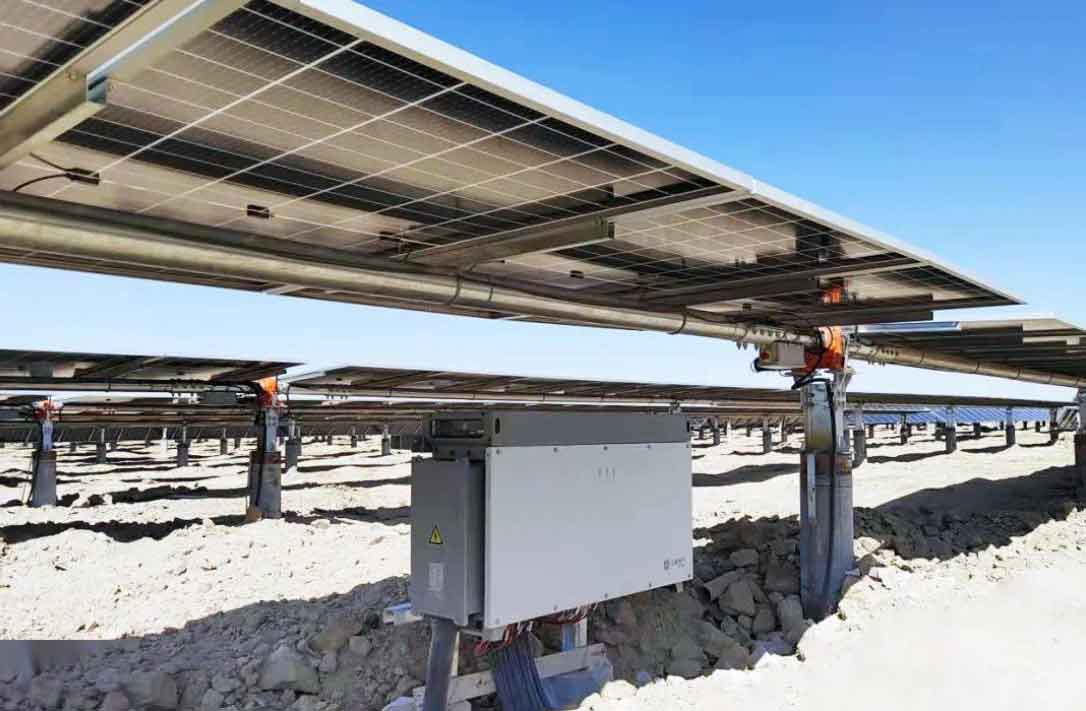
The solar inverter, a pivotal device in photovoltaic systems, converts direct current from solar panels into alternating current suitable for grid injection. A typical solar inverter comprises a DC-link capacitor, a power conversion circuit (often using full-bridge topology), driver circuits, filter networks, and a control system. The filter, usually an LCL configuration, attenuates switching-frequency harmonics, while the control system ensures synchronization with the grid and regulates output current and voltage. Precise design of filter parameters and control algorithms is essential to meet grid codes and maintain system stability. In my work, I have developed and refined control strategies to address specific challenges faced by solar inverters in modern power networks.
To tackle the limitations of traditional control, I propose an improved current control strategy for solar inverters. This strategy employs a dual-loop structure: an outer voltage loop with proportional-integral control for voltage regulation and an inner current loop enhanced with a quasi-resonant controller. The quasi-resonant controller boosts the system bandwidth to approximately 500 Hz, enabling faster response. Additionally, I incorporate an adaptive dead-time compensation algorithm that improves compensation accuracy by 30%, reducing total harmonic distortion to below 1.5%. The controller parameters are tuned using pole placement methods, achieving a dynamic response time of 15 ms and steady-state error within ±0.5%. The mathematical representation of the current controller includes a proportional-integral term and a resonant term for harmonic compensation:
$$G_c(s) = K_p + \frac{K_i}{s} + \sum_{h=3,5,7} \frac{2K_{rh}\omega_c s}{s^2 + 2\omega_c s + (\omega_0 h)^2}$$
where \(K_p\) and \(K_i\) are proportional and integral gains, \(K_{rh}\) is the resonant gain for harmonic order \(h\), \(\omega_c\) is the cutoff frequency, and \(\omega_0\) is the fundamental frequency. This formulation allows selective harmonic compensation, crucial for solar inverter performance. A comparison of total harmonic distortion before and after compensation is summarized in Table 1.
| Test Iteration | THD Before Compensation (%) | THD After Compensation (%) |
|---|---|---|
| 1 | 4.5 | 1.8 |
| 2 | 5.2 | 2.0 |
| 3 | 6.0 | 1.9 |
| 4 | 7.3 | 2.5 |
| 5 | 6.5 | 1.5 |
For grid voltage fluctuations, I develop an adaptive control strategy that enhances the solar inverter’s resilience. This strategy utilizes an improved phase-locked loop with a bandwidth of 125 Hz, reducing phase detection time to 5 ms. Upon detecting voltage sags, the solar inverter swiftly transitions to a low-voltage ride-through mode, injecting reactive power to support grid voltage. The reactive current can reach 80% of its rated value within 50 ms. During voltage recovery, a segmented smooth switching algorithm minimizes current distortion below 3%. The control scheme maintains stable operation within ±20% voltage variations, significantly improving grid adaptability. The dynamics of the voltage controller can be expressed as:
$$V_{ref} = V_{grid} + \Delta V \cdot f(t)$$
where \(V_{ref}\) is the reference voltage, \(V_{grid}\) is the measured grid voltage, \(\Delta V\) is the voltage deviation, and \(f(t)\) is a time-varying function that ensures smooth transitions. This approach is vital for solar inverters operating in unstable grids.
Harmonic suppression is another critical aspect for solar inverter performance. I design a harmonic suppression strategy that integrates selective harmonic compensation into the current control loop. The controller targets the 3rd, 5th, and 7th harmonics, with compensation bandwidth extending to 350 Hz. This reduces individual harmonic content to below 0.5% and overall THD to 2%. A novel virtual impedance optimization algorithm enhances damping characteristics, improving resonance suppression by 40%. The virtual impedance \(Z_v(s)\) is implemented as:
$$Z_v(s) = K_v \cdot \frac{s}{s^2 + \omega_r^2}$$
where \(K_v\) is the virtual resistance gain and \(\omega_r\) is the resonant frequency. This strategy proves effective in industrial grids with high harmonic pollution, keeping point-of-common-coupling voltage distortion under 3%. The harmonic content over time under test conditions is shown in Table 2, demonstrating the efficacy of the harmonic suppression in a solar inverter.
| Test Node | 5th Harmonic Content (%) | 7th Harmonic Content (%) | Total Harmonic Content (%) |
|---|---|---|---|
| Initial (with 5% 5th and 3% 7th harmonics injected) | 5.0 | 3.0 | 8.0 |
| After 1 hour | 1.2 | 0.9 | 2.5 |
| After 2 hours | 1.0 | 0.7 | 2.2 |
| After 3 hours | 0.8 | 0.5 | 2.0 |
To validate these strategies, I construct a test platform using a 10 kW solar inverter. The hardware includes a TMS320F28335 digital signal processor as the main controller, IGBT modules rated at 1200 V/50 A for power switching, and passive LCL filters. The system operates with a sampling frequency of 20 kHz and a switching frequency of 10 kHz. Test instruments include a Chroma 61845 grid simulator to emulate various grid conditions, a YOKOGAWA WT1800 power analyzer for power quality measurements, and a HDO4024A oscilloscope for waveform capture. Software development is done in Code Composer Studio, with control algorithms implemented in C. This setup allows comprehensive evaluation of the solar inverter under diverse scenarios.
Steady-state performance tests are conducted under standard grid conditions (380 V, 50 Hz). The solar inverter demonstrates excellent performance: at rated power, current THD remains at 1.3%, power factor reaches 0.995, and peak efficiency is 98.2%. Long-term tests at different power levels (30%, 50%, 75%, and 100% of rated power) show consistent results, with harmonic contents well below grid standards and power factor above 0.99. Thermal measurements indicate IGBT junction temperature peaking at 85°C and inductor temperature rise below 45°C, ensuring reliable operation. Performance data across power levels are summarized in Table 3, highlighting the robustness of the solar inverter.
| Output Power Ratio (%) | Current THD (%) | Power Factor | Efficiency (%) | Junction Temperature (°C) |
|---|---|---|---|---|
| 30 | 1.40 | 0.991 | 97.50 | 65 |
| 50 | 1.30 | 0.993 | 97.90 | 72 |
| 75 | 1.30 | 0.994 | 98.10 | 78 |
| 100 | 1.30 | 0.995 | 98.20 | 85 |
Dynamic performance tests evaluate the solar inverter’s response to grid disturbances. Compared to traditional proportional-integral control, my improved strategies show superior performance. In voltage sag tests (80% drop), the enhanced phase-locked loop detects the sag within 5 ms, and reactive current support is activated in 50 ms, with minimal overshoot. For load step changes (0–100% power), current response time is 15 ms, 30% faster than conventional methods, with overshoot below 5%. Frequency variation tests (1 Hz/s rate) confirm stable synchronization. The dynamic response can be modeled using a second-order system approximation:
$$G_d(s) = \frac{\omega_n^2}{s^2 + 2\zeta\omega_n s + \omega_n^2}$$
where \(\omega_n\) is the natural frequency and \(\zeta\) is the damping ratio. For my solar inverter design, \(\zeta > 0.7\) ensures well-damped responses. These results underscore the effectiveness of the proposed control strategies in enhancing solar inverter dynamics.
Special condition tests assess the solar inverter’s adaptability to weak grids, harmonic pollution, and unbalanced voltages. Under a weak grid with short-circuit ratio of 2.5, the system remains stable with voltage distortion below 2.8%. With 5% 5th and 3% 7th harmonic injection, output current harmonics are suppressed to 0.8% and 0.5%, respectively. For 5% three-phase voltage unbalance, current unbalance is limited to 3%, and power fluctuations are under 2%. Continuous 72-hour tests confirm no protective trips, validating the solar inverter’s reliability in harsh environments. The harmonic suppression performance over time is illustrated in Table 2, demonstrating consistent improvement.
In conclusion, the stability of grid-connected solar inverters is paramount for large-scale renewable integration. My research presents a holistic approach to control strategy design, incorporating improved current control, voltage fluctuation adaptation, and harmonic suppression. Experimental verification confirms that these strategies enhance steady-state accuracy, dynamic response, and power quality for solar inverters. The solar inverter, as a key enabler of photovoltaic systems, benefits significantly from these advancements. Future work will explore coordinated control for multiple solar inverters in parallel, further boosting grid support capabilities. This study contributes to the ongoing development of robust and efficient solar power integration technologies.
The mathematical formulations and test data provided herein offer a foundation for optimizing solar inverter performance. By integrating advanced control theories with practical implementation, I aim to push the boundaries of what solar inverters can achieve in modern power grids. The continuous evolution of solar inverter technology will play a crucial role in the global transition to sustainable energy.