
The evolution of the new energy market has accelerated the pace of technological innovation in batteries. While energy density remains a key performance metric, safety is becoming an increasingly critical concern for consumers. Lithium-ion batteries (LIBs), the dominant technology for secondary batteries, are widely used in portable electronics and electric vehicles. However, concerns over the scarcity and uneven distribution of lithium resources, coupled with frequent safety incidents like fires and explosions associated with LIBs, have raised significant apprehension about their future development.
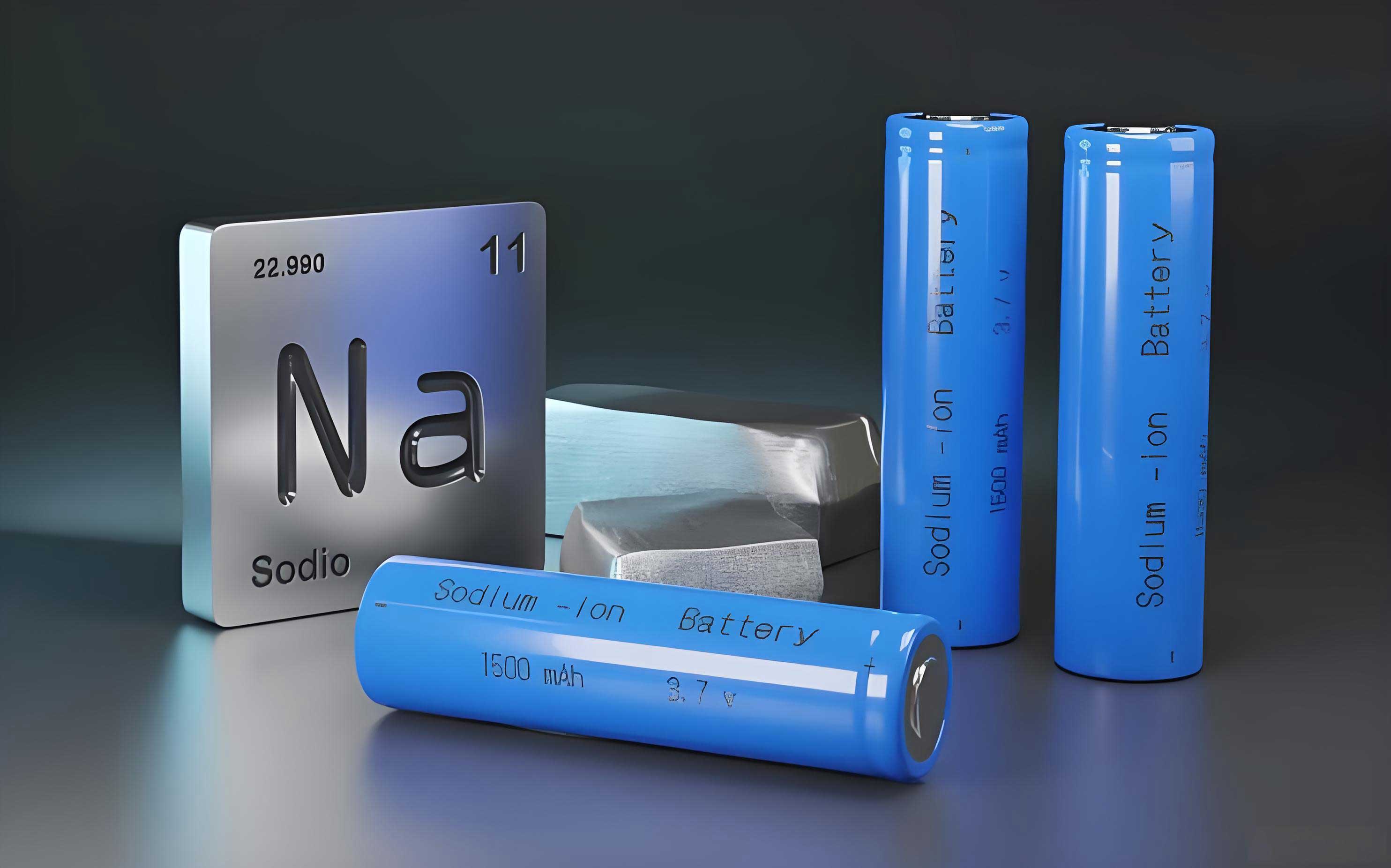
Sodium-ion batteries (SIBs) are emerging as a sustainable energy storage technology, attracting considerable attention due to their advantages of abundant sodium resources, low cost, wide operating temperature range, and excellent cycling stability. The working principle of a sodium-ion battery is similar to that of a lithium-ion battery, often described as a “rocking-chair” mechanism. During charging, sodium ions are extracted from the cathode, travel through the electrolyte, and are inserted into the anode, while electrons move in the opposite direction through an external circuit to maintain charge balance. The discharge process is the reverse, completing the reversible cycle. Notably, sodium-ion batteries demonstrate significant safety advantages over their lithium counterparts. For instance, they can operate stably in extreme temperatures ranging from -70°C to 100°C. Furthermore, under abuse tests such as overcharge, high temperature, short circuit, and nail penetration, sodium-ion batteries often exhibit higher stability without fire or explosion. Additionally, the use of aluminum foil as the anode current collector in sodium-ion batteries avoids potential over-discharge issues associated with carbon-based anodes in lithium-ion batteries.
Nevertheless, the thermal runaway risk in sodium-ion batteries cannot be ignored. The organic electrolytes commonly used in sodium-ion batteries are highly reactive. At elevated temperatures, these electrolytes can participate in exothermic reactions with both the cathode and anode. Furthermore, they are prone to volatilization, decomposition, and self-ignition, which can accelerate the internal temperature rise of the battery, ultimately leading to catastrophic failure. Additionally, the larger ionic radius of sodium can cause structural collapse in electrode materials during cycling, accompanied by heat generation, thereby introducing safety concerns.
The chain reactions between electrodes and electrolyte at high temperatures are the primary cause of thermal runaway in batteries. Therefore, investigating the thermal behavior of key materials in sodium-ion batteries is of paramount importance. While recent research has heavily focused on modifying electrode materials to enhance the energy density and cycle life of sodium-ion batteries, there is a relative lack of comprehensive summaries and discussions on the intrinsic thermal stability of these key battery materials. This review aims to bridge this gap. We will first discuss the thermal runaway process and primary heat sources in sodium-ion batteries. Subsequently, we will systematically elaborate on the thermal stability and heat/gas generation characteristics of key battery materials, covering cathodes, anodes, and electrolytes. Finally, we will propose design strategies for safer sodium-ion batteries and provide an outlook on future research directions.
The Thermal Runaway Process in Sodium-Ion Batteries
The critical components of a sodium-ion battery include the cathode, anode, electrolyte, and separator. The fundamental cause of thermal runaway lies in the intrinsic thermal effects of these materials. Beyond the heat generated during normal operation, heat accumulates rapidly under abuse conditions, which include mechanical abuse (vibration, impact), thermal abuse (high ambient temperature), and electrical abuse (overcharge). When the rate of heat generation within the battery exceeds its dissipation rate and accumulates to a critical point, thermal runaway occurs, potentially leading to fire or explosion. The thermal runaway process in a sodium-ion battery can be broadly divided into three stages: the Initial Stage, the Heat Accumulation Stage, and the Thermal Abuse Stage.
1. Initial Stage: When a battery is exposed to a high-temperature environment or experiences internal/external short circuits, initial overheating occurs. At this stage, heat primarily originates from the reversible heat ($Q_r$) of electrochemical reactions and the irreversible polarization heat ($Q_p$). When the battery temperature reaches the self-heating onset temperature ($T_{onset}$), the self-heating process begins, and the heating rate increases.
2. Heat Accumulation Stage: In this stage, exothermic reactions occur at the cathode, anode, and electrolyte. Heat primarily comes from the irreversible heat of these side reactions ($Q_s$) and polarization heat ($Q_p$), causing a rapid internal temperature rise. The sequence of reactions typically involves the decomposition of the Solid-Electrolyte Interphase (SEI) layer on the anode, the reaction between the anode and electrolyte, volatilization of the electrolyte, and the thermal decomposition of the cathode structure. The gases produced in these reactions increase internal pressure, potentially causing battery rupture. The release of oxygen ($O_2$) and flammable gases can further exacerbate the hazard. Additionally, separator materials like polypropylene (PP) and polyethylene (PE) can shrink and melt around 150°C, leading to direct contact between the cathode and anode and accelerating heat release. The battery temperature eventually reaches the thermal runaway critical temperature ($T_c$), and the heating rate increases further.
The key reactions in this stage can be represented as follows:
SEI layer decomposition (R represents an alkyl group):
$$ \text{ROCO}_2\text{Na} \rightarrow \text{RONa} + \text{CO}_2 $$
Reaction between anode (Na) and electrolyte (using ethylene carbonate, EC, as an example):
$$ 2\text{Na} + \text{C}_3\text{H}_4\text{O}_3 \rightarrow \text{Na}_2\text{CO}_3 + \text{C}_2\text{H}_4 $$
Cathode structure decomposition (for a layered transition metal oxide, $Na_xMO_2$):
$$ \text{Na}_x\text{MO}_2 \rightarrow x\text{NaMO}_2 + y\text{M}_3\text{O}_4 + y\text{O}_2 \quad (x + 3y = 1) $$
3. Thermal Abuse Stage: When the internal temperature reaches the flash point of the organic electrolyte, the battery loses control completely. The temperature rises exponentially, reaching the maximum thermal runaway temperature ($T_{max}$) and triggering fire or explosion. The primary heat source in this stage is the irreversible heat ($Q_s$) from violent side reactions, such as the combustion of the electrolyte:
$$ \text{C}_3\text{H}_4\text{O}_3 + 2.5\text{O}_2 \rightarrow 3\text{CO}_2 + 2\text{H}_2\text{O} $$
Understanding the thermal behavior and related characteristic parameters of key materials is therefore the first step toward improving the safety of sodium-ion batteries.
Research Progress on Key Materials
Cathode Materials
An ideal cathode material for sodium-ion batteries should possess excellent structural and thermal stability to ensure operational safety at high temperatures. Researchers have developed various cathode materials, primarily categorized into layered transition metal oxides, polyanionic compounds, and Prussian blue analogues.
Layered Transition Metal Oxides
Layered oxide cathodes are widely studied due to their high specific capacity and relatively simple synthesis. However, they undergo complex phase transitions during cycling, leading to significant structural contraction/expansion and potential collapse. Furthermore, they can decompose at high temperatures, releasing oxygen, which increases internal pressure and promotes electrolyte decomposition, raising combustion risk. Studies on $Na_{0.53}MnO_2$ show its thermal stability limit is around 400°C, and a full cell can enter thermal runaway above 190°C. The thermal stability of charged cathode materials is often lower than in the discharged state due to the higher oxidation state of transition metals. Research on $Na_xNi_{1/3}Fe_{1/3}Mn_{1/3}O_2$ (NFM) revealed its thermal decomposition is a redox process, accelerated by the presence of electrolyte and higher state-of-charge (SOC). Doping strategies (e.g., with Fe, Mg, Li) have been shown to improve structural stability, as evidenced by higher onset temperatures for exothermic reactions and lower total heat release in Differential Scanning Calorimetry (DSC) curves.
Comparative studies between sodium-ion and lithium-ion battery cathodes are insightful. For instance, $Na_{1-x}NiO_2$ exhibits a higher decomposition temperature (280-300°C) and simpler structural changes than its lithium analogue $Li_{1-x}NiO_2$. While a fully charged $Na_{2/3}Fe_{1/3}Mn_{2/3}O_2$ (FM) cathode may generate more total heat than $Li_{0.5}CoO_2$, its heat release rate ($dQ/dt$) is lower, potentially allowing more time for emergency response. A comprehensive comparison of a sodium-ion battery with an NTM (Na-rich layered oxide) cathode against lithium-ion batteries with LFP (LiFePO$_4$) and NCM (LiNi$_x$Co$_y$Mn$_z$O$_2$) cathodes showed that the NTM battery’s hazard level (based on $T_{max}$, maximum temperature rise rate $r_{max}$, and total energy released) lies between that of LFP and NCM batteries. Its self-heating onset temperature ($T_{onset}$) is similar to NCM, but the temperature required for spontaneous ignition under convection ($SADT$) can be increased closer to LFP levels with improved cooling.
Post-mortem analysis using techniques like X-ray computed tomography and scanning electron microscopy reveals that thermal runaway causes significant microstructural changes in layered oxide cathodes, including increased porosity, particle aggregation, and reduction of metal oxides to pure metals. In contrast, hard carbon anodes often retain their original morphology, indicating that cathode decomposition is a primary driver of structural failure during thermal runaway in sodium-ion batteries.
Polyanionic Compounds
Polyanionic compounds, with the general formula $Na_xM_y(XO_m)_n$ (M = transition metal, X = P, S, Si), offer a stable three-dimensional framework that mitigates volume changes during cycling. The strong X-O bonds in the polyanion groups make oxygen release less likely at high temperatures compared to layered oxides, contributing to higher thermal stability. However, their low electronic conductivity can lead to higher internal resistance and Joule heating.
Studies comparing sodium-ion batteries with NFM and $Na_4Fe_3(PO_4)_2(P_2O_7)$ (NFPP) cathodes under overcharge conditions showed distinct thermal runaway behaviors. Strain monitoring proved to be an effective early indicator of failure. The NFPP battery, while triggering thermal runaway at a lower SOC, reached a much lower maximum temperature (~225°C) than the NFM battery (~400°C), indicating a lower hazard severity. The charging rate significantly impacts the process; higher currents lead to faster energy accumulation and more hazardous, needle-like sodium dendrite growth on the anode.
Thermal analysis of common polyanionic cathodes reveals a stability trend. For example, the thermal stability order among some studied materials is: $Na_4VMn(PO_4)_3$ (NVMPO) > $Na_3V_2(PO_4)_3$ (NVP) > $Na_3V_2(PO_4)_2F_3$ (NVPF) > NFM. However, the presence of electrolyte can dramatically alter this, with charged NVP showing no exothermic effect when in contact with electrolyte in some studies. Doping strategies can have mixed effects on thermal stability; Mn-substitution in NVP (to form NVMP) was found to decrease thermal stability, lowering the exothermic peak temperature and increasing enthalpy release. In contrast, Zn-substitution in NVP was reported to reduce overall cell impedance and heat generation, thereby improving safety.
Gas generation during thermal runaway is a critical safety parameter. Analysis of an 18650 cylindrical sodium-ion battery with an NVPF cathode showed the total gas volume was 441 mL/Wh. The major components were volatile organic carbonates from the electrolyte (70 vol%), followed by $H_2$ (10 vol%), $CO_2$, $C_2H_4$, HF, $CH_4$, and CO. The gas composition was notably similar to that from an LFP lithium-ion battery but different from an NCM lithium-ion battery, which produced more $CO_2$ and CO due to easier oxygen release from the cathode.
Prussian Blue Analogues (PBAs)
Prussian blue analogues, with the formula $A_xM_1[M_2(CN)_6]_y \cdot zH_2O$ (A = alkali metal, M = transition metal), feature open 3D channels for fast sodium ion diffusion. However, the inevitable crystal water in their structure can react with the electrolyte, corroding the structure, increasing interfacial resistance, and generating heat. Moreover, toxic cyanide species may be released at high temperatures.
In-situ DSC studies comparing potassium/sodium-ion batteries with a $K_2Mn[Fe(CN)_6]$ (KMHCF) cathode against a lithium-ion battery with an LCO cathode revealed distinct thermal runaway mechanisms for PBA-based cells. The process starts with SEI decomposition and reaction of intercalated alkali metal with the electrolyte. The generated heat flow triggers electrolyte decomposition, further raising the temperature. Upon exceeding ~190°C, cyanides released from the PBA cathode decompose and react with the electrolyte, generating a large amount of heat and toxic gases, pushing the battery into full runaway. Although the total heat generated was lower than for the LCO-based LIB, the onset temperature for thermal runaway was lower for the PBA-based cells, attributed to the less stable, more organic-rich SEI layer formed on the anodes in these systems.
The thermal behavior characteristics of various sodium-ion battery cathode materials are summarized in the table below, providing a comparative overview of their structural and thermal stability.
| Material Class | Example Material | Method | Characteristic Temperature / Onset ($T_{onset}$) | Peak/Decomposition Temp. | Key Findings |
|---|---|---|---|---|---|
| Layered Oxides | $Na_{0.53}MnO_2$ | TG/ARC | ~162°C (ARC) / 400°C (TG limit) | 550°C (ARC $T_{max}$) | Thermal runaway onset at ~190°C, heating rate 2.5°C/min. |
| $Na_xNi_{1/3}Fe_{1/3}Mn_{1/3}O_2$ (NFM) | DSC/ARC | 166°C (ARC) / 238°C (DSC, 4.0V) | 312°C (ARC) / 319°C (DSC) | Decomposition facilitated by electrolyte and high SOC. Heat release lower than some LIB cathodes but onset is earlier. | |
| $Na_{2/3}Fe_{1/3}Mn_{2/3}O_2$ (FM) | DSC | — | 379-401°C (DSC peak) | Heat release increases with charge voltage. Heat release rate lower than $Li_{0.5}CoO_2$. | |
| Polyanionic | $Na_3V_2(PO_4)_3$ (NVP) | DSC/TG/ARC | 158°C (ARC) / 345°C (DSC, 4.1V) | 285°C (ARC) / 380-415°C (DSC) | High thermal stability limit (~800°C per TG). Charged material (4.5V) less stable. Gas generation profile similar to LFP LIBs. |
| $Na_3V_2(PO_4)_2F_3$ (NVPF) | DSC | 219°C (DSC, 4.3V) | 317°C (DSC) | Less stable than NVP. Major gas products are organic carbonates and $H_2$. | |
| $Na_4VMn(PO_4)_3$ (NVMP) | DSC | — | 266-287°C (DSC) | Mn-substitution reduces thermal stability compared to NVP. | |
| Prussian Blue | $K_2Mn[Fe(CN)_6]$ | DSC | 119°C (SIB) / 127°C (KIB) | ~240°C (DSC) | Thermal runaway involves cyanide release at ~190°C. Total heat lower than LCO LIBs, but SEI is less stable leading to earlier onset. |
Anode Materials
Significant progress has been made in developing anode materials for sodium-ion batteries, including sodium metal, carbon-based materials (hard carbon, soft carbon, graphite), and alloys. However, the instability of the SEI layer and the growth of sodium dendrites pose major safety challenges. The initial stages of thermal runaway specifically involve SEI decomposition and reactions between the anode and electrolyte.
Studies comparing hard carbon and graphite anodes show that hard carbon has a lower decomposition temperature but a broader exothermic peak, suggesting a slower heat release rate that might allow more time for intervention compared to graphite’s sharp, intense peak. The thermal stability of hard carbon decreases with higher degrees of sodiation (i.e., higher SOC), and the presence of electrolyte further reduces it.
A detailed DSC comparison between lithiated ($C_6Li_{0.65}$) and sodiated ($C_6Na_{0.65}$) hard carbon reveals differences in thermal behavior. The total exothermic enthalpy for $C_6Na_{0.65}$ was ~1,236 J/g, slightly lower than for $C_6Li_{0.65}$ (~1,619 J/g). The major exothermic peak for sodiated hard carbon, attributed to the reaction with $PF_5$ (from salt decomposition), occurred at a significantly lower temperature (184°C) than for lithiated hard carbon (264°C). This indicates poorer thermal stability for the sodiated material. The heat from SEI decomposition ($\Delta H_1$) was also about one-third that of the lithiated counterpart, pointing to differences in SEI composition and stability. Interestingly, a mixed $C_6Li_{0.25}Na_{0.37}$ anode showed a higher peak temperature (279°C), suggesting that a Li-containing SEI component could enhance thermal stability.
Electrolytes
The electrolyte facilitates ion transport and participates in forming the SEI/CEI (Cathode-Electrolyte Interphase) layers. Common sodium-ion battery electrolytes (organic carbonates, ethers) are highly flammable and volatile. Their decomposition at high temperatures generates gas, increasing internal pressure. Furthermore, the decomposition of the SEI layer they help form contributes significantly to thermal runaway hazards.
Research has systematically compared the thermal stability of various solvents, salts, and their combinations. The thermal stability order for common solvents is: Propylene Carbonate (PC) > Ethylene Carbonate (EC) > Diethyl Carbonate (DEC) > Dimethyl Carbonate (DMC) > Dimethoxyethane (DME). For EC-based binary mixtures: EC/PC > EC/DEC > EC/DMC > EC/DME. For sodium salts: $NaClO_4$ > $NaPF_6$ > Sodium bis(trifluoromethanesulfonyl)imide ($NaTFSI$).
The choice of electrolyte profoundly affects anode thermal stability. For fully sodiated hard carbon, the onset temperature for the first exothermic peak (associated with SEI decomposition) varies with the electrolyte. Electrolytes like $NaClO_4$ in EC/PC promote a more stable SEI, leading to a later onset and lower total heat release compared to other solvents. Among salts, sodium bis(fluorosulfonyl)imide ($NaFSI$) was found to form the most stable SEI on hard carbon, yielding the highest onset temperature and lowest total heat release. Ether-based electrolytes (e.g., 1M $NaBF_4$ in Tetraglyme) can lead to a more stable interface on hard carbon compared to carbonate-based electrolytes (e.g., 1M $NaClO_4$ in EC:PC), as evidenced by a higher SEI decomposition onset temperature and lower total exothermic heat.
Additives also play a crucial role. Fluoroethylene carbonate (FEC) added to $NaPF_6$-PC/EMC electrolyte significantly suppressed exothermic reactions between 160-230°C, improving the thermal stability of the hard carbon anode interface. For cathodes like NFM, the electrolyte composition also impacts thermal stability; while EC/PC may offer better electrochemical performance, EC/DEC can provide better thermal stability for the cathode. The sodium salt in the electrolyte affects cathode heat release, with the order being $NaClO_4$ > $NaPF_6$ > $NaTFSI$.
Catalytic effects on electrolyte decomposition are a serious concern. Studies using a high-pressure reactor show that sodium salts (e.g., $NaSO_3CF_3$) and transition metal sulfide anodes (e.g., $CoS_2$) can catalyze the thermal decomposition of ether-based solvents like diethylene glycol dimethyl ether (DEGDME). This catalysis leads to higher maximum temperatures and pressures, as well as faster pressure rise rates during heating, significantly exacerbating thermal runaway hazards.
| Component Type | Example | Effect on Thermal Behavior (Anode/Cathode) | Key Observation |
|---|---|---|---|
| Solvent | EC/PC mixture | Improves anode SEI stability | Delays SEI decomposition onset and reduces total heat from sodiated hard carbon compared to EC/DEC or EC/DMC. |
| Sodium Salt | $NaFSI$ | Improves anode SEI stability | Forms the most stable SEI on hard carbon among tested salts ($NaTFSI$, $NaPF_6$, $NaClO_4$), leading to highest onset temp. and lowest heat. |
| Sodium Salt | $NaTFSI$ | Improves cathode thermal stability | Leads to lower heat release from NFM cathode compared to $NaPF_6$ or $NaClO_4$. |
| Additive | Fluoroethylene Carbonate (FEC) | Improves anode/electrolyte interface stability | Suppresses exothermic reactions in 160-230°C range for hard carbon in $NaPF_6$-PC/EMC electrolyte. |
| Electrolyte Type | Ether-based ($NaBF_4$/Tetraglyme) | Improves anode interface stability vs. Carbonates | Higher SEI decomposition onset and lower total heat for hard carbon compared to carbonate-based ($NaClO_4$/EC:PC). |
| Catalytic Material | $CoS_2$ anode, $NaSO_3CF_3$ salt | Degrades electrolyte thermal stability | Catalyzes decomposition of ether solvents (DEGDME), leading to higher temps, pressures, and faster pressure rise. |
Conclusion and Perspectives
Sodium-ion batteries, with their cost and potential safety advantages, are promising candidates to complement or replace lithium-ion batteries in applications like electric vehicles and large-scale energy storage. However, structural changes in cathodes, unstable SEI layers on anodes, and flammable organic liquid electrolytes underscore the importance of addressing thermal runaway hazards. The root cause of thermal runaway lies in the intrinsic thermal effects of the battery materials. This review has discussed the thermal runaway process and primary heat sources in sodium-ion batteries, followed by a systematic overview of the thermal stability and heat/gas generation characteristics of key cathode, anode, and electrolyte materials.
To further enhance the safety of sodium-ion batteries for practical applications, the design of key materials should consider the following strategies:
- Cathode Design: The thermal decomposition of cathode materials (especially layered oxides) and subsequent oxygen release intensify thermal runaway hazards. Strategies such as optimizing the operating voltage window, elemental doping, and surface coating can improve structural and thermal stability, reducing heat release. Employing materials with low defect density and fewer grain boundaries, such as single-crystal cathodes, may also enhance structural and interfacial thermal stability.
- Anode and SEI Engineering: The rapid dissolution of the unstable SEI layer is a key issue triggering thermal runaway in sodium-ion batteries. Incorporating functional additives into the electrolyte to construct a more robust and thermally stable SEI layer is crucial. Furthermore, the thermal behavior of other anode materials (soft carbon, graphite, alloys) requires more investigation to fully understand their impact on overall battery safety.
- Advanced Electrode Architecture: Employing three-dimensional current collectors constructed from materials with high electronic and thermal conductivity (e.g., graphene, carbon nanotubes) can facilitate better heat dissipation and reduce local heat accumulation within the electrode.
- Safer Electrolytes: The decomposition and combustion of liquid electrolytes are major heat sources. Selecting solvents and salts with higher thermal stability (e.g., PC/EC, $NaClO_4$) can mitigate hazards. Beyond that, developing electrolytes with flame-retardant additives, highly thermally stable polymer/inorganic solid-state electrolytes, or ionic liquids presents a fundamental path toward safer sodium-ion batteries.
Currently, research on the thermal behavior of sodium-ion batteries is still in a relatively early stage. Future work should not be limited to studying the thermal stability of individual materials but must focus on their combined impact on the overall safety of large-format, high-capacity pouch or prismatic cells. Additionally, research efforts should be strengthened in complementary areas such as high-safety separators (with self-extinguishing or melt-shutdown properties), advanced Battery Management Systems (BMS), emergency response protocols, and state-of-health monitoring techniques. A holistic approach combining material innovation with system-level engineering is essential to synergistically improve the safety profile and competitiveness of sodium-ion batteries in the burgeoning new energy sector.