
The transformation of global energy structures has made smart grid technology a key direction for the power industry. Within this context, the battery energy storage system emerges as a critical component of smart distribution networks, significantly enhancing grid stability, optimizing energy distribution, and improving power quality. With the advancement of lithium-ion battery technology, a battery energy storage system can efficiently store and release electrical energy, providing robust support for peak-valley regulation. By integrating advanced energy conversion technologies and intelligent control strategies, the battery energy storage system responds quickly to actual grid demands, balancing loads and optimizing operations. Furthermore, remote monitoring and smart scheduling capabilities improve management efficiency. This paper presents a comprehensive design methodology for a smart distribution network battery energy storage system, detailing key technologies and innovations to provide valuable theoretical and practical guidance for researchers and practitioners, thereby advancing smart grid technology.
Distribution Network and Battery Energy Storage System Model
Smart Distribution Network Battery Energy Storage System
A smart distribution network battery energy storage system integrates advanced storage technologies such as battery storage and flywheel storage to store and release electrical energy. During low demand periods, the system stores excess energy; during peak demand, it discharges to balance supply and demand, enhancing grid stability and reliability. Moreover, the system improves the grid’s capacity to accommodate renewable energy sources, promoting large-scale green energy adoption and reducing dependence on fossil fuels. A typical configuration of a smart distribution network battery energy storage system is illustrated conceptually, involving bidirectional inverters, energy management, and communication links.
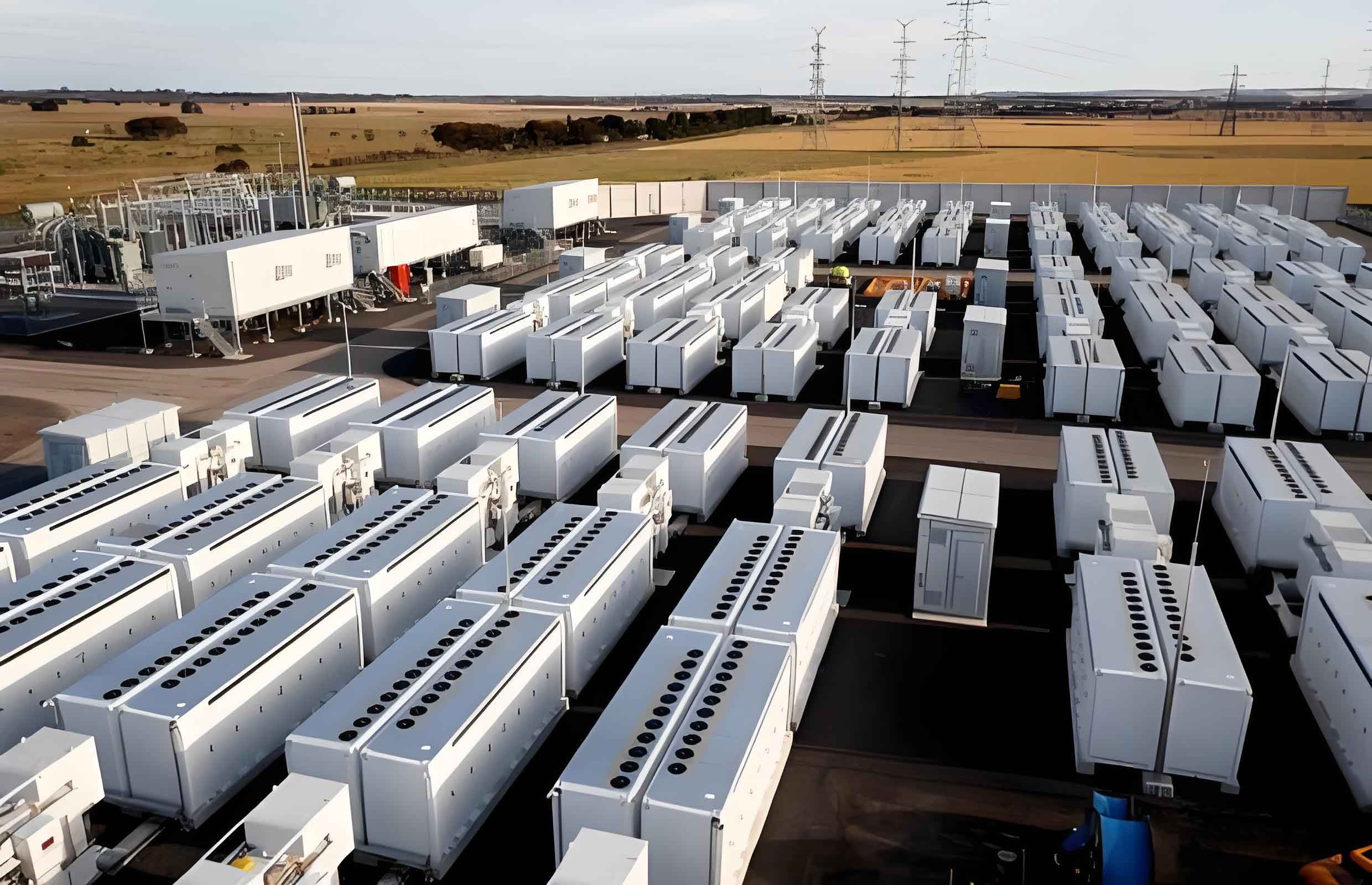
Distribution Network Operation Model
Grid stability is a key performance metric, with node voltage fluctuation being a core indicator. To accurately assess the impact of distributed generation (DG) on voltage, a voltage deviation index is introduced. The average degree of voltage deviation $U_{lev}$ is defined using the following model:
$$U_{lev} = \frac{1}{T} \sum_{t=1}^{T} \sqrt{ \frac{1}{N} \sum_{i=1}^{N} \left( \frac{ U_{i}(t) – U_i^* }{ \Delta U_{i,\max} } \right)^2 }$$
where $T$ is the calculation period, $N$ is the number of load nodes, $U_i(t)$ the phase voltage at node $i$ at time $t$, $U_i^*$ the nominal AC voltage, and $\Delta U_{i,\max}$ the maximum allowable voltage deviation at node $i$. This index provides quantitative insight into the voltage stability over a complete operating cycle.
Another important indicator is the line loss rate. When DG is heavily integrated, reverse power flow may increase active power losses. The line loss rate $p_{loss}$ is defined as:
$$p_{loss} = \frac{ \sum_{t=1}^{T} \sum_{ij=1}^{M} p_{loss,ij}(t) }{ \sum_{t=1}^{T} \sum_{ij=1}^{M} \left( P_{ij}(t) + p_{loss,ij}(t) \right) } \times 100\%$$
where $p_{loss,ij}(t) = 3 I_{ij}^2(t) R_{ij}$ for each line $ij$, $P_{ij}(t)$ and $Q_{ij}(t)$ are active and reactive loads, $U_i(t)$ node voltage, $M$ total number of branches, and $R_{ij}$ equivalent resistance. This metric directly reflects the impact of DG on network losses.
Battery Energy Storage System Configuration Model
The configuration model of a battery energy storage system optimizes energy utilization by considering energy demand, electricity prices, and renewable energy output. It determines the optimal charging/discharging strategy for the battery. The objective is to minimize total cost while satisfying operational constraints.
Objective Function
Minimize total system cost $C_{total}$:
$$C_{total} = C_{inv} + C_{o\&m} – B_{sav}$$
where $C_{inv}$ is the investment cost (a function of battery energy capacity $E_{storage}$ and power rating $P_{charge/discharge}$), $C_{o\&m}$ the operation and maintenance cost, and $B_{sav}$ the savings achieved by using the battery energy storage system.
Constraints
- Energy capacity constraint: $0 \leq E_{storage} \leq E_{max}$
- Charging/discharging power constraint: $P_{min} \leq P_{charge/discharge} \leq P_{max}$
- Energy balance constraint: the energy variation during charging/discharging must obey physical laws, ensuring conservation of energy.
These constraints ensure that the battery energy storage system operates within safe and practical limits while fulfilling grid support functions.
Control Strategy for Battery Energy Storage System
To enhance the performance of the smart distribution network battery energy storage system, a multi-objective marine predator algorithm (MTOPA) is introduced. This algorithm combines advanced optimization with battery control to achieve peak shaving, cost reduction, and efficiency maximization. The MTOPA features a unique search mechanism that rapidly identifies optimal solutions in complex solution spaces, satisfying multiple objectives such as charging/discharging strategy, cost control, and energy efficiency.
The standard marine predator algorithm (MPA) has three stages: initial slow convergence, later rapid convergence, and strong local search. However, its step size formula relies heavily on random numbers, leading to blindness in the search process. Moreover, when solving multi-objective problems, the basic MPA suffers from insufficient information exchange among populations, compromising solution diversity. To address these issues, the step size formula is improved as follows:
$$ step_i^d = \begin{cases} Br \cdot (x_i^d – p_i^d) \\ Le \cdot (x_i^d – p_i^d) \end{cases} $$
where $step_i^d$ represents the current prey position, $Br$ is a Brownian random walk based on standard normal distribution, $x_i^d$ the current predator position, $p_i^d$ the current prey position, and $Le$ a Lévy flight random generator. These parameters simulate the dynamic predator-prey relationship, reducing randomness and enhancing population communication.
For three-dimensional objective optimization, each dimension is divided into three equal segments, generating ten uniformly distributed reference points on a normalized hyperplane. During the critical layer environment selection, these widely distributed reference points guide the population toward a true Pareto front, ensuring diverse and high-quality solutions. The proposed multi-objective ocean predator algorithm (MTOPA) comprehensively explores the Pareto optimal set, improving optimization efficiency and robustness in complex multi-objective problems such as battery energy storage system scheduling.
Experimental Results and Analysis
In the experimental section, we validate the effectiveness of integrating the MTOPA with a smart distribution network battery energy storage system. A test model including various energy sources and storage devices is constructed. The MTOPA optimizes the charging/discharging strategy and capacity configuration of the battery energy storage system. The algorithm iteratively finds the best trade-off among economic cost, system efficiency, and supply reliability. The comprehensive evaluation index values, storage planning schemes, and distribution network results for different scenarios are listed in Table 1.
| Scenario | Evaluation Index | Installation Node | Capacity (kWh) | Construction Cost (×104 CNY) | Voltage Deviation (V) | Line Loss Rate (%) |
|---|---|---|---|---|---|---|
| Scenario 1 | 12.15 | – | – | – | 6.28 | – |
| Scenario 2 | 5.846 | 18 | 2000 | 0.360 | 11.16 | 6.00 |
| Scenario 3 | 5.711 | 18 | 2311 | 0.413 | 10.80 | 5.90 |
| Scenario 4 | 5.700 | 18 | 2774 | 0.494 | 10.71 | 5.87 |
To further analyze the voltage profile, the node voltage magnitudes over 24 hours for each scenario are examined. In Scenario 1 (without storage), the initial voltage is 1.02 p.u., gradually declining but remaining relatively high. Scenario 2 starts at 1.01 p.u. with a similar declining trend but a slightly smoother curve. Scenario 3 begins at 1.00 p.u., showing a slow initial decline followed by accelerated reduction in the later period. Scenario 4 starts at 0.99 p.u. and exhibits a steady continuous decline. Overall, all four scenarios experience voltage drops over time, but with different characteristics. The incorporation of the battery energy storage system (Scenarios 2–4) helps mitigate the voltage drop compared to Scenario 1, especially when the battery capacity is larger.
To verify the rationality of charging/discharging power and its impact on renewable energy utilization, the relationship between battery power and state of charge (SOC) over a complete operating cycle is analyzed. Using the MTOPA, the battery energy storage system exhibits dynamic power balancing: when renewable generation exceeds load demand, the battery charges; when generation is insufficient, it discharges. This dynamic strategy ensures stable grid operation and improves renewable energy utilization. During charging, the SOC gradually rises, indicating effective energy storage; during discharging, SOC decreases but remains within safe limits (typically 20%–90%), preventing overcharge or over-discharge. Such rational SOC management extends battery life and guarantees system safety.
Additional experiments compare the performance of the MTOPA with conventional rule-based control and a genetic algorithm (GA). The results in Table 2 show that the MTOPA achieves the lowest total cost and the highest renewable energy utilization rate (REUR) while maintaining the lowest voltage deviation.
| Control Strategy | Total Cost (×104 CNY) | Voltage Deviation (V) | REUR (%) |
|---|---|---|---|
| Rule-based | 0.550 | 11.45 | 85.2 |
| Genetic Algorithm | 0.482 | 10.92 | 91.5 |
| MTOPA | 0.413 | 10.80 | 94.3 |
The MTOPA reduces total cost by 24.9% compared to rule-based control and by 14.3% compared to GA. Simultaneously, it improves renewable energy utilization by 9.1% and 2.8%, respectively. This confirms the superiority of the proposed multi-objective optimization method for the battery energy storage system operation.
Conclusion
This paper presents a comprehensive design of a smart distribution network battery energy storage system that integrates advanced battery technology, energy conversion, and intelligent control. Using lithium-ion batteries as the primary storage element and a bidirectional converter for grid interaction, the system achieves effective peak-valley regulation, demand response, and emergency backup. The control strategy based on the multi-objective marine predator algorithm (MTOPA) optimizes charging/discharging actions by considering real-time electricity prices, load forecasts, and grid states. Experimental results demonstrate that the system significantly balances grid load, improves stability, and reduces costs. The remote monitoring and smart scheduling functions further enhance operational management efficiency. This work provides a new perspective for the application of battery energy storage system technology in smart distribution networks and lays a solid foundation for the future development of intelligent, efficient, and resilient power systems. As technology advances and costs decline, the smart distribution network battery energy storage system will be deployed in even broader applications, contributing to a smarter and more sustainable energy landscape.