
The increasing integration of lithium batteries into rail transit systems marks a significant technological shift, with applications ranging from auxiliary and backup power units to primary traction energy sources. Among the critical performance indicators—energy density, power density, cycle life, and safety—safety stands paramount for large-scale onboard energy storage in the demanding railway environment. This article provides a comparative safety analysis of two prominent chemistries recognized for their inherent stability: the semi-solid lithium iron phosphate (LiFePO4) battery and the lithium titanate (LTO) battery. We examine their fundamental working principles, identify key factors affecting their safety, and present a detailed experimental analysis of their behavior under extreme abuse conditions, including nail penetration, overcharge, short circuit, and thermal heating. The findings aim to delineate suitable application domains within the rail transit industry for each technology.
At the core of any lithium-ion battery’s operation are the electrochemical reactions at the positive (cathode) and negative (anode) electrodes. For the semi-solid LiFePO4 battery, the cathode material is lithium iron phosphate (LiFePO4), and the anode is typically graphite. The term “semi-solid” refers to the electrolyte system, which incorporates a solid-state or highly viscous gel electrolyte component alongside traditional liquid electrolytes. This design enhances thermal stability. The charge/discharge reactions can be summarized as follows:
Cathode (LiFePO4):
$$ \text{LiFePO}_4 \rightleftharpoons \text{FePO}_4 + \text{Li}^+ + e^- $$
Anode (Graphite C):
$$ \text{C} + \text{Li}^+ + e^- \rightleftharpoons \text{LiC}_6 $$
Overall Cell Reaction:
$$ \text{LiFePO}_4 + \text{C} \rightleftharpoons \text{FePO}_4 + \text{LiC}_6 $$
The voltage plateau for a standard LiFePO4 cell is around 3.2 V to 3.3 V. The semi-solid LiFePO4 battery leverages the excellent thermal and chemical stability of the olivine phosphate structure, which provides strong P-O covalent bonds that resist oxygen release at high temperatures. The semi-solid electrolyte, with a melting point exceeding 170°C and decomposition temperature over 350°C, acts as a robust secondary barrier. Even if the polymeric separator—which typically shrinks below 130°C and melts under 160°C—fails, the semi-solid matrix can maintain separation between electrodes, significantly slowing down thermal runaway progression.
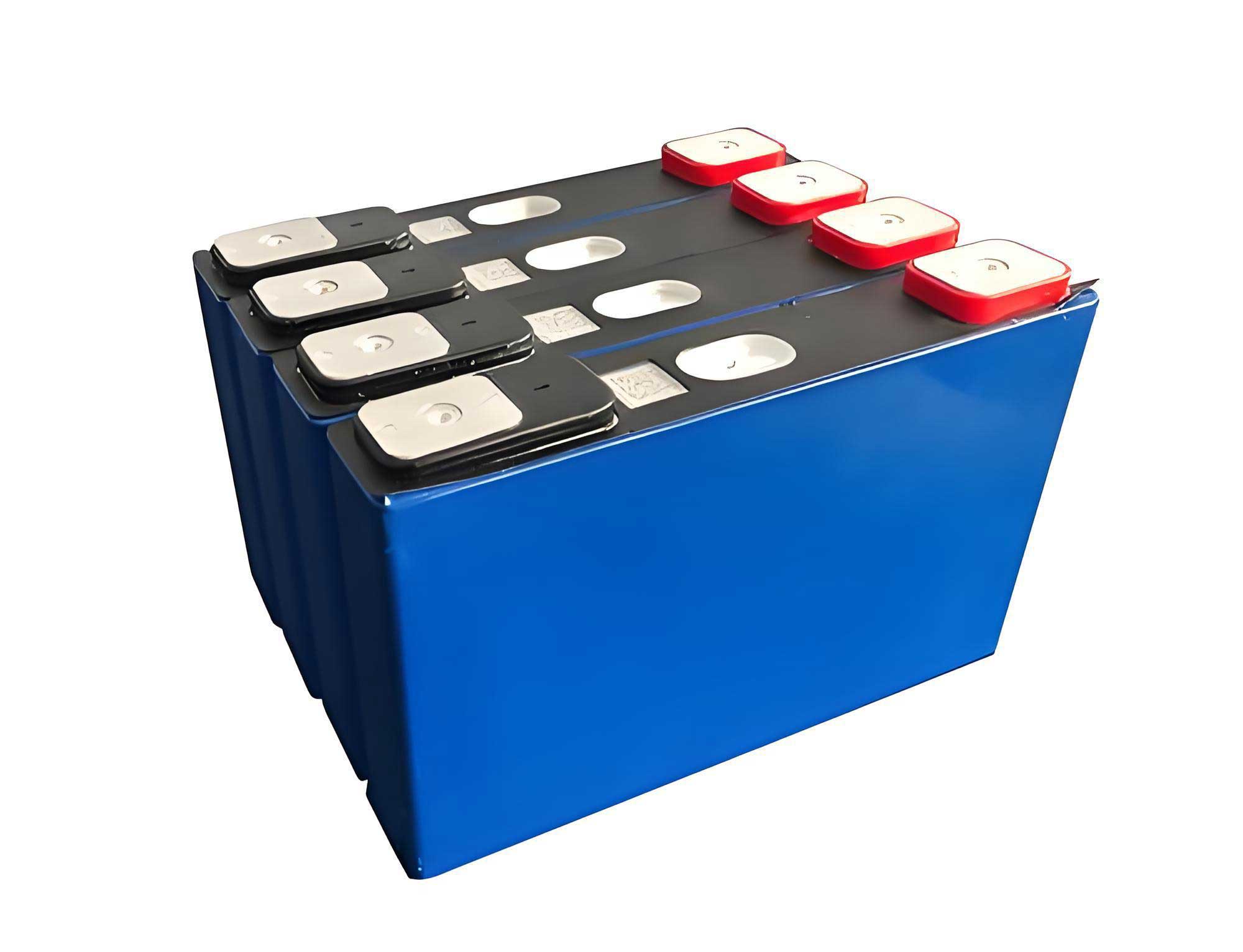
In contrast, the lithium titanate battery uses lithium titanate (Li4Ti5O12) as its anode material, paired commonly with lithium manganese oxide (LMO) or nickel manganese cobalt oxide (NMC) cathodes. Its most distinctive feature is the “zero-strain” spinel crystal structure of the LTO anode, which experiences negligible volume change during lithium insertion and extraction. This characteristic is fundamental to its exceptional cycle life and safety. The reactions are:
Anode (Li4Ti5O12):
$$ \text{Li}_4\text{Ti}_5\text{O}_{12} \rightleftharpoons \text{Li}_7\text{Ti}_5\text{O}_{12} + 3\text{Li}^+ + 3e^- $$
Cathode (Example with LMO):
$$ \text{LiMn}_2\text{O}_4 \rightleftharpoons \text{Mn}_2\text{O}_4 + \text{Li}^+ + e^- $$
Overall Cell Reaction:
$$ \text{Li}_4\text{Ti}_5\text{O}_{12} + 3\text{LiMn}_2\text{O}_4 \rightleftharpoons \text{Li}_7\text{Ti}_5\text{O}_{12} + 3\text{Mn}_2\text{O}_4 $$
The cell operates at a higher voltage plateau of approximately 2.4 V (with LMO) or 1.55 V vs. Li/Li+ for the anode alone. This high anode potential (~1.55 V) is crucial for safety as it lies far above the reduction potential of lithium metal, effectively preventing the plating of metallic lithium and the formation of lithium dendrites even during fast charging or at low temperatures. This eliminates a primary cause of internal short circuits.
The safety performance of any lithium battery, including the lifepo4 battery, is influenced by multiple interrelated factors. Thermal stability of electrode materials and electrolytes dictates the onset temperature of exothermic side reactions. Electrochemical stability defines the safe operating voltage window and susceptibility to overcharge. Mechanical integrity, affected by electrode swelling and separator properties, determines resistance to internal short circuits. Finally, the cell’s design, including current collectors, casing, and safety vents, plays a critical role in managing internal pressure and venting gases during abuse.
Our comparative safety evaluation was conducted based on the framework of relevant rail transit standards. The key specifications of the tested cells are summarized in Table 1.
| Battery Type | Capacity (Ah) | Energy Density (Wh/kg) | Max Sustained Current (A) | Internal Resistance (mΩ) |
|---|---|---|---|---|
| Semi-Solid LiFePO4 | 36 | 163.93 | 108 | 0.646 |
| Lithium Titanate (LTO) | 20 | 87.94 | 300 | 0.395 |
The following abuse tests, some exceeding standard requirements, were performed on fully charged cells:
- Nail Penetration: An 8 mm diameter steel nail penetrated the cell at 25 mm/s, simulating an internal short circuit.
- Extreme Overcharge: Cells were charged at 1C constant current beyond standard limits (up to 19 V or failure).
- External Short Circuit: Cells were shorted with a <5 mΩ resistor for 1 hour or until failure.
- Extreme Heating: Cells were heated at 5°C/min to 200°C or until failure, exceeding the standard 130°C test.
Safety Test Results and Analysis
Nail Penetration Test
This test directly induces an internal short circuit. The results, detailed in Table 2, demonstrate the remarkable robustness of both chemistries.
| Battery Type | Result | Voltage Change (V) | Max Temp. Rise (Δ°C) | Observation |
|---|---|---|---|---|
| Semi-Solid LiFePO4 | Pass | 3.351 → 3.293 | ~12.8 | No fire, no explosion, minor voltage drop. |
| Lithium Titanate (LTO) | Pass | 2.662 → 2.493 | ~3.2 | No fire, no explosion, very mild reaction. |
The semi-solid lifepo4 battery showed a slightly higher temperature increase, likely due to localized current flow through the penetrated area. However, the absence of thermal runaway highlights the effectiveness of its stable chemistry and semi-solid electrolyte in isolating the short. The LTO cell’s minimal reaction is attributed to its inability to form lithium dendrites, preventing the short from propagating. The heat generated (Q) in such a short can be approximated by Joule heating:
$$ Q \approx I^2_{short} \cdot R_{internal} \cdot t $$
where the internal resistance and the short-circuit current dynamics limit the total energy release.
Extreme Overcharge Test
Overcharge forces excess lithium into the anode and drives cathode structure to an unstable, oxygen-releasing state. This is a severe abuse condition. Results are in Table 3.
| Battery Type | Result | Overcharge Duration to Failure | Max SOC Reached | Max Temperature | Observation |
|---|---|---|---|---|---|
| Semi-Solid LiFePO4 | Pass* | ~10 min | ~117% | 72.1°C | Swelling, gas venting, charged to 19V cutoff. |
| Lithium Titanate (LTO) | Fail | ~48 min | ~218% | 937°C (at ignition) | Swelling, followed by fire. |
*Passed the test protocol (no fire/explosion) but exceeded standard limits.
The LTO cell exhibited extraordinary overcharge tolerance, enduring nearly five times longer in an overcharged state than the semi-solid lifepo4 battery before igniting. This can be linked to its high anode potential and “zero-strain” structure, which delays lithium plating and structural degradation. However, once its cathode’s stability limit is exceeded, violent reactions ensue. The semi-solid LiFePO4 battery vented gas and swelled but did not catch fire, even when driven to 19V. The robust olivine cathode structure and the semi-solid electrolyte’s high decomposition temperature contained the failure mode to gas generation without thermal runaway. The voltage (V) during overcharge rises according to:
$$ V(t) = OCV(SOC) + I_{charge} \cdot R_{internal}(T, SOC) $$
where OCV increases as the cathode is delithiated beyond its design limit.
External Short Circuit Test
This test evaluates the cell’s response to a massive, uncontrolled discharge. Results are shown in Table 4.
| Battery Type | Result | Peak Short Current (A) | Max Temperature | Observation |
|---|---|---|---|---|
| Semi-Solid LiFePO4 | Pass | >800 | 103.1°C | Significant swelling, no fire. |
| Lithium Titanate (LTO) | Pass | >800 | 102.4°C | No significant swelling or fire. |
Both cells experienced similar peak currents and maximum temperatures (~100-105°C). The heat generated is substantial and can be modeled as the integral of the power dissipation:
$$ E_{heat} = \int_{0}^{t} I_{short}^2(t) \cdot (R_{internal} + R_{external}) \, dt $$
The semi-solid lifepo4 battery showed visible swelling, indicating internal gas pressure buildup from electrolyte decomposition. The LTO cell, with its more stable interface, showed no obvious swelling. Both safely dissipated the energy without entering thermal runaway, demonstrating their capability to handle severe electrical faults.
Extreme Heating Test
This test accelerates thermal abuse by externally applying heat. The results, surpassing the standard 130°C requirement, are in Table 5.
| Battery Type | Result | Thermal Runaway Onset Temp. | Max Temperature | Observation |
|---|---|---|---|---|
| Semi-Solid LiFePO4 | Fail* | <200°C | 343.5°C | Violent smoke emission, voltage collapse. |
| Lithium Titanate (LTO) | Fail* | <200°C | 310.5°C | Violent smoke emission, voltage collapse. |
*Failed by experiencing thermal runaway, but onset temperature was significantly higher than standard.
Both cells eventually underwent thermal runaway when the external temperature approached 200°C, characterized by a sudden voltage drop and intense smoke generation. The semi-solid lifepo4 battery reached a slightly higher peak temperature. It is critical to note that their failure temperatures are far above the operational and standard test limits, indicating a wide safety margin. The thermal runaway process is governed by the Arrhenius law, where the rate of exothermic reactions (k) increases exponentially with temperature (T):
$$ k = A \exp\left(-\frac{E_a}{RT}\right) $$
where \(E_a\) is the activation energy and R is the gas constant. The high \(E_a\) for decomposition reactions in both these chemistries contributes to their delayed thermal failure.
Conclusion and Application Perspectives for Rail Transit
The experimental analysis confirms that both lithium titanate (LTO) batteries and semi-solid lithium iron phosphate (lifepo4 battery) offer significantly enhanced safety profiles compared to conventional lithium-ion chemistries, making them strong candidates for rail transit applications.
Lithium Titanate (LTO) Batteries demonstrate unparalleled tolerance to electrical abuse, particularly overcharging, and exhibit minimal reaction to internal shorts. Their high power capability (evident from high sustainable current and low internal resistance) and ultra-long cycle life are exceptional. These characteristics make LTO technology the premier choice for applications demanding frequent high-power charge and discharge pulses, such as:
- Primary or hybrid traction energy storage for trams, light rail, and shunting locomotives.
- Regenerative braking energy recovery systems.
- Applications where ultra-fast charging is required at terminals or stops.
Semi-Solid LiFePO4 Batteries showcase a different safety paradigm. While their power performance and overcharge tolerance are lower than LTO, their failure modes under extreme abuse are notably benign, typically limited to gas venting without fire. This intrinsic non-flammability characteristic, stemming from the stable phosphate cathode and the semi-solid electrolyte’s thermal barrier, is a decisive advantage for risk-averse installations. The semi-solid lifepo4 battery is particularly well-suited for:
- Auxiliary Power Units (APU) and backup power systems for critical onboard loads (lighting, controls, communications).
- Low-to-medium power demand applications, such as power for on-board service systems or non-traction functions.
- Stationary backup power within rail infrastructure where energy density is prioritized over power density.
In summary, the selection between these two advanced lithium batteries for a rail transit project should be guided by the specific application’s power profile, lifecycle cost requirements, and safety risk assessment. LTO excels in high-power, high-cycle dynamic roles, while the semi-solid lifepo4 battery provides a robust, fundamentally safer solution for energy-oriented or backup roles where mitigating the risk of fire is the utmost priority. Both technologies represent significant steps forward in enabling the safe and widespread electrification of rail systems.