
In the era of Industry 4.0 and smart manufacturing, the adoption of Manufacturing Execution Systems (MES) has become a cornerstone for enhancing productivity, quality, and efficiency across various industries. My research focuses on the application of MES in the thin film solar panel manufacturing sector, a process-oriented industry with unique challenges and requirements. Through comparative analysis with other industries and insights from practical project implementations, I aim to elucidate the distinctive features of MES in thin film solar panel production, address common pitfalls, and propose strategies for optimal system design and deployment. This article delves into the intricacies of MES functionality, emphasizing the critical role of stringent process control and professional expertise in achieving high data quality and continuous process improvement for thin film solar panels.
The manufacturing landscape is broadly categorized into discrete and process industries, each with divergent MES application paradigms. Discrete manufacturing, exemplified by automotive and electronics sectors, revolves around bill-of-materials (BOM)-centric production models, where products are assembled from distinct parts. In contrast, process manufacturing, including pharmaceuticals, chemicals, and thin film solar panel production, is characterized by recipe-based operations, where raw materials undergo continuous or batch transformations. This fundamental distinction shapes MES requirements in areas such as production planning, data acquisition, backflushing, equipment management, and quality control. Below, I present a comparative analysis through a table summarizing key differences.
| Aspect | Discrete Manufacturing | Process Manufacturing (e.g., Thin Film Solar Panels) |
|---|---|---|
| Production Planning | Driven by work orders from ERP; focuses on job scheduling and part tracking. | Instruction-based plans from ERP; emphasizes batch or continuous flow management. |
| Data Acquisition | Manual input or semi-automatic methods (e.g., barcode scanning); prone to human error. | Automated collection from integrated equipment (e.g., sensors, PLCs); high accuracy but requires robust interfaces. |
| Backflushing | Occurs at multiple or key工序; tracks work-in-progress (WIP) per operation. | Typically at final工序; uses反冲 for materials and costs across prior steps, simplifying WIP tracking. |
| Equipment Management | Focus on critical/bottleneck machines; single failures may not halt entire production. | All equipment is critical; any failure can disrupt the entire生产线, necessitating real-time monitoring. |
| Quality Management | Inspection per part or operation; uses首检,抽检, and SPC for batches. | Sampling by batch or工序; relies on statistical analysis for process improvement and consistency. |
From this comparison, it is evident that process industries like thin film solar panel manufacturing demand MES solutions that prioritize automation, real-time data integrity, and holistic process control. The production of thin film solar panels involves sophisticated deposition techniques, such as chemical vapor deposition or sputtering, where precise control over parameters like temperature, pressure, and material flow is paramount. Any deviation can impact the efficiency and durability of the thin film solar panel, underscoring the need for an MES that seamlessly integrates with equipment and enforces standardized workflows.
The MES architecture for thin film solar panel production must support industry standards like ISA-95 for enterprise-control integration and ISA-88 for batch control. In semiconductor-related sectors, including thin film solar panel manufacturing, the SECS/GEM protocol is often employed for equipment communication. A typical system integrates with ERP for material反冲 and order management, Warehouse Management Systems (WMS) for logistics, and various plant-floor devices via OPC, WebServices, or proprietary interfaces. The core functionality can be encapsulated in modules, as summarized below.
| MES Module | Description | Relevance to Thin Film Solar Panels |
|---|---|---|
| Foundation Data Center | Manages master data (e.g., materials, recipes, equipment specs). | Ensures consistency in thin film solar panel配方 and production parameters. |
| Work Order Management | Handles order execution, tracking, and synchronization with ERP. | Coordinates batch runs for thin film solar panel lines, minimizing downtime. |
| Production Scheduling | Optimizes sequence and timing of operations. | Balances throughput and resource use in energy-intensive thin film solar panel processes. |
| Quality Management | Supports inspection plans, data collection, and SPC analysis. | Monitors critical quality attributes (e.g., film thickness, conductivity) for thin film solar panels. |
| Buffer Zone Management | Controls intermediate storage and material flow. | Prevents bottlenecks in continuous thin film solar panel production lines. |
| Equipment Management | Tracks performance, maintenance, and consumables. | Vital for uptime of deposition tools used in thin film solar panel fabrication. |
| Production Tracking | Provides real-time visibility of WIP and lot history. | Enables traceability of each thin film solar panel from raw material to finished product. |
| Alarm Management | Handles alerts for deviations or failures. | Quick response to anomalies in thin film solar panel process conditions. |
| Reporting and Analytics | Generates dashboards and reports for decision support. | Analyzes yield and efficiency trends for thin film solar panel manufacturing. |
To quantify data quality in MES, which is crucial for thin film solar panel process improvement, we can define a metric for data accuracy:
$$ \text{Data Accuracy} = \frac{N_{\text{correct}}}{N_{\text{total}}} \times 100\% $$
where \( N_{\text{correct}} \) is the number of data points conforming to expected values, and \( N_{\text{total}} \) is the total data points collected. For thin film solar panel production, achieving high accuracy requires minimizing human intervention through automated data capture.
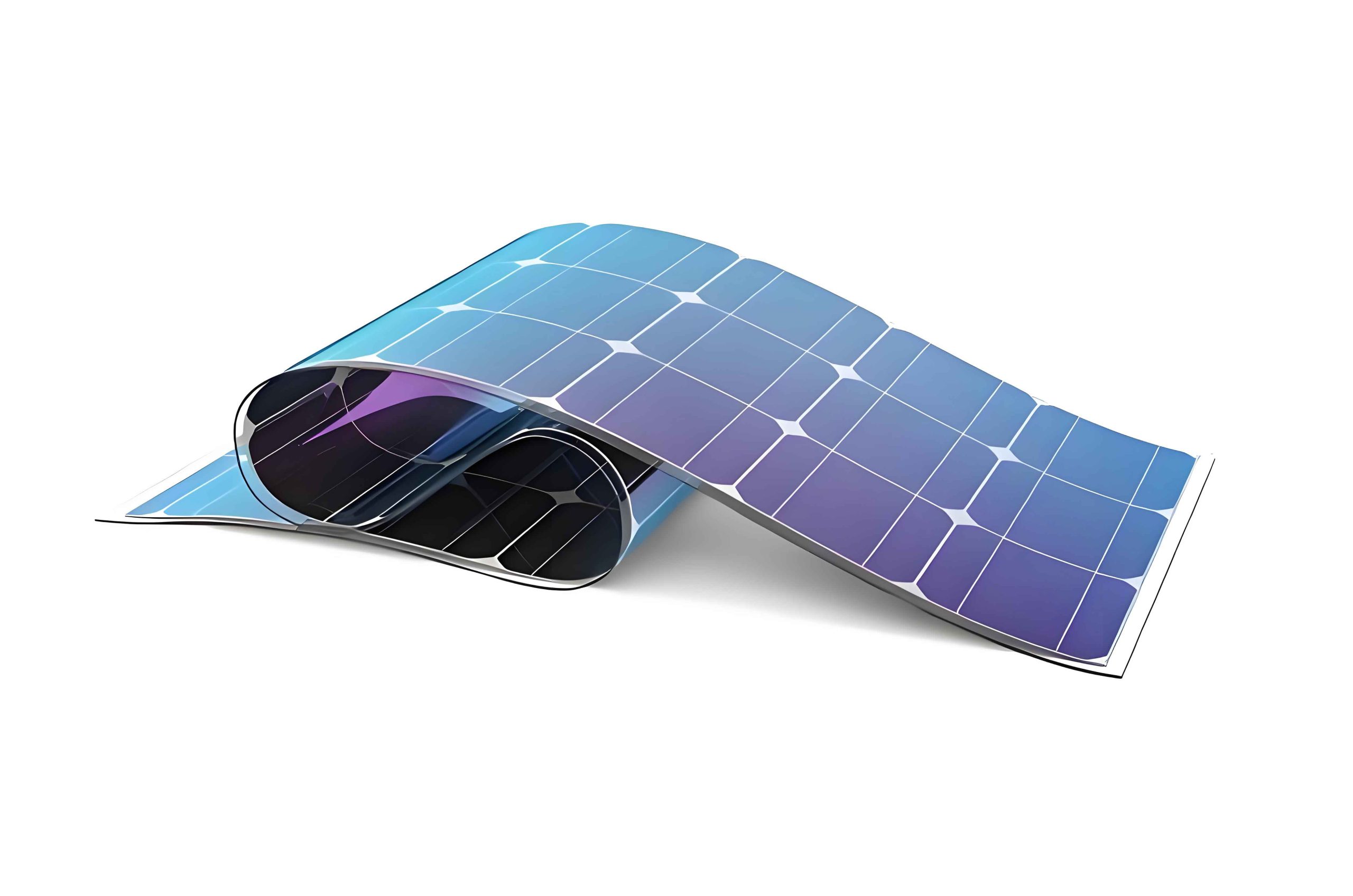
The visual representation above underscores the complexity of thin film solar panel manufacturing lines, where MES must orchestrate multiple stations, from glass substrate cleaning to laser scribing and final testing. Integrating such a system poses significant challenges. In my experience with real-world projects, several recurrent issues impede MES effectiveness in thin film solar panel facilities.
First, excessive manual intervention compromises data fidelity. For instance, operators may bypass standard procedures, leading to incorrect data entries or missed tracking events. This is particularly detrimental in thin film solar panel production, where process parameters like deposition rate and temperature must be meticulously recorded for analysis. Consider a scenario where an operator manually overrides a sensor reading; the MES then logs erroneous data, skewing subsequent quality assessments. To model this risk, we can use a formula for error propagation:
$$ \sigma_{\text{total}}^2 = \sigma_{\text{auto}}^2 + \sigma_{\text{manual}}^2 $$
Here, \( \sigma_{\text{auto}}^2 \) represents variance from automated sources, and \( \sigma_{\text{manual}}^2 \) from manual inputs. For thin film solar panel lines, reducing \( \sigma_{\text{manual}}^2 \) is essential, as manual errors often dominate. Strategies include enforcing MES-driven workflows at critical points, such as load/unload stations, where RFID or barcode scans should mandate proper sequence adherence.
Second, inadequate equipment integration undermines data acquisition. Thin film solar panel manufacturing equipment, such as plasma-enhanced chemical vapor deposition (PECVD) systems, must adhere to MES communication protocols. However, deviations from specification—like inconsistent signal reporting or unsynchronized clocks—cause data gaps or inaccuracies. A common issue is the lack of pre-deployment testing, leading to prolonged integration phases and unresolved compatibility problems. To address this, a rigorous interface specification is needed, defining data points like equipment status (e.g., idle, running, fault) and process variables (e.g., chamber pressure for thin film solar panel deposition). The following table outlines key integration requirements.
| Integration Aspect | Requirement for Thin Film Solar Panel Equipment | Example Data Point |
|---|---|---|
| Status Reporting | Real-time updates via SECS/GEM or OPC UA. | Equipment state: “RUNNING” during thin film solar panel coating. |
| Process Data Logging | High-frequency capture of sensor readings. | Temperature: \( T = 350 \pm 5^\circ \text{C} \) for thin film solar panel annealing. |
| Event Triggering | Automatic alerts for deviations or milestones. | Alarm if thin film solar panel film thickness exceeds \( 500 \text{nm} \). |
| Recipe Management | Download and validation of process recipes from MES. | Recipe ID: “TFSP-2024-01” for a specific thin film solar panel type. |
Third, the absence of dedicated MES expertise hampers system maintenance and optimization. Thin film solar panel manufacturers often lack in-house MES engineers, relying on vendors for support. This can lead to misalignment between MES functionalities and operational needs, such as insufficient reporting capabilities for thin film solar panel yield analysis. For example, a standard report might not breakdown defects by process step, impeding root-cause analysis. A proactive approach involves training plant personnel on MES customization and data analytics. Moreover, the MES should include configurable dashboards that display key performance indicators (KPIs) for thin film solar panel production, such as overall equipment effectiveness (OEE):
$$ \text{OEE} = \text{Availability} \times \text{Performance} \times \text{Quality} $$
where Availability = (Operating Time / Planned Production Time), Performance = (Ideal Cycle Time / Actual Cycle Time), and Quality = (Good Units / Total Units). For thin film solar panel lines, tracking OEE helps identify bottlenecks, like frequent tool maintenance reducing availability.
To mitigate these issues, I propose a framework for MES design in thin film solar panel manufacturing, emphasizing process control and data integrity. The core principle is to minimize human discretion by embedding business rules into the MES workflow. For instance, at a buffer zone between deposition and inspection, the MES should automatically assign lots based on FIFO logic, preventing operators from selecting lots arbitrarily. Similarly, for quality data collection, inline metrology tools should feed results directly to the MES, eliminating manual transcription. This aligns with lean manufacturing principles, reducing waste and variability in thin film solar panel production.
Furthermore, equipment integration must be standardized from the outset. Manufacturers should develop detailed interface control documents (ICDs) and conduct factory acceptance tests (FAT) with equipment suppliers before installation. This ensures that all devices, from scrubbers to laser scribers, comply with MES data formats and communication protocols. For thin film solar panel lines, a unified data model per ISA-95 facilitates integration, representing equipment as assets with hierarchical structures (e.g., zone > station > unit). Additionally, implementing edge computing devices can preprocess data from thin film solar panel equipment, reducing network latency and filtering noise before MES ingestion.
Regarding system maintenance, investing in specialized MES roles is crucial. A thin film solar panel plant should employ MES engineers who understand both software and process nuances. They can tailor reports, such as a Pareto analysis of defects in thin film solar panels, and implement advanced analytics like machine learning for predictive maintenance. For example, by analyzing historical data from deposition tools, the MES can forecast failures and schedule preemptive upkeep, avoiding unplanned downtime. The cost-benefit of such expertise can be modeled as:
$$ \text{Net Benefit} = \sum_{t=1}^{T} \left( \Delta R_t – \Delta C_t \right) / (1 + r)^t $$
where \( \Delta R_t \) is the revenue increase from improved thin film solar panel yield, \( \Delta C_t \) is the cost of MES personnel and tools, \( r \) is the discount rate, and \( T \) is the time horizon. Empirical studies in thin film solar panel facilities show that professional MES support leads to positive returns within 1-2 years.
In conclusion, the deployment of MES in thin film solar panel manufacturing is not merely a technological upgrade but a strategic imperative for competitiveness. Through comparative analysis, I have highlighted the process-oriented nature of this industry, necessitating MES features that ensure rigorous workflow control, seamless equipment integration, and high-fidelity data acquisition. The challenges of manual intervention and integration gaps can be overcome by designing MES with embedded process rules, standardizing interfaces, and fostering specialized expertise. As the demand for efficient renewable energy sources grows, optimizing thin film solar panel production through intelligent MES will be pivotal. Future research could explore IoT-enabled MES for real-time adaptive control, further enhancing the sustainability and output of thin film solar panel plants. By adhering to these principles, manufacturers can harness MES to achieve unprecedented levels of operational excellence, making thin film solar panels more affordable and reliable for global energy markets.