
With the rapid expansion of electric vehicles and energy storage systems, LiFePO4 batteries have gained prominence due to their safety, cost-effectiveness, and environmental compatibility. However, the growing volume of decommissioned LiFePO4 batteries necessitates efficient recycling strategies to mitigate resource depletion and environmental risks. This article systematically reviews state-of-the-art recycling technologies for spent LiFePO4 cathode materials, focusing on process mechanisms, performance metrics, and industrial scalability.
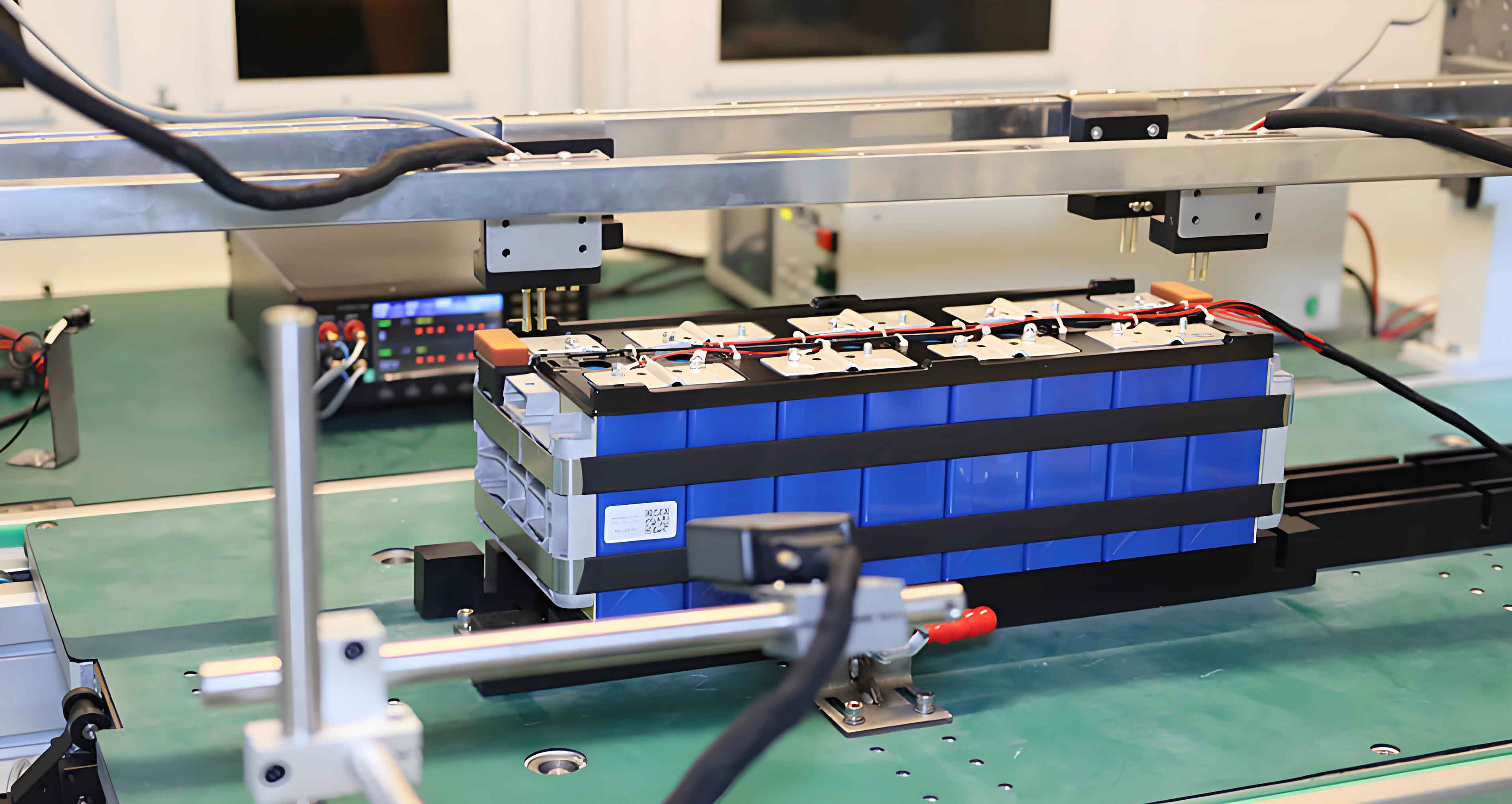
Structural Characteristics of Spent LiFePO4 Cathode Materials
The cathode of LiFePO4 batteries consists of lithium iron phosphate (LiFePO4), conductive carbon, and polyvinylidene fluoride (PVDF) binder coated on aluminum foil. The olivine crystal structure provides stable Li+ diffusion channels, as described by:
$$ \text{LiFePO}_4 \leftrightarrow \text{FePO}_4 + \text{Li}^+ + e^- $$
Degradation mechanisms during cycling include lithium loss, iron dissolution, and carbon layer detachment, necessitating tailored recovery approaches.
Physical Separation Techniques
Mechanical processing involves crushing, sieving, and density-based sorting to isolate active materials from current collectors. Key performance data from recent studies are summarized below:
| Method | LiFePO4 Recovery Rate | Purity | Reference |
|---|---|---|---|
| Selective Flocculation | 81.28% | 70% | Zhao et al. (2024) |
| Eddy Current Separation | 92% Cu/Al Recovery | N/A | Industry Report |
Chemical Leaching Processes
Acid-based leaching remains dominant for metal recovery. Optimal conditions for H2SO4-H2O2 systems are:
$$ \text{LiFePO}_4 + \text{H}_2\text{SO}_4 + \text{H}_2\text{O}_2 \rightarrow \text{Li}_2\text{SO}_4 + \text{FeSO}_4 + \text{H}_3\text{PO}_4 + \text{H}_2\text{O} $$
| Parameter | Optimal Value | Li Recovery | Fe Recovery |
|---|---|---|---|
| Temperature | 70°C | 98.1% | 98.0% |
| Time | 120 min | 97.8% | 97.5% |
Thermal Treatment Strategies
Pyrometallurgical approaches enable binder decomposition and phase regeneration. PVDF degradation occurs via:
$$ \text{PVDF} \xrightarrow{400-600^\circ \text{C}} \text{HF} + \text{C}_x\text{F}_y $$
Atmospheric control is critical to prevent Fe2+ oxidation:
$$ 4\text{FeO} + \text{O}_2 \rightarrow 2\text{Fe}_2\text{O}_3 \quad (\text{Undesirable}) $$
Direct Regeneration Methods
Hydrothermal relithiation demonstrates exceptional capacity retention:
$$ \text{FePO}_4 + \text{Li}^+ + e^- \xrightarrow{\text{Hydrothermal}} \text{LiFePO}_4 $$
| Method | Capacity (mAh/g) | Cycle Stability |
|---|---|---|
| Solid-State | 134.0 | 89% @ 100 cycles |
| Hydrothermal | 146.2 | 98.6% @ 200 cycles |
Electrochemical Relithiation
This emerging technique enables in-situ lithium replenishment:
$$ \text{FePO}_4 + \text{Li}^+ + e^- \xrightarrow{\text{Electrochemical}} \text{LiFePO}_4 $$
Commercial viability requires optimization of:
- Electrolyte composition
- Current density (0.1-1 C rate)
- Voltage window (2.5-4.0 V)
Techno-Economic Analysis
Comparative assessment of LiFePO4 recycling routes:
| Technology | CapEx ($/ton) | OpEx ($/ton) | CO2 Footprint |
|---|---|---|---|
| Hydrometallurgy | 1,200 | 800 | 2.1 kg/kg |
| Direct Regeneration | 950 | 450 | 0.8 kg/kg |
Conclusion
The recycling of LiFePO4 batteries presents both challenges and opportunities. While physical and chemical methods dominate current industrial practice, direct regeneration technologies show superior sustainability metrics. Future research should prioritize:
- Automated sorting systems for spent LiFePO4 batteries
- Closed-loop hydrometallurgical processes
- Standardization of electrochemical relithiation protocols
Advancements in these areas will enable circular economy implementation for LiFePO4 battery systems, ensuring sustainable growth of the electrification transition.