
The rapid expansion of electric vehicles and energy storage systems has positioned LiFePO4 batteries as a cornerstone technology due to their safety, cost-effectiveness, and longevity. However, the impending wave of retired LiFePO4 batteries necessitates efficient recycling strategies to mitigate environmental risks and recover critical resources. This article synthesizes advancements in pretreatment, resource regeneration, and industrialization pathways, while addressing technical challenges and future directions.
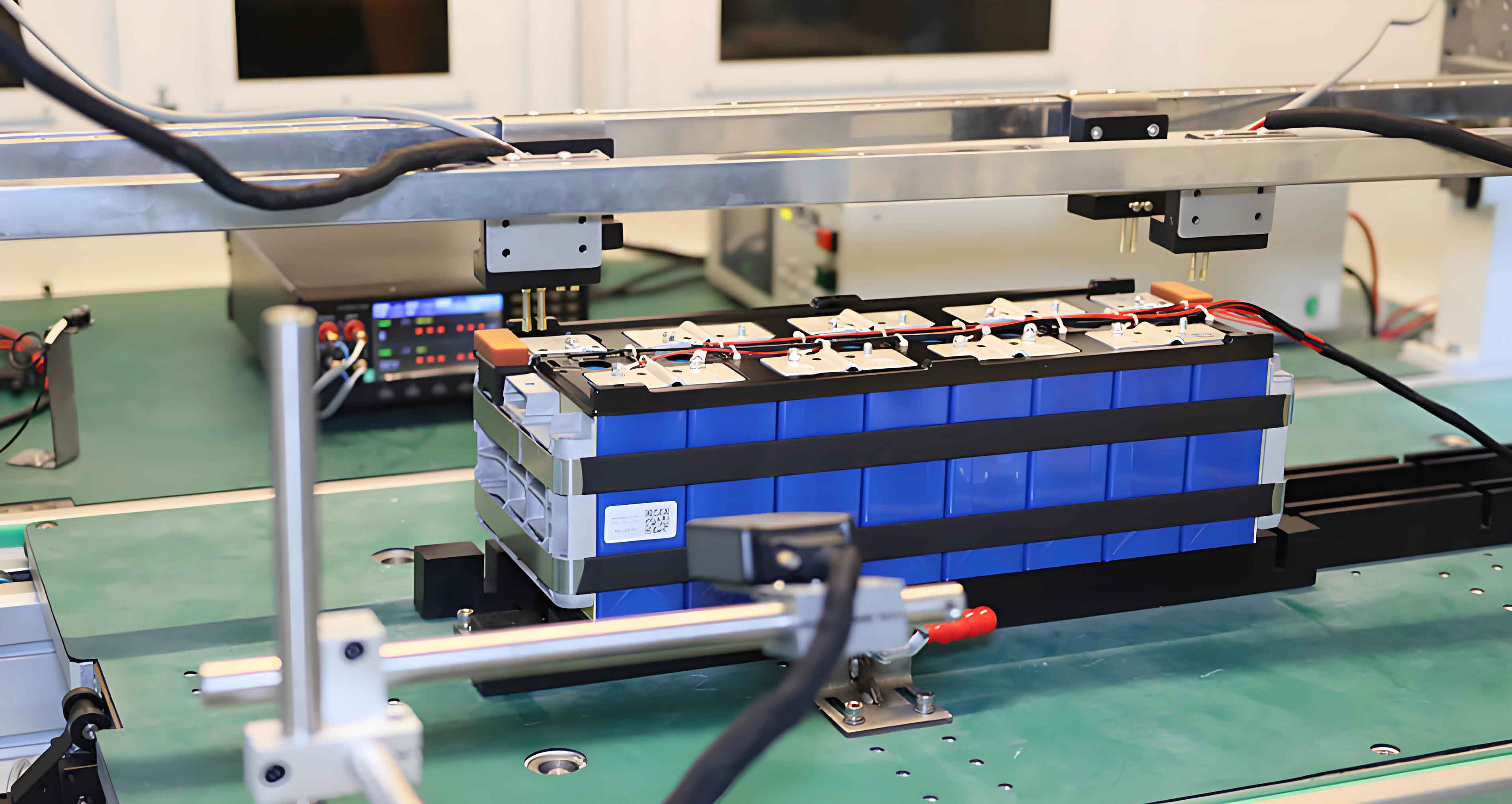
Pretreatment Techniques for Spent LiFePO4 Batteries
Pretreatment ensures safe handling and material separation. Key methods include:
| Method | Mechanism | Advantages | Limitations |
|---|---|---|---|
| Thermal Treatment | Pyrolysis of PVDF binder at 250–500°C | High purity separation | Energy-intensive; risk of LiFePO4 oxidation |
| Mechanical Separation | Crushing and sieving | Scalability | Material loss; incomplete impurity removal |
| Chemical Dissolution | Alkaline/Organic solvent dissolution | Selective Al foil removal | Toxic solvent residues |
The separation efficiency (η) of active materials from Al foil can be modeled as:
$$ η = \frac{m_{\text{recovered}}}{m_{\text{initial}}} \times 100\% $$
where $m_{\text{recovered}}$ and $m_{\text{initial}}$ denote the mass of recovered active material and initial input, respectively.
Resource Regeneration Pathways
Two dominant strategies exist for LiFePO4 cathode regeneration:
1. Direct Regeneration
Direct regeneration repairs structural defects and replenishes lithium vacancies. Key approaches include:
- Solid-phase repair: Li compensation using Li2CO3 or LiOH at 600–900°C.
- Liquid-phase repair: Hydrothermal relithiation with organic reductants (e.g., ascorbic acid).
- Electrochemical repair: External lithium replenishment via redox reactions.
The relithiation reaction is expressed as:
$$ \text{Li}_{1-x}\text{FePO}_4 + x\text{Li}^+ + xe^- \rightarrow \text{LiFePO}_4 $$
2. Indirect Regeneration
Indirect methods extract metals for resynthesis. Selective lithium extraction via oxidation dominates:
$$ \text{LiFePO}_4 + \frac{1}{4}\text{O}_2 \rightarrow \text{FePO}_4 + \frac{1}{2}\text{Li}_2\text{O} $$
Comparative analysis of regeneration pathways:
| Parameter | Direct Regeneration | Indirect Regeneration |
|---|---|---|
| Energy Consumption (kWh/kg) | 2.1–3.5 | 4.8–6.7 |
| Li Recovery Rate (%) | 92–97 | 85–93 |
| CO2 Emission (kg/kg) | 1.2–1.8 | 3.5–4.2 |
| Capital Cost (USD/ton) | 12,000–18,000 | 22,000–30,000 |
Industrialization of LiFePO4 Battery Recycling
The IPE-BRUNP process exemplifies industrial-scale LiFePO4 recycling:
- Oxidative leaching: Selective Li extraction into solution.
- FePO4 crystallization: Acid dissolution-precipitation cycle.
- Li2CO3 precipitation: Carbonation of purified Li-rich solution.
Economic metrics for a 20,000-ton/year facility:
$$ \text{Net Profit} = \sum (\text{Product Value}) – (\text{Operating Cost} + \text{Capital Cost}) $$
| FePO4 Yield | 16,000 tons/year |
| Li2CO3 Yield | 4,000 tons/year |
| Operating Cost | USD 920/ton |
| Revenue | USD 4,270/ton |
Challenges and Future Directions
Key technical barriers include:
- Heterogeneous feedstock composition
- Deep removal of multi-metal impurities (Al, Cu, Ni)
- Adaptation to evolving cathode chemistries
Emerging solutions leverage machine learning for spent battery sorting:
$$ \text{Sorting Accuracy} = \frac{N_{\text{correct}}}{N_{\text{total}}} \times 100\% $$
where $N_{\text{correct}}$ represents properly classified LiFePO4 battery units.
Sustainable development of LiFePO4 battery recycling requires synergistic advancements in smart disassembly systems, direct regeneration protocols, and policy frameworks to establish closed-loop ecosystems.