
The imperative for large-scale energy storage, particularly within the framework of integrating intermittent renewable energy sources like wind and solar power, is unequivocally recognized in national strategic energy plans. LiFePO4 batteries have emerged as a predominant technology for such applications due to their intrinsic safety advantages, such as thermal stability and resistance to oxygen release, compared to other lithium-ion chemistries. However, the series of fire incidents reported globally within battery energy storage systems (BESS) underscores that no electrochemical storage is entirely immune to thermal runaway under extreme abuse conditions. These events have precipitated intense scrutiny and research into the fire safety protocols for BESS installations. A critical component of this safety paradigm is the selection and validation of effective fire suppression agents capable of mitigating and controlling fires originating from individual battery modules or cells. This article presents a detailed, first-person perspective analysis of experimental investigations into the efficacy of various fire suppression systems—heptafluoropropane, perfluorohexanone, hot aerosol, and water mist—against fires involving LiFePO4 battery modules within a simulated prefabricated cabin environment, representative of typical BESS deployments.
The fundamental challenge in suppressing LiFePO4 battery fires extends beyond merely extinguishing visible flames. Thermal runaway is a self-sustaining exothermic reaction. Once initiated, it can propagate from cell to cell within a module or rack, driven by the internal chemical decomposition of electrodes and electrolyte. Therefore, an effective suppression agent must achieve two primary objectives: rapid flame knockdown (inhibition of gas-phase combustion) and, crucially, sufficient thermal management to cool the battery mass below the temperature threshold that sustains the internal chemical reaction chain. Failure in the latter often leads to reignition, as the battery continues to pyrolyze its components and release flammable gases.
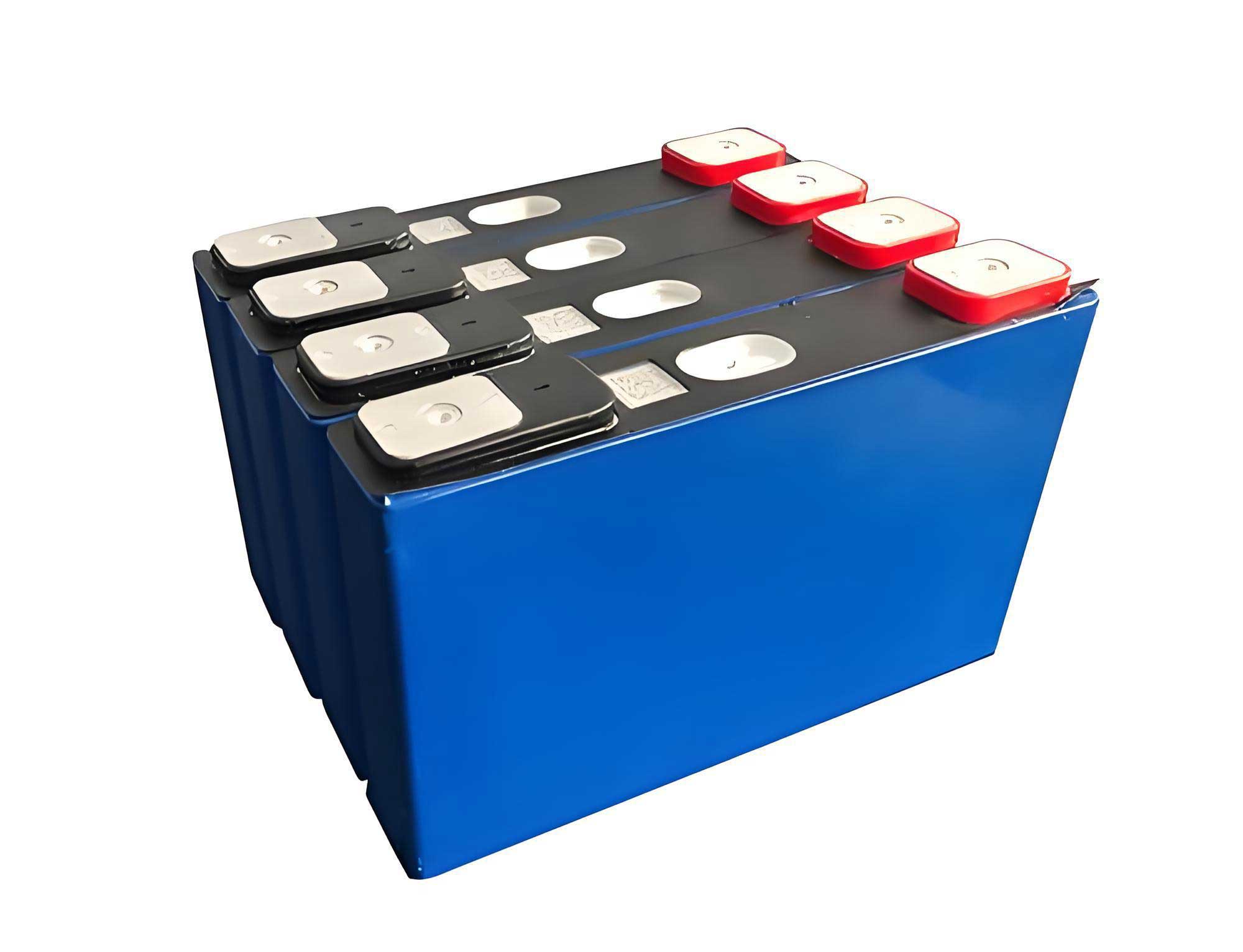
Our experimental platform was designed to replicate a real-world prefabricated BESS cabin, with dimensions of 12 m (L) × 2.4 m (W) × 2.6 m (H). The test specimen was a commercially available LiFePO4 battery module with a nominal voltage of 25.6 V and a capacity of 2752 Ah, constructed from 32 prismatic cells in an 8-series, 4-parallel configuration. To simulate a failure scenario where the Battery Management System (BMS) is compromised, it was deliberately disconnected. The module was subjected to an overcharge abuse condition using a constant current of 172 A (approximately 0.5C) until thermal runaway and open flame were observed. A pre-burn time of 30 seconds was allowed post-ignition before the automatic activation of the respective fire suppression system under test.
Suppression Systems and Experimental Parameters
Four distinct suppression technologies were evaluated under a consistent test protocol. The key design parameters for each system are summarized in Table 1.
| Suppression System | Extinguishing Mechanism | Deployment Method | Key Test Parameters |
|---|---|---|---|
| Heptafluoropropane (HFC-227ea) | Chemical inhibition (radical scavenging), oxygen dilution, minor cooling. | Total flooding of the cabin volume. | Agent mass: 75 kg; Design concentration: 10.4% v/v; Storage pressure: 2.5 MPa. |
| Perfluorohexanone (FK-5-1-12) | Chemical inhibition, superior cooling via evaporation. | Local application with nozzles arranged around the module. | Agent mass: 72 kg; Design concentration: ~6% v/v. |
| Hot Aerosol | Chemical inhibition (K/Na radicals), oxygen dilution. | Distributed units for total flooding. | 6 units, 1.6 kg/unit; Mass concentration: ~124.7 g/m³. |
| Water Mist (Medium Pressure) | Cooling (latent heat of vaporization), oxygen displacement, radiant heat attenuation. | Local application with nozzle inserted near the module surface. | Pressure: 10 MPa; Flow rate: 3 L/min; Post-extinguishment cooling: 10 min. |
The required mass of gaseous agents like heptafluoropropane for total flooding can be calculated using the standard formula:
$$ m = \frac{V}{s} \cdot \ln\left(\frac{100}{100 – C}\right) $$
where \( m \) is the agent mass (kg), \( V \) is the protected volume (m³), \( s \) is the specific volume (m³/kg) at the design temperature, and \( C \) is the design concentration (% v/v). For the cabin volume of approximately 75 m³ and a target concentration of 10.4%, the calculated mass aligns with the 75 kg used.
Experimental Observations and Thermal Data Analysis
1. Heptafluoropropane System
Upon activation, the heptafluoropropane system achieved rapid flame knockdown within 10 seconds. However, dense white smoke, indicative of ongoing internal pyrolysis of the LiFePO4 battery, continued to emanate from the module. Reignition occurred approximately 6.5 minutes after suppression, leading to a full renewed fire. Temperature data, as plotted in Figure 1 (conceptual), shows a sharp peak during initial flame, a rapid drop upon agent discharge, followed by a steady temperature rise corresponding to smoke production, culminating in a second temperature spike at reignition.
$$ T_{surface}(t) \approx T_{ambient} + (T_{peak} – T_{ambient}) \cdot e^{-k_{HFC} \cdot t} + \alpha \cdot \dot{Q}_{internal}(t) $$
Here, \( k_{HFC} \) represents the initial cooling constant from the agent, but the term \( \alpha \cdot \dot{Q}_{internal}(t) \), representing the ongoing internal heat generation rate of the LiFePO4 battery, eventually dominates, leading to thermal runaway again.
2. Perfluorohexanone System
Similar to heptafluoropropane, perfluorohexanone demonstrated excellent initial fire suppression, extinguishing open flames in under 10 seconds and providing more pronounced surface cooling, reducing module temperature to around 100°C. Yet, it failed to halt the internal electrochemical reaction. Reignition was observed after 3.8 minutes. The superior cooling is attributed to its higher latent heat of vaporization, but it was insufficient to quench the core thermal process of the failing LiFePO4 battery.
3. Hot Aerosol System
The hot aerosol system proved ineffective in this scenario. While the discharge momentarily obscured the flames, it did not achieve sustained suppression. Open flames reappeared within 20 seconds of agent discharge. The primary limitation is the lack of significant cooling capacity; the hot aerosol particles primarily act chemically and by dilution but add minimal enthalpy extraction from the hot LiFePO4 battery surfaces. The module surface temperature only decreased marginally from 372°C to 312°C during discharge.
4. Water Mist System
The medium-pressure water mist system, applied locally, successfully extinguished the flames within 2.5 minutes of activation. Critically, the system was allowed to continue operating for a 10-minute cooling period post-extinction. Temperature data showed a rapid and sustained decrease at all measured points on the LiFePO4 battery module. The module was monitored for 12 hours with no observed reignition. The success is attributed to the combined mechanisms: the fine droplets rapidly vaporize upon contact with hot surfaces, extracting substantial heat (\( Q = m \cdot L_v \), where \( L_v \) is the latent heat of vaporization), creating a steam blanket that displaces oxygen, and physically wetting the components to interrupt reaction pathways.
The comparative temperature profiles and key results are synthesized in Table 2.
| Suppression System | Time to Flame Knockdown | Maximum Surface Temp. After Discharge | Reignition Observed? | Primary Limiting Factor |
|---|---|---|---|---|
| Heptafluoropropane | < 10 s | Rapidly rose back to ~240°C | Yes (at 6.5 min) | Insufficient cooling; internal reaction continues. |
| Perfluorohexanone | < 10 s | ~100°C (then rose) | Yes (at 3.8 min) | Insufficient cooling; internal reaction continues. |
| Hot Aerosol | Not achieved | ~312°C (during discharge) | N/A (no full knockdown) | Negligible cooling capacity. |
| Water Mist | < 150 s | < 50°C (sustained) | No | N/A (Effective). |
Mechanistic Interpretation and Performance Criteria
The experimental outcomes highlight a fundamental principle for suppressing LiFePO4 battery fires: effective suppression requires coupled chemical and thermal intervention. We can model the energy balance of a battery module during a fire and suppression attempt:
$$ \rho C_p V \frac{dT}{dt} = \dot{Q}_{gen}(T) – \dot{Q}_{loss}(T) – \dot{Q}_{ext}(t) $$
Where:
– \( \rho C_p V \frac{dT}{dt} \) is the rate of change of internal energy.
– \( \dot{Q}_{gen}(T) \) is the temperature-dependent internal heat generation rate from the LiFePO4 battery’s exothermic reactions (e.g., SEI decomposition, electrolyte reaction, etc.).
– \( \dot{Q}_{loss}(T) \) represents natural heat losses (convection, radiation).
– \( \dot{Q}_{ext}(t) \) is the heat extraction rate provided by the fire suppression agent.
For a suppression system to be successful, the combined effect of \( \dot{Q}_{loss}(T) + \dot{Q}_{ext}(t) \) must exceed \( \dot{Q}_{gen}(T) \) and maintain the module temperature \( T \) below the critical threshold for thermal runaway propagation, \( T_{crit} \), for a sufficient duration. Gaseous agents like heptafluoropropane and perfluorohexanone provide a high initial \( \dot{Q}_{ext}(t) \) primarily through chemical inhibition and some cooling, effectively reducing the “flammability” term. However, their \( \dot{Q}_{ext}(t) \) is transient (ceases after discharge) and often insufficient to overcome the persistent \( \dot{Q}_{gen}(T) \) from a deeply compromised LiFePO4 battery. Hot aerosol provides minimal \( \dot{Q}_{ext}(t) \). Water mist, however, provides a sustained and high \( \dot{Q}_{ext}(t) \) due to continuous vaporization, effectively driving the energy balance negative and cooling the LiFePO4 battery below \( T_{crit} \).
The concept of a “Critical Heat Flux for Reignition” (\( CHF_r \)) for a suppressed but pyrolyzing LiFePO4 battery can be considered. If the net heat flux from the battery’s internal reactions and external residues back to its own surface exceeds this value, reignition occurs. Water mist drastically reduces surface temperature, thereby minimizing this feedback.
Implications for BESS Fire Protection Design
These findings have direct implications for the design of fire protection systems in LiFePO4-based energy storage installations:
- Cooling Capacity is Paramount: Specifications for suppression systems must mandate a quantifiable cooling performance criterion, not just flame extinguishment concentration. The system must be capable of absorbing the total enthalpy of the runaway LiFePO4 battery module and its adjacent units.
- Agent Duration and Application Method: Single-discharge gaseous systems are inherently risky for LiFePO4 battery fires due to the potential for reignition. Systems requiring sustained cooling, like water mist, must be designed for sufficient duration. Furthermore, the local application method used in this water mist test (nozzles near/within the rack) is likely more effective than general space flooding for targeting the seat of the fire within dense LiFePO4 battery arrays.
- Safety Interlocks are Non-Negotiable: For water-based systems, strict “fire detection -> electrical disconnect -> agent release” sequencing is absolutely critical to prevent electrical hazards. This interlock logic must be failsafe and with minimal latency.
- System-Level vs. Module-Level Protection: Protecting an entire prefabricated cabin from a single module fire may require different strategies. A layered approach, combining module-level or rack-level water mist or direct spray cooling with cabin-level dilution or exhaust management, could be optimal.
- Standardized Testing Protocols: The test protocol used here—overcharge ignition, pre-burn time, and post-extinction observation—provides a robust framework. Future standards for LiFePO4 battery energy storage system fire suppression should incorporate similar full-scale validation tests that account for both extinguishment and thermal management.
Conclusion
This comprehensive experimental study demonstrates that the fire dynamics of a LiFePO4 battery module present a unique challenge where conventional flame extinction is necessary but insufficient. The sustained exothermic reaction within a thermally runaway LiFePO4 battery necessitates a suppression solution with profound and sustained cooling capability. Among the agents tested—heptafluoropropane, perfluorohexanone, hot aerosol, and water mist—only the medium-pressure water mist system, applied locally and with continued operation for post-cooling, successfully suppressed the fire and prevented reignition of the LiFePO4 battery. This outcome underscores that the efficacy of a fire protection system for LiFePO4 battery energy storage must be evaluated against a dual metric: speed of flame knockdown and depth of thermal management. The inherent safety of the LiFePO4 chemistry mitigates the severity of incidents, but as these tests show, robust, cooling-centric active fire protection is a critical engineering requirement for the safe, widespread deployment of LiFePO4-based energy storage systems. Future work should focus on optimizing water mist droplet characteristics, application strategies for multi-rack installations, and integrated detection-suppression-control systems tailored for LiFePO4 battery failure modes.