
The global automotive industry is undergoing a fundamental transformation, pivoting away from its long-standing dependence on internal combustion engines powered by fossil fuels. This shift is primarily driven by the urgent need to mitigate environmental pollution and address the strategic challenges of energy security. New Energy Vehicles (NEVs), encompassing Battery Electric Vehicles (BEVs), Plug-in Hybrid Electric Vehicles (PHEVs), Range-Extended Electric Vehicles (REEVs), and Hydrogen Fuel Cell Vehicles (HFCVs), have emerged as the definitive pathway forward. Among these, vehicles relying on electrochemical energy storage, particularly those powered by advanced battery systems, dominate the current market landscape. The core enabler of this electric revolution is the power battery, a component that directly dictates vehicle performance, driving range, cost, and ultimately, consumer adoption. As a researcher deeply immersed in this field, I have witnessed and participated in the rapid evolution of these technologies. In this analysis, I will delve into the current state, critical technological components, and future trajectory of power battery technology for NEVs, with a concentrated focus on the ubiquitous and continually evolving li-ion battery.
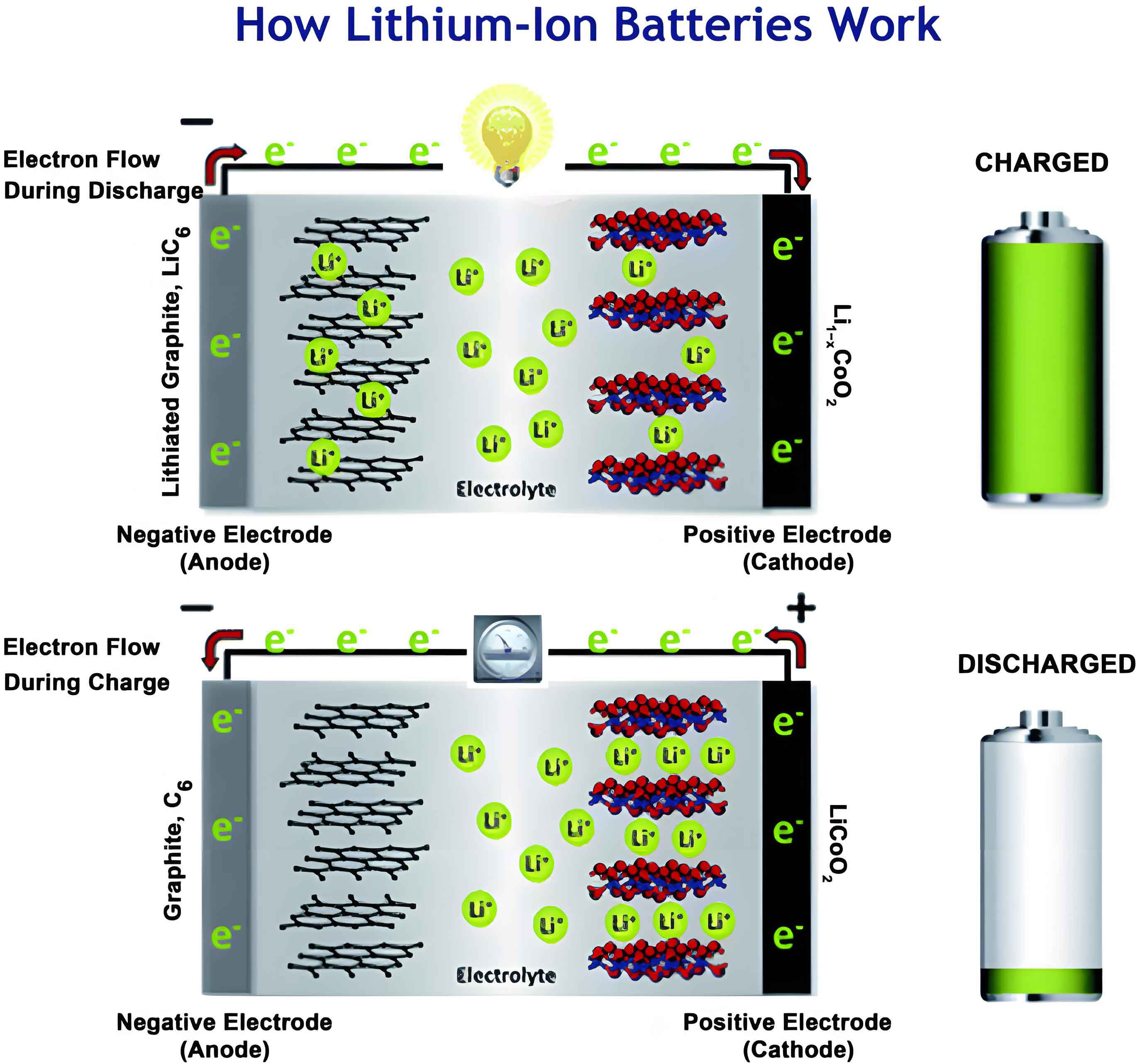
The transition from traditional lead-acid and nickel-metal hydride (NiMH) systems to the li-ion battery represents the single most significant leap in modern electrification. The superior energy density, power density, and cycle life of the li-ion battery have made modern, practical electric vehicles a reality. At its fundamental level, a li-ion battery operates on the principle of reversible intercalation and de-intercalation of lithium ions between a cathode and an anode, facilitated by an electrolyte medium. During discharge, lithium ions migrate from the anode through the electrolyte to the cathode, releasing electrons that travel through an external circuit to power the motor. Charging reverses this process, driven by an external power source. The overall cell reaction can be conceptually simplified, though the actual chemistry is material-dependent.
The performance of any li-ion battery is quantified by several key metrics. The capacity (Q) of a cell, typically measured in Ampere-hours (Ah), represents the total charge it can deliver. It is intrinsically linked to the active materials used:
$$ Q = nF $$
where *n* is the number of moles of lithium that can be cycled and *F* is Faraday’s constant (96,485 C/mol). A more practical metric for comparing battery packs of different sizes is energy density, expressed as Wh/kg (gravimetric) or Wh/L (volumetric). The energy (E) stored is:
$$ E = Q \times V $$
where *V* is the average discharge voltage of the cell. Therefore, the pursuit of higher energy density in li-ion battery technology revolves around increasing cell capacity and/or operational voltage. Another crucial parameter is the C-rate, which defines the charge or discharge current relative to the battery’s capacity. A discharge rate of 1C means the battery is depleted from full in one hour using a current equal to its Ah rating.
The landscape of power battery technologies is diverse, but the li-ion battery family is preeminent. The following table compares the primary contenders.
| Battery Technology | Cathode/Anode/Electrolyte Example | Key Advantages | Key Challenges | Primary NEV Application |
|---|---|---|---|---|
| Lithium Iron Phosphate (LFP) Li-ion Battery | LiFePO₄ / Graphite / Liquid Organic | Excellent safety, long cycle life, low cost, cobalt-free | Lower energy density, lower voltage (~3.2V) | BEVs (Standard Range), PHEVs, Energy Storage |
| Nickel Manganese Cobalt (NMC) Li-ion Battery | LiNiₓMnᵧCozO₂ / Graphite / Liquid Organic | High energy density, good power capability | Cost (cobalt), thermal stability concerns | BEVs (Long Range), PHEVs |
| Nickel Cobalt Aluminum (NCA) Li-ion Battery | LiNiₓCoᵧAlzO₂ / Graphite-Si / Liquid Organic | Very high energy density | Thermal stability, cost | BEVs (Long Range, Performance) |
| Lithium Manganese Oxide (LMO) Li-ion Battery | LiMn₂O₄ / Graphite / Liquid Organic | High power, good safety, low cost | Lower cycle life, lower energy density | HEVs, some BEVs (often blended) |
| Nickel-Metal Hydride (NiMH) | NiOOH / Metal Hydride / KOH | Proven reliability, safe | Low energy density, memory effect, self-discharge | HEVs (legacy) |
| Solid-State Li-ion Battery (Emerging) | NMC / Li-metal / Solid Ceramic/ Polymer | Potential for very high energy density, enhanced safety | Manufacturing complexity, interface resistance, cost | Future BEVs |
As the table illustrates, the modern li-ion battery ecosystem offers a spectrum of solutions tailored to different market needs. The advancement of the li-ion battery is not a singular achievement but a multi-front effort in materials science, electrochemistry, and systems engineering.
The Heart of the Cell: Cathode Materials for Li-Ion Batteries
The cathode is the primary determinant of a li-ion battery’s voltage, capacity, and much of its cost and safety profile. My research is closely aligned with the development and characterization of these critical materials. The cathode hosts lithium ions in its lattice structure when discharged. The potential at which lithium is intercalated/de-intercalated defines the cell voltage. The quest for the ideal cathode material involves balancing high specific capacity, high working potential, structural stability over thousands of cycles, safety, low cost, and minimal environmental impact.
The layered oxide family, particularly NMC (LiNixMnyCozO2) and NCA, has been the workhorse for high-energy applications. The evolution here has been towards “nickel-rich” and “cobalt-low” compositions. Increasing nickel content boosts capacity (e.g., NMC811 offers ~200 mAh/g), while reducing expensive and ethically problematic cobalt. However, this comes at the cost of reduced structural and thermal stability. The degradation mechanisms, including cation mixing and oxygen release at high voltages/ temperatures, are active areas of my investigation. Doping with elements like Al, Mg, or Ti and surface coating with oxides or phosphates are essential strategies to stabilize these high-energy cathodes for the li-ion battery.
In contrast, the polyanion family, exemplified by Lithium Iron Phosphate (LiFePO4 or LFP), offers a compelling trade-off. Its olivine structure provides exceptional thermal and chemical stability, making the LFP-based li-ion battery inherently safer. Although its energy density is lower due to a moderate voltage (~3.2 V vs. Li/Li+) and specific capacity (~170 mAh/g), its low cost, long cycle life, and absence of critical raw materials like cobalt and nickel have led to a massive resurgence, particularly for cost-sensitive and safety-first applications. The performance of this variant of the li-ion battery is continuously being improved through nanoscale engineering and carbon coating to enhance its electronic conductivity.
The Anode Frontier: Beyond Graphite in Li-Ion Batteries
While graphite remains the dominant anode material due to its excellent reversibility, low working potential, and low cost, its theoretical capacity is limited to 372 mAh/g (forming LiC6). To push the energy density boundaries of the next-generation li-ion battery, researchers are exploring alternatives with much higher capacity. My work involves analyzing the profound challenges and potential of these advanced anodes.
Silicon (Si) is the most promising candidate, with a theoretical capacity of ~3579 mAh/g (for Li15Si4 at room temperature). The integration of even small amounts of silicon into a graphite composite anode can significantly boost the capacity of a li-ion battery. However, the fundamental challenge is colossal: silicon undergoes a volume expansion of ~280% upon full lithiation. This volumetric swing induces severe mechanical stress, leading to particle pulverization, loss of electrical contact, and continuous consumption of electrolyte to form new Solid Electrolyte Interphase (SEI) layers. This results in rapid capacity fade. Strategies to harness silicon in the li-ion battery involve using nano-structured Si (nanoparticles, nanowires) to better accommodate strain, designing sophisticated porous carbon matrices, and developing advanced binder systems and electrolyte additives to stabilize the SEI.
Lithium metal is the “holy grail” anode, with an ultra-high theoretical capacity of 3860 mAh/g and the lowest electrochemical potential. A li-ion battery employing a lithium metal anode paired with a high-capacity cathode (like sulfur or air) could represent a step-change in energy storage. However, the challenges are even more daunting than with silicon: uncontrolled dendritic lithium growth during plating poses severe safety risks (short circuits), and the high reactivity of lithium leads to poor Coulombic efficiency and short cycle life. The pursuit of a practical lithium metal anode is intimately tied to the development of solid-state electrolytes, which I will discuss next, as they may mechanically suppress dendrite growth. Success in this area would redefine the li-ion battery paradigm.
The Vital Bridge: Electrolyte Systems for Advanced Li-Ion Batteries
The electrolyte is the vital yet often overlooked component of a li-ion battery. It must conduct lithium ions efficiently while being electronically insulating, chemically stable across a wide voltage window, and safe under abuse conditions. Conventional li-ion battery technology relies on liquid electrolytes: lithium salts (e.g., LiPF6) dissolved in organic carbonate solvents (e.g., ethylene carbonate, dimethyl carbonate). While functional, these liquids are volatile, flammable, and can decompose at high voltages or temperatures, posing safety hazards.
My research into next-generation electrolytes focuses on two promising directions. The first is the development of solid-state electrolytes (SSEs). Replacing the liquid with a solid (ceramic like LLZO or LGPS, or solid polymer) could revolutionize li-ion battery safety by eliminating leakage and flammability. Furthermore, certain SSEs are mechanically robust enough to potentially inhibit lithium dendrite growth, enabling the use of lithium metal anodes. The ionic conductivity (\(\sigma_i\)) of an electrolyte is paramount:
$$ \sigma_i = n_i q_i \mu_i $$
where \(n_i\) is the charge carrier concentration, \(q_i\) is the charge, and \(\mu_i\) is the carrier mobility. While the conductivity of the best SSEs now rivals that of liquids at room temperature, the high interfacial resistance between the solid electrolyte and the solid electrode particles remains a critical bottleneck. Perfecting this interface is a core challenge for the solid-state li-ion battery.
The second direction is the formulation of advanced liquid electrolytes. This includes “high-concentration” or “localized high-concentration” electrolytes, which alter the solvation structure to improve stability at high voltages (>4.3V vs. Li/Li+), enabling the use of more aggressive cathode materials. Another key area is the development of functional additives—small amounts of compounds that preferentially decompose to form a stable, protective SEI on the anode or a Cathode Electrolyte Interphase (CEI) on the cathode. These additives are crucial for stabilizing silicon-containing anodes and nickel-rich cathodes in the modern li-ion battery.
The Brain and Guardian: Battery Management and System Integration
A high-performance li-ion battery cell is only as good as the system that manages and protects it. The Battery Management System (BMS) is the electronic brain of the battery pack. In my view, its functions are critical for the safety, performance, and longevity of any li-ion battery pack in an NEV. The core tasks of a BMS can be summarized as follows:
| BMS Function | Technical Description | Impact on Li-Ion Battery |
|---|---|---|
| State Estimation | Real-time algorithms (e.g., Kalman Filters, neural networks) to estimate State of Charge (SOC), State of Health (SOH), and State of Power (SOP). | Prevents overcharge/discharge, informs driver range, manages power limits, predicts remaining useful life. |
| Cell Balancing | Active (shuttling charge between cells) or passive (dissipating charge from higher cells) techniques to equalize cell voltages. | Maximizes usable pack capacity, prevents individual cell overstress, extends overall pack cycle life. |
| Thermal Management | Controls cooling/heating systems (liquid, air, refrigerant) based on temperature sensor data to maintain an optimal window (e.g., 15-35°C). | Essential for safety (prevents thermal runaway), enables fast charging, maintains performance in extreme climates, slows degradation. |
| Fault Diagnosis & Safety | Monitors for over-voltage, under-voltage, over-current, over-temperature, and isolation faults. Triggers safety protocols (contactors open). | The primary layer of functional safety (ISO 26262), critical for preventing catastrophic failure of the li-ion battery. |
The integration of these functions is non-trivial. The BMS must perform these complex calculations and controls with high reliability for over a decade in harsh automotive environments. Furthermore, the mechanical design of the battery pack—its enclosure, module configuration, and thermal management plumbing—is equally vital. It must provide protection from crashes, vibration, and the elements while efficiently managing the heat generated by thousands of li-ion battery cells during high-power driving and fast charging. The overarching goal is to translate excellent cell-level performance into a safe, reliable, and durable pack-level system.
Conclusion and Perspective
The journey of the li-ion battery from powering consumer electronics to propelling the global shift in transportation is one of the defining technological narratives of our time. Its continued evolution is not merely an incremental engineering task but a multidisciplinary endeavor at the forefront of materials science, electrochemistry, and systems engineering. As I reflect on the current state, the path forward for the li-ion battery in NEVs is clear, though challenging.
The immediate future will see a diversification of cathode chemistries, with cost-effective and safe LFP growing its market share for mass-market vehicles, while nickel-rich NMC/NCA continues to push the envelope for premium long-range models. The gradual incorporation of silicon into graphite anodes will become mainstream, offering tangible energy density gains. In the electrolyte space, advanced liquid formulations with sophisticated additive packages will be the near-term solution, while solid-state batteries will progress from the laboratory to initial niche commercialization, addressing fundamental interface and manufacturing challenges.
Concurrently, the intelligence of the BMS will grow, leveraging more data and advanced algorithms for precise state estimation and proactive health management. Fast-charging capabilities, enabled by both cell design and sophisticated thermal management, will continue to improve, gradually alleviating range anxiety. Ultimately, the success of the li-ion battery and, by extension, the electric vehicle revolution, hinges on simultaneously improving the triumvirate of energy density, cost (per kWh), and charging speed, all while guaranteeing uncompromising safety and longevity. Through sustained research, innovation, and collaboration across academia and industry, the li-ion battery will undoubtedly continue to be the central pillar powering our sustainable mobility future for decades to come.