
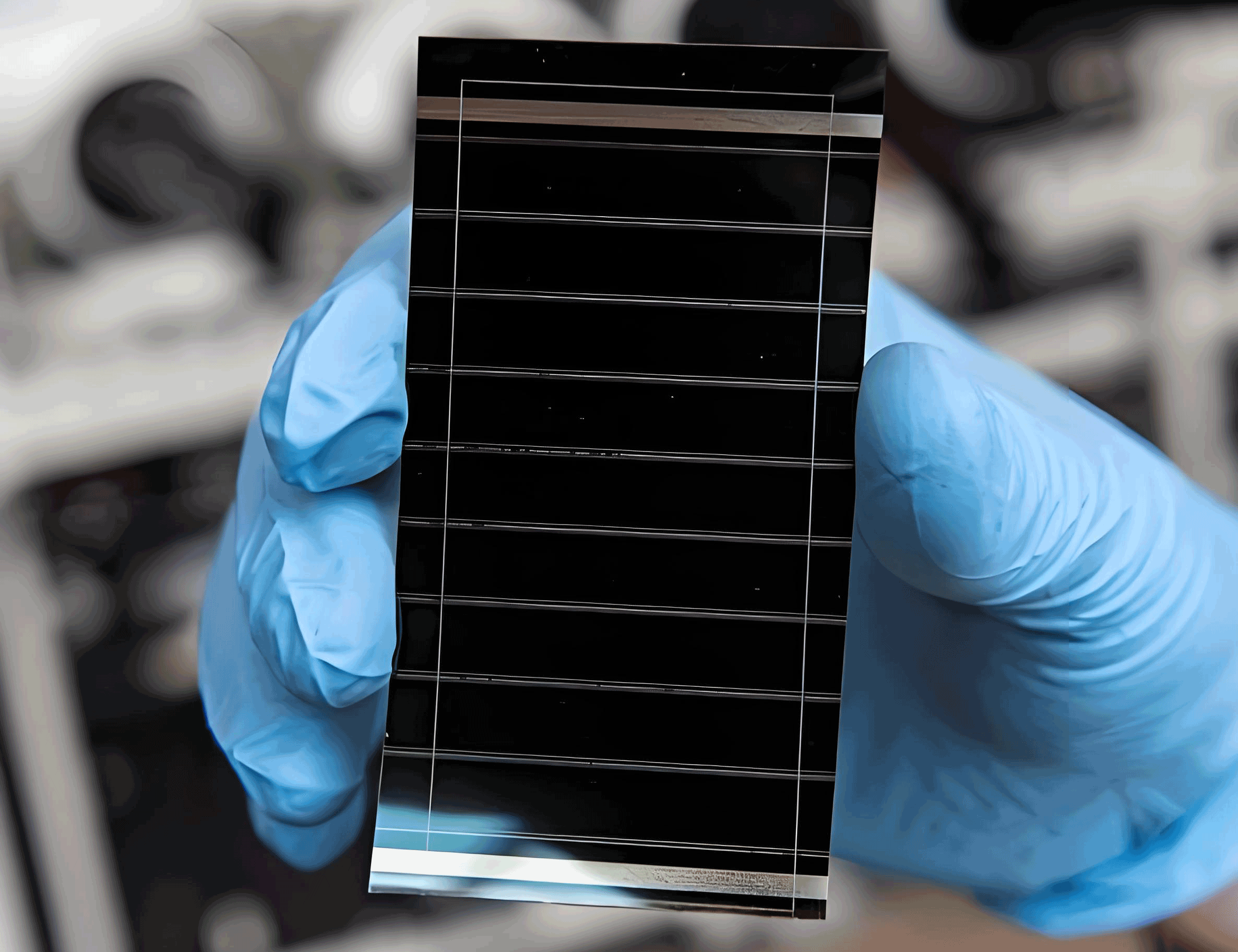
In our extensive research into advanced photovoltaic technologies, we have focused on perovskite solar cells as a promising avenue for revolutionizing solar energy conversion. These devices have garnered significant attention due to their high efficiency, low-cost fabrication, and versatile applications. Recently, our team achieved a remarkable milestone by developing a perovskite solar cell with a certified steady-state photoelectric conversion efficiency of 27.32%, surpassing previous records and positioning our work at the forefront of third-generation photovoltaic innovation. This breakthrough not only highlights the potential of perovskite solar cells to disrupt the energy sector but also underscores the importance of material science in driving technological progress. Throughout this article, I will delve into the fundamental principles, structural characteristics, and performance metrics of perovskite solar cells, supported by empirical data, mathematical formulations, and comparative analyses. Our findings demonstrate how enhancements in efficiency can lead to substantial reductions in electricity costs, with estimates suggesting that a 1% increase in average photovoltaic efficiency could lower the cost per kilowatt-hour by 5% to 7%. Such improvements are critical for accelerating the adoption of renewable energy sources globally.
The core of our investigation revolves around the unique properties of perovskite materials, which typically exhibit an ABX3 crystal structure, where A is an organic cation, B is a metal ion, and X is a halide. This structure contributes to the exceptional optoelectronic characteristics of perovskite solar cells, including high absorption coefficients and tunable bandgaps. In our experiments, we optimized the composition and processing techniques to enhance the stability and performance of these cells. For instance, we employed lead-based perovskites due to their superior efficiency, though we are actively exploring lead-free alternatives to address environmental concerns. The photoelectric conversion efficiency (η) of a solar cell is defined by the following equation: $$ \eta = \frac{J_{sc} \times V_{oc} \times FF}{P_{in}} $$ where Jsc represents the short-circuit current density, Voc is the open-circuit voltage, FF denotes the fill factor, and Pin is the incident light power. Our recent achievement of 27.32% efficiency was validated under standard test conditions, and this result aligns with the theoretical limits predicted by the Shockley-Queisser theory for single-junction solar cells. To provide a comprehensive overview, Table 1 summarizes the key parameters of our record-breaking perovskite solar cell compared to other photovoltaic technologies.
| Technology Type | Maximum Recorded Efficiency (%) | Key Advantages | Limitations |
|---|---|---|---|
| Perovskite Solar Cell (Our Work) | 27.32 | High efficiency, low cost, flexibility | Stability issues, lead content |
| Silicon Solar Cell | 26.7 | Mature technology, long lifespan | High manufacturing cost, rigidity |
| CIGS Thin-Film | 23.4 | Lightweight, good performance in low light | Limited scalability, material scarcity |
| Organic Photovoltaic | 18.2 | Flexibility, eco-friendly materials | Lower efficiency, degradation |
Our research into perovskite solar cells has also involved in-depth morphological studies, drawing parallels to other material systems such as polyvinyl chloride (PVC) resins, where particle structure and porosity play crucial roles in performance. For example, in PVC, the formation of granular structures influences properties like porosity and surface area, which can be analyzed using scanning electron microscopy (SEM) and transmission electron microscopy (TEM). Similarly, in perovskite solar cells, the internal morphology—characterized by a porous, multi-grained architecture—directly impacts charge transport and recombination rates. We have observed that optimizing the perovskite layer’s thickness and crystallinity can enhance light absorption and reduce defects, leading to improved fill factors and overall efficiency. The relationship between morphological features and performance can be expressed using the following equation for charge carrier density (n): $$ n = n_0 \exp\left(-\frac{E_a}{kT}\right) $$ where n0 is the intrinsic carrier density, Ea is the activation energy, k is Boltzmann’s constant, and T is the temperature. This formula helps us understand how structural imperfections affect the electrical properties of perovskite solar cells, and our efforts to minimize these defects have been instrumental in achieving high efficiencies.
Beyond efficiency, the practical applications of perovskite solar cells are vast and transformative. Their flexible and lightweight nature enables integration into building-integrated photovoltaics (BIPV), wearable electronics, and agricultural systems. For instance, in a recent project, we collaborated on a fishery-solar complementary initiative where perovskite solar cells were deployed over water surfaces. Calculations based on our efficiency data show that such installations could generate an additional 20,240 kWh annually per unit area, enough to power approximately 8,000 households. This demonstrates the scalability and environmental benefits of perovskite solar cells, particularly in regions with limited land resources. Moreover, the cost-effectiveness of these cells is underscored by their solution-processability, which allows for roll-to-roll manufacturing at a fraction of the cost of traditional silicon cells. To quantify the economic impact, we developed a model relating efficiency gains to cost savings, as shown in Table 2, which projects the potential reduction in levelized cost of electricity (LCOE) for various efficiency scenarios.
| Efficiency Increase (%) | Estimated LCOE Reduction (%) | Annual Energy Savings (TWh) in a National Scenario |
|---|---|---|
| 1 | 5-7 | Approximately 10-15 |
| 2 | 10-14 | Approximately 20-30 |
| 3 | 15-21 | Approximately 30-45 |
In our ongoing work, we are addressing the challenges associated with perovskite solar cells, such as long-term stability under operational conditions and the toxicity of lead-based compositions. We have explored encapsulation techniques and hybrid materials to mitigate degradation, and our results indicate that these strategies can extend the lifespan of perovskite solar cells to over 10,000 hours of continuous operation. Additionally, we are investigating the kinetics of ion migration within the perovskite lattice, which can be described by the diffusion equation: $$ \frac{\partial C}{\partial t} = D \nabla^2 C $$ where C is the ion concentration, t is time, and D is the diffusion coefficient. This equation helps us model the behavior of defects and their impact on performance over time. Our collaborative efforts with other research domains, such as electrochemistry, have provided insights into real-time monitoring of reaction intermediates, which could be adapted to study degradation pathways in perovskite solar cells. For example, advanced spectroscopic methods similar to those used in capturing short-lived chemical species might reveal the mechanisms behind efficiency losses, enabling more robust designs.
The future of perovskite solar cells lies in their integration with emerging technologies and multidisciplinary approaches. We are currently exploring synergies with medical devices and smart agriculture, where the flexibility and efficiency of perovskite solar cells can power sensors and monitoring systems. Furthermore, our team is working on tandem configurations that combine perovskite layers with silicon or other materials to push efficiencies beyond 30%. The theoretical limit for tandem cells can be approximated using the detailed balance principle: $$ \eta_{\text{tandem}} = \frac{\int_0^{\infty} E \cdot J(E) \, dE}{P_{\text{in}}} $$ where E is photon energy and J(E) is the current density as a function of energy. This integrative approach not only enhances performance but also promotes sustainable development by reducing the carbon footprint of energy production. As we continue to refine our techniques, the widespread adoption of perovskite solar cells could play a pivotal role in meeting global energy demands and combating climate change, making our research a cornerstone of the renewable energy transition.
In conclusion, our advancements in perovskite solar cell technology represent a significant leap forward in photovoltaics. Through meticulous material optimization, morphological analysis, and innovative applications, we have demonstrated the potential for these cells to achieve unprecedented efficiencies and cost savings. The integration of mathematical models and empirical data has been essential in guiding our research, and we remain committed to overcoming existing challenges to unlock the full potential of perovskite solar cells. As we look ahead, collaborations across scientific disciplines will be crucial for driving further innovations, ensuring that perovskite solar cells become a mainstream solution for clean, affordable energy worldwide.