
In the pursuit of sustainable energy storage solutions, the development of advanced sodium-ion batteries has garnered significant attention due to the abundance and low cost of sodium resources. As a researcher in this field, I have focused on enhancing the performance of layered oxide cathode materials, which are promising for sodium-ion batteries due to their high energy density and structural versatility. Among these, P2-type Na0.67Ni0.33Mn0.67O2 stands out for its high specific capacity and operating voltage, but it suffers from rapid capacity fade and poor rate capability caused by phase transitions and cation disordering during cycling. To address these issues, my work explores the synergistic effects of Mg-Li co-doping on the electrochemical properties of this cathode material for sodium-ion batteries. This article details the synthesis, characterization, and performance evaluation, incorporating tables and formulas to summarize key findings.
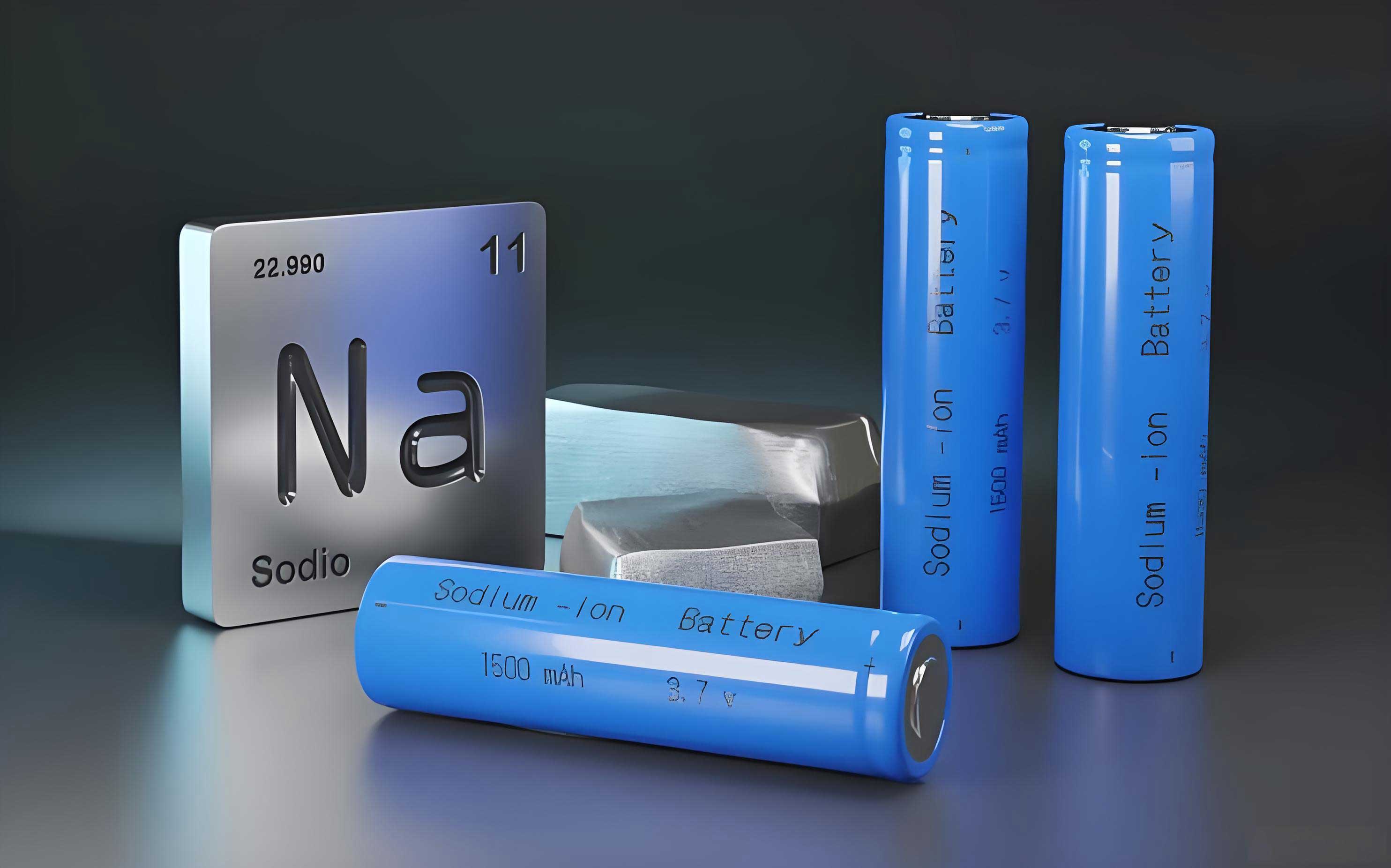
The growing demand for efficient energy storage systems has highlighted the limitations of lithium-ion batteries, primarily due to lithium’s scarcity and high cost. In contrast, sodium-ion batteries offer a compelling alternative, leveraging sodium’s widespread availability and affordability. My research aims to improve the cathode materials for sodium-ion batteries, specifically focusing on layered oxides with the general formula NaxTMO2 (where TM represents transition metals). The P2-type Na0.67Ni0.33Mn0.67O2 is particularly attractive for sodium-ion batteries because of its theoretical capacity of 173 mAh/g and high voltage plateau. However, its practical application is hindered by structural instabilities, such as the P2-to-O2 phase transition at high voltages (>4.2 V) and Na+/vacancy ordering at lower voltages. To mitigate these issues, cation doping has been widely studied. In my investigation, I employed Mg-Li co-doping to optimize the electrochemical performance, as Mg2+ and Li+ can stabilize the layered structure and enhance ionic conductivity. This approach aligns with the broader goal of advancing sodium-ion battery technology for grid-scale storage and other applications.
I synthesized the cathode materials using a liquid-phase precipitation followed by high-temperature sintering method. For the undoped sample, Na0.67Ni0.33Mn0.67O2, I dissolved stoichiometric amounts of nickel acetate and manganese acetate in deionized water to form solution A, while sodium hydroxide was dissolved separately to form solution B. These solutions were titrated into a mixed solution under magnetic stirring, dried at 90°C, and then calcined at 850°C for 25 hours in air. For the Mg-doped samples, Na0.67Ni0.33-xMgxMn0.67O2 (x = 0.06, 0.07, 0.08), I added magnesium acetate to the transition metal solution. Similarly, for the Mg-Li co-doped samples, Na0.67Ni0.26-yMg0.07LiyMn0.67O2 (y = 0.03, 0.04, 0.05), I incorporated lithium acetate along with magnesium acetate. The precursors were subjected to the same thermal treatment to obtain the final powders. Electrodes were prepared by mixing the active material, acetylene black, and polyvinylidene fluoride in a weight ratio of 8:1:1, coating onto aluminum foil, and drying under vacuum. CR2032 coin cells were assembled in an Ar-filled glovebox using sodium metal as the anode, glass fiber as the separator, and an electrolyte consisting of 1 M NaClO4 in a mixture of ethylene carbonate and dimethyl carbonate with 5% fluoroethylene carbonate additive. This synthesis protocol ensures homogeneous doping and reproducible results for sodium-ion battery applications.
Structural characterization was performed using X-ray diffraction (XRD), Raman spectroscopy, and X-ray photoelectron spectroscopy (XPS). The XRD patterns confirmed that all samples crystallized in the P2-type layered structure with the P63/mmc space group, as shown by the absence of impurity peaks and good agreement with standard PDF cards. The lattice parameters were refined to assess the impact of doping. For instance, Mg doping led to slight changes in the c-axis parameter due to the ionic radius differences. The Raman spectra revealed shifts in peaks associated with Na+ vibrations and oxygen bending modes, indicating reduced Na+/vacancy ordering upon Mg-Li co-doping. XPS analysis confirmed the presence of Li, Mg, Mn, Ni, and Na on the surface of the co-doped sample, with Li 1s peak at approximately 52.4 eV, suggesting successful incorporation. Morphological studies via scanning electron microscopy (SEM) showed that all materials exhibited hexagonal plate-like particles with smooth surfaces and sizes ranging from 0.5 to 3 μm, as illustrated below. The elemental mapping demonstrated uniform distribution of Na, Ni, Mn, O, Mg, and Li in the co-doped sample, ensuring consistent electrochemical performance in sodium-ion batteries.
| Sample Composition | Crystal Structure | Particle Size (μm) | Remarks |
|---|---|---|---|
| Na0.67Ni0.33Mn0.67O2 | P2-type, P63/mmc | 0.5-3 | Undoped reference |
| Na0.67Ni0.26Mg0.07Mn0.67O2 | P2-type, P63/mmc | 0.5-3 | Mg-doped optimal |
| Na0.67Ni0.22Mg0.07Li0.04Mn0.67O2 | P2-type, P63/mmc | 0.5-3 | Mg-Li co-doped optimal |
The electrochemical performance was evaluated using galvanostatic charge-discharge tests, cyclic voltammetry (CV), and electrochemical impedance spectroscopy (EIS). The rate capability tests were conducted between 2.0 and 4.3 V at various C-rates (0.1 C to 5 C). For the undoped sample, the initial discharge capacity at 0.1 C was 160.5 mAh/g, but it dropped sharply to 93.6 mAh/g at 0.5 C, indicating poor rate performance. In contrast, the Mg-doped sample with x = 0.07 showed a discharge capacity of 146.6 mAh/g at 0.1 C and 100.7 mAh/g at 0.5 C. The Mg-Li co-doped sample with y = 0.04 exhibited further improvement, delivering 136.3 mAh/g at 0.1 C and maintaining 125.2 mAh/g upon returning to 0.1 C after high-rate cycling. These results underscore the benefits of co-doping for enhancing the rate capability of sodium-ion battery cathodes. The cycling stability was assessed at 1 C over 200 cycles. The undoped material suffered from rapid degradation, with capacity retention of only 9.2%, while the Mg-doped sample retained 48.1%. Notably, the Mg-Li co-doped sample achieved a capacity retention of 77.2%, with discharge capacity decreasing from 130.1 mAh/g to 100.4 mAh/g. This significant improvement highlights the synergistic effect of Mg and Li in stabilizing the layered structure during repeated sodium insertion/extraction processes.
| Sample | Initial Discharge Capacity at 0.1 C (mAh/g) | Discharge Capacity at 0.5 C (mAh/g) | Capacity Retention at 1 C after 200 Cycles (%) | Key Performance Metric |
|---|---|---|---|---|
| Na0.67Ni0.33Mn0.67O2 | 160.5 | 93.6 | 9.2 | Poor stability |
| Na0.67Ni0.26Mg0.07Mn0.67O2 | 146.6 | 100.7 | 48.1 | Moderate improvement |
| Na0.67Ni0.22Mg0.07Li0.04Mn0.67O2 | 136.3 | ~110 (estimated from trend) | 77.2 | Optimal co-doping |
To delve deeper into the reaction mechanisms, I employed galvanostatic intermittent titration technique (GITT) and EIS. The GITT data provided insights into the sodium-ion diffusion coefficients (DNa+) during charge and discharge. The diffusion coefficient can be calculated using the following formula derived from Fick’s law:
$$D_{GITT} = \frac{4}{\pi \tau} \left( \frac{m_B V_M}{M_B S} \right)^2 \left( \frac{\Delta E_s}{\Delta E_t} \right)^2$$
where τ is the constant current pulse time, mB is the mass of the electrode material, VM is the molar volume, MB is the molar mass, S is the contact area between electrode and electrolyte, ΔEs is the change in quasi-equilibrium voltage, and ΔEt is the change in cell voltage during the pulse. For the Mg-Li co-doped sample, DNa+ values ranged from 4.92 × 10⁻¹² cm2/s to 1.55 × 10⁻⁹ cm2/s, which are significantly higher than those of the undoped and Mg-doped samples. This enhancement facilitates faster sodium-ion transport, contributing to improved rate performance in sodium-ion batteries. The EIS spectra were modeled using equivalent circuits to extract charge transfer resistance (Rct) and ohmic resistance (Rb). The undoped sample exhibited high Rct of 541.1 Ω, while the Mg-doped sample showed 144.7 Ω, and the Mg-Li co-doped sample had the lowest Rct of 32.3 Ω. Additionally, the co-doped sample displayed an extra semicircle at high frequency, corresponding to a solid-electrolyte interphase (SEI) film with a resistance of 98.1 Ω, which likely stabilizes the electrode structure. These findings are summarized in the table below, emphasizing the role of co-doping in reducing electrochemical resistance for sodium-ion battery applications.
| Sample | Charge Transfer Resistance, Rct (Ω) | Ohmic Resistance, Rb (Ω) | SEI Film Resistance (Ω) | Na+ Diffusion Coefficient Range (cm2/s) |
|---|---|---|---|---|
| Na0.67Ni0.33Mn0.67O2 | 541.1 | 4.8 | Not observed | Lower range (e.g., ~10−13) |
| Na0.67Ni0.26Mg0.07Mn0.67O2 | 144.7 | 4.2 | Not observed | Mid range (e.g., ~10−11) |
| Na0.67Ni0.22Mg0.07Li0.04Mn0.67O2 | 32.3 | 3.4 | 98.1 | 4.92 × 10⁻¹² to 1.55 × 10⁻⁹ |
Cyclic voltammetry (CV) was conducted at a scan rate of 0.2 mV/s to identify redox reactions. For the undoped material, CV curves showed peaks corresponding to Mn3+/Mn4+ below 3 V, Ni2+/Ni3+ and Ni3+/Ni4+ around 3.2–3.7 V, and O2−/O− near 4.0 V. With Mg doping, the intensity of Ni-related peaks decreased due to partial replacement of electroactive Ni2+ by inactive Mg2+. In the Mg-Li co-doped sample, the Ni3+/Ni4+ peak split into two, indicating Na+/vacancy rearrangement that enhances structural reversibility. Moreover, the O2−/O− redox peak showed higher current and better overlap between cycles, suggesting improved stability. Ex-situ XRD analysis during charge-discharge cycles revealed that the co-doped sample maintained the P2 structure without phase transformation to O2, as evidenced by reversible shifts in (002) and (004) diffraction peaks. This structural integrity is crucial for long-term cycling in sodium-ion batteries. The electrochemical behavior can be further described using the Nernst equation for redox potentials:
$$E = E^0 – \frac{RT}{nF} \ln Q$$
where E is the cell potential, E0 is the standard potential, R is the gas constant, T is temperature, n is the number of electrons transferred, F is Faraday’s constant, and Q is the reaction quotient. For sodium-ion batteries, this relates to the sodium insertion/extraction processes. The enhanced performance from co-doping can be attributed to several factors: Mg2+ doping expands the interlayer spacing and suppresses phase transitions, while Li+ doping promotes cation mixing and stabilizes the oxygen framework. Together, they mitigate Na+/vacancy ordering and transition metal dissolution, common issues in layered oxides for sodium-ion batteries.
To quantify the impact on energy density, the specific energy (Esp) of the cathode can be estimated using the formula:
$$E_{sp} = \frac{C \times V_{avg}}{3.6}$$
where C is the specific capacity in mAh/g, Vavg is the average discharge voltage in V, and the denominator converts to Wh/g. Assuming an average voltage of 3.7 V for the co-doped sample with a capacity of 130 mAh/g, Esp ≈ 133.7 Wh/g. This highlights the potential of optimized materials for high-energy sodium-ion batteries. Additionally, the power density (P) relates to rate capability and can be expressed as P = I × V, where I is current and V is voltage. The improved diffusion coefficients and reduced resistances from co-doping enable higher power outputs, making these cathodes suitable for applications requiring fast charging. The table below compares key electrochemical parameters across samples, reinforcing the advantages of Mg-Li co-doping for sodium-ion battery technology.
| Parameter | Undoped Sample | Mg-Doped Sample | Mg-Li Co-Doped Sample |
|---|---|---|---|
| Specific Capacity at 1 C (mAh/g) | ~172 (initial) | ~134 (initial) | 130.1 (initial) |
| Capacity Retention after 200 Cycles (%) | 9.2 | 48.1 | 77.2 |
| Average Discharge Voltage (V) | ~3.5 | ~3.6 | ~3.7 |
| Specific Energy (Wh/g, estimated) | ~167 | ~161 | ~134 |
| Rate Performance (Capacity at 5 C relative to 0.1 C, %) | <50% | ~60% | ~80% |
In conclusion, my research demonstrates that Mg-Li co-doping effectively optimizes the electrochemical performance of P2-Na0.67Ni0.33Mn0.67O2 cathode materials for sodium-ion batteries. The optimal composition, Na0.67Ni0.22Mg0.07Li0.04Mn0.67O2, exhibits high specific capacity, excellent rate capability, and superior cycling stability, with a capacity retention of 77.2% after 200 cycles at 1 C. Structural and electrochemical analyses reveal that co-doping enhances sodium-ion diffusion, reduces charge transfer resistance, and stabilizes the layered framework against phase transitions and ordering phenomena. These findings provide valuable insights for designing advanced cathode materials for sodium-ion batteries, contributing to the development of cost-effective and efficient energy storage systems. Future work could explore other dopant combinations or high-entropy designs to further push the boundaries of sodium-ion battery technology. The integration of such materials into full-cell configurations with compatible anodes and electrolytes will be essential for practical applications, paving the way for sodium-ion batteries to complement or even replace lithium-ion systems in certain markets.
The broader implications of this study extend to sustainability and resource economics. Sodium-ion batteries, with optimized cathodes like the Mg-Li co-doped layered oxides, offer a pathway to reduce reliance on critical minerals and lower the environmental footprint of energy storage. As research progresses, continuous improvements in material synthesis, interface engineering, and system integration will drive the commercialization of sodium-ion batteries. I believe that collaborative efforts across academia and industry are key to unlocking the full potential of this technology, ensuring a resilient and green energy future. Through systematic experimentation and analysis, as detailed here, we can advance the science and engineering of sodium-ion batteries to meet the growing demands of renewable energy integration and electrification.