
In the context of global resource scarcity and the urgent need for sustainable development, the exploration and utilization of clean, renewable energy sources have become paramount. Photovoltaic (PV) power generation stands as a leading technology in this transition, offering a low-cost, high-efficiency, and environmentally friendly solution for electricity production. Its applications span from urban infrastructures to remote off-grid systems. However, the inherent intermittency and variability of solar radiation pose significant challenges to the stability and reliability of power systems reliant on PV generation. This instability can disrupt grid balance, reduce power quality, and hinder the economic viability of PV projects. A critical component in mitigating these issues is the cell energy storage system, which stores excess energy during peak generation periods and supplies power during deficits or low-light conditions. The optimal configuration and scheduling of the storage capacity within a PV microgrid are thus essential for enhancing system resilience, ensuring efficient energy management, and maximizing economic returns. This paper delves into the methodologies for optimizing the capacity of cell energy storage systems in photovoltaic microgrids, aiming to provide a robust framework that improves operational stability and promotes the sustainable growth of renewable energy sectors.
The core of a photovoltaic microgrid is the cell energy storage system, typically comprising batteries that store electrical energy converted from solar power. The performance and longevity of this cell energy storage system are influenced by numerous factors, including battery chemistry, operating conditions, and load profiles. To develop an effective optimization strategy, it is imperative to first establish a accurate mathematical model representing the behavior of the PV cells and the associated cell energy storage system. The equivalent circuit of a PV cell, which forms the basis of the storage unit, can be represented as a current source in parallel with a diode and series/parallel resistances. This model facilitates the analysis of current-voltage characteristics under varying environmental conditions.
The output current \(I_0\) of the PV cell, based on the single-diode model, can be expressed as:
$$I_0 = I_{ph} – I_d \left[ \exp\left(\frac{q(V_0 + I_0 R_s)}{n k T}\right) – 1 \right] – \frac{V_0 + I_0 R_s}{R_{sh}}$$
where \(I_{ph}\) is the photocurrent generated by incident light, \(I_d\) is the diode saturation current, \(q\) is the electron charge, \(V_0\) is the output voltage, \(R_s\) is the series resistance, \(R_{sh}\) is the shunt resistance, \(n\) is the ideality factor, \(k\) is Boltzmann’s constant, and \(T\) is the absolute temperature. For practical purposes in system-level simulations, simplified forms are often employed. Considering the effects of irradiance \(\phi\) and temperature \(\beta\), the modified output current \(I_0’\) and voltage \(V_0’\) can be approximated as:
$$I_0′ = I_{ph,ref} \frac{\phi}{\phi_{ref}} \left[1 + a (\beta – \beta_{ref})\right]$$
$$V_0′ = V_{oc,ref} + b (\beta – \beta_{ref}) + c \ln\left(\frac{\phi}{\phi_{ref}}\right)$$
Here, the subscript \(ref\) denotes values at standard test conditions (STC), and \(a\), \(b\), \(c\) are coefficients determined by the cell material and construction. Furthermore, the degradation of the cell energy storage system over time must be accounted for to ensure long-term performance. The effective energy output \(E_{PV}\) of the PV array over its lifetime can be estimated as:
$$E_{PV} = P_{peak} \cdot H_{peak} \cdot \eta_{inv} \cdot (1 – O)^{t}$$
where \(P_{peak}\) is the peak power rating, \(H_{peak}\) is the annual peak sun hours, \(\eta_{inv}\) is the inverter efficiency, \(O\) is the annual degradation rate (e.g., 0.15 for some technologies), and \(t\) is the time in years. This model provides the foundational dynamics for integrating the cell energy storage system into the microgrid optimization framework.
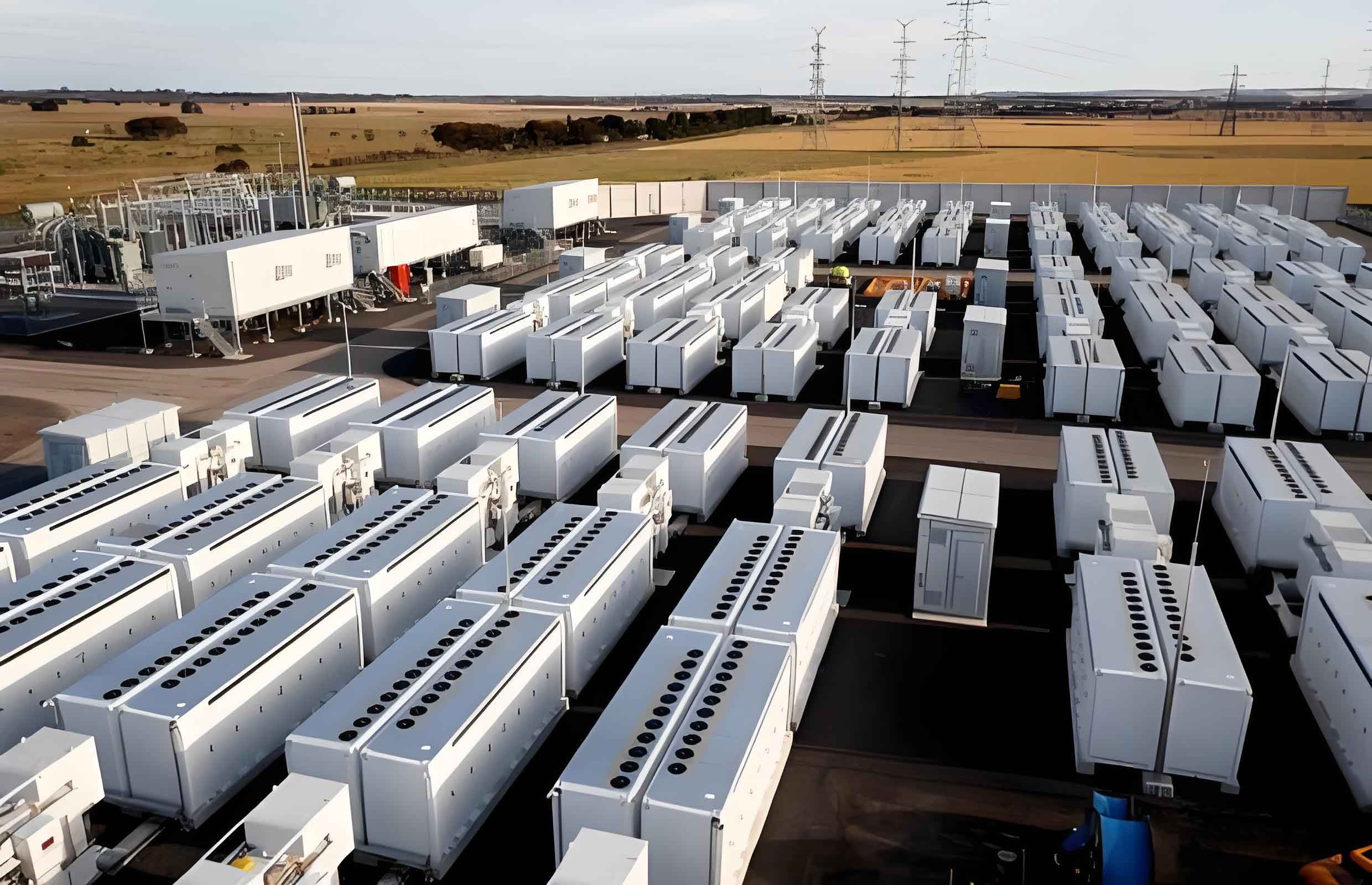
The optimization of the cell energy storage system capacity hinges on balancing multiple constraints and objectives. The primary goal is to minimize the total cost of ownership while ensuring reliable power supply and maximizing the self-consumption of locally generated PV energy. Key constraints include power balance, battery state-of-charge (SOC) limits, charge/discharge rates, and economic factors. The power balance constraint ensures that at any time interval \(t\), the total generation from PV and the cell energy storage system equals the load demand plus any grid exchange or losses. Mathematically, for a discrete time horizon:
$$\sum_{t=1}^{T} \left( P_{PV}(t) + P_{disch}(t) – P_{ch}(t) \right) = \sum_{t=1}^{T} P_{load}(t) + P_{grid}(t)$$
where \(P_{PV}(t)\) is PV power output, \(P_{disch}(t)\) is discharge power from the cell energy storage system, \(P_{ch}(t)\) is charge power, \(P_{load}(t)\) is load demand, and \(P_{grid}(t)\) is power exchanged with the main grid (positive for import, negative for export). The operational limits of the cell energy storage system are critical for longevity. The SOC must be maintained within safe bounds to prevent over-charge or deep discharge. Let \(SOC(t)\) represent the state-of-charge at time \(t\). Then:
$$SOC_{min} \leq SOC(t) \leq SOC_{max}$$
Typically, \(SOC_{min}\) might be set at 25% and \(SOC_{max}\) at 95% to extend battery life. The SOC dynamics are governed by:
$$SOC(t+1) = SOC(t) + \frac{\eta_{ch} P_{ch}(t) \Delta t}{C_{bat}} – \frac{P_{disch}(t) \Delta t}{\eta_{disch} C_{bat}}$$
where \(\eta_{ch}\) and \(\eta_{disch}\) are charge and discharge efficiencies, \(C_{bat}\) is the usable capacity of the cell energy storage system in kWh, and \(\Delta t\) is the time step. Additionally, the charge and discharge powers are limited by the battery’s power rating \(P_{bat,max}\):
$$0 \leq P_{ch}(t) \leq P_{bat,max}, \quad 0 \leq P_{disch}(t) \leq P_{bat,max}$$
Economic constraints involve minimizing the overall cost, which includes capital investment for the cell energy storage system, operation and maintenance (O&M) costs, and energy purchasing costs from the grid. The objective function can be formulated as minimizing the net present cost (NPC) or levelized cost of energy (LCOE). A common formulation aims to maximize self-consumption while minimizing cost:
$$\text{Minimize } \quad J = \sum_{t=1}^{T} \left[ C_{grid}(t) P_{grid}(t) + C_{OM} P_{bat}(t) \right] + C_{cap} C_{bat}$$
subject to the constraints above, where \(C_{grid}(t)\) is time-varying electricity price, \(C_{OM}\) is O&M cost per kW, \(C_{cap}\) is capital cost per kWh of the cell energy storage system, and \(P_{bat}(t)\) represents battery power flow. To solve this complex, non-linear optimization problem with multiple constraints, metaheuristic algorithms such as Particle Swarm Optimization (PSO) are highly effective.
Particle Swarm Optimization is a population-based stochastic algorithm inspired by social behavior of bird flocking. It is well-suited for optimizing the capacity and dispatch of a cell energy storage system due to its ability to handle non-convex, multi-modal objective functions. In PSO, each particle represents a candidate solution, defined by a position vector \(\mathbf{x}_i\) that includes variables such as the capacity \(C_{bat}\) and the dispatch schedule \(P_{ch}(t), P_{disch}(t)\). Each particle moves through the search space with a velocity \(\mathbf{v}_i\), updated based on its own best experience and the global best experience of the swarm. The update equations for particle \(i\) at iteration \(k\) are:
$$\mathbf{v}_i^{k+1} = \omega \mathbf{v}_i^k + c_1 r_1 (\mathbf{p}_i^k – \mathbf{x}_i^k) + c_2 r_2 (\mathbf{g}^k – \mathbf{x}_i^k)$$
$$\mathbf{x}_i^{k+1} = \mathbf{x}_i^k + \mathbf{v}_i^{k+1}$$
Here, \(\omega\) is the inertia weight, \(c_1\) and \(c_2\) are acceleration coefficients, \(r_1\) and \(r_2\) are random numbers in [0,1], \(\mathbf{p}_i^k\) is the personal best position of particle \(i\), and \(\mathbf{g}^k\) is the global best position found by the swarm. For the cell energy storage system optimization, the position vector might be defined as \(\mathbf{x} = [C_{bat}, SOC(1), \dots, SOC(T), P_{ch}(1), \dots, P_{ch}(T), P_{disch}(1), \dots, P_{disch}(T)]\). The objective function \(J\) is evaluated for each particle, and constraints are handled using penalty functions or repair mechanisms. The algorithm iterates until convergence criteria are met, such as a maximum number of iterations or minimal improvement in the global best.
To illustrate the application and effectiveness of the proposed optimization framework, a comprehensive simulation study was conducted using MATLAB/Simulink. The test case is a representative photovoltaic microgrid, referred to as the M microgrid, with typical residential and commercial load profiles. The load response characteristics over a 24-hour period are summarized in Table 1, showing the variability that necessitates a robust cell energy storage system.
| Time (Hour) | Load Power (kW) | Time (Hour) | Load Power (kW) |
|---|---|---|---|
| 00:00 – 01:00 | 45.2 | 12:00 – 13:00 | 120.5 |
| 01:00 – 02:00 | 42.1 | 13:00 – 14:00 | 118.7 |
| 02:00 – 03:00 | 40.5 | 14:00 – 15:00 | 115.3 |
| 03:00 – 04:00 | 38.9 | 15:00 – 16:00 | 112.8 |
| 04:00 – 05:00 | 39.8 | 16:00 – 17:00 | 125.6 |
| 05:00 – 06:00 | 50.3 | 17:00 – 18:00 | 135.4 |
| 06:00 – 07:00 | 65.7 | 18:00 – 19:00 | 145.2 |
| 07:00 – 08:00 | 85.4 | 19:00 – 20:00 | 138.9 |
| 08:00 – 09:00 | 95.8 | 20:00 – 21:00 | 128.5 |
| 09:00 – 10:00 | 105.6 | 21:00 – 22:00 | 110.3 |
| 10:00 – 11:00 | 115.2 | 22:00 – 23:00 | 85.7 |
| 11:00 – 12:00 | 118.9 | 23:00 – 00:00 | 60.2 |
The PV generation profile was modeled based on historical solar irradiance data for a mid-latitude location, with a peak capacity of 200 kW. The cell energy storage system considered is lithium-ion battery-based, with parameters: charge/discharge efficiency \(\eta_{ch} = \eta_{disch} = 0.92\), maximum depth of discharge (DOD) = 80%, cycle life dependent on DOD, and capital cost of 2500 USD per kWh. The time-of-use electricity tariff was applied, with high rates during peak hours (08:00-20:00) and low rates during off-peak. The PSO algorithm was configured with a swarm size of 50 particles, inertia weight \(\omega\) decreasing linearly from 0.9 to 0.4, acceleration coefficients \(c_1 = c_2 = 2.0\), and maximum iterations of 200.
Three configuration scenarios were compared to validate the proposed method:
Scenario A (Proposed Method): Optimization using the PSO-based approach with full constraint handling as described.
Scenario B (Traditional Method): A rule-based method that uses fixed charge/discharge thresholds without capacity optimization.
Scenario C (Unconstrained Method): An optimization that ignores battery aging constraints (SOC limits and DOD).
The optimization results for the cell energy storage system capacity and key performance indicators are summarized in Table 2. The proposed method demonstrates superior economic and technical outcomes.
| Performance Metric | Scenario A (Proposed) | Scenario B (Traditional) | Scenario C (Unconstrained) |
|---|---|---|---|
| Optimal Storage Capacity (kWh) | 826.0 | 813.1 | 821.7 |
| Battery Total Investment (kUSD) | 203.2 | 272.6 | 206.5 |
| Annualized System Cost (USD) | 647 | 1389 | 1234 |
| Actual Round-Trip Efficiency (%) | 92.32 | 86.35 | 87.19 |
| PV Self-Consumption Rate (%) | 78.5 | 65.2 | 70.8 |
| Storage-to-PV Capacity Ratio (%) | 11 | 5 | 21 |
| Battery Cycle Life (cycles to 80% capacity) | 4500 | 3200 | 3800 |
The proposed method yields a cell energy storage system capacity of 826 kWh, which is slightly higher than the other scenarios but leads to the lowest total investment and annual cost. This is because the optimization balances capacity with dispatch strategies to reduce peak demand charges and maximize arbitrage opportunities. The actual round-trip efficiency of 92.32% exceeds the initial assumed 90%, indicating that intelligent scheduling reduces energy losses. The self-consumption rate of 78.5% signifies that a large portion of PV generation is used locally, reducing grid dependence. In contrast, the traditional method results in higher costs due to inefficient cycling and oversized components, while the unconstrained method compromises battery life, leading to higher long-term replacement costs. The storage-to-PV ratio of 11% suggests an economical sizing that matches the load profile without over-investment.
To further elucidate the operational benefits, the daily dispatch profile of the cell energy storage system under Scenario A is analyzed. Figure 2 (not shown numerically) would illustrate the charge/discharge power relative to PV generation and load. Mathematically, the net power balance at each hour can be derived from the optimized variables. Let \(P_{net}(t) = P_{PV}(t) – P_{load}(t)\). Then the battery power \(P_{bat}(t) = P_{ch}(t) – P_{disch}(t)\) is scheduled such that:
$$P_{bat}(t) =
\begin{cases}
\min(P_{net}(t), P_{bat,max}) & \text{if } P_{net}(t) > 0 \text{ and } SOC(t) < SOC_{max} \\
\max(P_{net}(t), -P_{bat,max}) & \text{if } P_{net}(t) < 0 \text{ and } SOC(t) > SOC_{min} \\
0 & \text{otherwise}
\end{cases}$$
This rule is embedded within the PSO algorithm to generate feasible schedules. The economic savings stem from avoiding high tariff periods. The cost function per day can be broken down as:
$$C_{daily} = \sum_{t=1}^{24} \left[ C_{grid}(t) \cdot \max(0, P_{load}(t) – P_{PV}(t) – P_{disch}(t)) \right] + \lambda \cdot C_{bat,cycle}$$
where \(\lambda\) is a degradation cost coefficient per cycle. The optimization minimizes \(C_{daily}\) over the year. Sensitivity analyses were conducted on key parameters to assess robustness. For instance, varying the electricity price differential between peak and off-peak by ±20% resulted in optimal cell energy storage system capacities ranging from 780 to 850 kWh, indicating moderate sensitivity. Similarly, changes in PV penetration level directly influence the required storage capacity, as shown in Table 3.
| PV Penetration (% of Annual Load) | Optimal Storage Capacity (kWh) | Levelized Cost of Storage (USD/kWh) |
|---|---|---|
| 30% | 520 | 0.15 |
| 50% | 680 | 0.12 |
| 70% | 826 | 0.10 |
| 90% | 950 | 0.09 |
The levelized cost of storage decreases with higher PV penetration due to better utilization of the cell energy storage system. The optimization algorithm effectively scales the capacity to match the incremental value of stored energy. Another critical aspect is the integration of forecasting errors. In real-world operations, PV generation and load demand are subject to uncertainties. The proposed framework can be extended to stochastic optimization by incorporating probability distributions. For example, let \(\tilde{P}_{PV}(t)\) and \(\tilde{P}_{load}(t)\) be random variables. The objective becomes minimizing expected cost:
$$\mathbb{E}[J] = \mathbb{E}\left[ \sum_{t} C_{grid}(t) \tilde{P}_{grid}(t) \right] + C_{cap} C_{bat}$$
where expectations are taken over forecast error distributions. This adds complexity but enhances resilience. The PSO algorithm can handle such scenarios by evaluating particles over multiple scenarios per iteration.
The implications of optimizing the cell energy storage system extend beyond mere cost savings. It contributes to grid stability by reducing peak demand, deferring grid infrastructure upgrades, and providing ancillary services such as frequency regulation. Furthermore, by extending battery cycle life through careful SOC management, the environmental footprint is reduced due to less frequent replacements. The proposed method aligns with global trends toward smart grids and distributed energy resources. Future work could explore hybrid energy storage systems combining batteries with supercapacitors for high-power applications, or the inclusion of demand response mechanisms. Additionally, machine learning techniques could be integrated to improve forecasting accuracy and adaptive control.
In conclusion, this paper presents a comprehensive methodology for optimizing the capacity of a cell energy storage system within photovoltaic microgrids. By establishing a detailed PV-battery model, formulating constraints for power balance, battery longevity, and economics, and employing a Particle Swarm Optimization algorithm, an efficient and cost-effective configuration is achieved. Simulation results demonstrate that the proposed approach significantly reduces total investment and annual operating costs while improving system efficiency and self-consumption. The cell energy storage system is pivotal in harnessing the full potential of solar energy, and its optimal design is crucial for the economic viability and reliability of renewable energy systems. As technology advances and costs decline, such optimization frameworks will become increasingly important in accelerating the transition to a sustainable energy future.