
In the context of global decarbonization efforts, the penetration of renewable energy sources such as wind and solar power in electricity grids has been increasing rapidly. This shift introduces significant volatility and uncertainty into power system operations, thereby amplifying the demand for ancillary services like Automatic Generation Control (AGC) frequency regulation. As a flexible and fast-responding resource, the battery energy storage system has emerged as a pivotal solution to address these challenges. However, the dual nature of battery energy storage systems—acting both as a load and a source—complicates their participation in electricity markets. Specifically, they face a trade-off between allocating capacity to the energy market for arbitrage and to the ancillary service market for frequency regulation. This paper, from my perspective as a researcher in this field, aims to develop a comprehensive opportunity cost model for battery energy storage systems providing AGC services and propose optimal market strategies. I will delve into the technical characteristics, economic modelling, and decision-making frameworks, utilizing mathematical formulations and tables to encapsulate key insights. The goal is to provide a robust analytical tool for stakeholders to maximize the benefits of battery energy storage systems in competitive markets.
The integration of renewable energy has transformed power systems, necessitating enhanced flexibility. AGC frequency regulation is essential for maintaining grid stability by balancing supply and demand in real-time. Traditional sources like thermal power plants have limitations in response speed and accuracy. In contrast, a battery energy storage system offers rapid response times, high precision, and the ability to provide both upward and downward regulation. This makes the battery energy storage system a valuable asset for grid operators. Nonetheless, the economic viability of deploying a battery energy storage system for AGC depends on understanding its opportunity costs—the foregone profits from not using its capacity in the energy market. I will explore this concept in depth, focusing on lithium-ion battery energy storage systems due to their maturity and declining costs. Through this analysis, I hope to shed light on how to strategically allocate resources between markets, ensuring that the battery energy storage system contributes effectively to grid reliability while optimizing revenue.
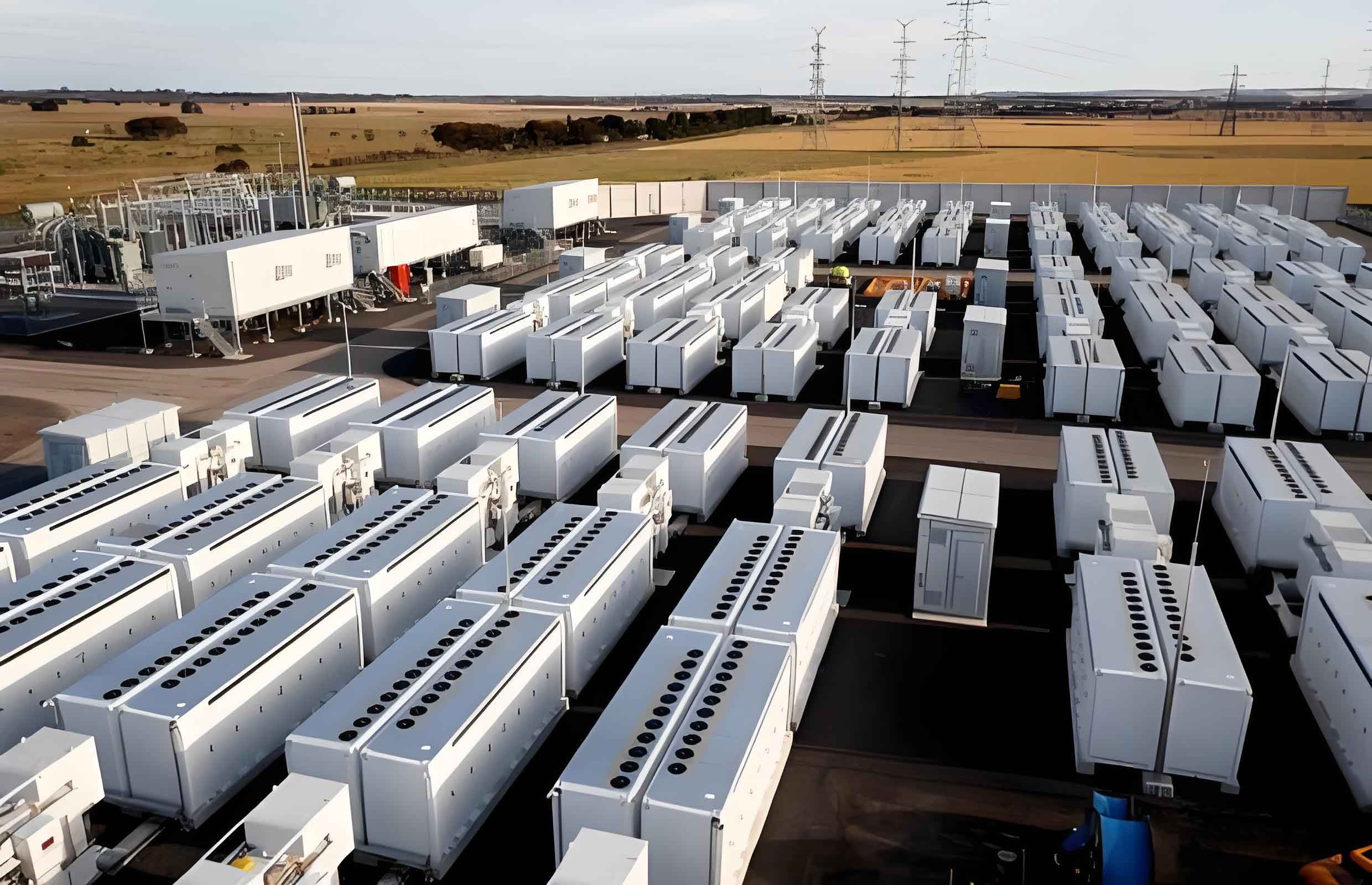
To begin, let me outline the operational characteristics of a lithium-ion battery energy storage system in the context of AGC frequency regulation. The battery energy storage system operates through power converters that enable bidirectional power flow, allowing it to charge or discharge based on grid signals. For frequency regulation, the system typically employs a droop control strategy, where the power output adjustment is proportional to the frequency deviation. Mathematically, this can be expressed as:
$$ \Delta P_{s,t} = -\frac{\Delta f_t}{\delta_s} $$
Here, \( \Delta P_{s,t} \) represents the active power adjustment of the battery energy storage system at time \( t \), \( \Delta f_t \) is the frequency deviation, and \( \delta_s \) is the droop coefficient. This equation highlights the linear response of the battery energy storage system to frequency changes, enabling quick stabilization. However, the battery energy storage system must operate within its technical constraints, including state of charge (SOC) limits and power ratings. The SOC is a critical parameter, defined as the ratio of current energy content to maximum capacity. To prevent degradation, the SOC is usually constrained between a minimum and maximum value, often set at 10% and 90% for lithium-ion systems. The operational model for the battery energy storage system includes power and energy constraints, which I will formalize later.
In terms of performance, studies have shown that a battery energy storage system can respond to frequency deviations within seconds, outperforming conventional generators that may take minutes. This rapid response reduces frequency nadirs and overshoots, enhancing grid stability. For instance, a battery energy storage system can achieve full power output in about 1 second, whereas a thermal unit might require 6 seconds or more. This advantage makes the battery energy storage system particularly suited for high-frequency regulation markets where speed is paramount. However, the participation of a battery energy storage system in markets requires a clear understanding of its costs and revenues, which leads to the core of my analysis: opportunity cost modelling.
Opportunity cost, in economic terms, refers to the value of the next best alternative forgone when making a decision. For a battery energy storage system, the opportunity cost of providing AGC capacity is the profit it could have earned by using that capacity for energy arbitrage in the electricity market. To model this, I first need to establish the revenue streams from both markets. In the energy market, the battery energy storage system charges during low-price periods and discharges during high-price periods, capturing price differentials. The net revenue can be expressed as:
$$ f_{es} = \sum_{t=1}^{N} \left( P_{dch,t} \lambda_t – P_{ch,t} \lambda_t – C_{D,t} – C_{M,t} \right) T $$
where \( P_{dch,t} \) and \( P_{ch,t} \) are the discharge and charge powers, \( \lambda_t \) is the electricity price, \( C_{D,t} \) is the depreciation cost, \( C_{M,t} \) is the operation and maintenance cost, and \( T \) is the time interval. The depreciation cost for a lithium-ion battery energy storage system is often linked to cycle life and depth of discharge, modeled as:
$$ C_{D,t} = \frac{C_I}{2 N_{life} Q_0} (P_{ch,t} + P_{dch,t}) T $$
Here, \( C_I \) is the initial investment, \( N_{life} \) is the cycle life, and \( Q_0 \) is the rated capacity. The operation and maintenance cost is typically proportional to the power throughput: \( C_{M,t} = K_{M,t} (P_{ch,t} + P_{dch,t}) T \), with \( K_{M,t} \) as a coefficient.
When the battery energy storage system reserves capacity for AGC services, it cannot use that capacity for energy arbitrage. Thus, its power and energy constraints become tighter. For example, if the battery energy storage system commits \( R_U \) MW for upward regulation and \( R_D \) MW for downward regulation (assuming symmetric bidding where \( R_U = R_D \)), the effective SOC limits shift to:
$$ SOC’_{min} = SOC_{min} + R_U \cdot t_{AGC} $$
$$ SOC’_{max} = SOC_{max} – R_D \cdot t_{AGC} $$
where \( t_{AGC} \) is the required duration for AGC response (e.g., 10 minutes). This reduction in operational flexibility decreases the potential revenue from the energy market. The opportunity cost \( C_{OP} \) is then defined as the difference between the revenue when no AGC capacity is reserved (\( P_{re} \)) and the revenue when AGC capacity is reserved (\( P_{re}’ \)):
$$ C_{OP} = P_{re} – P_{re}’ $$
To compute \( C_{OP} \), I need to solve the energy market clearing problem with and without AGC capacity reservations. The market clearing model includes conventional generators, renewable sources, the battery energy storage system, and demand. The objective is to minimize total system costs, subject to constraints like power balance, generator limits, and storage dynamics. I formulate this as a linear or quadratic optimization problem, which can be solved using tools like CPLEX. The key constraints for the battery energy storage system are:
Power limits:
$$ 0 \leq P_{ch,t} \leq b_{ch,t} P_{ch,max} $$
$$ 0 \leq P_{dch,t} \leq b_{dch,t} P_{dch,max} $$
$$ b_{ch,t} + b_{dch,t} \leq 1 $$
where \( b_{ch,t} \) and \( b_{dch,t} \) are binary variables indicating charge and discharge states.
SOC dynamics:
$$ SOC_t = SOC_{t-1} + P_{ch,t} \eta_{ch} T – \frac{P_{dch,t}}{\eta_{dch}} T $$
with \( \eta_{ch} \) and \( \eta_{dch} \) as charge and discharge efficiencies.
SOC bounds:
$$ SOC_{min} \leq SOC_t \leq SOC_{max} $$
When AGC capacity is reserved, the SOC bounds become \( SOC’_{min} \leq SOC_t \leq SOC’_{max} \), and the power limits may also be adjusted if the reserved capacity reduces the available power for energy trading. By solving the market clearing problem iteratively for different AGC capacity values, I can trace the opportunity cost curve. Typically, as the reserved AGC capacity increases, the opportunity cost rises at an increasing rate, indicating diminishing returns in the energy market.
Now, let me present a detailed example to illustrate this modelling approach. Consider a modified IEEE 6-bus system with three conventional generators, a wind farm, a load, and a lithium-ion battery energy storage system with a capacity of 20 MW/100 MWh. The system parameters are summarized in Table 1.
| Component | Parameter | Value |
|---|---|---|
| Generator G1 | Min Output (MW) | 90 |
| Max Output (MW) | 220 | |
| Cost Coefficients (a, b, c) | 176.9, 13.5, 0.0004 | |
| Fuel Price ($/MBtu) | 5.0 | |
| AGC Capacity (MW) | 50 | |
| Generator G2 | Min Output (MW) | 10 |
| Max Output (MW) | 100 | |
| Cost Coefficients (a, b, c) | 129.9, 32.6, 0.001 | |
| Fuel Price ($/MBtu) | 5.5 | |
| AGC Capacity (MW) | 30 | |
| Generator G3 | Min Output (MW) | 10 |
| Max Output (MW) | 20 | |
| Cost Coefficients (a, b, c) | 137.4, 17.6, 0.005 | |
| Fuel Price ($/MBtu) | 5.2 | |
| AGC Capacity (MW) | 10 | |
| Battery Energy Storage System | Rated Power (MW) | 20 |
| Rated Energy (MWh) | 100 | |
| Charge/Discharge Efficiency | 90% | |
| SOC Limits | 10%-90% | |
| Operation & Maintenance Cost ($/MWh) | 4.0 |
I assume a 24-hour period with time intervals of 1 hour. The load profile and wind generation forecast are given, and the energy market is cleared to minimize total cost, including generator costs and battery energy storage system costs. The market-clearing prices are determined by the marginal cost of the most expensive generator dispatched. When the battery energy storage system participates fully in the energy market (i.e., no AGC reservation), it charges during low-price hours and discharges during high-price hours. The resulting revenue, after accounting for costs, is calculated as \( P_{re} \). For instance, with a price spread of 23.52 $/MWh between peak and off-peak periods, the battery energy storage system earns a net revenue of 675 $ per day.
Next, I introduce AGC capacity reservations. Suppose the battery energy storage system symmetrically bids \( R \) MW for both upward and downward regulation. The SOC limits are adjusted according to \( SOC’_{min} = 0.1 + R \cdot (10/60) \) and \( SOC’_{max} = 0.9 – R \cdot (10/60) \), assuming a 10-minute response duration. The energy market clearing is repeated for various values of \( R \), and the revenue \( P_{re}’ \) is computed. The opportunity cost \( C_{OP} \) is then derived as the difference. The results are summarized in Table 2.
| AGC Capacity Reserved, R (MW) | Energy Market Revenue, \( P_{re}’ \) ($) | Opportunity Cost, \( C_{OP} \) ($) | Marginal Opportunity Cost ($/MW) |
|---|---|---|---|
| 0 | 675.00 | 0.00 | – |
| 2 | 670.50 | 4.50 | 2.25 |
| 4 | 664.80 | 10.20 | 2.85 |
| 6 | 657.60 | 17.40 | 3.60 |
| 8 | 648.40 | 26.60 | 4.60 |
| 10 | 637.00 | 38.00 | 5.70 |
| 12 | 623.20 | 51.80 | 6.90 |
| 14 | 606.60 | 68.40 | 8.30 |
| 16 | 587.00 | 88.00 | 9.80 |
| 18 | 564.20 | 110.80 | 11.40 |
From Table 2, it is evident that the opportunity cost increases with \( R \), and the marginal opportunity cost (the incremental cost per additional MW of AGC capacity) also rises. This trend reflects the nonlinear impact of capacity constraints on the battery energy storage system’s arbitrage potential. For example, when \( R \) increases from 0 to 2 MW, the marginal opportunity cost is 2.25 $/MW, but when \( R \) increases from 16 to 18 MW, it jumps to 11.40 $/MW. This convexity is crucial for decision-making.
Beyond opportunity cost, providing AGC services involves actual regulation costs due to frequent charging and discharging cycles, which accelerate battery degradation. This regulation cost, denoted \( C_{Reg} \), can be estimated based on historical performance or empirical models. For simplicity, I assume a constant marginal regulation cost of 0.1 $/MW per hour. The total cost of providing AGC capacity \( R \) is then the sum of opportunity cost and regulation cost. To maximize profit, the battery energy storage system should participate in the AGC market only if the compensation price \( \pi_{AGC} \) exceeds this total cost per unit capacity.
Mathematically, the optimal AGC capacity \( R^* \) is found where the marginal total cost equals the compensation price:
$$ \frac{d C_{OP}}{d R} + C_{Reg} = \pi_{AGC} $$
Using the data from Table 2, I can interpolate the marginal opportunity cost function. For instance, in regions like North China, the AGC compensation price might be 0.78 $/MW (equivalent to 5 yuan/MW), while in Northwest China, it could be 3.14 $/MW (20 yuan/MW). With \( C_{Reg} = 0.1 $/MW \), the optimal \( R^* \) for a price of 0.78 $/MW is approximately 7.5 MW, as at this point the marginal opportunity cost is around 0.68 $/MW, summing to 0.78 $/MW. For a higher price of 3.14 $/MW, the marginal cost curve suggests that \( R^* \) would be near the maximum capacity of 20 MW, as even at high \( R \), the total marginal cost remains below 3.14 $/MW.
To formalize the market strategy, I propose a decision framework for the battery energy storage system operator. First, forecast energy prices and system conditions. Second, compute the opportunity cost curve via the market clearing model. Third, estimate regulation costs based on battery technology. Fourth, compare the marginal total cost with the AGC compensation price to determine the optimal capacity allocation. This process can be automated using optimization algorithms, enabling real-time bidding in both markets.
Moreover, the participation of a battery energy storage system in ancillary services can enhance grid stability and integrate more renewables. For example, by providing fast frequency response, the battery energy storage system can mitigate the variability of wind and solar generation. This aligns with decarbonization goals and may attract additional policy incentives. However, market design must evolve to properly value the speed and accuracy of battery energy storage systems, perhaps through performance-based payments.
In conclusion, the opportunity cost modelling for a battery energy storage system providing AGC services is essential for optimizing its market participation. My analysis shows that the opportunity cost is convex increasing with reserved capacity, driven by constraints on power and energy. The optimal strategy balances energy arbitrage and frequency regulation, ensuring maximum revenue while supporting grid reliability. As electricity markets mature, tools like this model will be invaluable for battery energy storage system operators to navigate complex decisions. Future work could extend this to include uncertainty in prices and renewable generation, or to aggregate multiple battery energy storage systems for portfolio optimization. Ultimately, the battery energy storage system is a key enabler of the energy transition, and understanding its economics is critical for sustainable power systems.
To further illustrate, let me provide additional formulas and insights. The energy market clearing problem can be generalized as:
Minimize:
$$ \sum_{t=1}^{N} \left( \sum_{i=1}^{ng} \left( a_i + b_i P_{g,i,t} + c_i P_{g,i,t}^2 + u_i x_{i,t} \right) + C_{D,t} + C_{M,t} \right) $$
Subject to:
$$ \sum_{i=1}^{ng} P_{g,i,t} + P_{re,t} + P_{dch,t} – P_{ch,t} = L_t $$
$$ b_{i,t} P_{g,i,min} \leq P_{g,i,t} \leq b_{i,t} P_{g,i,max} $$
$$ P_{g,i,t} – P_{g,i,t-1} \leq \Delta P_{i,max}^u $$
$$ P_{g,i,t-1} – P_{g,i,t} \leq \Delta P_{i,max}^d $$
$$ \text{And storage constraints as above.} $$
This formulation highlights the integration of the battery energy storage system into a holistic market framework. The opportunity cost derivation requires solving this problem twice, which can be computationally intensive but manageable with modern solvers.
In practice, the battery energy storage system’s lifecycle considerations also affect decisions. For instance, frequent AGC cycling may reduce battery lifespan, increasing long-term costs. This can be incorporated into the regulation cost \( C_{Reg} \) using more sophisticated degradation models. Additionally, the battery energy storage system may participate in multiple ancillary services simultaneously, such as spinning reserve or voltage support, which would require multi-dimensional opportunity cost analysis.
Overall, the battery energy storage system represents a paradigm shift in grid operations. By leveraging its flexibility, we can achieve a cleaner and more resilient power system. The models and strategies discussed here provide a foundation for harnessing the full potential of the battery energy storage system in competitive markets. As I continue my research, I aim to refine these approaches and explore real-world applications, contributing to the advancement of sustainable energy infrastructure.