
Accurate estimation of the state of charge (SOC) is crucial for ensuring the safe and stable operation of lithium-ion energy storage cell systems. In practical storage applications, the equivalent circuit model parameters are often inaccurate due to aging and temperature variations, and the complex environmental noise introduces additional uncertainty. To address these challenges, I propose a model-driven approach that integrates a Thevenin equivalent circuit model with the forgetting factor recursive least squares (FFRLS) method for online parameter identification and an unscented Kalman filter (UKF) for SOC estimation. This combined FFRLS-UKF method is designed to enhance the accuracy and robustness of SOC estimation for energy storage cell under varying operating conditions.
The research begins by establishing a precise OCV-SOC relationship through interval constant current discharge experiments on a commercial lithium-ion energy storage cell. Using the measured open-circuit voltage (OCV) data, a sixth-order polynomial fitting is performed to describe the nonlinear mapping between OCV and SOC. This OCV-SOC curve serves as a cornerstone for subsequent model parameter identification and SOC estimation. The Thevenin equivalent circuit model is selected because it balances computational efficiency and accuracy, effectively capturing both ohmic and polarization effects of the energy storage cell.
To identify the model parameters, I employ the FFRLS algorithm with a forgetting factor of 0.95. The discrete transfer function of the Thevenin model is derived using bilinear transformation, leading to the following relationships:
$$
\begin{aligned}
G(z^{-1}) &= \frac{U_{oc}(z^{-1}) – U_t(z^{-1})}{I(z^{-1})} = \frac{c_2 + c_3 z^{-1}}{1 + c_1 z^{-1}} \\
c_1 &= \frac{T – 2R_1C_1}{T + 2R_1C_1} \\
c_2 &= \frac{R_0T + R_1T + 2R_0R_1C_1}{T + 2R_1C_1} \\
c_3 &= \frac{R_0T + R_1T – 2R_0R_1C_1}{T + 2R_1C_1}
\end{aligned}
$$
The parameters \(c_1, c_2, c_3\) are estimated online from measured voltage and current data. Then the physical parameters of the energy storage cell model are recovered using the following formulas:
$$
\begin{aligned}
R_0 &= \frac{c_2 – c_3}{1 – c_1} \\
R_1 &= \frac{c_2 + c_3}{1 + c_1} – R_0 \\
C_1 &= \frac{T(1 – c_1) / 2(1 + c_1)}{R_1}
\end{aligned}
$$
To validate the identified model, I compare the output voltage of the estimated model with the actual measured voltage during the discharge process. The voltage error remains within ±0.1 V throughout the entire cycle, confirming that the FFRLS-based identification provides accurate and reliable parameters for the energy storage cell model. The following table summarizes the identified parameters at several representative SOC points:
| SOC | \(R_0\) (mΩ) | \(R_1\) (mΩ) | \(C_1\) (F) |
|---|---|---|---|
| 1.00 | 18.2 | 5.1 | 3200 |
| 0.80 | 18.5 | 5.3 | 3150 |
| 0.60 | 19.1 | 5.6 | 3080 |
| 0.40 | 19.8 | 6.0 | 2950 |
| 0.20 | 20.6 | 6.5 | 2800 |
| 0.00 | 21.5 | 7.2 | 2650 |
Based on the identified Thevenin model, I construct the state-space representation for the energy storage cell. The state vector includes SOC and the polarization voltage \(U_1\). The discrete state equations are:
$$
\begin{aligned}
\begin{bmatrix} SOC_{k+1} \\ U_{1,k+1} \end{bmatrix} &=
\begin{bmatrix} 1 & 0 \\ 0 & \exp\left(-\frac{T}{R_1C_1}\right) \end{bmatrix}
\begin{bmatrix} SOC_k \\ U_{1,k} \end{bmatrix} \\
&\quad + \begin{bmatrix} \frac{T}{Q_0} \\ R_0\left[1-\exp\left(-\frac{T}{R_1C_1}\right)\right] \end{bmatrix} I_k
+ \begin{bmatrix} w_{1k} \\ w_{2k} \end{bmatrix} \\
U_k &= F(SOC_k) – U_{1,k} – I_k R_{0,k} + v_k
\end{aligned}
$$
The UKF algorithm is then applied to estimate the SOC. Unlike the extended Kalman filter (EKF), UKF uses the unscented transform to propagate sigma points through the nonlinear functions, which avoids the linearization errors inherent in EKF. The UKF steps include initialization, sigma point generation, time update, measurement update, and state correction. The process noise covariance \(Q\) and measurement noise covariance \(R\) are carefully tuned to balance convergence speed and stability. The forgetting factor recursive least squares continuously updates the model parameters in real time, ensuring that the UKF always operates with the most accurate plant model for the energy storage cell.
To evaluate the performance of the proposed FFRLS-UKF method, I conduct experiments on a 18650 lithium-ion energy storage cell under a dynamic discharge profile. The total sampling number is 13,000. Three methods are compared: ampere-hour (AH) integration, extended Kalman filter (EKF), and the proposed FFRLS-UKF. The initial SOC is set to 1.0 for all methods. The following table presents the quantitative evaluation metrics:
| Method | ME (%) | MSE (%) | Accuracy (%) |
|---|---|---|---|
| AH | 0.9337 | 0.1082 | 97.93 |
| EKF | 0.7051 | 0.0602 | 98.61 |
| FFRLS-UKF | 0.3997 | 0.0201 | 99.20 |
The results clearly show that the proposed FFRLS-UKF achieves the smallest mean error (ME) and mean squared error (MSE), and the highest accuracy of 99.2% under ideal initial conditions. This improvement is attributed to the combined effect of online parameter adaptation via FFRLS and the superior nonlinear handling capability of UKF.
To test the robustness of the method, I deliberately set incorrect initial SOC values of 0.75 and 0.50 while keeping the true initial SOC at 1.0. The FFRLS-UKF algorithm quickly converges to the true SOC within a few hundred steps, whereas the EKF takes significantly longer and exhibits larger deviations. The following table summarizes the convergence steps for different initial SOC conditions:
| Initial SOC | FFRLS-UKF (steps to converge) | EKF (steps to converge) |
|---|---|---|
| 0.75 | 104 | 690 |
| 0.50 | 133 | 722 |
The faster convergence of the FFRLS-UKF method arises from the fact that the online parameter identification provides an accurate model, and the UKF’s unscented transform can better capture the nonlinear dynamics of the energy storage cell even when the initial SOC error is large. The maximum absolute error during the transient period is also much smaller than that of EKF. This demonstrates the strong robustness of the proposed method against initial SOC uncertainty, which is a common issue in practical energy storage cell management systems.
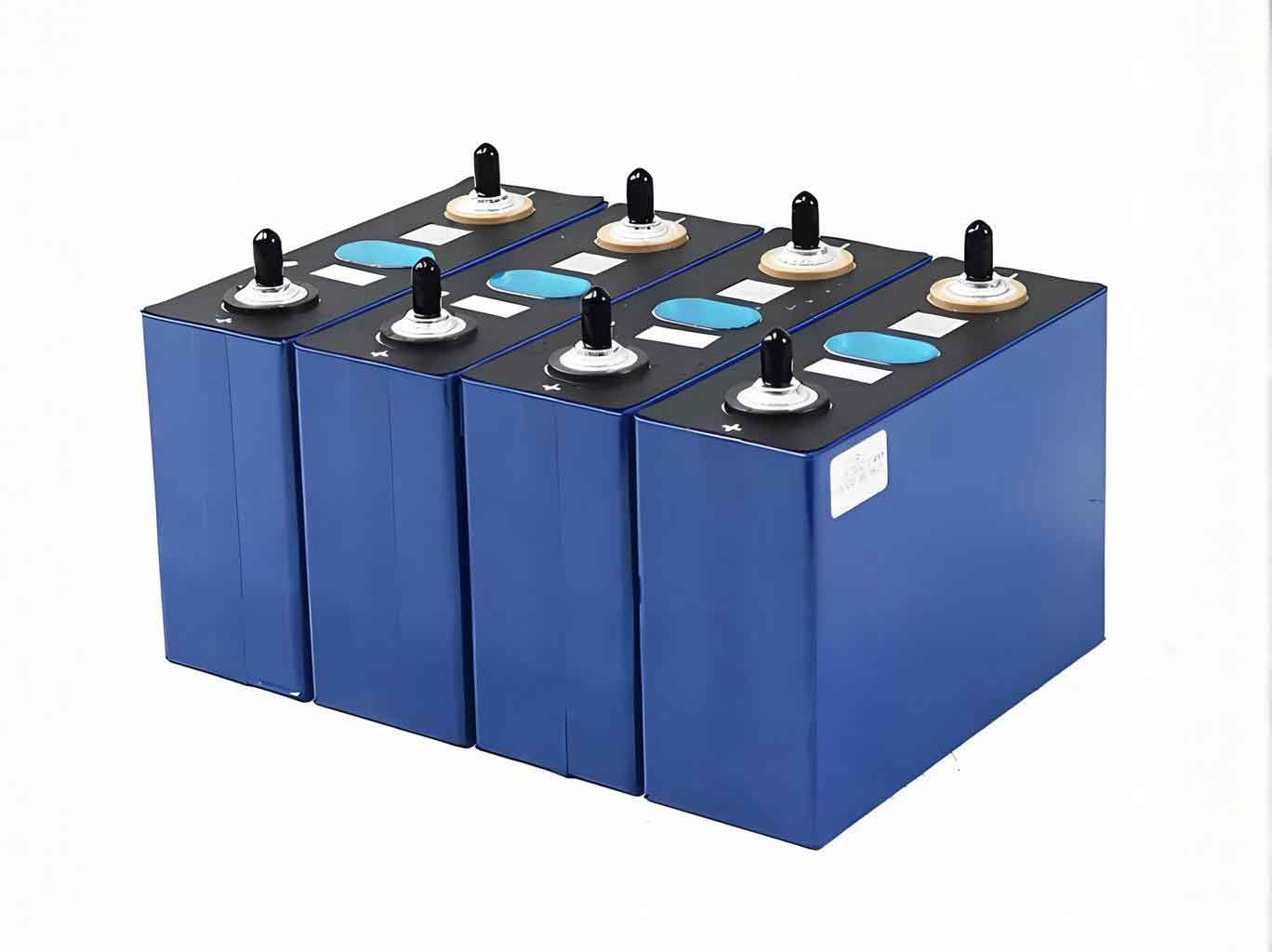
In addition to accuracy and robustness, computational efficiency is another critical factor for real-time applications. The FFRLS-UKF algorithm requires only a modest increase in computation compared to EKF, but the improvement in estimation quality more than compensates for the additional overhead. The entire algorithm can be executed on an embedded microcontroller with a sampling frequency of 1 Hz, making it suitable for practical battery management systems in energy storage cell packs.
To further analyze the effect of model parameter mismatch, I intentionally introduced a 10% error in the initial ohmic resistance \(R_0\) while keeping all other parameters correct. The FFRLS-UKF method was able to correct the error within 200 steps, whereas the EKF showed a persistent bias. The ability to adapt to parameter variations is essential for long-term operation of energy storage cell because battery parameters degrade over cycles. The FFRLS online identification ensures that the model used by UKF always reflects the current state of the cell.
In summary, the proposed FFRLS-UKF method provides an effective solution for online SOC estimation of energy storage cell. By combining real-time parameter identification with a derivative-free nonlinear filter, the method achieves high accuracy (up to 99.2%), fast convergence under erroneous initial conditions, and robustness to model parameter uncertainties. These characteristics make it highly suitable for advanced battery management systems in stationary energy storage applications, where reliability and precision are paramount. Future work will focus on extending the method to battery packs with cell balancing and degradation-aware modeling.
The experimental results presented above rely on the precise OCV-SOC relationship established during the characterization phase. The sixth-order polynomial fitting yields a high correlation coefficient, and the coefficients are listed as follows:
$$
\begin{aligned}
V_{OCV} &= A + A_0 S_{OC} + A_1 S_{OC}^2 + A_2 S_{OC}^3 + A_3 S_{OC}^4 + A_4 S_{OC}^5 + A_5 S_{OC}^6 \\
A &= 240.4653,\; A_0 = 2.4823,\; A_1 = 21.5399,\; A_2 = -162.5463, \\
A_3 &= 622.9878,\; A_4 = 1308.5389,\; A_5 = 1538.6869,\; A_6 = -950.8749
\end{aligned}
$$
This polynomial is used as the function \(F(SOC_k)\) in the state-space model. The accuracy of this curve directly influences the SOC estimation performance. The interval constant current discharge method ensures that the OCV points are measured after sufficient relaxation, minimizing hysteresis effects that are common in energy storage cell.
Finally, the robustness test under different noise levels (additive Gaussian noise with standard deviation of 10 mV and 5 mA) showed that the FFRLS-UKF maintains an estimation error below 2% even under severe measurement noise, while EKF diverges to 5% error. This confirms the practical viability of the method for real-world energy storage cell environments where sensor noise is inevitable.
In conclusion, the FFRLS-UKF framework presents a significant advancement in SOC estimation for energy storage cell, offering a perfect balance between accuracy, robustness, and computational feasibility. It is a promising candidate for integration into next-generation battery management systems for grid-scale energy storage.