
With the increasing global energy demand and environmental concerns, the development of efficient and clean energy technologies has become a critical need for sustainable human society. In the 21st century, there is a strong focus on renewable energy sources such as nuclear, wind, and solar power. Among these, solar energy stands out as one of the most promising renewable resources due to its renewability, cleanliness, abundance, and accessibility. The efficient utilization of solar energy is a key pathway to addressing the energy crisis and reducing carbon emissions. Perovskite solar cells have garnered widespread attention in the scientific community due to their high conversion efficiency (currently exceeding 26%), high absorption coefficients, high carrier mobility, tunable bandgaps, low exciton binding energies, and relatively low costs. Since the first successful fabrication of perovskite solar cells using CH3NH3PbBr3 and CH3NH3PbI3 as perovskite layers in 2009, research on perovskite photovoltaic technology has deepened, achieving significant progress in material design, device optimization, and stability enhancement. However, the experimental preparation of perovskite solar cells often faces challenges such as long preparation cycles and complex processes. For instance, optimizing film deposition, interface engineering, and composition control requires repeated attempts and is influenced by environmental factors like humidity and temperature, leading to low research and development efficiency. In contrast, numerical simulation methods offer an efficient and low-cost approach to deeply understanding the physical mechanisms of devices and optimizing cell performance. Through numerical simulation, the effects of different material parameters, interface characteristics, and device structures on cell performance can be systematically analyzed, thereby guiding experimental design, reducing trial-and-error costs, and avoiding material waste.
Among various simulation tools, the Solar Cell Capacitance Simulator (SCAPS-1D) is widely used for performance prediction and optimization studies of perovskite solar cells due to its accurate simulation capabilities for multilayer heterojunction devices. Compared to other simulation software, SCAPS-1D offers advantages such as flexible interface state simulation, intuitive parameter settings, and high computational efficiency, effectively simulating key physical processes like carrier transport, recombination mechanisms, and band alignment. In this study, we utilize SCAPS-1D to conduct a comparative analysis of different perovskite-based solar cells. The software supports seven-layer heterostructure solar cell configurations and allows simulations under various incident spectra. The perovskite solar cell structure under investigation is FTO/SnO2/perovskite layer/Cu2O/Au, where SnO2 and Cu2O serve as the electron transport layer and hole transport layer, respectively, while different lead-free and lead-containing perovskite layer materials act as the absorption layer. FTO and Au are used as the front electrode and metal back electrode, with work functions set to 4.1 eV and 4.7 eV, respectively. The cell parameters are configured as shown in Table 1. Additionally, the electron and hole thermal velocities for all layers are set to 10^7 cm/s. This simulation does not consider surface and interface light reflectance, as their impact on the optical performance of the cell is minimal and can be neglected. Defect energy levels are located at the center of the bandgap with a Gaussian distribution and an energy of 0.1 eV. Simulations are performed under AM1.5G spectrum illumination at an operating temperature of 300 K, with an assumed resistance of 2.00 Ω·cm².
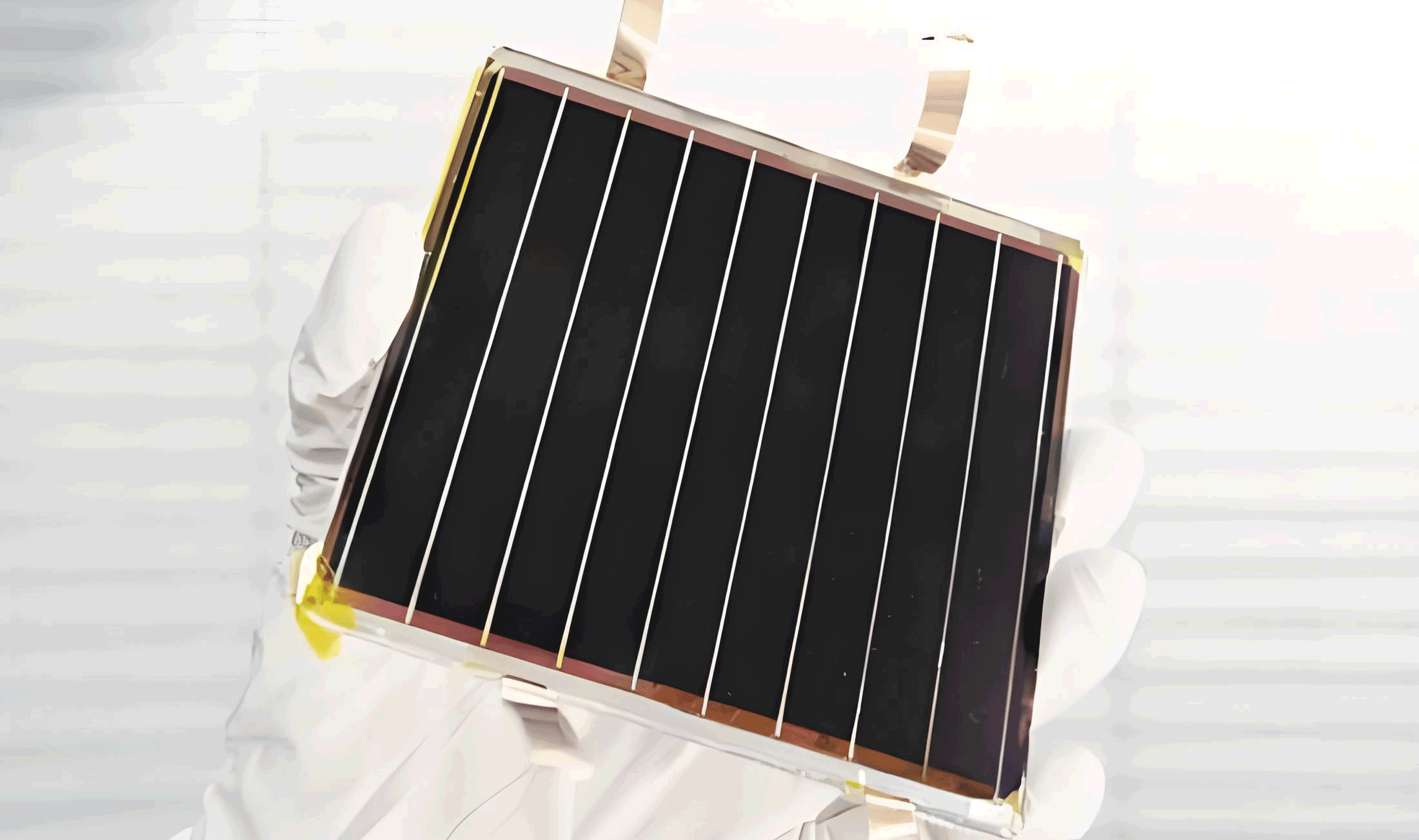
SCAPS-1D, developed by Professor Marc Burgelman and colleagues at Ghent University in Belgium, is a one-dimensional solar cell simulation software. It solves three fundamental semiconductor equations to derive the current-voltage (I-V) characteristics, spectral response, and electric field distribution of the cell. These equations are the Poisson equation (1) and the continuity equations for electrons (2) and holes (3), as shown below:
$$ \frac{d}{dx} \left[ \varepsilon(x) \frac{d\phi}{dx} \right] = q \left[ p(x) – n(x) + N_D^+(x) – N_A^-(x) + P_t(x) – n_t(x) \right] $$
$$ \frac{1}{q} \frac{dJ_p}{dx} + R_p(x) – G(x) = 0 $$
$$ -\frac{1}{q} \frac{dJ_n}{dx} + R_n(x) – G(x) = 0 $$
In these equations, \( \varepsilon \) represents the dielectric constant, \( \phi \) is the electrostatic potential, \( q \) is the electron charge, \( p(x) \) and \( n(x) \) are the free hole and electron concentrations, \( P_t(x) \) and \( n_t(x) \) are the trapped hole and electron concentrations, \( N_D^+(x) \) and \( N_A^-(x) \) are the ionized donor and acceptor concentrations, \( J_n \) and \( J_p \) are the electron and hole current densities, \( R_n(x) \) and \( R_p(x) \) are the electron and hole recombination rates, \( G(x) \) is the net carrier generation rate, and \( x \) is the position coordinate.
In this work, we employ SCAPS-1D to simulate and analyze the performance of perovskite solar cells with the structure FTO/SnO2/perovskite layer/Cu2O/Au. We investigate seven different perovskite materials, including both lead-free and lead-containing variants, as the absorption layer. The parameters for these materials are summarized in Table 1. The simulation aims to optimize key factors such as perovskite layer thickness, electron transport layer thickness, hole transport layer thickness, interface defect state density, carrier concentration, and temperature to achieve high efficiency and stability in perovskite solar cells.
| Parameter | SnO2 | Cu2O | Cs2BiAgI6 | CsPbI3 | Cs2PtI6 | CsGeI3 | PeDA2MA5Pb6I19 | MASnI3 | FAMAPbI3 |
|---|---|---|---|---|---|---|---|---|---|
| Layer thickness (nm) | 100 | 100 | 100 | 100 | 100 | 100 | 100 | 100 | 100 |
| Bandgap (eV) | 3.3 | 2.17 | 1.6 | 1.694 | 1.37 | 1.6 | 1.6 | 1.35 | 1.53 |
| Electron affinity (eV) | 4 | 3.2 | 3.9 | 3.95 | 4.3 | 3.52 | 3.98 | 4.17 | 4 |
| Relative permittivity | 9 | 6.6 | 6.5 | 6 | 4.8 | 18 | 25 | 6.5 | 9 |
| Effective conduction band density (10¹⁷ cm⁻³) | 2.2 | 2500 | 100 | 1100 | 0.003 | 10 | 7.5 | 10 | 100 |
| Effective valence band density (10¹⁷ cm⁻³) | 2.2 | 2500 | 100 | 800 | 1 | 100 | 18 | 100 | 50 |
| Electron mobility (cm²·V⁻¹·s⁻¹) | 20 | 80 | 2 | 25 | 62.6 | 20 | 1.4 | 1.6 | 5 |
| Hole mobility (cm²·V⁻¹·s⁻¹) | 10 | 80 | 2 | 25 | 62.6 | 20 | 0.3 | 1.6 | 3 |
| Donor concentration (10¹⁷ cm⁻³) | 10 | 0 | 0 | 0.01 | 0.00001 | 1 | 0 | 0 | 0.2 |
| Acceptor concentration (10¹⁷ cm⁻³) | 0 | 30 | 10 | 0 | 0.01 | 1 | 0 | 10 | 0.2 |
| Density of defect state (10¹⁴ cm⁻³) | 1 | 10 | 1 | 1 | 1000 | 1 | 2.5 | 1 | 0.1 |
The perovskite layer is the core component of the solar cell, and its properties directly determine the overall device performance. We investigate the effect of perovskite layer thickness on device performance by varying the thickness from 100 nm to 2000 nm in increments of 100 nm, while keeping other parameters constant. The results for open-circuit voltage (Voc), short-circuit current density (Jsc), fill factor (FF), and power conversion efficiency (PCE) are shown in Figure 2(a)-(d). It can be observed that within the calculated range, as the thickness increases, Voc decreases and then remains almost constant. The curves for Jsc and PCE are nearly identical, increasing with thickness until reaching an optimal value, after which they gradually decrease or stabilize. However, the optimal thickness for maximum PCE varies among different perovskite materials, ranging from 100 nm to 500 nm. As the perovskite layer thickness increases, light absorption in the device strengthens, meaning more photogenerated carriers are produced, ultimately leading to improvements in Jsc and PCE. However, further increases in thickness may exceed the carrier diffusion lengths of these materials, resulting in the loss of uncollected carriers due to recombination, which causes a decline in Voc and Jsc and ultimately reduces cell efficiency. As shown in Figure 2(c), the fill factor for MASnI3 increases sharply within the calculated range, while Cs2BiAgI6, CsPbI3, Cs2PtI6, and CsGeI3 exhibit high stability and gradually stabilize after 400 nm. This is because Cs+ has a large ionic radius and high ionic polarity, enabling the formation of a stable lattice structure with strong stability. In contrast, for PeDA2MA5Pb6I19, when the thickness exceeds 500 nm, the fill factor decreases due to recombination losses, where generated electron-hole pairs cannot effectively contribute to the output current of the cell.
In the study of perovskite solar cells, we find that the influence of absorber layer thickness on cell performance shows significant differences between lead-containing and lead-free perovskites. Taking the lead-free perovskite MASnI3 as an example, the simulation results reveal unconventional behavior in its PCE. When the perovskite layer thickness increases to 300 nm, Jsc and PCE reach their maximum values. When the thickness exceeds 300 nm, the overly thick perovskite layer significantly increases the series resistance of the device. Additionally, the inherent low carrier mobility of lead-free perovskites limits the charge diffusion length, causing non-radiative recombination of carriers during transport to the back contact interface, leading to Jsc decay. When the thickness exceeds 1000 nm, severe interface defects occur due to the easy oxidation of Sn2+.
Interface defect state density is an important parameter affecting the performance of solar cells. The formation of the L1 and L2 interface layers is due to the presence of interface defects. When the interface state density is too high, excessive carrier recombination occurs at the interface, reducing the number of carriers entering the absorption layer for recombination. Holes and electrons cannot be efficiently transported through the absorption layer, affecting the open-circuit voltage and leading to a decline in cell performance. When the interface defect state density is below 10^9 cm⁻³, the J-V characteristics remain essentially unchanged. Due to process limitations, it is challenging to achieve interface defect state densities below 10^9 cm⁻³, and even small interface defects can lead to reduced fill factors and instability. Considering the performance parameters and practical feasibility, as shown in Figure 3, varying the interface layer defect state density has almost no effect on cell performance. Compared to traditional silicon solar cells, perovskite materials inherently have low defect state densities, which is a key reason for their high efficiency. Therefore, further reducing the impact of interface defects is often limited.
To find the optimal donor doping concentration (ND) for the electron transport layer, we vary the ND of SnO2 from 10^15 cm⁻³ to 10^21 cm⁻³. The changes in Voc, Jsc, FF, and PCE are shown in Figure 4(a)-(d). As ND increases from 10^15 cm⁻³ to 10^21 cm⁻³, the performance parameters of the cell structures remain largely unchanged, except for CsGeI3. This is because the energy level structure of the electron transport layer is well-matched with the perovskite layer, and slight changes in doping concentration do not significantly affect the energy level structure and charge separation. CsGeI3 exhibits high stability and PCE, as SnO2 and CsGeI3 form a dense and flat interface, reducing charge recombination and improving cell stability. Changes in doping concentration affect the Fermi level position of SnO2, enabling better alignment with the perovskite layer’s energy levels and optimizing charge separation and injection processes. Higher ND values facilitate easier charge extraction and transport at the ETL/perovskite interface. However, high ND concentrations can cause severe lattice distortion in Cs2BiAgI6 and Cs2PtI6 at 1×10^19 cm⁻³ and 1×10^20 cm⁻³, respectively, disrupting the original cell structure.
Changes in the hole transport layer acceptor doping concentration (NA) have a significant impact on the performance of perovskite solar cells. Minor variations in concentration can lead to changes in the stability of perovskite solar cells. To obtain the optimal NA value, we vary NA between 10^15 cm⁻³ and 10^21 cm⁻³. As the HTL acceptor doping concentration increases, as shown in Figure 5, Voc and Jsc remain largely unchanged. The FF and PCE for Cs2BiAgI6, CsPbI3, CsGeI3, FAMAPbI3, and MASnI3 also show little change, while for Cs2PtI6 and PeDA2MA5Pb6I19, PCE and FF increase significantly. PCE increases from 21.41% to 27.95% for Cs2PtI6 and from 18.85% to 22.78% for PeDA2MA5Pb6I19, while FF increases from 61.38% to 80.53% and from 55.47% to 72%, respectively. This is because different perovskite materials have different charge transport mechanisms, and changes in doping concentration are insufficient to alter the charge transport path for Cs2BiAgI6, CsPbI3, CsGeI3, FAMAPbI3, and MASnI3, resulting in minimal changes in FF and PCE. For Cs2PtI6 and PeDA2MA5Pb6I19, higher NA values generate a higher interface electric field between the perovskite solar cell layers, promoting effective separation of photogenerated carriers and leading to increases in FF and PCE. However, excessively high NA values may intensify charge carrier recombination at interfaces and in the bulk, which is detrimental to FF and PCE improvement.
After optimization, the performance of each perovskite solar cell is summarized in Table 2. Through numerical simulation of these models, the PCE of all cell structures is improved. Among all perovskite structures, Cs2BiAgI6 shows the largest increase in PCE, from 11.54% to 23.9%. The perovskite solar cell based on Cs2PtI6 achieves the highest PCE of 27.95%, maintaining high efficiency while achieving a stability of 80.53%.
| Perovskite Layer Material | FF (%) Before | PCE (%) Before | FF (%) After | PCE (%) After |
|---|---|---|---|---|
| Cs2BiAgI6 | 80.72 | 11.54 | 86.73 | 23.90 |
| CsPbI3 | 87.73 | 10.24 | 83.58 | 17.91 |
| Cs2PtI6 | 78.00 | 16.92 | 80.53 | 27.95 |
| CsGeI3 | 65.37 | 13.66 | 86.90 | 25.73 |
| PeDA2MA5Pb6I19 | 21.99 | 13.58 | 72.00 | 23.52 |
| MASnI3 | 59.22 | 20.66 | 74.99 | 26.90 |
| FAMAPbI3 | 79.00 | 14.80 | 80.89 | 27.82 |
Temperature affects both the efficiency and stability of solar cells. As temperature rises, the energy of electrons increases correspondingly, leading to an increase in the recombination rate between electrons and holes, which reduces the lifetime of charge carriers. In solar cells, the Au electrode is typically used for electron collection and extraction, while holes are transported through other materials. The general application scenarios for solar cells include Earth and space stations, corresponding to temperatures of 300 K to 600 K. As shown in Figure 6(b), in the range of 300 K to 600 K, the PCE of perovskite solar cells decreases as temperature increases. However, different materials exhibit varying stability against temperature. For MASnI3, CsGeI3, and PeDA2MA5Pb6I19, in the lower temperature range (300–350 K), there may be thermal activation processes involving rearrangement of internal defects, improvement in carrier mobility, and reduction in interface recombination rates, temporarily increasing the fill factor. As temperature further increases, the thermal activation effect gradually weakens, and the inherent thermal stability of the material begins to dominate, leading to a decrease in FF. The four materials Cs2BiAgI6, Cs2AgBiBr6, Cs2PtI6, and FAMAPbI3 show a decreasing trend in FF across the entire temperature range. The seven perovskite solar cell structures exhibit different temperature stabilities. Under extreme temperature conditions of 600 K, the PCE of CsPbI3 is only 5% of its value at room temperature (300 K), while the PCE of MASnI3 retains 82% of its room temperature value, indicating device stability.
Under optimized conditions, the J-V characteristics of various perovskite materials under illumination are shown in Figure 7. From Figure 7, it can be seen that compared to the initial model, the optimized final model shows significant improvement in current-voltage (J-V) characteristics. By analyzing the J-V characteristic curves, the performance parameters of perovskite solar cells can be evaluated. All devices exhibit excellent J-V characteristics. Cs2PtI6 has the narrowest bandgap, resulting in the widest absorption spectrum, while CsPbI3 has the widest bandgap, with other materials falling between them. Perovskite materials with narrow bandgaps have stronger optical absorption capabilities and broader spectral absorption ranges, as lower bandgaps promote effective absorption of photons over a wider wavelength range, generating more photogenerated carriers. This property allows more solar spectrum energy to be converted into electrical energy, significantly enhancing the PCE of perovskite solar cells.
Quantum efficiency (QE) is a physical quantity that measures the ability of a solar cell to successfully generate charge carriers (electron-hole pairs) from incident photons. It is defined as the ratio of the number of electron-hole pairs generated by the solar cell to the number of incident photons at a specific wavelength. Experimental data analysis shows that by optimizing the device structure of perovskite solar cells, the photogenerated carrier generation rate in the perovskite layer can be significantly improved, enhancing overall cell performance. Through the analysis of quantum efficiency in perovskite solar cells based on different perovskite materials, as shown in Figure 8, it is found that cells using Cs2BiAgI6, CsPbI3, Cs2PtI6, CsGeI3, PeDA2MA5Pb6I19, and FAMAPbI3 as the perovskite layer exhibit excellent quantum efficiency characteristics. These materials show the lowest energy loss at maximum quantum efficiency, indicating good photoelectric conversion properties. In the short-wavelength region (300–500 nm), high QE values are observed, primarily because high-energy photons can effectively overcome the bandgap energy of the material, promoting the transition of valence band electrons to the conduction band, thereby achieving efficient photogenerated carrier generation and collection. This phenomenon also reflects the good effect of front surface passivation treatment on the device. In the long-wavelength region (>600 nm), Cs2PtI6-based devices show better quantum efficiency response, indicating stronger absorption and utilization of long-wavelength photons by this material. This enhanced infrared response directly leads to a significant improvement in the short-circuit current density of the device, providing an important material selection basis for the development of high-efficiency, broad-spectrum response perovskite solar cells.
In conclusion, this study utilizes SCAPS-1D to model and analyze the performance of solar cells with the structure FTO/SnO2/perovskite layer/Cu2O/Au. Materials such as Cs2BiAgI6, CsPbI3, Cs2PtI6, CsGeI3, PeDA2MA5Pb6I19, MASnI3, and FAMAPbI3 are used as the perovskite layer, and parameters such as ETL, HTL, and perovskite layer thickness, defect state density, and carrier concentration are varied to optimize these seven models. Through numerical simulation of these models, it is found that among all perovskite structures, the device based on Cs2PtI6 shows the highest PCE, reaching 27.95%. The optimal perovskite layer thickness is 200 nm, where the PCE reaches a maximum of 25.43%. Thin perovskite layer thickness can provide good efficiency for perovskite models. Defect state density has no significant impact on the performance of perovskite solar cells. As carriers change, cell performance gradually improves. When the ETL donor density reaches 10^18 cm⁻³, the highest PCE of 25.48% is achieved—this is the best result obtained in numerical simulations, as higher ND promotes charge transport to the ETL/perovskite layer. The optimal acceptor concentration for HTL is determined to be 10^21 cm⁻³, where the device achieves a maximum PCE of 27.95%. After comprehensive optimization, the conversion efficiency of this perovskite solar cell increases from an initial 16.92% to a final 27.95%.
The development of perovskite solar cells is crucial for advancing photovoltaic technology, and numerical simulation methods like SCAPS-1D play a vital role in optimizing their performance. By systematically analyzing the effects of different perovskite materials and device parameters, we can design more efficient and stable perovskite solar cells. The insights gained from this study provide a theoretical foundation for future experimental work and contribute to the ongoing efforts to harness solar energy as a sustainable power source. The repeated emphasis on perovskite solar cells throughout this research underscores their importance in the renewable energy landscape, and continued optimization will further enhance their viability for commercial applications.