
In my extensive work with high-temperature industrial processes, particularly those involving molybdenum compounds, I have consistently observed that the stability of the reaction environment is paramount. The challenges associated with dynamic sealing at discharge points in equipment like multi-hearth furnaces for molybdenum concentrate roasting are significant. Through practical implementation, the adoption of a double-flap valve system at the discharge outlet has proven exceptionally effective in resolving these dynamic sealing issues. This configuration essentially creates an airlock, preventing the ingress of ambient air and the uncontrolled egress of furnace gases, thereby rigorously maintaining the desired reducing or controlled atmosphere crucial for consistent product quality and efficient reaction kinetics.
The operational principle can be summarized by considering the pressure differentials. When the upper flap opens for feeding material from the furnace, the lower flap remains sealed, isolating the system from the downstream environment. The sequence ensures that at no point is the furnace interior directly exposed. The force required to maintain a seal against a pressure difference $\Delta P$ is non-trivial and is given by:
$$F_{seal} = A_{valve} \cdot \Delta P + F_{friction}$$
where $A_{valve}$ is the effective sealing area and $F_{friction}$ is the force needed to overcome seal resistance. The dual-valve system elegantly manages this by never subjecting a single seal to the full furnace-to-atmosphere pressure gradient for extended periods.
A critical evolution in this system was the shift from electric motor drives to pneumatic actuators. Electric motors, while precise, were prone to frequent failures in the harsh, dusty, and thermally variable environment near the furnace outlet. Diagnosing faults—whether from overheating, dust ingress, or electrical issues—was time-consuming and disrupted production. Pneumatic drives, powered by compressed air, offered a robust solution. Their inherent simplicity and tolerance to harsh conditions dramatically reduced failure rates. Furthermore, a key safety advantage emerged: in the event of a mechanical jam or overload, a pneumatic system will simply stall as air compresses, whereas an electric motor may continue to draw current, potentially burning out or causing catastrophic gearbox failure. This fail-safe characteristic aligns perfectly with the principle of minimizing consequential loss.
Control logic is where operational smoothness is achieved. Simply cycling the flaps on a timer is insufficient, as it risks conflicting with the mechanical raking arms inside the furnace that move the solid bed. In my experience, synchronizing the double-flap valve’s operation with the signal from the raking arm mechanism is the cornerstone of reliable performance. This synchronization ensures that discharge only occurs when the rake has pushed material into the discharge chute, preventing valve actuation against a solid column of material, which would cause jamming, and ensuring a steady, predictable outflow. This control strategy has demonstrated remarkable long-term stability and reliability.
The quality of molybdenum intermediates produced in such controlled environments is fundamental for downstream applications. This brings me to the fascinating and multifaceted role molybdenum plays in advanced surface engineering and, most prominently, in the realm of thin film solar panel technology. The journey from molybdenum ore to a functional component in a high-tech device encapsulates several key technological domains.
First, consider surface lubrication for lightweight alloys. The development of room-temperature-curing molybdenum disulfide (MoS₂) coatings represents a significant achievement. These coatings often employ a bilayer architecture to optimize performance. The bond coat is designed for maximum adhesion to the aluminum substrate, while the top coat is enriched with solid lubricant. A typical formulation breakdown can be summarized as follows:
| Coating Layer | Primary Components | Key Function | MoS₂ Content (Typical Mass Ratio) |
|---|---|---|---|
| Bond Coat | Acrylic Polyurethane Resin, Plasticizer, Solvent | Provide adhesion, corrosion protection | 10 – 20 parts |
| Top Coat | Acrylic Polyurethane Resin, Plasticizer | Carry and deliver lubricant, wear resistance | 120 – 180 parts |
The high MoS₂ loading in the top coat ensures a low shear strength layer is transferred to the mating surface, drastically reducing friction coefficients, often described by:
$$\mu \approx \frac{\tau_{shear}}{P_{hardness}}$$
where $\tau_{shear}$ is the low shear strength of the oriented MoS₂ lamellae and $P_{hardness}$ is the contact pressure. Achieving a “0级” (Grade 0) adhesion rating per standardized cross-cut tests is a testament to the effectiveness of this layered approach, ensuring the coating remains intact under severe mechanical stress.
Parallel to material enhancement is the need for environmental and quality monitoring. The rapid detection of hazardous hexavalent molybdenum ions [Mo(VI)] in soil, water, or food chains is a critical safety concern. The innovation of a colloidal gold-based lateral flow immunoassay test strip is a powerful tool. Its operation relies on competitive inhibition. The sample containing Mo(VI) ions competes with the immobilized Mo(VI)-protein conjugate on the test (T) line for binding sites on the gold nanoparticle-labeled monoclonal antibodies. The signal intensity on the T line is inversely proportional to the Mo(VI) concentration in the sample, allowing for semi-quantitative, on-the-spot analysis. This technology bridges the gap between laboratory-grade instrumentation and field-deployable rapid screening, which is indirectly vital for ensuring feedstock and environmental safety in industries producing materials for thin film solar panel manufacturing.
This leads us to the heart of molybdenum’s modern technological significance: its role as a premier back-contact material in copper indium gallium diselenide (CIGS) thin film solar panel technology. The requirements for this layer are exceptionally demanding: excellent electrical conductivity, high thermal stability during absorber deposition (often at 500-600°C), strong adhesion to the substrate (usually glass or flexible polymer), and the formation of a favorable electronic interface with the CIGS absorber. Molybdenum, typically deposited by DC magnetron sputtering, meets these needs uniquely. Its work function facilitates the formation of an ohmic contact with CIGS, and it acts as a diffusion barrier for sodium ions from the soda-lime glass substrate, which incidentally enhances the performance of the CIGS absorber.
The sputter deposition process itself is governed by complex physics. The deposition rate $R_d$ can be approximated by:
$$R_d = \frac{J \cdot Y \cdot \cos \theta}{e \cdot \rho \cdot A}$$
where $J$ is the ion current density, $Y$ is the sputter yield (atoms/ion), $\theta$ is the angle of incidence, $e$ is the electron charge, $\rho$ is the density of Mo, and $A$ is the area. Controlling this process to obtain the desired microstructure—often a dense, lower-stress bottom layer and a more porous, compressive-stress top layer to aid in adhesion of CIGS—is a key art in thin film solar panel fabrication.
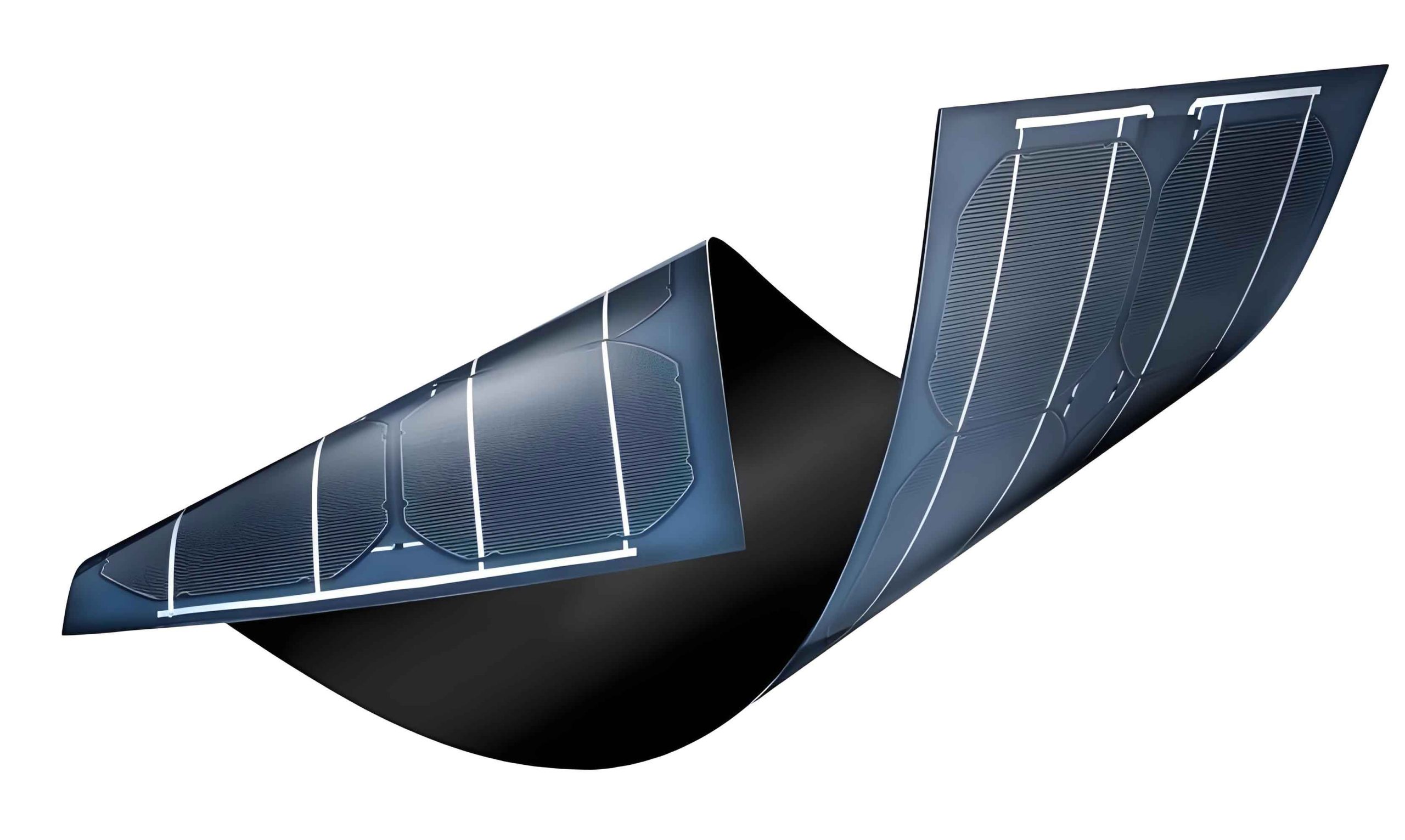
However, vacuum sputtering is capital-intensive. This has driven research into alternative, non-vacuum methods for depositing molybdenum back contacts, aiming to reduce the cost of thin film solar panel production. A prominent approach involves the development of composite molybdenum paste. This paste, formulated for techniques like screen printing or doctor-blading, represents a fascinating marriage of powder metallurgy and polymer chemistry. A representative formulation is structured around four core components:
| Component | Weight Fraction (%) | Function |
|---|---|---|
| Molybdenum Powder (Mo) | 50 – 80 | Conductive filler, forms the continuous percolation network after firing. |
| Glass Frit | 5 – 15 | Forms a liquid phase during firing, promotes sintering, bonds Mo to substrate. |
| Organic Vehicle (Epoxy Resin + Solvent) | 10 – 25 | Provides rheology for printing, temporarily binds particles. |
| Additives (Dispersants, Plasticizers, etc.) | 5 – 10 | Controls paste stability, print definition, and final film morphology. |
The post-printing thermal processing (firing) is critical. The organic vehicle must burn out cleanly without blistering, while the glass frit softens and sinters the Mo particles together and to the substrate. The electrical conductivity $\sigma$ of the resulting film depends on the sintered density and contact area between particles, following a relationship influenced by percolation theory:
$$\sigma \propto (p – p_c)^t$$
where $p$ is the volume fraction of Mo, $p_c$ is the critical percolation threshold, and $t$ is a critical exponent. The challenge is to formulate a paste that, after low-temperature firing, approaches the conductivity of sputtered films, which is on the order of $10^6$ S/m. While the conductivity of printed films is typically lower, the potential for drastic cost reduction makes this a vital research path for the future commercialization of thin film solar panel technology.
Looking at the broader picture, the technological threads connect. The reliable production of high-purity molybdenum oxides or chemicals (aided by robust furnace systems like those with double-flap valves) feeds into the production of molybdenum metal powder. This powder can be used in sputtering targets for vacuum deposition or formulated into conductive pastes for printed electronics. The performance of the final molybdenum layer—whether sputtered or printed—directly impacts the efficiency $\eta$ of the thin film solar panel:
$$\eta = \frac{V_{oc} \cdot J_{sc} \cdot FF}{P_{in}} \times 100\%$$
where $V_{oc}$ is open-circuit voltage, $J_{sc}$ is short-circuit current density, and $FF$ is the fill factor. A poorly conducting or delaminating back contact increases series resistance, reducing the $FF$ and, consequently, the overall panel efficiency. Furthermore, the interface between Mo and CIGS can lead to the formation of a thin MoSe₂ layer during the selenization process. While a thin, oriented MoSe₂ layer can be beneficial for contact properties, excessive growth is detrimental. Understanding and controlling this interfacial chemistry is another layer of complexity in optimizing the back contact for thin film solar panel applications.
In conclusion, from the gritty reality of sealing a roaring industrial furnace to the nano-scale engineering of interfaces in a photovoltaic device, molybdenum proves to be an element of extraordinary utility. The practical engineering solutions developed for its primary processing lay the groundwork for the high-purity materials required in advanced applications. Its unique combination of properties—refractory nature, conductivity, and favorable interfacial behavior—has cemented its status as an irreplaceable component in the architecture of CIGS thin film solar panel technology. The ongoing innovation, particularly in moving from vacuum-based to printable composite paste technologies, highlights a dynamic field of research aimed squarely at making thin film solar panel production more scalable and economically viable. The journey of molybdenum, from ore to a functional layer in a device harvesting sunlight, is a compelling narrative of materials science driving sustainable energy solutions.