
In the context of the 2025 Energy Green Development Conference, the theme “Energy + AI Leading Green Development” highlights the transformative potential of intelligent energy systems. As a researcher deeply involved in the energy transition, I focus on the planning and configuration of the battery energy storage system (BESS), which is a cornerstone technology for building a new power system dominated by renewable energy. The battery energy storage system plays a pivotal role in achieving carbon peak and carbon neutrality goals by enabling high penetration of wind and solar power while maintaining grid stability. In this article, I will systematically analyze the current status, challenges, and innovative pathways for BESS planning and configuration from two dimensions: market mechanism design and government regulation. The discussion will be supported by quantitative tables and mathematical formulations.
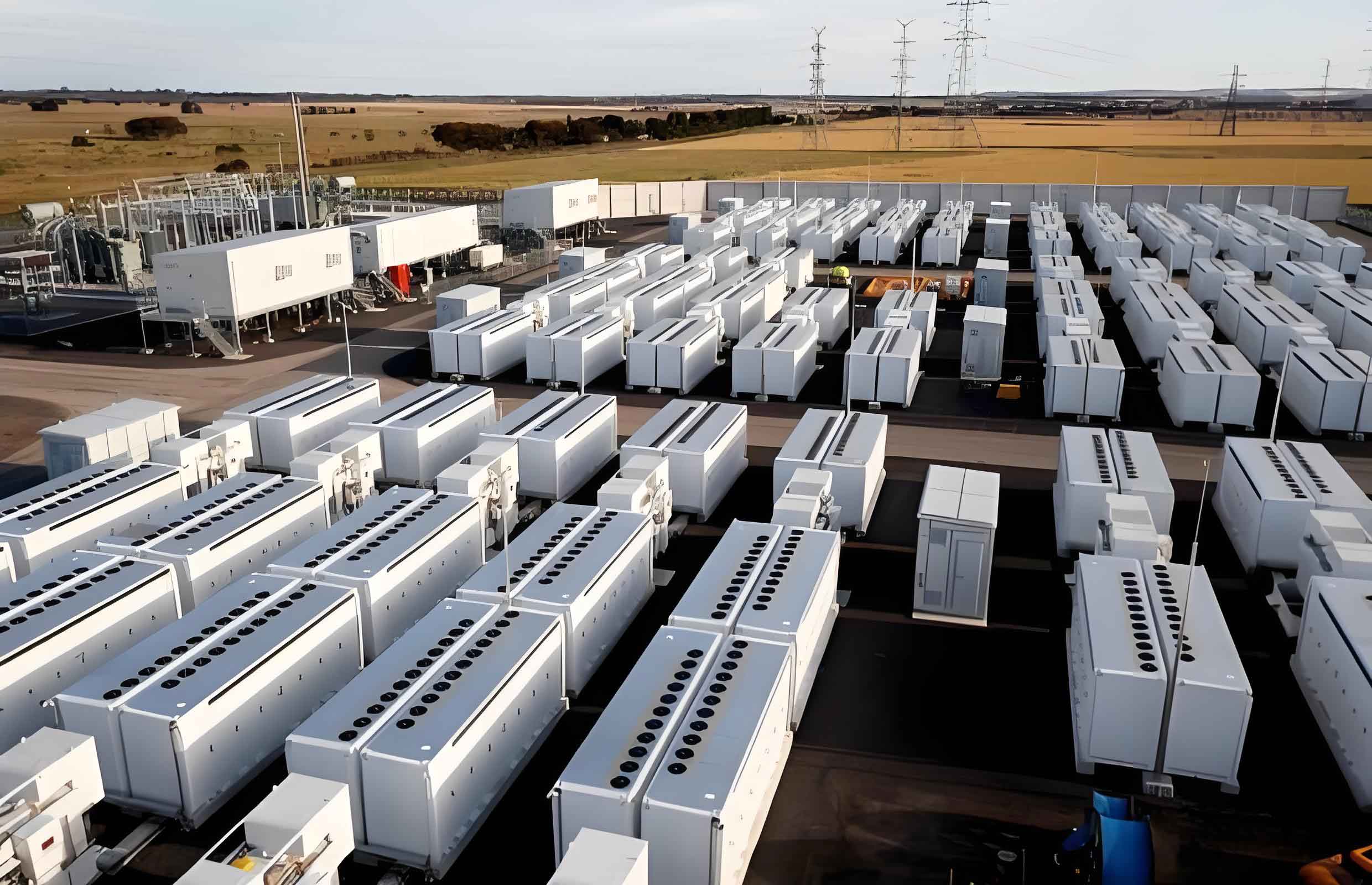
1. Current Status and Key Challenges of Battery Energy Storage Systems
Building a new power system with renewable energy as the mainstay is a critical measure to achieve carbon peak and carbon neutrality. With the rapid growth of installed capacity of wind and photovoltaic power, the operating characteristics of the power system are undergoing profound changes. The integration of high-proportion renewable energy leads to a series of challenges, including peak regulation difficulties, increased frequency stability pressure, and higher complexity of voltage control. According to statistics from 2023, China’s renewable energy new installed capacity reached 370 GW, accounting for 82.7% of the national new power generation capacity. Among them, new wind power and solar power installed capacity reached 76 GW and 220 GW respectively. The total installed capacity of wind power, solar power, and photovoltaic power exceeded 1,000 GW. Against this backdrop, the battery energy storage system (BESS), as an important flexible regulation resource, plays an increasingly significant role in the new power system due to its fast response, flexible configuration, and high regulation accuracy. The BESS can effectively smooth the output fluctuations of renewable energy, provide various auxiliary services such as frequency regulation, peak shaving, and reserve, enhance the grid’s anti-disturbance ability and fault recovery capability, and improve the power supply reliability and power quality. In recent years, China’s energy storage industry has shown rapid development. By the end of 2023, China’s new energy storage installed capacity had exceeded 30 GW, with lithium-ion battery energy storage systems dominating.
Table 1: Key Statistics of BESS Development in China (2023)
| Indicator | Value |
|---|---|
| Renewable energy new installed capacity (2023) | 370 GW |
| Wind power new installed | 76 GW |
| Solar power new installed | 220 GW |
| Total renewable capacity (cumulative) | >1,000 GW |
| New energy storage installed (2023) | >30 GW |
| Dominant technology | Lithium-ion BESS |
However, the large-scale application of BESS in the new power system still faces many challenges. First, the investment cost of BESS remains high, the life-cycle cost-benefit assessment system is incomplete, and there is a lack of sustainable business models and return mechanisms. Second, the positioning of BESS in the electricity market is unclear, the rules for participating in market transactions are not well established, and the value realization channels are limited. Third, there are deficiencies in planning and design standards, grid connection technical requirements, and operation and maintenance specifications for BESS. The whole-life-cycle supervision system has not been established. In addition, issues such as safety, cycle life, and recycling of BESS also need to be addressed urgently.
2. Multi-Functional Value and Planning Obstacles of BESS in the New Power System
2.1 Multi-Functional Value and Strategic Role
The battery energy storage system has multiple functional values in the new power system. It is a key technical means to support high-proportion renewable energy accommodation and ensure the safe and stable operation of the power grid. The BESS has become an indispensable core element of the new power system.
First, flexible power regulation: Through rapid charging and discharging conversion, the BESS effectively smooths the output fluctuations of renewable energy, improving the grid’s ability to accept renewable energy. Configuring a BESS with appropriate capacity can reduce the output fluctuation of wind and photovoltaic power stations and significantly improve power quality.
Recently research indicates that a properly sized BESS can reduce the ramp rate of a wind farm from 10% per minute to less than 2% per minute, enhancing grid stability.
Second, auxiliary services: The BESS can provide various auxiliary services including primary frequency regulation, secondary frequency regulation, automatic generation control (AGC), and spinning reserve. Compared with traditional coal-fired units, the response time of BESS can reach millisecond level, and the regulation accuracy is higher, better meeting the frequency control needs of the grid.
The relationship between regulation performance and economic benefit can be expressed as:
$$R_{\text{aux}} = \sum_{t=1}^{T} \left[ P_{\text{reg}}(t) \cdot \pi_{\text{reg}}(t) + P_{\text{res}}(t) \cdot \pi_{\text{res}}(t) \right]$$
where \(R_{\text{aux}}\) is the total revenue from auxiliary services, \(P_{\text{reg}}(t)\) and \(\pi_{\text{reg}}(t)\) are the regulation power and price at time \(t\), and \(P_{\text{res}}(t)\) and \(\pi_{\text{res}}(t)\) are the reserve power and price.
Third, economic optimization of grid operation: By implementing peak-valley arbitrage, the BESS can charge during low-load periods and discharge during peak periods, effectively reducing the peak-valley difference and improving equipment utilization efficiency. Furthermore, the BESS can alleviate transmission and distribution line congestion, delaying the need for grid upgrade investments and improving grid asset utilization efficiency.
The net benefit of peak-valley arbitrage can be modeled as:
$$B_{\text{arb}} = \sum_{i=1}^{N} \left( \eta_{\text{roundtrip}} \cdot E_{\text{dis},i} \cdot \pi_{\text{peak},i} – E_{\text{ch},i} \cdot \pi_{\text{valley},i} \right)$$
where \(\eta_{\text{roundtrip}}\) is the round-trip efficiency, \(E_{\text{dis},i}\) and \(E_{\text{ch},i}\) are discharge and charge energy, and \(\pi_{\text{peak},i}\) and \(\pi_{\text{valley},i}\) are peak and valley electricity prices.
Fourth, enhancing power supply reliability: As an emergency power source, the BESS can quickly switch to island operation mode during grid faults, providing continuous power supply to critical loads. Under extreme weather events or natural disasters, the black-start capability of the BESS can support rapid grid restoration.
Table 2: Value Categories and Corresponding BESS Services
| Value Category | Service Type | Example Application |
|---|---|---|
| Power regulation | Renewable smoothing | Smoothing wind/solar output |
| Auxiliary service | Frequency regulation, reserve | Fast frequency response |
| Economic optimization | Peak shaving, congestion relief | Arbitrage, T&D deferral |
| Reliability | Emergency power, black-start | Critical load backup |
2.2 Key Obstacles in BESS Planning and Configuration
Despite continuous technological progress and expanding application scenarios, the large-scale development of BESS still faces the following prominent problems:
(a) Incomplete cost recovery mechanism and poor investment economics. The initial investment of BESS is high, and it still heavily relies on policy subsidies or mandatory energy storage allocation requirements. There is a lack of sustainable market-based profit models. In the current electricity market, the value of BESS cannot be fully realized through the energy market alone. Especially in regions where the auxiliary service market is immature and capacity compensation mechanisms are absent, BESS projects have long payback periods and high risks.
A typical cost breakdown for a utility-scale lithium-ion BESS is shown below:
Table 3: Cost Breakdown of a 100 MW/200 MWh BESS (2025 estimate)
| Cost Component | Percentage | Typical Value (USD/kWh) |
|---|---|---|
| Battery pack | 55% | 120 |
| Power conversion system | 15% | 33 |
| Balance of plant & installation | 20% | 44 |
| Engineering, procurement & construction | 10% | 22 |
| Total | 100% | ~220 USD/kWh |
(b) Imperfect market access and trading mechanisms. The status of BESS as an independent market entity has not been universally recognized nationwide. There are still obstacles in terms of access conditions, metering rules, and settlement methods for BESS to participate in electricity markets. Trading products are limited, lacking short-term, high-frequency trading mechanisms and cross-market arbitrage mechanisms suitable for the characteristics of BESS.
(c) Uncoordinated dispatch and operation mechanisms. Current grid dispatch agencies mostly focus on local applications when dispatching BESS resources, lacking system-level optimization and cross-regional coordination. The operation mode of BESS stations is too rigid, failing to fully exploit their flexible regulation potential. There is also a lack of coordinated interaction with renewable energy generation and demand-side response resources.
(d) Lack of technical standards and safety supervision. BESS still has technical bottlenecks in performance degradation, thermal runaway risk, cycle life, and decommissioning recycling. The industry lacks unified standards for planning and design, grid connection testing, operation and maintenance, echelon utilization, and recycling. The whole-life-cycle supervision system has not been established, and safety hazards and environmental risks cannot be ignored.
3. Innovative Pathways for Market Mechanisms and Regulatory Policies
3.1 Building Multi-Layer Market Mechanisms Adapted to BESS Characteristics
First, improve the energy market mechanism and allow BESS to participate as an independent entity. It is recommended to introduce shorter trading periods, such as 15-minute or 5-minute trading intervals, to match the fast response characteristics of the battery energy storage system. At the same time, a locational marginal pricing (LMP) mechanism should be established to accurately reflect grid congestion at different locations, guiding BESS deployment to the most needed positions.
The optimal bidding strategy for a price-taking BESS in a day-ahead market can be formulated as:
$$\max \sum_{t=1}^{24} \left[ \left( p_{\text{dis},t} \cdot \pi_t^{\text{DA}} – p_{\text{ch},t} \cdot \pi_t^{\text{DA}} \right) \cdot \Delta t \right]$$
subject to state-of-charge (SOC) dynamics:
$$E_{t+1} = E_t + \left( \eta_{\text{ch}} \cdot p_{\text{ch},t} – \frac{p_{\text{dis},t}}{\eta_{\text{dis}}} \right) \cdot \Delta t$$
$$0 \leq E_t \leq E_{\max}, \quad 0 \leq p_{\text{ch},t} \leq P_{\max}, \quad 0 \leq p_{\text{dis},t} \leq P_{\max}$$
where \(p_{\text{ch},t}\) and \(p_{\text{dis},t}\) are charging and discharging power, \(\pi_t^{\text{DA}}\) is the day-ahead price, \(\eta_{\text{ch}}\) and \(\eta_{\text{dis}}\) are charging and discharging efficiencies.
Second, improve the auxiliary service market system. Expand the variety of auxiliary service market products, including frequency regulation, reserve, reactive power regulation, and black-start services. Establish a performance-based payment mechanism that determines compensation standards according to the response speed, regulation accuracy, and other performance indicators of BESS, incentivizing the provision of high-quality auxiliary services. After adopting the performance-based payment mechanism, the auxiliary service revenue of BESS can be increased significantly.
The performance score for frequency regulation can be defined as:
$$\text{Score} = w_1 \cdot \text{Accuracy} + w_2 \cdot \text{Delay} + w_3 \cdot \text{Persistence}$$
where \(w_1, w_2, w_3\) are weighting factors determined by the system operator.
Third, establish a capacity market mechanism. Through capacity compensation or capacity auction, provide stable capacity revenue for BESS, ensuring the recovery of fixed investment. It is recommended to use reliability requirement models to scientifically determine capacity needs and establish scarcity pricing mechanisms to fully reflect the capacity value of BESS.
The capacity payment for a BESS can be expressed as:
$$C_{\text{payment}} = \text{DRCC} \times \text{UCAP}_{\text{BESS}}$$
where DRCC is the demand resource capacity credit price, and UCAP is the unforced capacity of BESS, accounting for outage probabilities.
Fourth, explore green value realization mechanisms. Establish a linkage mechanism between green electricity certificate trading and carbon emission reduction benefits, converting the environmental benefits of BESS in promoting renewable energy accommodation into economic returns. Through the green value realization mechanism, the project return rate of BESS can be enhanced.
The total revenue model integrating multiple value streams is:
$$R_{\text{total}} = R_{\text{energy}} + R_{\text{aux}} + R_{\text{capacity}} + R_{\text{green}}$$
Table 4: Revenue Streams for BESS Under Proposed Market Framework
| Revenue Stream | Source | Typical Share (Projected) |
|---|---|---|
| Energy arbitrage | Energy market (day-ahead, real-time) | 30–40% |
| Auxiliary services | Frequency regulation, reserve | 25–35% |
| Capacity payment | Capacity market or compensation | 20–25% |
| Green value | Renewable energy certificates, carbon credits | 10–15% |
3.2 Improving the Regulatory Policy System
First, strengthen top-level design and strategic planning. Incorporate BESS development into the national energy strategy and power development plan, clarifying medium- and long-term development goals and technology roadmaps. It is recommended to formulate a special plan for new energy storage development, defining key development regions and application scenarios to avoid disorderly development and resource waste.
Second, perfect the technical standard system. Accelerate the formulation of technical standards covering the entire chain of BESS planning and design, equipment manufacturing, grid connection operation, maintenance management, and decommissioning recycling. Focus on improving the safety standard system, including standards for battery safety, electrical safety, and fire safety. Establish a BESS product certification and quality supervision system to ensure product quality and performance.
Third, innovate business models and operation mechanisms. Promote the development of shared BESS models. Through capacity leasing and service purchasing, improve BESS utilization efficiency and reduce user costs. Explore BESS aggregation business models, integrating distributed BESS resources through virtual power plants to participate in electricity market trading. The shared BESS model can increase BESS utilization rate and shorten the investment payback period.
The optimization of shared BESS capacity allocation can be formulated as:
$$\min \sum_{i=1}^{N} \left( C_{\text{fix},i} + C_{\text{var},i} \right) \quad \text{s.t.} \quad \sum_{i=1}^{N} P_{\text{BESS},i} \geq P_{\text{req}}, \quad \text{SOC}_i \in [\text{SOC}_{\min}, \text{SOC}_{\max}]$$
Fourth, increase policy support. Reduce the investment cost of BESS projects through investment subsidies, tax incentives, and low-interest loans. Establish a BESS pricing mechanism, clarifying the price formation method for BESS participating in various electricity market transactions. Strengthen financial innovation, promote financing models such as BESS asset securitization, and broaden financing channels.
Fifth, strengthen safety assurance and risk management. Establish a BESS safety supervision system, improving safety access, operation monitoring, and emergency management systems. Implement whole-life-cycle management of BESS, establishing a full-process supervision mechanism from production, transportation, installation, operation to decommissioning recycling. Establish a BESS insurance system to diversify and transfer safety risks.
4. Mathematical Modeling for BESS Planning and Configuration
To quantitatively analyze the optimal planning and configuration of BESS in the new power system, I present a comprehensive optimization model that integrates market revenues, technical constraints, and regulatory policies.
4.1 Objective Function
The objective is to maximize the net present value (NPV) over the project lifetime \(L\):
$$\text{NPV} = \sum_{y=1}^{L} \frac{\text{Annual Profit}_y}{(1+r)^y} – C_{\text{invest}}$$
where \(r\) is the discount rate, \(C_{\text{invest}}\) is the initial investment cost, and the annual profit includes all revenue streams minus operation and maintenance (O&M) costs.
4.2 Investment Cost Model
The total investment cost for a BESS with power rating \(P_{\text{rated}}\) (MW) and energy capacity \(E_{\text{rated}}\) (MWh) is:
$$C_{\text{invest}} = \alpha \cdot P_{\text{rated}} + \beta \cdot E_{\text{rated}} + C_{\text{BoP}}$$
where \(\alpha\) is the power-specific cost (USD/MW), \(\beta\) is the energy-specific cost (USD/MWh), and \(C_{\text{BoP}}\) is the balance-of-plant cost.
4.3 Revenue Modeling
Energy arbitrage revenue:
$$R_{\text{energy}} = \sum_{t=1}^{8760} \left( p_{\text{dis}}(t) \cdot \pi_{\text{real-time}}(t) – p_{\text{ch}}(t) \cdot \pi_{\text{real-time}}(t) \right) \cdot \Delta t$$
Auxiliary service revenue:
$$R_{\text{aux}} = \sum_{t=1}^{8760} \left( P_{\text{reg}}(t) \cdot \pi_{\text{reg}}(t) + P_{\text{res}}(t) \cdot \pi_{\text{res}}(t) \right) \cdot \Delta t$$
Capacity revenue:
$$R_{\text{capacity}} = \text{Capacity Price} \times \text{Effective Capacity}$$
Green value revenue:
$$R_{\text{green}} = E_{\text{renewable\_support}} \times \text{Green Certificate Price}$$
4.4 Technical Constraints
State-of-charge dynamics:
$$\text{SOC}(t+1) = \text{SOC}(t) + \left( \eta_{\text{ch}} \cdot \frac{p_{\text{ch}}(t)}{E_{\text{rated}}} – \frac{p_{\text{dis}}(t)}{\eta_{\text{dis}} \cdot E_{\text{rated}}} \right) \cdot \Delta t$$
Power limits:
$$0 \leq p_{\text{ch}}(t) \leq P_{\text{rated}}, \quad 0 \leq p_{\text{dis}}(t) \leq P_{\text{rated}}$$
SOC limits:
$$\text{SOC}_{\min} \leq \text{SOC}(t) \leq \text{SOC}_{\max}$$
Cycle life degradation:
$$\text{Degradation} = \sum_{k=1}^{N_{\text{cycles}}} f(\text{DOD}_k)$$
where DOD is depth of discharge, and \(f\) is a degradation function typically modeled as:
$$f(\text{DOD}) = a \cdot \text{DOD}^b$$
4.5 Regulatory Policy Constraints
Mandatory energy storage requirement:
$$E_{\text{BESS}} \geq \gamma \cdot P_{\text{renewable}}$$
where \(\gamma\) is the minimum storage ratio (e.g., 10–20% of renewable capacity).
Minimum SOC reserve for primary frequency regulation:
$$\text{SOC}(t) \geq \text{SOC}_{\text{FR\_min}} \quad \forall t$$
Table 5: Typical Parameters for BESS Planning Optimization
| Parameter | Symbol | Typical Value |
|---|---|---|
| Power cost coefficient | \(\alpha\) | 100 USD/kW |
| Energy cost coefficient | \(\beta\) | 220 USD/kWh |
| Round-trip efficiency | \(\eta_{\text{rt}}\) | 85–92% |
| Cycle life (80% DOD) | \(N_{\text{life}}\) | 5,000–10,000 cycles |
| Discount rate | \(r\) | 5–8% |
| Project lifetime | \(L\) | 10–15 years |
| SOC operating range | \([\text{SOC}_{\min},\text{SOC}_{\max}]\) | [10%, 90%] |
5. Future Outlook and Scaling Projections
Looking ahead, with the deepening of electricity market reform, continuous progress in battery technology, and declining costs, the battery energy storage system will play an even more important role in the new power system. It is estimated that by 2030, China’s new energy storage installed capacity will reach approximately 150 GW, forming a trillion-yuan market scale. The levelized cost of energy (LCOE) for BESS is projected to decrease further, as shown in the following table.
Table 6: Projected BESS Cost and Performance Evolution
| Year | Installed Capacity (GW) | Battery Cost (USD/kWh) | Round-trip Efficiency (%) | Cycle Life (cycles) |
|---|---|---|---|---|
| 2023 | >30 | ~139 | 85–88 | 5,000–6,000 |
| 2025 | ~50 | ~110 | 87–90 | 6,000–8,000 |
| 2030 | ~150 | ~80 | 90–93 | 8,000–12,000 |
By establishing a fair and open market environment and a scientifically effective regulatory framework, the battery energy storage system will become a vital force driving the energy revolution and achieving the “dual carbon” goals. The integration of AI and BESS further enhances the intelligent scheduling and predictive maintenance capabilities, leading to higher operational efficiency and lower risks.
The AI-optimized scheduling model for BESS can be expressed as a reinforcement learning problem:
$$\pi^*(s) = \arg \max_{a} \left[ R(s,a) + \gamma \sum_{s’} P(s’|s,a) V^*(s’) \right]$$
where \(s\) is the state (e.g., SOC, price, load), \(a\) is the action (charge/discharge/idle), and \(V^*\) is the optimal value function learned from historical data.
In summary, the battery energy storage system is the key technical support for building a new power system and achieving green and low-carbon energy transition. Promoting its large-scale, high-quality development must rely on the dual driving forces of market mechanisms and government regulation. Through innovative market design, robust regulatory policies, and advanced AI-driven optimization, the full potential of BESS can be unlocked, paving the way for a sustainable energy future.