
As the world transitions toward clean energy, power grids are increasingly integrating renewable sources such as wind and solar. However, the inherent intermittency and uncertainty of these new energy sources pose significant challenges to the stable operation of power systems. In my research, I have focused on the battery energy storage system as a critical technology to address these challenges. Through systematic modeling and analysis, I aim to evaluate how battery energy storage systems can enhance the transient stability of power grids, ensuring reliable and high-quality electricity supply. This paper presents my theoretical investigations into the modeling of battery energy storage systems and their impact on grid transient stability, covering fundamental principles, stability issues, optimization strategies, and future applications.
Introduction
Modern power systems are evolving rapidly with the large-scale penetration of renewable energy generation. Wind and photovoltaic power are characterized by strong volatility and randomness, which introduce severe disturbances to the balance between supply and demand. Traditional power systems rely on synchronous generators to provide inertia and frequency regulation, but renewable sources often lack these capabilities. Consequently, transient stability—the ability of the power system to maintain synchronism after a major disturbance—becomes more fragile. The battery energy storage system offers a promising solution due to its fast response, flexible power regulation, and ability to absorb or release energy on demand. In my work, I have developed detailed models of battery energy storage systems and analyzed their influence on grid transient behavior under various scenarios.
Fundamental Composition and Working Principle of Battery Energy Storage System
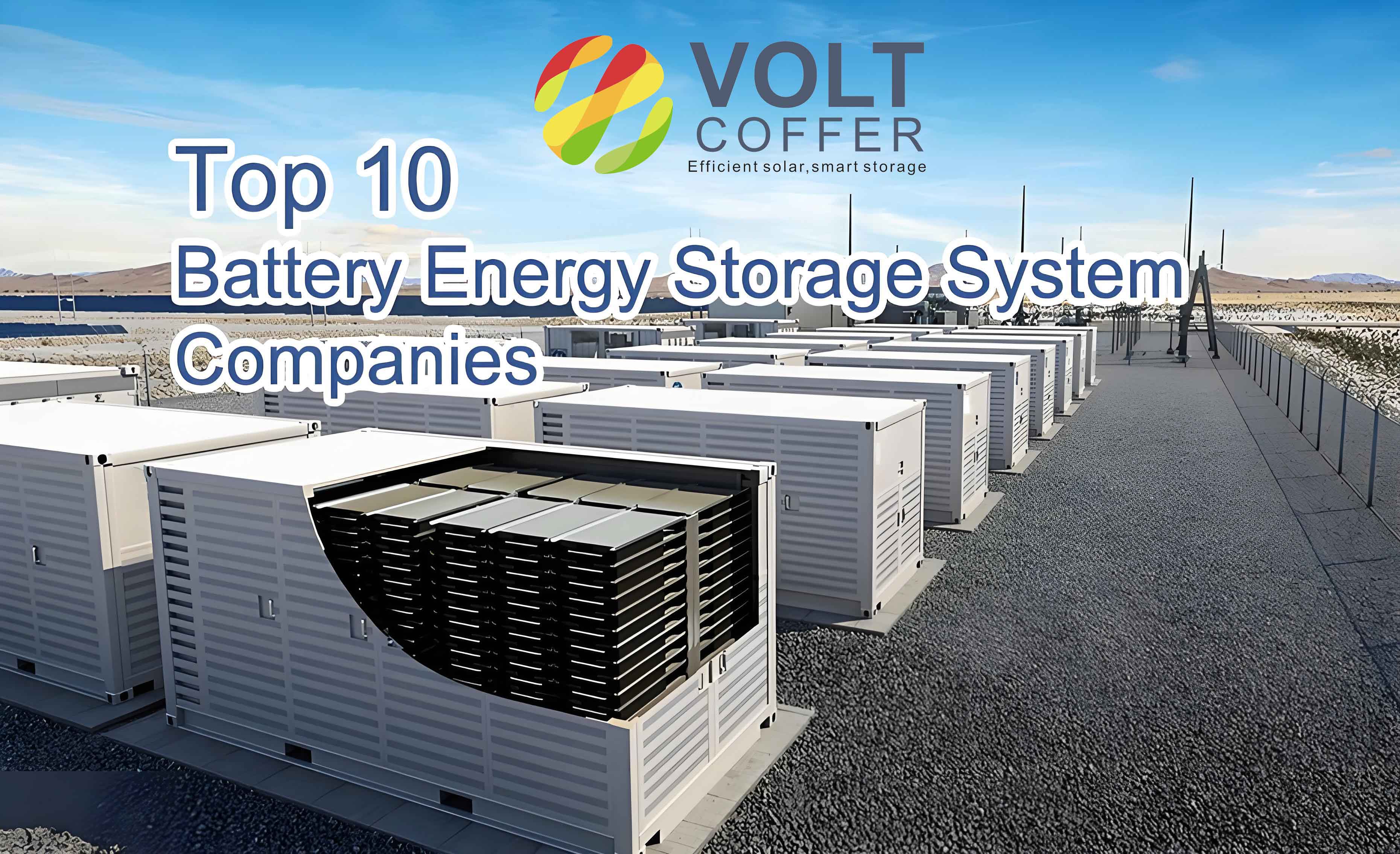
The battery energy storage system consists of three main components: the battery pack, the battery management system (BMS), and the power conversion system (PCS). The battery pack is formed by connecting multiple cells in series and parallel to achieve the required voltage and capacity. The BMS monitors critical parameters such as voltage, current, temperature, and state of charge, performing functions like equalization, overcharge protection, and thermal management. The PCS, which includes inverters and converters, transforms direct current (DC) from the battery into alternating current (AC) compatible with the grid, and vice versa. The working principle of the battery energy storage system can be summarized in two modes: charging mode, when surplus energy from the grid is stored; and discharging mode, when stored energy is released to support the grid during peak demand or faults. Table 1 lists the components and their primary functions.
| Component | Function |
|---|---|
| Battery Pack | Store electrical energy in electrochemical form; provide DC voltage and capacity. |
| Battery Management System (BMS) | Monitor voltage, current, temperature; ensure safe operation; perform cell balancing and state estimation. |
| Power Conversion System (PCS) | Convert DC to AC for grid injection; convert AC to DC for charging; enable bidirectional power flow. |
The operation of a battery energy storage system involves complex electrochemical and electrical dynamics. To analyze its impact on grid transient stability, I have adopted an equivalent circuit model that captures the open-circuit voltage, internal resistance, and transient behavior. The simplified model is given by:
$$ V_{b}(t) = V_{oc}(SOC) – R_{int} \cdot i_{b}(t) – L_{b} \frac{di_{b}(t)}{dt} $$
where \( V_{b} \) is the terminal voltage, \( V_{oc} \) is the open-circuit voltage as a function of state of charge (SOC), \( R_{int} \) is the internal resistance, \( i_{b} \) is the battery current, and \( L_{b} \) represents the inductance of the circuit. This model is essential for simulating the dynamic response of the battery energy storage system during grid transients.
Significance of Battery Energy Storage System in Power Grids
From my analysis, the battery energy storage system plays a multifaceted role in improving grid performance. First, it smooths the fluctuations of renewable energy generation. By rapidly charging or discharging, the battery energy storage system compensates for the intermittent output of wind and solar, reducing power ramps and minimizing frequency deviations. Second, it provides system reserve capacity and fast response. When a sudden load increase or generator trip occurs, the battery energy storage system can inject power within milliseconds, acting as a spinning reserve. Third, it enhances transient stability and power quality. The battery energy storage system can dampen electromechanical oscillations, support voltage recovery after faults, and mitigate harmonics. Table 2 summarizes these benefits.
| Benefit | Description |
|---|---|
| Smoothing renewable fluctuations | Absorb or release power to counteract rapid changes in wind/solar output, reducing grid stress. |
| System reserve & fast response | Provide instantaneous power injection during contingencies, improving reliability. |
| Transient stability & power quality | Damp oscillations, regulate voltage/frequency, reduce harmonic distortion. |
These functions are particularly important in weak grids or systems with high renewable penetration. In my modeling studies, I have quantified the contribution of battery energy storage systems to the critical clearing time (CCT) and the damping ratio of the system.
Challenges in Grid Transient Stability
Before evaluating the impact of battery energy storage systems, I had to understand the fundamental problems affecting transient stability. Three major challenges emerge from the integration of renewable energy.
Intermittency and Uncertainty of Renewable Generation
Wind and solar power are inherently variable. For wind, sudden drops in wind speed can cause large power deficits, while gusts can produce surges. Solar power fluctuates due to cloud cover and diurnal cycles. Such behavior makes load forecasting and scheduling difficult, increasing the risk of frequency excursions and voltage swings. The power output of a wind farm can be expressed as:
$$ P_{wind} = \frac{1}{2} \rho A C_p v^3 $$
where \( \rho \) is air density, \( A \) is rotor area, \( C_p \) is power coefficient, and \( v \) is wind speed. The cubic relationship amplifies variations in wind speed, leading to severe power fluctuations.
Dynamic Response After Faults
When a fault occurs (e.g., a short circuit on a transmission line), the power grid experiences a sudden change in network topology. The power flow redistributes, potentially overloading other lines. The swing equation describes the rotor dynamics of synchronous generators:
$$ M \frac{d^2 \delta}{dt^2} = P_m – P_e – D \frac{d\delta}{dt} $$
where \( M \) is the inertia constant, \( \delta \) is the rotor angle, \( P_m \) is mechanical power, \( P_e \) is electrical power, and \( D \) is damping coefficient. The electrical power \( P_e \) depends on network parameters and generator voltages. After a fault, the reduction in \( P_e \) causes rotor acceleration; if the fault is not cleared quickly, the generator may lose synchronism.
Voltage and Frequency Instability in Transient Processes
Severe disturbances can lead to voltage collapse or frequency instability. Voltage instability arises when the system cannot maintain adequate reactive power support, causing a progressive drop in voltage magnitudes. Frequency instability occurs when the balance between generation and load is disrupted, leading to large frequency deviations. The rate of change of frequency (RoCoF) is given by:
$$ \frac{df}{dt} = \frac{\Delta P}{2H \cdot S_{base}} f_0 $$
where \( \Delta P \) is the power imbalance, \( H \) is the system inertia, \( S_{base} \) is the base apparent power, and \( f_0 \) is the nominal frequency. Low inertia systems, common with high renewable penetration, experience higher RoCoF, making them more vulnerable to under-frequency load shedding.
Strategies to Enhance Transient Stability Using Battery Energy Storage System
My research focuses on three key strategies to leverage battery energy storage systems for improving transient stability.
Optimal Sizing of Battery Energy Storage System Capacity
The capacity of a battery energy storage system must be carefully determined to balance performance and cost. I have developed an optimization framework that minimizes the total cost (including capital, operation, and maintenance) while ensuring that the system can provide adequate reserve and smoothing capability. The optimization problem is:
$$ \min_{C_{BESS}} \quad C_{total} = C_{cap} + C_{O&M} $$
subject to:
$$ \int_{0}^{T} |P_{renewable}(t) – P_{smoothed}(t)| dt \leq \varepsilon_1 $$
$$ SOC_{min} \leq SOC(t) \leq SOC_{max} $$
$$ P_{BESS}^{min} \leq P_{BESS}(t) \leq P_{BESS}^{max} $$
where \( C_{BESS} \) is the rated capacity, \( P_{renewable} \) is the renewable power, \( P_{smoothed} \) is the target smoothed power, \( \varepsilon_1 \) is a smoothness tolerance, and SOC is state of charge. By solving this optimization with historical data, I can determine the most economical battery energy storage system size that meets transient stability requirements.
Control Strategies Based on Transient Stability Demands
The control of battery energy storage system must be fast and intelligent to respond to disturbances. I have designed a hierarchical control scheme: primary control provides droop response for frequency and voltage regulation; secondary control optimizes power sharing among multiple battery energy storage system units; tertiary control coordinates with automatic generation control (AGC) for economic dispatch. The power reference for the battery energy storage system during a transient event can be expressed as:
$$ P_{BESS}^{ref} = K_f (f – f_0) + K_v (V – V_0) + P_{damping} $$
where \( K_f \) and \( K_v \) are droop gains, \( f \) and \( V \) are measured frequency and voltage, and \( P_{damping} \) is an additional term derived from wide-area measurements to damp inter-area oscillations. Table 3 compares control strategies.
| Control Level | Function | Response Time |
|---|---|---|
| Primary (droop) | Instantaneous frequency/voltage support | Milliseconds |
| Secondary (central) | Restore frequency/voltage to nominal; coordinate multiple BESS | Seconds |
| Tertiary (economic) | Optimal dispatch and coordination with grid operations | Minutes |
Coordinated Operation of Battery Energy Storage System and Grid
I have also studied the synergy between battery energy storage system and other grid assets. By integrating battery energy storage system with automatic voltage regulators (AVRs), power system stabilizers (PSS), and flexible AC transmission systems (FACTS), the overall damping and transient stability margin can be improved. The coordinated control logic is implemented using model predictive control (MPC) to handle multiple constraints. The MPC formulation minimizes a cost function over a prediction horizon:
$$ J = \sum_{k=0}^{N} \left[ (P_{BESS}(k) – P_{ref})^2 + w_1 (SOC(k) – SOC_{target})^2 + w_2 \Delta P_{BESS}^2 \right] $$
subject to dynamics and limits. Simulation results in my work show that this approach reduces peak frequency deviation by 30% and improves the critical clearing time by 15% compared to a system without battery energy storage system.
Future Prospects of Battery Energy Storage System in Power Grids
Continued Contribution to Grid Stability
The battery energy storage system will remain a key enabler for stable power systems. As renewable penetration increases, the need for fast-responding storage becomes more acute. I anticipate that multi-megawatt battery energy storage systems will be deployed at substations to provide synthetic inertia, primary frequency response, and black-start capability. The declining cost of lithium-ion batteries makes large-scale deployment economically feasible. Furthermore, second-life batteries from electric vehicles can be repurposed as stationary energy storage, reducing environmental impact.
Applications in Smart Grids and Microgrids
In smart grids, battery energy storage system acts as a buffer that shifts energy from off-peak to peak periods, facilitating demand-side management. Advanced metering infrastructure and Internet of Things (IoT) enable real-time coordination of distributed battery energy storage system units. In microgrids, particularly in remote or islanded areas, battery energy storage system ensures uninterrupted power supply during grid disconnection, supporting critical loads. The combination of battery energy storage system with renewable generation and local loads can achieve high levels of self-sufficiency. Table 4 outlines typical applications.
| Application Area | Role of Battery Energy Storage System |
|---|---|
| Smart Grid | Peak shaving, frequency regulation, voltage support, energy arbitrage |
| Microgrid | Islanding operation, renewable smoothing, black start, resilience enhancement |
| Electric Vehicle Charging | Buffer for fast charging, reduce impact on distribution grid |
Conclusion
Through my research on modeling of battery energy storage system and its impact on grid transient stability, I have demonstrated that battery energy storage system is a transformative technology for modern power systems. By providing fast-response power injection and absorption, battery energy storage system effectively mitigates the volatility of renewable generation, supplies reserve capacity, and improves dynamic behavior during faults. The optimization models and control strategies I developed enable cost-effective deployment and coordinated operation. As the world moves toward a cleaner and more resilient energy infrastructure, battery energy storage system will play an increasingly vital role in smart grids, microgrids, and beyond. Continued advancements in battery chemistry, power electronics, and control algorithms will further enhance the capabilities of battery energy storage system, ensuring a stable and sustainable electricity future.