
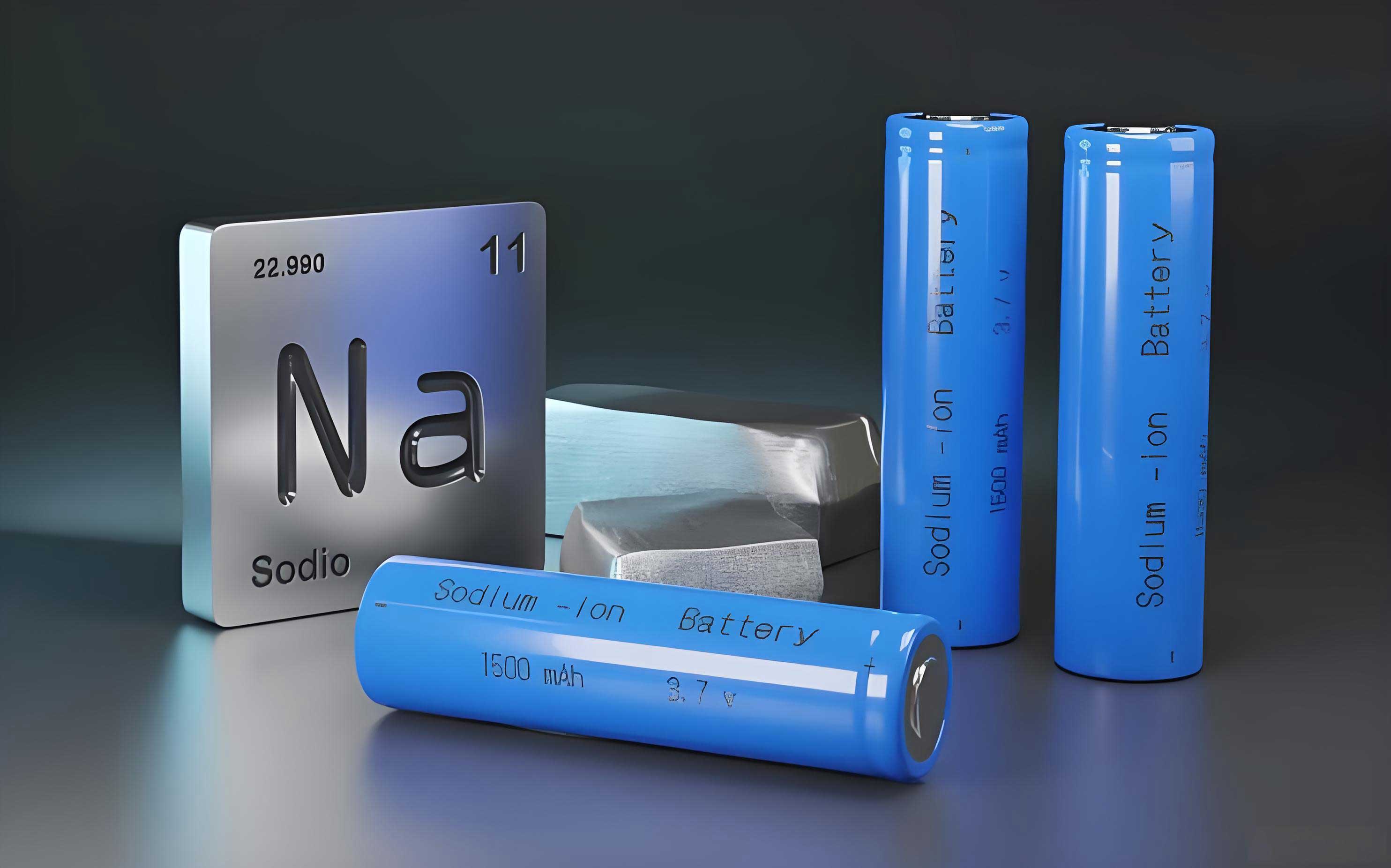
We stand at a critical juncture in energy storage technology. The pursuit of sustainable and cost-effective solutions for grid storage and electrified transportation has propelled significant research beyond the well-established lithium-ion battery. Among the promising alternatives, the sodium-ion battery has garnered immense attention due to the natural abundance and low cost of sodium resources, alongside inherent safety advantages. A pivotal component determining the performance, cost, and viability of a sodium-ion battery is its cathode material. Within the pantheon of cathode candidates—layered oxides, polyanion compounds, and Prussian blue analogues—the family of sodium superionic conductor (NASICON)-type phosphates presents a compelling combination of structural robustness, thermal stability, and tunable electrochemical properties. This article delves into the specific sub-class of Mn-based NASICON materials, exploring their structural foundations, electrochemical behavior, persistent challenges, and the strategic modifications employed to unlock their full potential for next-generation sodium-ion battery technology.
1. The NASICON Framework: A Versatile Host for Sodium Ions
The NASICON structure, first identified in the late 1960s, is renowned for its three-dimensional (3D) open framework that facilitates rapid ionic conduction. The archetypal crystal structure is built from corner-sharing \(MO_6\) octahedra and \(XO_4\) tetrahedra (where M is typically a transition metal and X is P or Si), forming a robust covalent network with the general formula \(A_xMM'(XO_4)_3\). For sodium-ion battery applications, the A sites are occupied by \(Na^+\) ions, which can be reversibly (de)intercalated during charge and discharge cycles. The framework itself provides two distinct types of interstitial sites for the mobile \(Na^+\) ions, connected by spacious 3D migration channels. This open architecture is a cornerstone for good rate capability.
The true power of the NASICON chemistry lies in its exceptional tunability, which manifests in three key aspects:
1. Compositional Flexibility: The M, M’, and X sites can be occupied by a wide variety of elements, as summarized in the table below. This allows for precise tailoring of the material’s properties, including its redox activity, operating voltage, and structural stability.
| Site | Common Elements/Functional Groups | Primary Role/Effect |
|---|---|---|
| A (Alkali Metal) | Na, Li, K, vacancies | Mobile ion for charge compensation; concentration dictates capacity. |
| M, M’ (Transition Metal) | V, Mn, Fe, Ti, Cr, Zr, Ni, etc. | Redox-active centers; determines voltage and electronic structure. |
| X (Polyanion) | \(PO_4^{3-}\), \(SiO_4^{4-}\), \(P_2O_7^{4-}\), \(SO_4^{2-}\), \(F^-\) | Inductive effect stabilizes structure and raises operating voltage. |
2. Structural Stability: The strong P-O covalent bonds create a stable framework that minimizes lattice distortion during \(Na^+\) extraction/insertion, leading to excellent long-term cycle life—a critical parameter for any practical sodium-ion battery.
3. Voltage Tunability via the Inductive Effect: The operating voltage of the redox couple (\(M^{n+}/M^{(n+1)+}\)) is not intrinsic to the metal alone but is powerfully influenced by the surrounding anion. The polyanion group (\(XO_4)^{y-}\) exerts a strong inductive effect, effectively lowering the energy of the metal’s redox orbital and thereby increasing the practical cell voltage. The strength of this effect generally follows the trend: \(SiO_4^{4-} < PO_4^{3-} < P_2O_7^{4-} < SO_4^{2-}\). The voltage of common redox couples within the \(PO_4\)-based NASICON structure can be approximated and are listed below.
| Redox Couple | Approximate Voltage vs. Na/Na+ (V) | Theoretical Capacity Contribution (per 1 e- transfer) |
|---|---|---|
| \(Ti^{3+}/Ti^{4+}\) | ~2.1 | ~ 117 mAh/g (for \(Na_3M_2(PO_4)_3\)) |
| \(V^{3+}/V^{4+}\) | ~3.4 | |
| \(Mn^{2+}/Mn^{3+}\) | ~3.6 | |
| \(Cr^{3+}/Cr^{4+}\) | ~4.3 | |
| \(Mn^{3+}/Mn^{4+}\) | ~4.1 |
The flagship material, \(Na_3V_2(PO_4)_3\) (NVP), leverages the \(V^{3+}/V^{4+}\) couple at 3.4 V, offering a theoretical capacity of 117 mAh/g for the extraction of two \(Na^+\) ions. However, concerns regarding vanadium’s toxicity and cost have driven the search for alternatives. Substituting V with more abundant and environmentally benign elements like Manganese (Mn) has emerged as a highly attractive strategy, giving rise to the family of Mn-based NASICON cathodes.
2. Mn-Based NASICON Cathodes: A Path to High Energy Density
Incorporating Manganese into the NASICON structure addresses the cost issue while opening the door to higher energy densities. The unique appeal of Mn lies in its ability to participate in multi-electron redox processes (\(Mn^{2+}/Mn^{3+}/Mn^{4+}\)), which can, in principle, deliver higher specific capacities. A general formula for these mixed-metal compounds is \(Na_{4-y}MnM(PO_4)_3\), where M is another transition metal (V, Ti, Cr, Fe, Zr). The electrochemical performance of key members of this family is systematically compared below.
| Material | Voltage Range (V vs. Na/Na+) | Active Redox Couples | Typical Reversible Capacity | Key Characteristics |
|---|---|---|---|---|
| \(Na_4MnV(PO_4)_3\) (NMVP) | 2.5 – 3.8 | \(V^{3+}/V^{4+}\), \(Mn^{2+}/Mn^{3+}\) | 100 – 110 mAh/g | Two clear plateaus at ~3.4 V (V) and ~3.6 V (Mn). Improved voltage over NVP. |
| \(Na_4MnV(PO_4)_3\) (High Voltage) | 1.5 – 4.3 | \(V^{3+}/V^{4+}/V^{5+}\), \(Mn^{2+}/Mn^{3+}\) | >140 mAh/g (Charge) | Accessing \(V^{4+}/V^{5+}\) at ~4.1 V increases capacity but often with irreversibility. |
| \(Na_3MnTi(PO_4)_3\) (NMTP) | 1.5 – 4.2 | \(Ti^{3+}/Ti^{4+}\), \(Mn^{2+}/Mn^{3+}/Mn^{4+}\) | Up to 160 mAh/g | Exhibits three-electron reaction in wide window. High capacity but low average voltage as a full cell cathode. |
| \(Na_4MnCr(PO_4)_3\) (NMCP) | 1.5 – 4.5 | \(Cr^{3+}/Cr^{4+}\), \(Mn^{2+}/Mn^{3+}/Mn^{4+}\) | ~130-160 mAh/g | Very high energy density (~566 Wh/kg) but severe challenges at high voltage. |
| \(Na_3MnZr(PO_4)_3\) | 2.5 – 4.1 | \(Mn^{2+}/Mn^{4+}\) (two-electron) | ~105 mAh/g | Electrochemically inert \(Zr^{4+}\) stabilizes structure; smoother voltage profile. |
The voltage profile of a material like \(Na_4MnV(PO_4)_3\) is governed by the sequential redox activity of its constituent metals. The potential \(E\) for a given redox couple can be related to the Gibbs free energy change \(\Delta G\) of the (de)sodiation reaction:
$$ E = -\frac{\Delta G}{nF} $$
where \(n\) is the number of electrons transferred and \(F\) is Faraday’s constant. The inductive effect of the \(PO_4\) framework modifies the chemical environment, effectively altering \(\Delta G\) and thus \(E\) for each couple. The specific capacity \(C\) (in mAh/g) is determined by the number of transferred electrons \(n\), the number of formula units per gram \(N\), and Faraday’s constant:
$$ C = \frac{n \cdot F}{3.6 \cdot M_w} $$
where \(M_w\) is the molecular weight of the charged/discharged formula unit. For \(Na_4MnV(PO_4)_3\), extracting 2 \(Na^+\) (with n=2) from the nominal formula leads to a theoretical capacity of ~117 mAh/g.
A critical aspect governing performance is the kinetic limitation imposed by solid-state diffusion. The diffusion coefficient of sodium ions \(D_{Na}\) within the cathode particles is a key parameter, often estimated from electrochemical impedance spectroscopy (EIS) or galvanostatic intermittent titration technique (GITT) using equations like the simplified Warburg impedance relation:
$$ Z’ = R_{ct} + R_s + \sigma_\omega \omega^{-1/2} $$
where \(\sigma_\omega\) is the Warburg coefficient related to \(D_{Na}\) by:
$$ D_{Na} = \frac{R^2 T^2}{2 A^2 n^4 F^4 C^2 \sigma_\omega^2} $$
(Here, \(R\) is the gas constant, \(T\) is temperature, \(A\) is electrode area, and \(C\) is sodium concentration). Studies on the solid-solution series \(Na_{3+x}Mn_xV_{2-x}(PO_4)_3\) have shown that increasing Mn content (x) can decrease \(D_{Na}\) by an order of magnitude, highlighting the nuanced impact of composition on ionic transport.
3. Inherent Challenges and Degradation Mechanisms
Despite their promising attributes, Mn-based NASICON cathodes face several intrinsic and interrelated challenges that impede their practical application in a durable sodium-ion battery.
3.1 Low Electronic Conductivity: Like most polyanionic materials, NASICONs are inherent electronic insulators. This poor electronic conductivity (\(\sigma_e\)) limits charge transfer kinetics at the particle surface and throughout the electrode composite, directly impairing rate capability, power density, and low-temperature performance. The electronic transport can be described by a hopping mechanism between localized states on the transition metal ions, with conductivity following an Arrhenius-type law:
$$ \sigma_e T = \sigma_0 \exp\left(-\frac{E_a}{kT}\right) $$
where \(E_a\) is the activation energy for polaron hopping, which can be relatively high in these materials.
3.2 Jahn-Teller Distortion of Mn3+: This is a fundamental issue for Mn-based electrodes. During the charging process, \(Mn^{2+}\) (high-spin \(d^5\), \(t_{2g}^3e_g^2\), spherically symmetric) is oxidized to \(Mn^{3+}\) (high-spin \(d^4\), \(t_{2g}^3e_g^1\)). The asymmetric electron distribution in the \(e_g\) orbital of \(Mn^{3+}\) causes a spontaneous distortion of the surrounding \(MnO_6\) octahedron to lower the system’s energy. This Jahn-Teller distortion induces significant local lattice strain, which can propagate, leading to microcracking of particles, loss of electrical contact, and accelerated degradation upon cycling. The distortion energy contributes to voltage hysteresis and structural instability.
3.3 Manganese Dissolution and Interfacial Instability: A particularly pernicious problem is the dissolution of Mn ions into the electrolyte, especially at charged states (high oxidation states) or in the presence of trace acids (e.g., HF from electrolyte decomposition). This process can be described by a simplified reaction:
$$ Mn^{3+}(solid) \rightarrow Mn^{2+}(solution) + \text{“hole”} $$
The dissolved \(Mn^{2+}\) ions migrate through the electrolyte and can deposit on the anode surface, disrupting the formation and composition of the solid electrolyte interphase (SEI). This leads to continuous electrolyte consumption, increased interfacial impedance, and catastrophic capacity fade. The problem is exacerbated at higher operating voltages (>4.0 V vs. Na/Na+), where electrolyte oxidation becomes more pronounced.
3.4 Phase Transformations and Mechanical Stress: Many of these materials undergo two-phase transitions during (de)sodiation (e.g., between \(Na_4MnV(PO_4)_3\) and \(Na_2MnV(PO_4)_3\)). The moving phase boundary creates localized stress concentrations due to differing lattice parameters (volume change, \(\Delta V\)). For brittle ceramic particles, repeated cycling leads to the propagation of microcracks. This not only electrically isolates active material but also creates fresh surfaces for continuous side reactions with the electrolyte. The mechanical stress \(\sigma\) at the phase boundary can be related to the strain \(\epsilon\) and the material’s elastic modulus \(Y\):
$$ \sigma \propto Y \cdot \epsilon \approx Y \cdot \frac{\Delta V}{3V} $$
Minimizing \(\Delta V\) is crucial for long cycle life.
4. Strategic Modifications for Performance Enhancement
To overcome these challenges and realize the potential of Mn-based NASICON cathodes, researchers have developed a multifaceted arsenal of modification strategies, often employed in combination.
4.1 Carbon Nano-Engineering: This is the most ubiquitous and effective strategy to tackle low electronic conductivity. Coating or compositing active material particles with various carbon allotropes (amorphous carbon, carbon nanotubes (CNTs), graphene, porous carbon) creates a percolating conductive network. This network serves three purposes: (1) drastically improving bulk electronic conductivity (\(\sigma_e\)) of the composite, (2) constraining particle growth during synthesis, leading to nano-sized primary particles that shorten \(Na^+\) diffusion lengths, and (3) providing a protective layer that mitigates direct contact and side reactions with the electrolyte. For example, \(Na_4MnV(PO_4)_3\)/CNT composites have delivered capacities of ~69 mAh/g at an ultra-high rate of 90 C. The effective conductivity of a composite \(\sigma_{eff}\) can be modeled using percolation theory:
$$ \sigma_{eff} \propto (p – p_c)^t $$
where \(p\) is the volume fraction of conductive carbon, \(p_c\) is the percolation threshold, and \(t\) is a critical exponent.
4.2 Rational Ion Doping/Substitution: Tailoring the crystal chemistry through aliovalent or isovalent doping is a powerful tool to enhance both ionic and electronic transport, as well as structural stability.
- Stabilizing the Lattice: Substituting a portion of Mn with electrochemically inactive or more stable ions (e.g., \(Mg^{2+}\), \(Al^{3+}\), \(Zr^{4+}\)) directly suppresses the population of Jahn-Teller active \(Mn^{3+}\) ions, dampening the distortive effect. Ions like \(Zr^{4+}\) form stronger \(Zr-O\) bonds (bond energy ~766 kJ/mol) compared to \(Mn-O\) (~637 kJ/mol), anchoring the structure.
- Creating Sodium Vacancies: Doping with higher-valence cations (e.g., \(Al^{3+}\) for \(Mn^{2+}\)) introduces charge-compensating \(Na^+\) vacancies into the structure, as described by the defect equation using Kröger-Vink notation:
$$ Al_2O_3 \xrightarrow{2Mn_{Mn}} 2 Al’_{Mn} + V^{\bullet}_{Na} + 3 O_O^x $$
These pre-existing vacancies can act as hopping sites, potentially lowering the activation energy for \(Na^+\) diffusion and increasing the ionic conductivity \(\sigma_i\). - Optimizing Bottleneck Size: The size of the interstitial “bottlenecks” in the 3D migration pathway controls \(D_{Na}\). Strategic doping can adjust the M-O bond lengths and polyhedral tilting to maximize this bottleneck area. Computational studies suggest an optimal composition exists, such as in \(Na_{3.2}Mn_{1.2}V_{0.8}(PO_4)_3\).
The table below summarizes the effects of different dopants in the \(Na_4MnV(PO_4)_3\) system.
| Dopant (Site) | Example Composition | Primary Mechanism | Observed Benefit |
|---|---|---|---|
| \(Zr^{4+}\) (Mn) | \(Na_{3.9}Mn_{0.95}VZr_{0.05}(PO_4)_3\) | Lattice stabilization, vacancy creation | 88 mAh/g at 50 C; Excellent cycling. |
| \(Al^{3+}\) (V) | \(Na_4V_{0.8}Al_{0.2}Mn(PO_4)_3\) | Structural stabilization, Mn content reduction | 92% capacity retention after 1000 cycles at 5 C. |
| \(Fe^{3+}\) (Mn) | \(Na_4VMn_{0.5}Fe_{0.5}(PO_4)_3\) | Synergistic multi-metal redox, Jahn-Teller suppression | High rate (96 mAh/g at 20 C), excellent low-temp performance. |
4.3 Morphology and Architecture Control: Synthesizing materials with optimized particle morphology (e.g., nanoparticles, porous microspheres, 3D-interconnected architectures) is crucial. Nanoscale primary particles (< 50 nm) reduce the absolute path length for both ionic and electronic transport, improving kinetics. Furthermore, porous or hierarchical structures can accommodate volume strain more effectively and provide better electrolyte infiltration. For instance, reducing the primary particle size of \(Na_4MnV(PO_4)_3\) from 35 nm to 16 nm was shown to significantly boost \(D_{Na}\) and rate performance by altering the phase transformation mechanism towards a more solid-solution-like behavior.
5. Conclusions and Future Perspectives
Mn-based NASICON materials represent a vibrant and promising frontier in the search for high-energy, low-cost cathodes for the sodium-ion battery. Their tunable chemistry, enabled by the robust and flexible NASICON framework, allows for the design of materials with multiple redox-active centers, leading to high theoretical capacities and competitive energy densities. The integration of carbon matrices and strategic ion doping has proven effective in mitigating the classic issues of poor conductivity and Jahn-Teller distortion, yielding materials with impressive rate capability and cycle life in laboratory-scale cells.
However, the path to commercialization requires a concerted focus on several critical fronts:
- Fundamental Understanding of High-Entropy Design: While multi-metal substitution (e.g., \(Na_4VMn_{0.5}Fe_{0.5}(PO_4)_3\)) shows great promise, the selection rules for dopants and a deep, mechanistic understanding of how specific combinations affect local structure, electronic band structure, and correlated ion diffusion are needed. Advanced computational modeling and in situ/operando characterization techniques will be indispensable.
- Conquering the High-Voltage Frontier: To fully exploit the high-energy-density promise of couples like \(Mn^{3+}/Mn^{4+}\) and \(Cr^{3+}/Cr^{4+}\), materials must remain stable and reactions must be highly reversible above 4.0 V vs. Na/Na+. This remains a grand challenge, demanding innovations in bulk doping for structural resilience and, crucially, in interfacial engineering.
- Holistic Electrolyte and Interface Engineering: The stability of the cathode-electrolyte interphase (CEI) at high voltage is paramount. Research must go beyond the active material to develop compatible electrolytes (e.g., concentrated electrolytes, novel salts, and additives) that suppress Mn dissolution, electrolyte oxidation, and transition metal crossover. Understanding and controlling the CEI formation mechanism is as important as optimizing the cathode itself for a practical sodium-ion battery.
- Scalable and Sustainable Synthesis: Finally, the translation of promising lab-scale materials into commercially viable products requires the development of scalable, energy-efficient, and environmentally friendly synthesis routes that can consistently produce materials with the desired nano/microstructure and carbon composite architecture.
In conclusion, the journey of Mn-based NASICON cathodes is emblematic of the broader quest in battery research: to rationally design materials at the atomic level to overcome fundamental physical and chemical constraints. Continued interdisciplinary efforts in materials science, electrochemistry, and engineering hold the key to unlocking the full potential of these materials, paving the way for the next generation of affordable, safe, and high-performance sodium-ion battery technology.