
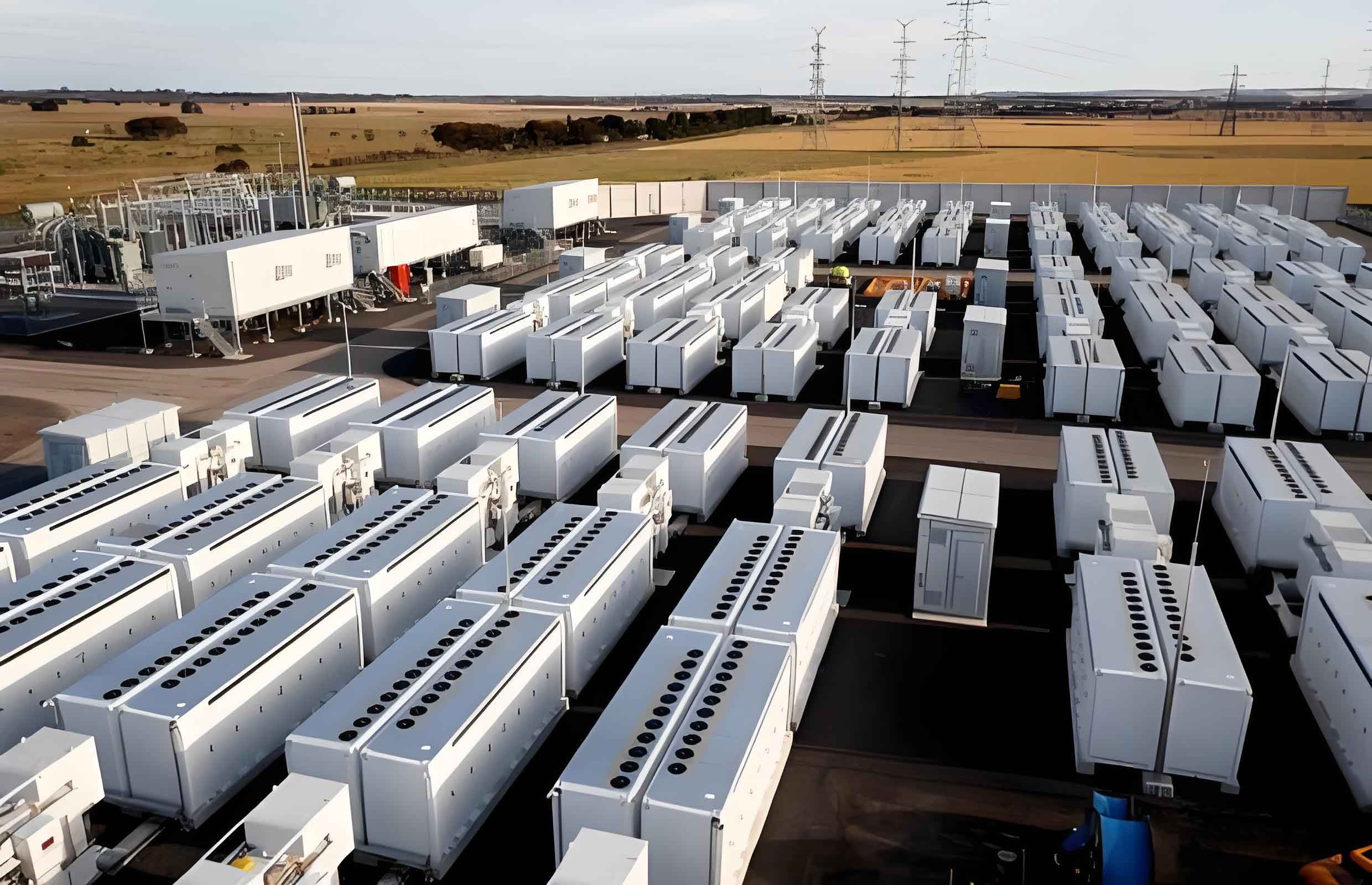
We are witnessing a rapid transformation of modern power systems, characterized by the increasing penetration of renewable energy sources such as wind and solar photovoltaic. While these sources are essential for a sustainable energy future, their inherent stochastic and intermittent nature, coupled with the widespread adoption of power electronic interfaces, introduces significant challenges to grid stability. The reduction in system inertia and damping, traditionally provided by synchronous generators, makes the grid more vulnerable to frequency deviations. Conventional frequency regulation units, such as thermal and hydro power plants, are increasingly inadequate for this new landscape due to their slow response times and limited ramping capabilities. In this context, we have focused our research on battery energy storage systems (battery energy storage systems), which have emerged as a pivotal technology for providing fast and reliable frequency regulation services. The core of our inquiry lies in exploring the advanced grid-connected control strategies for battery energy storage systems and their crucial role in both primary and secondary frequency regulation. This review systematically analyzes these strategies, their limitations, and the research frontiers for enhancing grid frequency stability.
1. Grid-Connected Control Strategies for BESS
The performance of a battery energy storage systems in providing grid support is intrinsically linked to its power converter control strategy. These strategies dictate how the battery interacts with the AC grid, managing active and reactive power, voltage, and frequency. We categorize the primary control paradigms into grid-following and grid-forming types. The most prominent strategies include PQ control, V/F control, droop control, and virtual synchronous generator (VSG) control. The first two are classic grid-following methods, while the latter two are advanced grid-forming methods that are becoming increasingly vital for weak grids.
1.1. PQ Control Strategy
The PQ control, or constant power control, is a grid-following strategy where the battery energy storage systems converter acts as a current source. Its control structure, as we have studied, typically comprises an outer power loop and an inner current loop. The outer loop independently regulates active power (P) and reactive power (Q) to their setpoints. The P controller adjusts the frequency within a defined bandwidth, while the Q controller manages the voltage.
$$ P_{ref} = K_{p,P}(f_{ref} – f) + P_0 $$
$$ Q_{ref} = K_{p,Q}(V_{ref} – V) + Q_0 $$
This strategy is straightforward and effective for injecting a specified amount of power into a stiff grid. However, we have identified several critical limitations in our research. It does not inherently regulate the grid’s voltage or frequency; rather, it relies on the grid to provide a stable voltage and frequency reference. This makes it a passive participant in grid support, with slow response to grid disturbances and poor stability in weak grid conditions.
To overcome these issues, we have seen numerous improvements proposed in the literature. Table 1 summarizes some key modifications to the standard PQ control.
| Reference | Proposed Modification | Objective |
|---|---|---|
| Nempu et al. (2019) | Optimization of PI controller gains using PSO, GA, and ABC algorithms | Improve controller gain tuning for better dynamic response |
| Zhai et al. (2018) | Active control based on node type conversion (PQ, QV, PV) for PV-storage systems | Enhance power control capability under varying grid conditions |
| Nemu et al. (2019) | PQ control based on an integrated PI synchronous reference dq-frame | Improve performance under dynamic load changes with multi-loop control |
| Liang et al. (2019) | Smooth switching coordination control between PQ and V/F | Improve frequency stability during islanded operation after grid disconnection |
| Ye et al. (2018) | Coordinated secondary control scheme combining droop and PQ control | Achieve frequency restoration and optimize microgrid state |
1.2. V/F Control Strategy
In contrast to PQ control, the V/F (Voltage/Frequency) control strategy is designed to maintain a constant voltage and frequency at the point of common coupling, independent of the load. This strategy is analogous to an ideal voltage source. As we have analyzed, its control system consists of two cascaded loops operating in a dq reference frame. The outer voltage loop is responsible for maintaining the voltage magnitude and frequency at their reference values. The inner current loop provides fast dynamic current control, enhancing the system’s dynamic response and reducing harmonic distortion.
$$ V_{d,ref} = V^* \cos(\omega t) $$
$$ V_{q,ref} = 0 $$
While V/F control is excellent for forming an islanded microgrid and providing a stable voltage and frequency reference, we have noted its significant weakness: it has very limited ability to participate in grid frequency and voltage regulation during grid-connected mode. The control is rigid, and any change in system load or generation must be compensated for by the main grid. To mitigate its inflexibility, we have studied several advances.
- Fuzzy Logic Control: One approach uses fuzzy logic controllers to minimize the error between calculated and reference power, coupled with an improved grid synchronization method to reduce power oscillations and current harmonic distortion.
- Integration with MPPT: A coordinated control scheme combining V/F control with Maximum Power Point Tracking (MPPT) optimizes energy conversion efficiency during both grid-connected and islanded operations.
- Model Predictive Control: An improved Particle Swarm Optimization (PSO) algorithm is used to fine-tune predictive control parameters, enabling real-time self-tuning and faster dynamic response to voltage and load fluctuations.
1.3. Droop Control Strategy
Droop control is a foundational grid-forming strategy that mimics the inherent frequency and voltage regulation behavior of synchronous generators. It operates autonomously without the need for high-bandwidth communication, making it highly robust and scalable for multi-unit systems. As we have depicted, the control law is simple: active power is regulated based on frequency deviation, and reactive power is regulated based on voltage deviation.
$$ f = f_{ref} – m \cdot (P – P_{ref}) $$
$$ V = V_{ref} – n \cdot (Q – Q_{ref}) $$
Where \( m \) and \( n \) are the droop coefficients for active and reactive power, respectively. This strategy allows multiple battery energy storage systems to share load variation proportionally based on their rated capacity. The control includes an outer power loop based on these droop characteristics and an inner voltage and current loop to regulate the converter’s output.
Our research highlights that while droop control provides autonomous power sharing and supports islanded operation, it has limitations. It does not provide the inertial response characteristic of synchronous machines, which can lead to a higher Rate of Change of Frequency (RoCoF) during disturbances. Furthermore, high droop gains can cause system oscillations, and reactive power sharing accuracy is often poor due to line impedance mismatches. Table 2 outlines some of the enhancements we have found in the literature.
| Reference | Proposed Enhancement | Primary Benefit |
|---|---|---|
| Zhao et al. (2022) | Generalized droop control providing virtual inertia and damping | Suppresses power oscillations and shortens settling time during load changes |
| Khaledian & Golkhar (2018) | Novel auxiliary controller to mitigate high droop gain oscillations | Enhances system stability and improves reactive power sharing |
| Li & Wang (2017) | Cooperative Q-V droop control based on consensus and nominal voltage adjustment | Improves reactive power sharing accuracy |
| Yao et al. (2021) | Adaptive droop control for distributed generators | Reduces power loss, improves power sharing, and enhances battery health |
1.4. Virtual Synchronous Generator Control Strategy
To address the lack of inertia in droop control, we have seen the development of the Virtual Synchronous Generator (VSG) control strategy. The VSG is a sophisticated grid-forming control that fully emulates the electromechanical characteristics of a conventional synchronous generator. By introducing virtual inertia (J) and damping (D) constants, the battery energy storage systems converter can provide an inertial response, effectively slowing down the RoCoF and improving system damping.
$$ J \frac{d\omega}{dt} = P_{m} – P_{e} – D(\omega – \omega_{g}) $$
The VSG control structure typically comprises two main parts: the active power-frequency (P-f) loop and the reactive power-voltage (Q-V) loop. The P-f loop simulates the governor and swing equation, while the Q-V loop simulates the automatic voltage regulator (AVR).
Despite its superior performance, we have identified several challenges with VSG control in our studies. The first is power oscillation. The introduction of virtual inertia can lead to poorly damped power oscillations. Researchers have proposed using deep reinforcement learning, adaptive neural networks, and model predictive control to adaptively tune the virtual inertia and damping coefficients in real-time to suppress these oscillations. The second is transient stability. During severe grid faults, the VSG can lose synchronism. Mode-adaptive power angle control and transient angle stability control have been introduced to avoid this. The most significant issue we have observed is power coupling. The strong coupling between the active and reactive power control loops, especially in low-voltage microgrids with high R/X ratios, can lead to significant power tracking errors and degrade dynamic performance. As summarized in Table 3, various decoupling strategies are employed.
| Reference | Method/Strategy | Core Principle |
|---|---|---|
| Du et al. (2023) | Improved power decoupling control strategy | Addresses decoupling issues in medium/low voltage microgrids |
| Hu et al. (2024) | Small-signal model for optimal virtual inductance | Determines optimal decoupling value for virtual inductance |
| Wen et al. (2021) | Power decoupling control based on q-axis voltage drop | Reduces computational load and further minimizes power coupling |
2. BESS in Frequency Regulation
Frequency regulation is a critical ancillary service for maintaining power system stability. It is conventionally divided into primary and secondary frequency regulation. Traditional thermal units provide this by adjusting their mechanical power output in response to frequency deviations. However, as we have established, their slow response is a major drawback.
2.1. Primary Frequency Regulation
Primary frequency regulation (PFR) is the initial, fast-acting automatic response to a power imbalance. The goal is to arrest the frequency decline or rise within seconds. Due to its rapid response capabilities, battery energy storage systems is exceptionally well-suited for PFR. The control typically uses a droop characteristic: the battery power output is modulated proportionally to the frequency deviation.
$$ \Delta P = \frac{1}{R} \cdot \Delta f $$
Where R is the droop setting. Our research indicates that the control method for PFR is predominantly based on droop control and VSG control. Using VSG control provides the added benefit of virtual inertia, which is crucial for lowering the RoCoF in low-inertia grids. We have seen several innovations:
- VSG-based virtual inertia control: This strategy directly emulates synthetic inertia to stabilize frequency during high renewable penetration.
- SMES-based VSG: Integrating a Superconducting Magnetic Energy Storage (SMES) system with VSG control provides ultra-fast inertial power support for mixed grid scenarios.
- Frequency support from EV batteries: A novel synthetic inertia control system utilizes the remaining energy in electric vehicle batteries to improve frequency stability, thereby reducing the required dedicated BESS capacity.
- Distributed consensus control: Frameworks using battery aggregators and dual-consensus distributed control enable multiple battery energy storage systems to cooperatively provide PFR in the ancillary service market, maximizing their overall benefit.
2.2. Secondary Frequency Regulation
Secondary frequency regulation (SFR), also known as Automatic Generation Control (AGC), is a centralized or distributed control action that restores the system frequency and net tie-line power flows to their scheduled values after a disturbance. This action occurs over a timescale of minutes. The challenge for traditional AGC is the slow response of conventional generators. In our analysis, battery energy storage systems offers a solution through its fast-ramping capability.
The primary challenges for using battery energy storage systems in SFR revolve around its finite energy capacity and State of Charge (SoC) management. If the battery is not managed correctly, it can become fully charged or depleted, rendering it unable to provide further regulation. The research we have reviewed focuses on sophisticated control strategies to address these issues. Table 4 summarizes key research directions.
| Reference | Focus/Strategy | How it Addresses Limitations |
|---|---|---|
| Doenges et al. (2020) | Regulation Response Accuracy Margin control | Reduces system non-compliance rate and includes SoC management to prevent extreme charge/discharge, improving battery lifespan. |
| Wang (2024) | SoC recovery mechanism | Further enhances continuous frequency regulation capability by managing the battery’s energy state. |
| Zhao et al. (2020) | Distributed control for mode switching | Allows BESS to smoothly transition between regulation and charging modes to manage SoC, but may not fully meet recovery time requirements. |
| Yu et al. (2021) | Back-and-forth communication-based distributed control | Coordinates multiple BESS for voltage regulation. A distributed consensus AGC algorithm balances system power and improves BESS operational efficiency and lifespan. |
| Chakraborty et al. (2018) | Combining BESS with a wind farm | Enhances overall AGC performance of the hybrid plant by compensating for wind power variability. |
| Zhang et al. (2020) | MPC-based control for high PV penetration grids | Integrates BESS to improve SFR performance and system economics in a high-renewable environment. |
| Weng et al. (2013) | Optimal full-state feedback control | Designs an optimal controller for BESS to assist hydropower in meeting AGC requirements. |
3. Conclusion and Future Outlook
In this review, we have systematically explored the grid-connected control strategies for battery energy storage systems and their critical role in frequency regulation. Our analysis confirms that while traditional PQ and V/F controls are well-established, they are insufficient for the challenges of modern power systems. The emergence of grid-forming controls, particularly droop and VSG, provides the necessary inertial support and grid stability that is lost with the phase-out of conventional power plants. We have summarized the key improvements and innovations for each control strategy, including optimization, decoupling, and adaptive tuning techniques.
The future of power systems will be defined by multi-converter interactions. Our outlook identifies several key research trends:
- Multi-Converter Stability: A primary focus will be on the interaction and stability of multiple grid-forming converters (like VSGs) operating in parallel. We need to develop control strategies that ensure stable power sharing and dampen oscillations in these complex systems.
- Advanced AGC for BESS: Future research must develop more sophisticated AGC algorithms for battery energy storage systems that consider multi-scenario, multi-timescale optimal scheduling. This includes integrating battery degradation models, SoC forecasting, and market signals to optimize both grid support and economic viability.
- Resilience and Black-Start Capability: The ability of grid-forming battery energy storage systems to form a stable grid, operate in islanded mode, and provide black-start capabilities will be a crucial area of research to enhance overall system resilience.
In conclusion, battery energy storage systems are set to become the backbone of future power system stability. The ongoing research into advanced control strategies and optimized frequency regulation is not just an academic pursuit but a necessary endeavor for the successful and reliable transition to a high-renewable energy future.