
As an expert in product compliance and certification, I have extensively studied the regulatory landscape for portable electronic devices powered by li ion batteries, especially in emerging markets like India. The Indian economy, with a GDP of $3.39 trillion in 2022 and growing consumer purchasing power, presents a lucrative opportunity for electronics manufacturers. However, exporting li ion batteries and battery packs to India requires navigating a complex web of certifications, including UN38.3 testing, transport condition assessments, and BIS conformity evaluation. In this article, I will delve into these requirements, providing a comprehensive guide to help businesses ensure their li ion battery products meet Indian market entry standards. I will use tables and formulas to summarize key points, emphasizing the critical role of li ion battery safety and performance throughout.
The demand for li ion batteries in India is driven by the proliferation of smartphones, laptops, wearables, and other portable electronics. Li ion batteries are preferred due to their high energy density, but their chemical composition—using reactive lithium electrodes and flammable organic electrolytes—poses significant risks during transport and use. Therefore, regulatory frameworks like UN38.3 and BIS are essential to mitigate these hazards. I will explore each certification step-by-step, highlighting how they interrelate and why compliance is non-negotiable for market success.
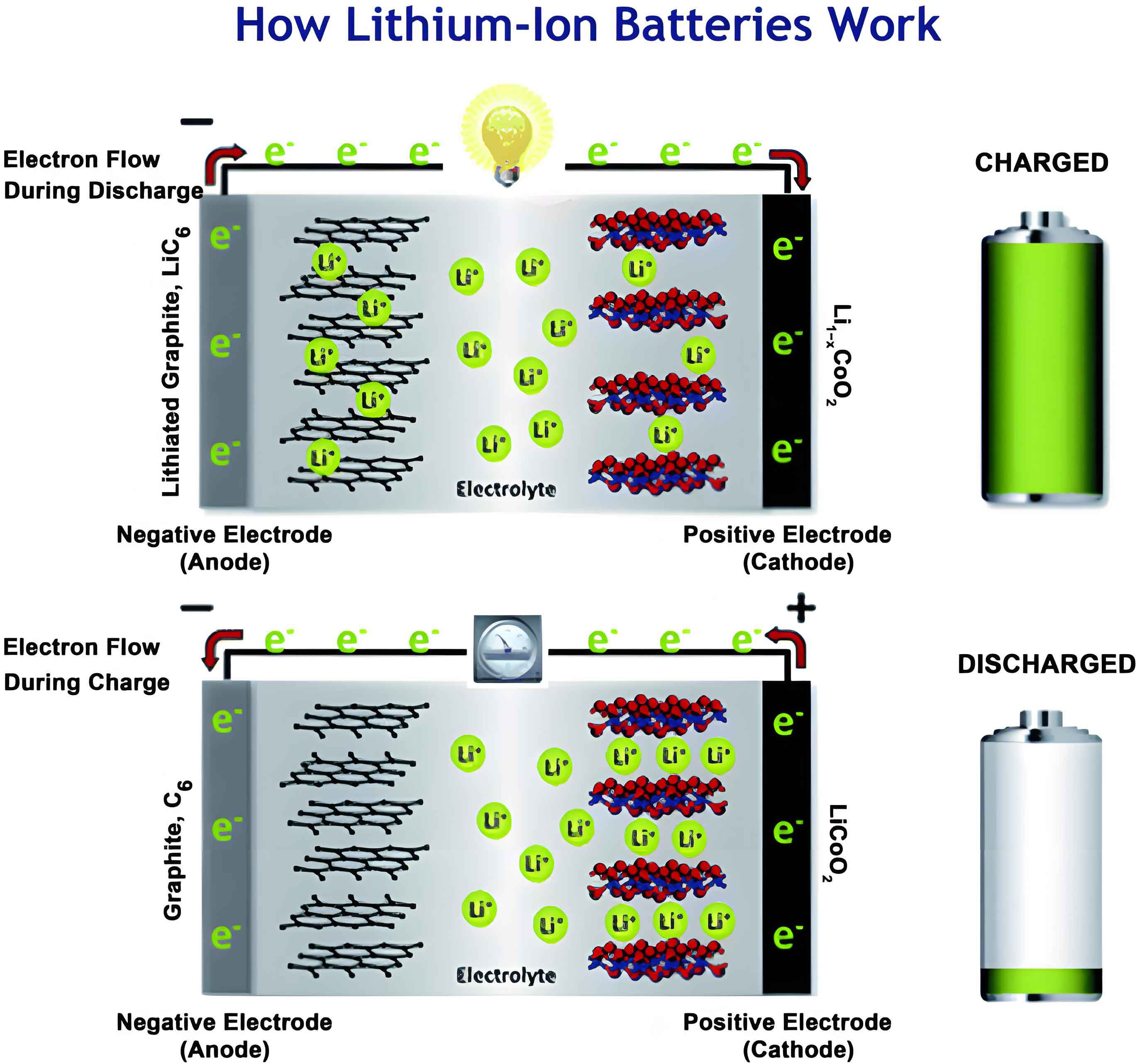
To begin, let’s consider the foundational aspect: UN38.3 testing. This is a mandatory pre-transport requirement for li ion batteries globally, stemming from the United Nations’ “Recommendations on the Transport of Dangerous Goods, Manual of Tests and Criteria.” Specifically, Section 38.3 outlines eight tests that simulate environmental, mechanical, and electrical stressors. For any li ion battery intended for export, including to India, these tests must be passed to obtain a UN38.3 test report and a summary, which are prerequisites for transport documents. The tests are designed to ensure that li ion batteries can withstand conditions like altitude changes, temperature extremes, vibrations, and short circuits without failure. In my analysis, I’ve found that failing any of these tests can halt shipments, causing costly delays. Below, I summarize the eight UN38.3 tests in a table, noting their objectives and relevance to li ion battery safety.
| Test Number | Test Name | Description | Purpose for Li-ion Battery |
|---|---|---|---|
| 1 | Altitude Simulation | Exposes battery to low-pressure equivalent to 15,000 m altitude | Assesses leakage or rupture under reduced pressure |
| 2 | Thermal Test | Subjects battery to extreme temperatures from -40°C to +75°C | Evaluates thermal stability and performance |
| 3 | Vibration | Applies sinusoidal vibration at specified frequencies | Checks for mechanical integrity during transport |
| 4 | Shock | Administers half-sine shock pulses at high acceleration | Tests resistance to impacts and crashes |
| 5 | External Short Circuit | Shorts battery terminals at room and elevated temperatures | Prevents overheating or fire from short circuits |
| 6 | Crush | Applies crushing force to battery cell | Simulates mechanical abuse in real-world scenarios |
| 7 | Overcharge | Charges battery at twice the recommended current | Ensures protection against overcharging hazards |
| 8 | Forced Discharge | Discharges battery forcibly to assess reversal | Prevents damage from deep discharge conditions |
Beyond these core tests, additional requirements may apply under UN Special Provision 188 and stacking tests, particularly for li ion battery packages exceeding certain energy thresholds. The UN38.3 test summary is a condensed version of the full report, often used by freight forwarders and authorities to quickly verify compliance. In my experience, preparing this documentation early is crucial for smooth logistics. To quantify the safety margins, we can use formulas related to li ion battery performance. For instance, the energy content of a li ion battery is given by:
$$ E = V \times Q $$
where \( E \) is the energy in watt-hours (Wh), \( V \) is the nominal voltage in volts (V), and \( Q \) is the capacity in ampere-hours (Ah). This energy value often determines whether additional tests, like the 1.2-meter drop test, are required. Another key formula is the state-of-charge (SOC), which impacts safety during transport:
$$ \text{SOC} = \frac{Q_{\text{current}}}{Q_{\text{max}}} \times 100\% $$
For li ion batteries, maintaining SOC between 30% and 50% is recommended for transport to reduce risks. These mathematical insights help in designing safer li ion battery systems.
Once UN38.3 compliance is achieved, the next step is obtaining a Transport Condition Identification Document, often called a货物运输条件鉴定书 in Chinese contexts, but for international purposes, I refer to it as a transport certificate. This document certifies that the li ion battery packaging meets regulations such as the IATA Dangerous Goods Regulations, JT/T 617-2018 for road transport, or the IMDG Code for sea freight. Issued by authorities like the Civil Aviation Administration of China, it validates that the li ion battery is properly classified, packed, and labeled for transit. The certificate typically has a one-year validity, necessitating regular renewals. In my work, I’ve seen that discrepancies in this document can lead to shipment rejections, emphasizing the need for accuracy. The classification of li ion batteries depends on their watt-hour rating, as per this formula:
$$ \text{Watt-hour rating} = V_{\text{nominal}} \times \text{Ah} $$
For example, a li ion battery with a nominal voltage of 3.7V and capacity of 2.5Ah has a watt-hour rating of 9.25Wh, which may fall under different packing instructions. I summarize common transport categories for li ion batteries in the table below.
| Energy Range (Wh per cell) | Transport Category | Key Requirements |
|---|---|---|
| ≤ 20 Wh | Small li ion battery | Simplified packing, may be exempt from some rules |
| 20 Wh to 100 Wh | Medium li ion battery | Standard packaging, UN38.3 mandatory |
| > 100 Wh | Large li ion battery | Enhanced packaging, additional tests like drop test |
Moving to Indian-specific requirements, the Bureau of Indian Standards (BIS) plays a pivotal role. BIS oversees product certification through schemes like Scheme I (ISI mark), Scheme II (Compulsory Registration), and Scheme IV (Certificate of Conformity). For li ion batteries used in portable electronics, the Electronics and Information Technology Goods (Requirement of Compulsory Registration) Order, 2021 mandates BIS registration under Scheme II. This means that before exporting li ion batteries to India, manufacturers must have their products tested at BIS-recognized labs in India and obtain a registration certificate. The BIS logo and registration number must be displayed on the battery label, ensuring traceability. In my analysis, this process involves several steps, which I outline in detail.
First, documentation is key. Companies need to prepare an application form, proof of legal registration, authorization letters, quality management system certificates (e.g., ISO 9001), product specifications, circuit diagrams, battery labels, trademark documents, UN38.3 reports, and samples—typically 45 li ion batteries and 25 li ion cells. This comprehensive dossier ensures that every aspect of the li ion battery is scrutinized. Second, testing must align with Indian standards IS 16046-1:2018 for nickel-based systems and IS 16046-2:2018 for li ion battery systems, which are harmonized with IEC 62133. These standards include tests similar to UN38.3 but with additional nuances, such as continuous charging, high-rate charge protection, and temperature cycling. Below, I compare key tests for li ion batteries under BIS versus UN38.3.
| Test Aspect | UN38.3 Focus | BIS (IS 16046-2) Focus |
|---|---|---|
| Environmental Simulation | Altitude, thermal shock | Temperature cycling, high-temperature exposure |
| Mechanical Integrity | Vibration, shock, crush | Mechanical shock, free fall, vibration |
| Electrical Safety | External short, overcharge, forced discharge | External short, overcharge, high-rate charge protection |
| Additional Checks | Limited to transport scenarios | Continuous charging, labeling compliance |
The BIS testing phase is rigorous, often taking weeks to complete. Once passed, the application is submitted to BIS for review, along with fees. Upon approval, a Grant of Registration is issued, valid for two years, renewable upon payment. Post-certification, BIS conducts market surveillance through random sampling and testing to ensure ongoing compliance. Non-conforming li ion batteries can lead to certificate suspension or penalties, which I’ve observed in cases where manufacturers neglect quality control. To emphasize the importance of safety, consider the formula for heat generation in a li ion battery during a short circuit:
$$ P = I^2 \times R $$
where \( P \) is the power dissipated as heat in watts (W), \( I \) is the short-circuit current in amperes (A), and \( R \) is the internal resistance in ohms (Ω). High heat can cause thermal runaway, a critical risk for li ion batteries. Thus, BIS tests like external short circuit are designed to verify that batteries can limit such currents. Another relevant formula is the charge efficiency, which affects battery longevity:
$$ \eta = \frac{Q_{\text{discharge}}}{Q_{\text{charge}}} \times 100\% $$
where \( \eta \) is the efficiency, crucial for evaluating li ion battery performance under BIS standards.
In recent years, India has tightened its regulations, and since August 1, 2023, China has also introduced CCC certification for li ion batteries, adding another layer for global exporters. This dual requirement means that manufacturers must design li ion batteries to meet multiple certifications simultaneously. For instance, labeling must include both BIS and CCC marks, and testing should cover overlapping criteria. In my practice, I recommend a harmonized approach: conduct tests that satisfy both UN38.3 and BIS where possible, such as external short circuit or overcharge tests, to reduce costs and time. The table below summarizes key market access certifications for li ion batteries targeting India and China.
| Market | Key Certification | Standard | Validity Period |
|---|---|---|---|
| India | BIS Compulsory Registration | IS 16046-2:2018 | 2 years |
| China | CCC Certification | GB 31241-2014 (for portable li ion batteries) | 5 years |
| Global Transport | UN38.3 Test Report | UN Manual Part III, 38.3 | Indefinite (but often required for each shipment) |
| International Air | IATA Transport Certificate | IATA DGR | 1 year |
To deepen the technical discussion, let’s explore formulas related to li ion battery lifecycle and safety. The capacity fade over cycles can be modeled using:
$$ Q_{\text{cycle}} = Q_0 \times e^{-k \cdot n} $$
where \( Q_0 \) is the initial capacity, \( k \) is the degradation rate constant, and \( n \) is the number of cycles. This degradation impacts both BIS and CCC tests, which assess endurance. Additionally, the internal resistance \( R \) of a li ion battery can be estimated from voltage drop under load:
$$ R = \frac{V_{\text{open}} – V_{\text{load}}}{I} $$
where \( V_{\text{open}} \) is the open-circuit voltage and \( V_{\text{load}} \) is the voltage under current \( I \). High resistance can lead to overheating, a key concern in certifications. For li ion batteries, these parameters must be optimized to pass safety tests.
In conclusion, exporting li ion batteries to India demands a meticulous approach to certifications. From UN38.3 testing to transport documents and BIS registration, each step ensures that li ion battery products are safe, reliable, and compliant. As markets evolve, integrating requirements like CCC certification becomes essential for global competitiveness. I have covered these aspects in detail, using tables and formulas to elucidate complex points. Remember, the keyword li ion battery is central to this discourse, reflecting its critical role in portable electronics. By adhering to these standards, manufacturers can tap into India’s growing demand while upholding safety and quality. For ongoing updates, staying engaged with regulatory bodies like BIS and IATA is advisable, as standards for li ion batteries continue to advance.
Finally, I stress the importance of proactive compliance. Whether dealing with UN38.3, transport certificates, or BIS, early engagement with testing labs and experts can streamline the process. The li ion battery industry is dynamic, and certifications are not just hurdles but opportunities to build trust and market share. Through this guide, I hope to empower businesses to navigate the Indian landscape successfully, leveraging the potential of li ion battery technology for sustainable growth.