
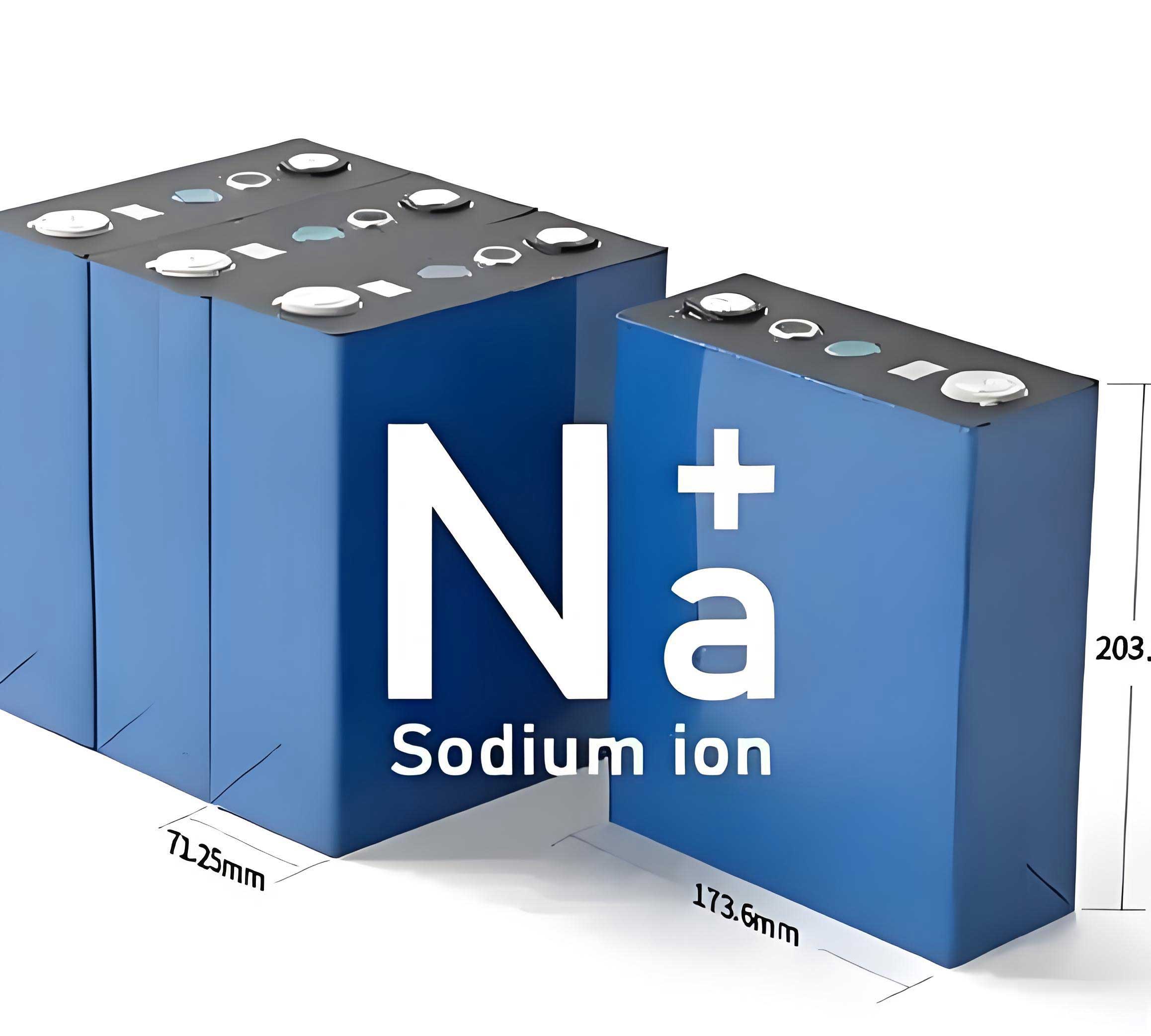
The global pursuit of sustainable and cost-effective energy storage solutions has propelled significant research beyond the dominant lithium-ion battery (LIB) technology. While LIBs offer high energy density and long cycle life, concerns regarding the limited geographical distribution, escalating cost, and geopolitical sensitivity of lithium resources have intensified the search for viable alternatives. Among the emerging contenders, the sodium-ion battery (SIB) stands out due to the natural abundance and low cost of sodium, coupled with inherent safety advantages derived from its less reactive chemistry. As a promising candidate for grid-scale energy storage and other applications where cost and sustainability are paramount, the development of high-performance SIBs has become a major focus in electrochemical research.
The overall performance of a sodium-ion battery—its energy density, power capability, cycle life, and cost—is profoundly influenced by the cathode material. Various cathode families have been explored for SIBs, including polyanionic compounds, Prussian blue analogues, and organic materials. However, layered transition metal oxides (LTMOs) with the general formula NaxTMO2 (where TM = Ni, Co, Mn, Fe, Cu, etc., and 0 < x ≤ 1) have garnered immense attention. Their appeal lies in their high theoretical specific capacity, relatively simple synthesis, and structural diversity, which allows for extensive compositional tuning. This article provides a comprehensive review of layered transition metal oxide cathode materials for sodium-ion batteries, delving into their structural classification, synthesis, electrochemical behaviors, inherent challenges, and modification strategies. The future perspectives for this pivotal class of materials in advancing sodium-ion battery technology are also discussed.
The foundational crystal structure of these materials consists of alternating layers of edge-sharing transition metal-oxygen (TM-O) octahedra and alkali metal (Na) ions. The specific stacking sequence of the oxygen layers and the coordination environment of the sodium ions define the phase type. The notation system, borrowed from the well-established lithium counterpart, uses a letter to denote the Na+ site symmetry: ‘O’ for octahedral and ‘P’ for prismatic (trigonal prism) coordination. A following number indicates the number of distinct TM-O layers in the smallest stacking repeat unit. For instance, an ‘O3’ structure has sodium in octahedral sites with an ABCABC oxygen stacking sequence, while a ‘P2’ structure has sodium in trigonal prismatic sites with an ABBA oxygen stacking. The most prevalent and thermodynamically stable phases in sodium-ion battery cathodes are the O3- and P2-types, though O2 and P3 phases are also observed under specific conditions or during electrochemical cycling.
The equilibrium phase formed for a given composition NaxTMO2 is governed by the sodium content (x), the ionic radii of the transition metals, and the synthesis conditions (especially temperature). A general trend is observed: compositions with higher sodium content (x > ~0.7) typically stabilize in the O3 structure, while those with lower sodium content (x ~ 0.5-0.7) often form the P2 structure. This can be rationalized by the different effective space for sodium ions; the prismatic site in the P2 phase is larger, better accommodating sodium at lower concentrations. The free energy difference between phases can be expressed as a function of composition and temperature:
$$ \Delta G_{\text{P2→O3}}(x, T) = G_{\text{O3}}(x, T) – G_{\text{P2}}(x, T) $$
Where a negative $\Delta G$ favors the O3 phase. The synthesis method plays a critical role in achieving the desired phase purity, morphology, and electrochemical performance.
| Synthesis Method | Principle & Process | Key Advantages | Key Disadvantages | Typical Particle Size | Impact on Electrochemical Performance |
|---|---|---|---|---|---|
| High-Temperature Solid-State Reaction | Mechanical mixing of precursor powders (e.g., Na2CO3, TM oxides) followed by calcination at 800-1000°C. | Simple, scalable, high crystallinity. | Poor homogeneity, irregular morphology, prolonged heating, possible Na volatilization. | 1-10 μm | Often yields materials with good tap density but may suffer from sluggish kinetics and phase impurities. |
| Sol-Gel Method | Hydrolysis and polycondensation of metal alkoxides/nitrates with chelating agents to form a gel, then calcined. | Excellent stoichiometric control, homogeneous mixing at molecular level, fine particles. | Complex process, expensive precursors, high shrinkage, low yield. | 50-200 nm (aggregated) | Can produce materials with high specific capacity and good rate capability due to fine particles and uniformity. |
| Co-precipitation | Precipitation of transition metal hydroxide/carbonate precursors from aqueous solution, then mixed with Na source and calcined. | Good control over morphology (spherical secondary particles), scalable, homogeneous cation mixing. | Sensitive to pH/temperature, may require washing steps, risk of Na loss during calcination. | 5-15 μm (secondary) | Excellent for producing dense, spherical polycrystalline particles ideal for electrode fabrication, offering good cycling stability. |
| Hydrothermal/Solvothermal | Reaction in aqueous/organic solvent at elevated temperature and pressure in an autoclave. | Low temperature, controlled crystal growth, unique nanostructures. | Batch process, limited scale-up, safety concerns with pressure. | 100-500 nm (varied) | Often yields materials with high surface area and nanostructured features, beneficial for rate performance but may compromise tap density and interfacial stability. |
Among the diverse structures, P2-type layered oxides represent a crucial family of cathode materials for sodium-ion batteries. Their defining characteristic is the prismatic coordination of Na+ ions between ABBA-stacked MO2 slabs, belonging to the hexagonal space group P63/mmc. This structure offers a larger interlayer spacing (typically ~5.6 Å) compared to O3 phases, providing a more open two-dimensional diffusion pathway for sodium ions. This intrinsic feature often translates to superior rate capability in P2-type materials. A canonical example is P2-Na2/3Ni1/3Mn2/3O2, which delivers a high operating voltage (average ~3.6 V vs. Na/Na+) and a theoretical capacity of about 173 mAh g-1. The electrochemical process in P2 materials typically involves multiple phase transitions as sodium is extracted and re-inserted.
Despite the favorable kinetics, P2-type cathodes for sodium-ion batteries face significant challenges. The most critical issue is their structural instability upon deep desodiation (charging to high voltages). As sodium is removed, the electrostatic repulsion between the negatively charged MO2 layers increases, often triggering gliding of the layers to relieve the strain. This leads to irreversible phase transitions, such as P2 to O2 or P2 to OP4, where the ‘O2’ phase has octahedral sodium sites and an ABAC oxygen stacking. The P2→O2 transition involves a significant contraction along the c-axis and a change in sodium coordination, frequently causing microcracks, loss of structural integrity, and rapid capacity fade. Furthermore, at specific sodium concentrations (e.g., x = 1/2, 2/3), Na+/vacancy ordering can occur within the layers, creating superlattice structures. While this ordering can stabilize certain intermediate phases, it also creates high energy barriers for Na+ diffusion, manifesting as voltage plateaus and limiting rate performance. The voltage profile and capacity retention are thus closely tied to the management of these phase transitions.
To overcome these hurdles and unlock the potential of P2-type materials in sodium-ion batteries, extensive research has focused on modification strategies, primarily through cationic doping and surface engineering. Doping with electrochemically inert or active ions (e.g., Mg2+, Zn2+, Cu2+, Al3+, Ti4+, Li+) into the transition metal layer is highly effective. These dopants serve multiple functions: they can act as pillars to suppress the detrimental layer gliding, disrupt Na+/vacancy ordering to smooth the voltage profile, and enhance the overall structural and chemical stability. For example, Mg doping in P2-Na2/3Ni1/3Mn2/3O2 has been shown to effectively inhibit the P2→O2 transition, leading to dramatically improved cycle life. The stabilizing effect can be partially understood by considering the bond strength, where the strong Mg-O bond increases the cohesion of the TM layer.
$$ E_{\text{cohesion}} \propto \sum_i \frac{z_+ \cdot z_- \cdot e^2}{d_{\text{TM-O}}} $$
Where $z_+$ and $z_-$ are the cation and anion charges, $e$ is the electron charge, and $d_{\text{TM-O}}$ is the bond distance. A stronger average bond increases the energy barrier for structural rearrangement. Surface coating with stable oxides (Al2O3, ZrO2), phosphates, or conductive polymers is another vital strategy. The coating layer acts as a physical barrier, minimizing direct contact with the electrolyte, thereby suppressing parasitic side reactions, transition metal dissolution, and surface degradation, especially at high voltages. It also can help mitigate microcrack propagation. Compositional engineering to create binary, ternary, or high-entropy TM systems is a powerful approach to achieve synergistic effects, balancing capacity, voltage, and stability.
| Material Composition | Average Voltage (V vs. Na/Na+) | Reversible Capacity (mAh g-1) | Primary Challenges | Common Modification Approaches |
|---|---|---|---|---|
| P2-Na2/3Ni1/3Mn2/3O2 | ~3.6 | ~120-160 | P2-O2 phase transition, TM migration, voltage decay. | Mg, Ti, Cu doping; Al2O3 coating. |
| P2-Na2/3Fe1/2Mn1/2O2 | ~3.3 (Fe3+/4+) | ~190 | Low voltage of Fe3+/4+, Jahn-Teller distortion of Mn3+. | Cu, Mg doping to suppress Jahn-Teller effect. |
| P2-Na0.7Cu0.2Mn0.8O2 | ~3.4, ~3.8 (Cu2+/3+) | ~100 | Voltage hysteresis, structural changes at high voltage. | Ti, Mg co-doping; electrolyte optimization. |
| P2-Na0.67Mn0.67Ni0.33O2 with Li/Mg doping | ~3.5-3.7 | ~150-170 | Managing multi-phase evolution. | Dual doping to pin oxygen stacking. |
In contrast to the P2-type, O3-type layered oxides are characterized by sodium ions residing in octahedral sites between ABCABC-stacked MO2 layers (space group R$\bar{3}$m). The most significant advantage of O3-type materials for sodium-ion batteries is their higher initial sodium content (typically Na content x ≥ 0.9), which translates to a higher theoretical and practical capacity if most sodium can be reversibly extracted. Common examples include O3-NaNiO2, O3-NaFeO2, and multi-metal compounds like O3-NaNi1/3Fe1/3Mn1/3O2 (NFM). Their general formula at full sodiation is close to NaTMO2.
However, the electrochemical (de)intercalation in O3-type cathodes is more complicated. Sodium diffusion occurs via a tetrahedral intermediate site (O3→O’3→P3→P’3→… sequences are common), leading to a higher activation barrier and generally poorer rate capability compared to P2-types. Furthermore, O3 structures often undergo a series of phase transitions during cycling, many of which involve significant slab gliding and volume changes. These repetitive strains can induce particle cracking, loss of electrical contact, and accelerated interface degradation. A particularly notorious issue for many O3-type materials is their poor air stability. Upon exposure to ambient atmosphere, they readily react with moisture (H2O) and carbon dioxide (CO2). The mechanisms involve proton exchange (Na+ + H2O → H+ + NaOH) and the formation of surface species like NaOH, Na2CO3, and TM(OH)x. This not only degrades the bulk structure (forming inactive phases) but also complicates electrode processing, as the moisture-laden powders can cause slurry gelation. The resulting electrodes exhibit poor mechanical integrity and significantly compromised electrochemical performance due to increased impedance and irreversible capacity loss.
Addressing the challenges of O3-type cathodes is thus multi-faceted. Doping strategies are equally crucial here. Substituting a portion of Ni with more stable ions like Fe, Mn, Cu, Ti, or Mg can enhance structural stability, suppress unwanted phase transitions, and in some cases, improve air stability. For instance, doping with Mg or Cu in O3-NaNi0.5Mn0.5O2 has been shown to mitigate phase complexity and improve cycling. A particularly innovative strategy is the deliberate introduction of Na vacancies in the pristine material. Synthesizing compounds with an initial composition like Na0.9Cu1/2Mn1/2O2 or Na0.95Mg0.05Cu0.15Mn0.8O2 creates a “pre-desodiated” state. This approach has been found to dramatically enhance air stability by reducing the chemical driving force for Na+/H+ exchange, while the pre-existing vacancies can facilitate faster Na+ diffusion, partially offsetting the inherent kinetic limitations of the O3 structure. The improved stability can be linked to a lower chemical potential $\mu_{\text{Na}}$ in the material:
$$ \mu_{\text{Na}} = \mu_{\text{Na}}^0 + RT \ln(a_{\text{Na}}) $$
Where $a_{\text{Na}}$ is the activity of sodium. A lower initial sodium content reduces $a_{\text{Na}}$, thereby decreasing the thermodynamic driving force for reactions with atmospheric H2O/CO2. Surface coating and electrolyte engineering (using stable salts and additives) are also essential to protect the vulnerable surface of O3 particles from both atmospheric degradation and electrochemical corrosion.
| Targeted Issue | Modification Strategy | Mechanism of Action | Exemplary Material | Outcome |
|---|---|---|---|---|
| Structural Instability & Phase Transitions | Multi-metal doping (Mg, Ti, Al, Zn, Li) | Strengthens TM-O bonds, acts as pillar, suppresses layer gliding, simplifies phase transition path. | O3-NaNi0.5Mn0.3Mg0.1Ti0.1O2 | Improved cycling stability, smoother voltage profile. |
| Poor Air Stability | Controlled Na vacancy design | Lowers sodium chemical activity, reduces driving force for Na+/H+ exchange. | O3-Na0.9Cu0.22Fe0.3Mn0.48O2 | Can be handled in ambient air, stable slurry processing. |
| Sluggish Kinetics | Doping with ions that promote Na+ diffusion (e.g., Li+) | Expands Na layer spacing, reduces diffusion barrier, disrupts Na ordering. | O3-NaLixNi0.5-xMn0.5O2 | Enhanced rate capability. |
| Interfacial Degradation | Surface coating (Al2O3, ZnO, NaTi2(PO4)3) | Physical barrier against electrolyte attack, inhibits TM dissolution, stabilizes surface structure. | Al2O3-coated O3-NaNi1/3Fe1/3Mn1/3O2 | Reduced impedance growth, better long-term cycling. |
In summary, layered transition metal oxides represent a cornerstone in the development of high-performance cathode materials for sodium-ion batteries. The P2-type and O3-type structures each offer distinct advantages and face specific challenges. The P2 phase provides superior rate performance and structural robustness at intermediate sodium levels but is plagued by high-voltage phase transitions. The O3 phase offers high capacity but struggles with sluggish kinetics, complex phase evolution, and air sensitivity. The path forward for optimizing these materials lies in sophisticated compositional design—leveraging multi-metal doping, controlled non-stoichiometry, and advanced coatings. Future research directions should focus on: 1) Developing composite or intergrown structures (e.g., P2/O3 biphasic materials) that synergize the benefits of both phases; 2) Employing advanced in situ/operando characterization techniques coupled with first-principles calculations to precisely map sodium diffusion pathways and phase transformation mechanisms in real time; 3) Engineering the microstructure (morphology, porosity, crystallite size) to optimize ionic/electronic transport and mitigate mechanical strain; and 4) Designing holistic electrolyte systems and stable interfaces tailored for these oxide cathodes. As research continues to address these fundamental and applied challenges, layered transition metal oxides are poised to play a pivotal role in enabling the commercialization of cost-effective, sustainable, and high-energy-density sodium-ion batteries for the future energy storage landscape.