
In my research, I have focused extensively on developing a robust machine learning framework for anomaly detection in solar inverter operational data. As the integration of photovoltaic systems into the modern power grid accelerates, the solar inverter, being a critical component, frequently experiences anomalies under environmental and operational disturbances. Traditional anomaly detection methods, which rely heavily on fixed thresholds and empirical models, often suffer from high false-positive rates, missed detections, and significant response delays. To address these challenges, I have proposed a comprehensive multi-dimensional time-series framework that combines reconstruction, prediction, and fusion techniques specifically tailored for solar inverter data.
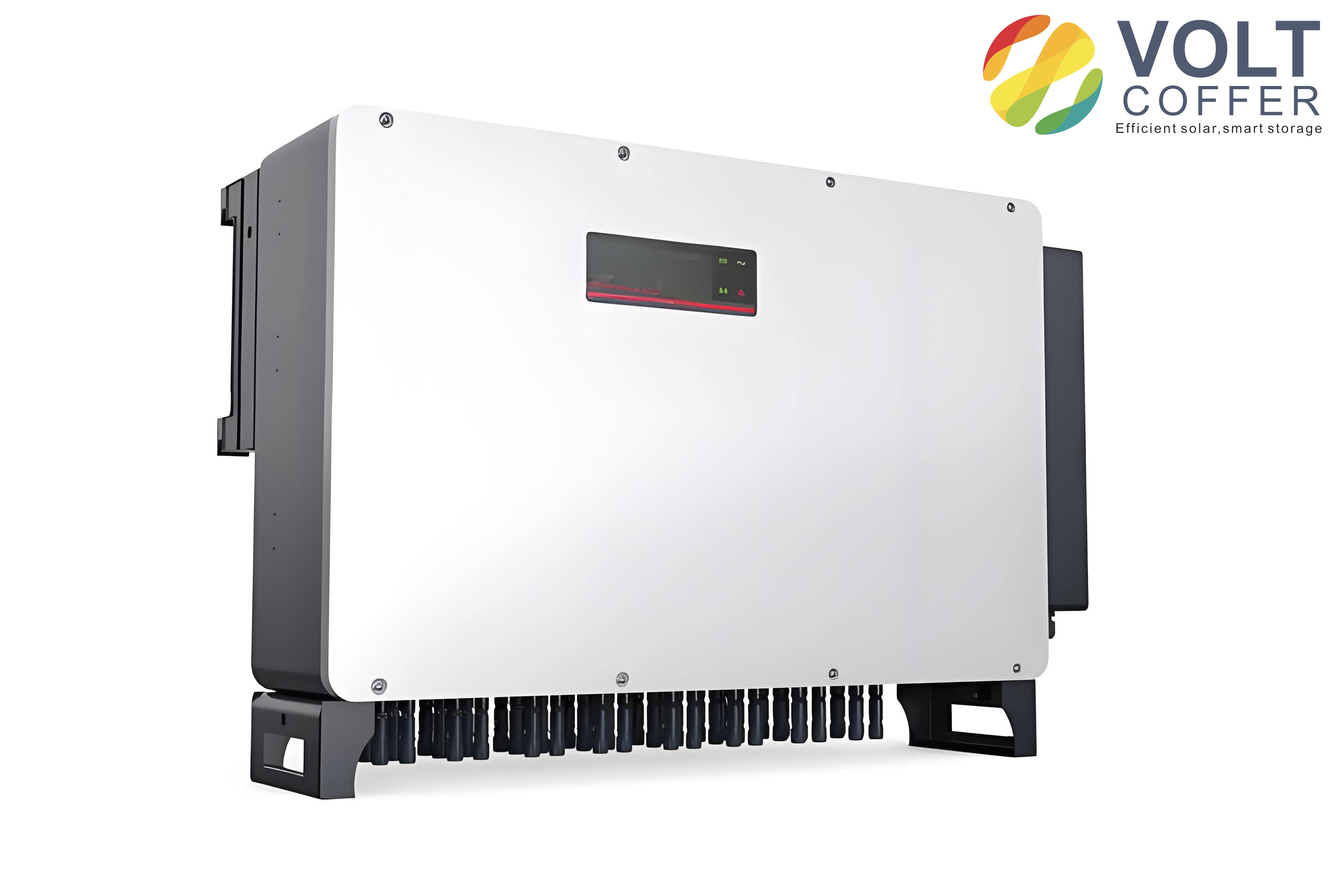
The core principle of my approach lies in understanding that a solar inverter generates a vast array of time-series parameters, including voltage, current, frequency, temperature, and power output. These parameters exhibit strong nonlinearity and coupling characteristics. By applying machine learning, I can mine deep patterns from this operational data without relying on predefined rules or static thresholds. This makes my method highly adaptable to the dynamic operational conditions typical of photovoltaic systems.
Fundamental Concepts and Advantages
Anomaly detection in a solar inverter involves identifying abnormal behaviors or early fault trends by analyzing the temporal evolution and feature deviation of key operational parameters. This process is critical for predictive maintenance and system scheduling. The application of machine learning offers several distinct advantages over traditional threshold-based methods:
- It provides powerful nonlinear modeling and multi-variable coupling analysis capabilities.
- It significantly reduces false alarms and missed detections by learning from historical data.
- Its self-learning mechanism allows for adaptive adjustment to changing environmental conditions.
- It enables an end-to-end detection pipeline from feature extraction to decision making, enhancing efficiency and response speed.
Methodology: Reconstruction-Prediction-Fusion Framework
My proposed framework is built upon three pillars: an autoencoder for reconstruction, a Long Short-Term Memory (LSTM) model for prediction, and a multi-model fusion mechanism for final decision-making. This structure is designed to capture both static reconstruction errors and dynamic temporal deviations that are common in solar inverter data.
Autoencoder with Weighted Reconstruction and Sparse Penalty
I utilize an encoder-decoder structure to learn the latent feature representation of historical normal data from the solar inverter. The anomaly is detected based on the reconstruction error. To improve sensitivity to subtle anomalies, I have defined a multi-modal weighted reconstruction error:
$$ \epsilon_{mm} = \sum_{i=1}^{n} \lambda_i \cdot \frac{(x_i – \hat{x}_i)^2}{\sigma_i^2 + \epsilon} $$
In this formula, $x_i$ is the original feature value, $\hat{x}_i$ is the reconstructed value, $\sigma_i^2$ is the variance of the $i^{th}$ feature, $\lambda_i$ is the importance coefficient, and $\epsilon$ is a small stability constant. This function adjusts the weight of the reconstruction error based on the historical volatility and importance of each feature, allowing the model to quickly capture anomalies in features that are normally stable but sensitive.
Furthermore, I introduce a structural sparsity penalty to prevent the model from overfitting to random disturbances or anomalous patterns:
$$ \epsilon_{sparse} = \| \mathbf{x} – \hat{\mathbf{x}} \|_2^2 + \beta \cdot \sum_{j=1}^{h} |z_j|^{\alpha} $$
Here, $\mathbf{x}$ and $\hat{\mathbf{x}}$ are the input and output vectors, $z_j$ is the activation value of the $j^{th}$ hidden neuron, $h$ is the coding layer dimension, $\alpha$ controls the sparsity nonlinearity, and $\beta$ regulates the strength of the penalty. By applying this nonlinear sparse constraint, the model tends to activate fewer neurons to reconstruct the input, improving reliability and generalization.
LSTM Model with Trend and Cycle Indicators
To address the significant temporal dependencies and periodic patterns in solar inverter data, such as diurnal solar cycles, I employ an LSTM model. I have designed two key indicators for this purpose.
First, the trend deviation integral residual is defined to measure the directional cumulative deviation of the prediction error over a time window:
$$ R^{(t)}_{int} = \sum_{\tau=0}^{W-1} \left( \frac{y_{t-\tau} – \hat{y}_{t-\tau}}{\Delta t} \right) \cdot \Delta t $$
In this equation, $y_{t-\tau}$ is the actual value, $\hat{y}_{t-\tau}$ is the LSTM prediction, $W$ is the observation window length, and $\Delta t$ is the time interval. This integral of residuals over time is particularly effective for detecting early signals of potential faults or efficiency degradation in the solar inverter.
Second, I created a diurnal periodic similarity offset metric to identify anomalies where the current operational period deviates from historical similar periods:
$$ S_{cycle} = 1 – \frac{ \langle \mathbf{Y}_t, \mathbf{Y}_{t-T_d} \rangle }{ \| \mathbf{Y}_t \| \cdot \| \mathbf{Y}_{t-T_d} \| } $$
Here, $\mathbf{Y}_t$ is the current period data segment, $\mathbf{Y}_{t-T_d}$ is the segment from the previous similar period, and $T_d$ is the period length. This metric measures the similarity offset between current and historical cycles. A high offset value may indicate issues like partial shading or inverter efficiency decline even under similar irradiance conditions.
Multi-Model Fusion and Decision
To create a unified decision mechanism from the outputs of different models, I designed a dynamic confidence-weighted fusion scoring system:
$$ S_{fuse} = \sum_{k=1}^{K} \omega_k \cdot \sigma \left( \frac{f_k – \mu_k}{\sigma_k + \epsilon} \right) $$
In this fusion function, $f_k$ is the output feature of the $k^{th}$ model, $\mu_k$ and $\sigma_k$ are the historical mean and standard deviation of that feature, $\omega_k$ is the model confidence weight, and $\sigma(\cdot)$ is a Sigmoid mapping function. The function maps the standardized distance of each model’s output and then weights them to form a unified score. This score can be used by a lightweight classifier, such as a Support Vector Machine or a simple neural network, for the final classification. The weights can be dynamically adjusted to balance the contribution of each model during operation.
Experimental Setup and Results
I validated my framework using data from a 500 MW centralized photovoltaic power plant equipped with 160 solar inverters. The data was collected at 1-minute intervals and included over 30 operational parameters. I selected 10 stable inverters for my experiments. The tests were designed to evaluate performance against two primary types of anomalies: sudden mutations and gradual trends/cycle deviations.
Sudden Mutation Anomaly Detection
I injected three types of sudden mutation anomalies into the data to test the sensitivity of my autoencoder-based method. The results are presented in the table below.
| Test ID | Anomaly Type | Actual Time | Threshold Method (Time) | Threshold Method (Delay/s) | Proposed Method (Time) | Proposed Method (Delay/s) |
|---|---|---|---|---|---|---|
| 1 | Output Voltage Drop (20%) | 09:41:13 | 09:42:00 | 47 | 09:41:18 | 5 |
| 2 | Input Current Surge (35%) | 11:26:54 | 11:28:12 | 78 | 11:26:58 | 4 |
| 3 | Frequency Fluctuation (1.2Hz) | 13:17:02 | Not Detected | N/A | 13:17:09 | 7 |
The results clearly show that my method reduced the detection delay to just 5 to 7 seconds, while the traditional threshold method either had significant delays or entirely missed the frequency fluctuation anomaly. No false alarms or missed detections were reported by my proposed method.
Trend and Cycle Anomaly Detection
This experiment tested the LSTM-based prediction model on a solar inverter that was experiencing a gradual efficiency decline due to loose terminal connections. The anomaly evolved over several days, as shown in the sample data below.
| Date | Daily Irradiation (kWh/m²) | Avg. Module Temp (℃) | Theoretical Output (kW) | Actual Output (kW) | Efficiency Deviation |
|---|---|---|---|---|---|
| 2025-04-10 | 5.72 | 38.1 | 1556.2 | 1546.3 | -0.64% |
| 2025-04-11 | 5.61 | 39.3 | 1526.5 | 1488.6 | -2.48% |
| 2025-04-12 | 5.68 | 39.7 | 1546.1 | 1441.3 | -6.78% |
| 2025-04-13 | 5.65 | 40.5 | 1538.0 | 1394.7 | -9.30% |
| 2025-04-14 | 5.69 | 40.2 | 1549.3 | 1365.2 | -11.89% |
The performance of my detection framework is summarized below.
| Date | Actual Trend | Detection Time | Early Warning (hours) | Missed Detection? | Cycle Similarity Offset |
|---|---|---|---|---|---|
| 2025-04-11 | Latent Phase | No Anomaly | N/A | No | 0.07 |
| 2025-04-12 | Significant Decline | 08:53 | 5.2 | No | 0.25 |
| 2025-04-13 | Continuous Deterioration | 07:42 | 8.1 | No | 0.32 |
| 2025-04-14 | Severe Deviation | 06:49 | 9.6 | No | 0.40 |
The LSTM model successfully identified the trend anomaly early on April 12, providing a 5.2-hour advance warning. The cycle similarity offset metric also increased in correlation with the degradation, confirming its value as an additional indicator for periodic pattern analysis. By combining these two LSTM-based indicators, the system demonstrated a strong capability for early detection of latent faults, preventing major operational failures in the solar inverter.
Conclusion
In my work, I have successfully addressed the limitations of traditional threshold-based methods for solar inverter anomaly detection. By constructing a comprehensive “reconstruction-prediction-fusion” framework, I have achieved high sensitivity, low latency, and robust generalization. The autoencoder with its weighted sparse reconstruction error provides excellent detection of sudden mutations. The LSTM model, with its trend integral and cycle similarity offset, proves highly effective for identifying gradual degradation and periodic anomalies. Finally, the multi-model fusion mechanism ensures a robust and unified decision-making process. Experimental results from a real-world 500 MW photovoltaic plant confirm the effectiveness and superiority of my method, significantly improving the safety and reliability of the solar inverter. This framework provides a solid technical foundation for intelligent operation and predictive maintenance in modern photovoltaic power systems.