
In the realm of modern energy storage systems, accurately predicting the available capacity of lithium-ion batteries is paramount for ensuring safety, reliability, and efficiency. As a researcher focused on battery management systems, I have observed that traditional methods often fall short due to the complex internal and external dynamics of lithium-ion batteries. This article presents a novel data-driven approach that integrates transfer entropy analysis with a jellyfish search-back propagation neural network (JS-BP) to forecast the capacity of lithium-ion batteries. By leveraging information-theoretic principles and advanced optimization algorithms, this model aims to enhance prediction accuracy and robustness, addressing critical challenges in battery health monitoring.
The importance of lithium-ion batteries in applications such as electric vehicles, renewable energy integration, and portable electronics cannot be overstated. However, the degradation of lithium-ion batteries over time poses significant risks, including reduced performance and potential failures. Accurate capacity prediction enables proactive maintenance and extends the lifespan of lithium-ion battery packs. Existing methods, including direct experimental tests, equivalent circuit models, and conventional data-driven techniques, often suffer from limitations like high computational costs, sensitivity to initial conditions, or inadequate handling of nonlinear relationships. Therefore, I propose a hybrid framework that combines transfer entropy for health factor selection with JS-BP neural networks for capacity estimation, validated through both public datasets and experimental platforms.
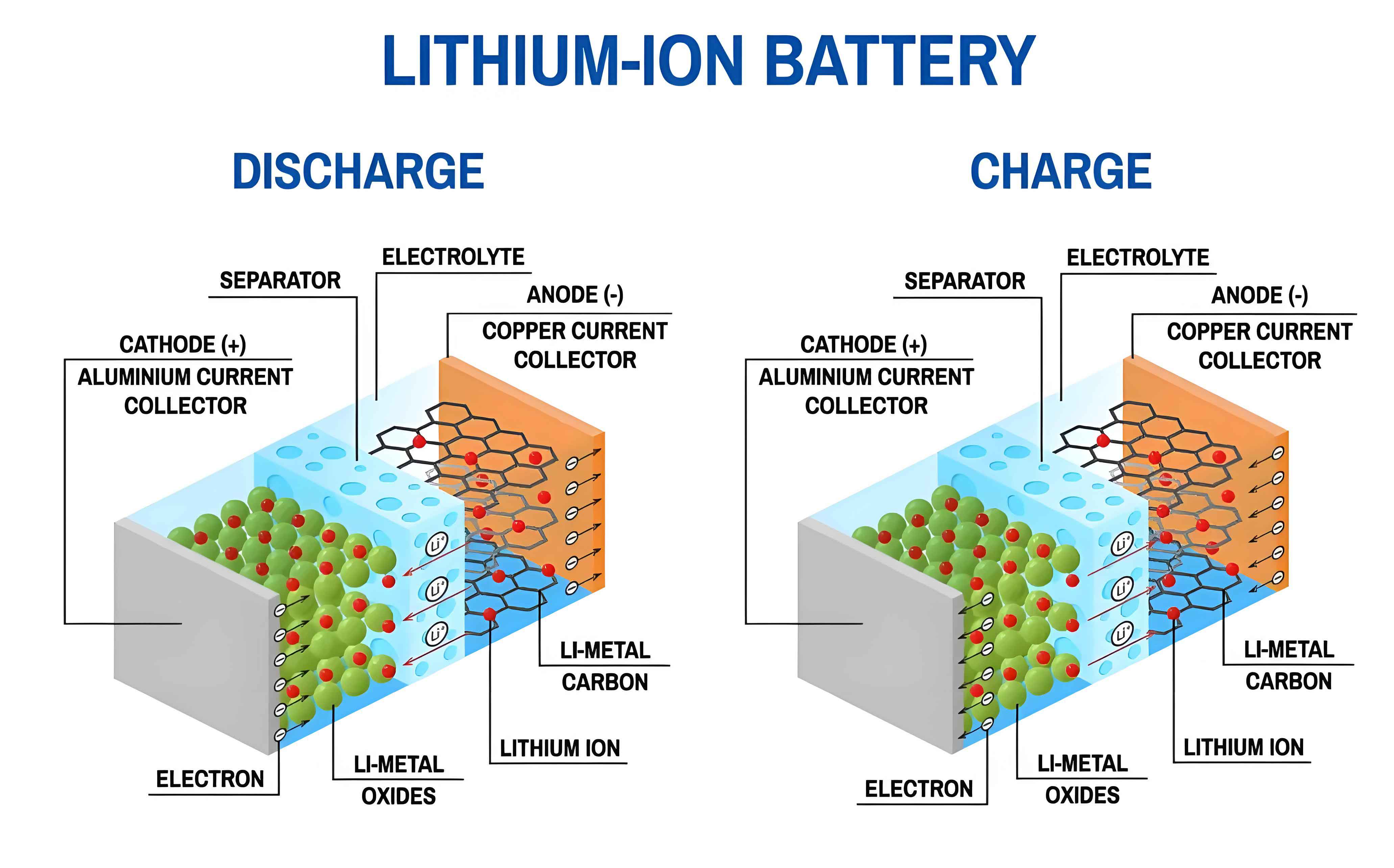
Transfer entropy serves as a cornerstone of this approach, providing a quantitative measure of information flow between variables. In the context of lithium-ion batteries, it helps identify causal relationships between health indicators—such as temperature, internal resistance, and voltage—and battery capacity. The transfer entropy from variable \( j \) to variable \( i \) is defined as:
$$T_{j \to i} = \sum p(i_{n+1}, i_n^{(k)}, j_m^{(l)}) \log \frac{p(i_{n+1} | i_n^{(k)}, j_m^{(l)})}{p(i_{n+1} | i_n^{(k)})}$$
where \( i_n \) and \( j_m \) represent measurements at time steps \( n \) and \( m \), \( k \) and \( l \) denote dimensions, and \( p \) denotes probability densities. A higher transfer entropy value indicates a stronger causal influence, guiding the selection of health factors most relevant to lithium-ion battery capacity degradation. This method moves beyond mere correlation analysis, capturing dynamic interactions that reflect the underlying aging mechanisms of lithium-ion batteries.
To compute transfer entropy, I discretize time series data from lithium-ion battery cycling tests. For instance, consider health factors like maximum charging temperature (\( T_{chg} \)), maximum discharging temperature (\( T_{dischg} \)), internal resistance (\( R_e \)), and charge transfer resistance (\( R_{ct} \)). By analyzing their transfer entropy to capacity (\( C \)), I filter out insignificant variables. The process involves partitioning data into segments, estimating probability distributions using kernel density methods, and applying the formula above. Table 1 summarizes transfer entropy values for different lithium-ion battery cells, highlighting factors with strong causal links.
| Battery Cell | Health Factor | Transfer Entropy to Capacity (bits) |
|---|---|---|
| B0005 | \( T_{chg} \) | 0.4638 |
| B0005 | \( R_{ct} \) | 0.4884 |
| B0006 | \( R_{ct} \) | 0.6076 |
| B0006 | \( R_e \) | 0.5796 |
| B0007 | \( T_{chg} \) | 0.3752 |
| B0007 | \( R_{ct} \) | 0.4553 |
This table illustrates that internal resistance parameters often exhibit higher transfer entropy, underscoring their importance in lithium-ion battery capacity prediction. By focusing on these factors, the model reduces dimensionality and enhances computational efficiency.
The selected health factors then feed into a JS-BP neural network, which combines the universal approximation capabilities of backpropagation networks with the global optimization strengths of the artificial jellyfish search algorithm. The JS-BP model addresses common pitfalls of standard BP networks, such as local minima convergence and sensitivity to weight initialization. The jellyfish search algorithm mimics oceanic jellyfish behavior, incorporating movements like following ocean currents and swarm intelligence to explore solution spaces effectively. The optimization process minimizes the mean squared error loss function:
$$L(\theta) = \frac{1}{N} \sum_{i=1}^{N} (y_i – \hat{y}_i)^2$$
where \( \theta \) represents network weights and biases, \( N \) is the number of samples, \( y_i \) is the actual capacity of the lithium-ion battery, and \( \hat{y}_i \) is the predicted capacity. The algorithm iteratively updates parameters using a time-controlled mechanism that switches between exploration and exploitation phases, ensuring robust convergence for lithium-ion battery data patterns.
In terms of architecture, the JS-BP network comprises an input layer with nodes corresponding to health factors (e.g., \( T_{chg} \), \( R_{ct} \)), one or more hidden layers with sigmoid activation functions, and an output layer for capacity prediction. Training involves forward propagation to compute outputs and backward propagation with gradient descent adjusted by jellyfish search rules. The hybrid approach accelerates learning and improves accuracy for nonlinear lithium-ion battery degradation trends.
For data preparation, I utilized publicly available aging datasets from NASA, specifically lithium-ion battery cells B0005, B0006, and B0007, which undergo cyclic charging and discharging under controlled conditions. These datasets include measurements of voltage, current, temperature, and derived internal resistances. To ensure consistency, I applied linear interpolation to standardize data lengths to 278 cycles per cell. Additionally, I collected experimental data from a battery aging platform using coin cells subjected to constant-current constant-voltage protocols, with parameters like charge cutoff voltage at 4.3 V and discharge cutoff at 2.7 V. This dual-source validation enhances the model’s generalizability across different lithium-ion battery types and operating conditions.
The preprocessing steps involve normalizing health factors to a [0,1] range to prevent scaling issues and splitting data into training (90%) and testing (10%) sets for simulation, while experimental data uses an 85-15 split. Key features extracted include maximum temperatures during charge/discharge cycles and internal resistances calculated from electrochemical impedance spectroscopy. These features serve as inputs after transfer entropy screening, as shown in Table 1.
Simulation results demonstrate the efficacy of the proposed model. Using the NASA datasets, I trained the JS-BP network on selected health factors and predicted capacities for test cycles. Figure 1 depicts capacity degradation trends across cycles, emphasizing the need for accurate prediction in lithium-ion battery management. The predictions closely align with actual values, with error metrics computed using root mean square error (RMSE) and mean absolute error (MAE):
$$RMSE = \sqrt{\frac{1}{N} \sum_{j=1}^{N} (y_j – \hat{y}_j)^2}$$
$$MAE = \frac{1}{N} \sum_{i=1}^{N} |y_i’ – y_i|$$
where \( y_j \) and \( \hat{y}_j \) are actual and predicted capacities, respectively. Table 2 summarizes prediction errors for each lithium-ion battery cell, highlighting the model’s low error levels.
| Battery Cell | RMSE (A·h) | MAE (A·h) |
|---|---|---|
| B0005 | 0.071083 | 0.068120 |
| B0006 | 0.080691 | 0.074532 |
| B0007 | 0.081517 | 0.079845 |
These results indicate that the JS-BP model achieves high precision, with RMSE values below 0.082 A·h, confirming its suitability for lithium-ion battery capacity forecasting. Compared to baseline methods like standard BP, radial basis function (RBF) networks, and convolutional neural networks (CNN), the JS-BP approach yields superior performance due to its optimized weight tuning and causal feature selection.
Experimental validation on the coin cell platform further corroborates these findings. The transfer entropy analysis identified \( T_{chg} \) and \( R_{ct} \) as dominant health factors, which were used to train the JS-BP model. Capacity predictions over 300 cycles show minimal deviation from measured values, as illustrated in Figure 2. Error metrics for this experimental setup are presented in Table 3, comparing JS-BP against other neural network models.
| Neural Network Model | MAE (A·h) | RMSE (A·h) |
|---|---|---|
| JS-BP | 0.000471 | 0.000540 |
| BP | 0.001164 | 0.001525 |
| RBF | 0.001431 | 0.001804 |
| CNN | 0.001419 | 0.001810 |
The JS-BP model’s MAE and RMSE are an order of magnitude lower than alternatives, underscoring its robustness for real-world lithium-ion battery applications. This improvement stems from the synergy between transfer entropy-based feature selection, which isolates critical degradation signals, and the jellyfish search optimization, which fine-tunes network parameters to capture complex nonlinearities in lithium-ion battery behavior.
To delve deeper into the model’s mechanics, consider the mathematical formulation of the jellyfish search algorithm. It operates on a population of candidate solutions (jellyfish) that move in a search space defined by weight and bias values. The position update for a jellyfish \( i \) at iteration \( t \) is given by:
$$\vec{X}_i(t+1) = \vec{X}_i(t) + \gamma \cdot \vec{step}$$
where \( \vec{step} \) is a movement vector influenced by ocean current direction or swarm behavior, and \( \gamma \) is a scaling factor. The ocean current direction is computed as the mean of all jellyfish positions weighted by fitness, while swarm movements involve random walks or directed motions toward better solutions. This stochastic yet guided exploration prevents premature convergence, a common issue in lithium-ion battery capacity prediction models that rely on gradient-based methods alone.
Furthermore, the time control mechanism modulates between following the ocean current and swarm movement based on a threshold function:
$$f(t) = \left| \left(1 – \frac{t}{T_{\text{max}}}\right) \cdot (2 \cdot rand – 1) \right|$$
where \( t \) is the current iteration, \( T_{\text{max}} \) is the maximum iterations, and \( rand \) is a random number in [0,1]. If \( f(t) > 0.5 \), jellyfish follow the ocean current; otherwise, they engage in swarm motion. This dynamic adjustment enhances global search capabilities, crucial for handling the heterogeneous aging patterns of lithium-ion batteries.
In practice, implementing the JS-BP model involves coding in environments like MATLAB or Python, with libraries for neural networks and optimization. The training process typically converges within 100-200 iterations for lithium-ion battery datasets, thanks to the efficient search strategy. Key hyperparameters include learning rate (set to 0.01), population size (50 jellyfish), and maximum iterations (200). These settings were tuned via cross-validation to minimize prediction errors for lithium-ion battery capacity.
The transfer entropy computation also requires careful parameter selection, such as embedding dimensions \( k \) and \( l \), which I set to 2 based on false nearest neighbor analysis, and delay times estimated via mutual information. Using kernel density estimation with Gaussian kernels, I computed probability distributions from time series data, ensuring robustness to noise inherent in lithium-ion battery measurements.
Beyond simulation and experiment, the model’s implications for battery management systems are profound. By providing accurate capacity predictions, it enables state-of-health (SOH) estimation, remaining useful life (RUL) forecasting, and optimal charging strategies for lithium-ion batteries. For instance, integrating this model into battery management systems could trigger alerts when capacity falls below 80% of initial value, a common threshold for lithium-ion battery replacement. This proactive approach mitigates safety risks and reduces operational costs in energy storage systems reliant on lithium-ion technology.
However, challenges remain, such as adapting the model to diverse lithium-ion battery chemistries (e.g., lithium iron phosphate vs. lithium nickel manganese cobalt oxide) and operating conditions (e.g., varying temperatures and load profiles). Future work will involve expanding datasets to include long-term aging data from grid-scale lithium-ion battery storage, incorporating additional health factors like impedance spectroscopy at multiple frequencies, and exploring deep learning variants of JS-BP for enhanced accuracy. Moreover, real-time implementation on embedded systems could benefit from model compression techniques, given the computational demands of transfer entropy and neural network inference.
In conclusion, the integration of transfer entropy and JS-BP neural networks offers a powerful framework for lithium-ion battery capacity prediction. This data-driven approach leverages causal analysis to select informative health factors and employs bio-inspired optimization to train robust prediction models. Validation on NASA datasets and experimental platforms confirms its high accuracy and low error metrics, making it a valuable tool for advancing lithium-ion battery management. As the demand for reliable energy storage grows, such innovative methodologies will play a pivotal role in ensuring the longevity and safety of lithium-ion battery systems across applications.
To summarize key equations and metrics, below is a consolidated table of formulas used in this study for lithium-ion battery capacity prediction:
| Component | Formula | Description |
|---|---|---|
| Transfer Entropy | $$T_{j \to i} = \sum p(i_{n+1}, i_n^{(k)}, j_m^{(l)}) \log \frac{p(i_{n+1} | i_n^{(k)}, j_m^{(l)})}{p(i_{n+1} | i_n^{(k)})}$$ | Quantifies information flow from variable \( j \) to \( i \) |
| RMSE | $$RMSE = \sqrt{\frac{1}{N} \sum_{j=1}^{N} (y_j – \hat{y}_j)^2}$$ | Root mean square error for prediction accuracy |
| MAE | $$MAE = \frac{1}{N} \sum_{i=1}^{N} |y_i’ – y_i|$$ | Mean absolute error for prediction deviation |
| Jellyfish Position Update | $$\vec{X}_i(t+1) = \vec{X}_i(t) + \gamma \cdot \vec{step}$$ | Updates candidate solutions in optimization |
| Time Control Function | $$f(t) = \left| \left(1 – \frac{t}{T_{\text{max}}}\right) \cdot (2 \cdot rand – 1) \right|$$ | Modulates exploration vs. exploitation in jellyfish search |
This comprehensive approach underscores the potential of combining information theory and machine learning for lithium-ion battery research. As I continue to refine this model, the focus will be on scalability and real-world deployment, ultimately contributing to safer and more efficient lithium-ion battery technologies for a sustainable energy future.