
The global transition towards carbon neutrality has propelled the rapid deployment of wind and solar power. However, the inherent intermittency and volatility of renewable generation necessitate robust energy storage solutions to maintain grid stability and balance supply with demand. Among various options, electrochemical energy storage, particularly battery energy storage systems (BESS), stands out due to its rapid response, high energy density, flexible configuration, and relatively short construction cycles. While the market for BESS is expanding exponentially, the levelized cost of electricity (LCOE) for “renewables + BESS” remains a critical barrier to widespread commercialization.
A key metric for evaluating the economic viability of a battery energy storage system is its LCOE over the full operational lifespan, coupled with its end-of-life residual value. The LCOE is heavily influenced by the cycle and calendar life of the batteries, while the residual value depends on the recoverable worth of key materials, the efficiency of recycling technologies, and environmental handling costs. To achieve the target LCOE for large-scale application, advancing life-cycle regeneration technologies—encompassing performance restoration during service and efficient material recovery after retirement—is paramount. This review examines the failure mechanisms of representative battery energy storage systems and critically assesses the state-of-the-art in repair-regeneration and recycling technologies, providing insights for sustainable development in the sector.
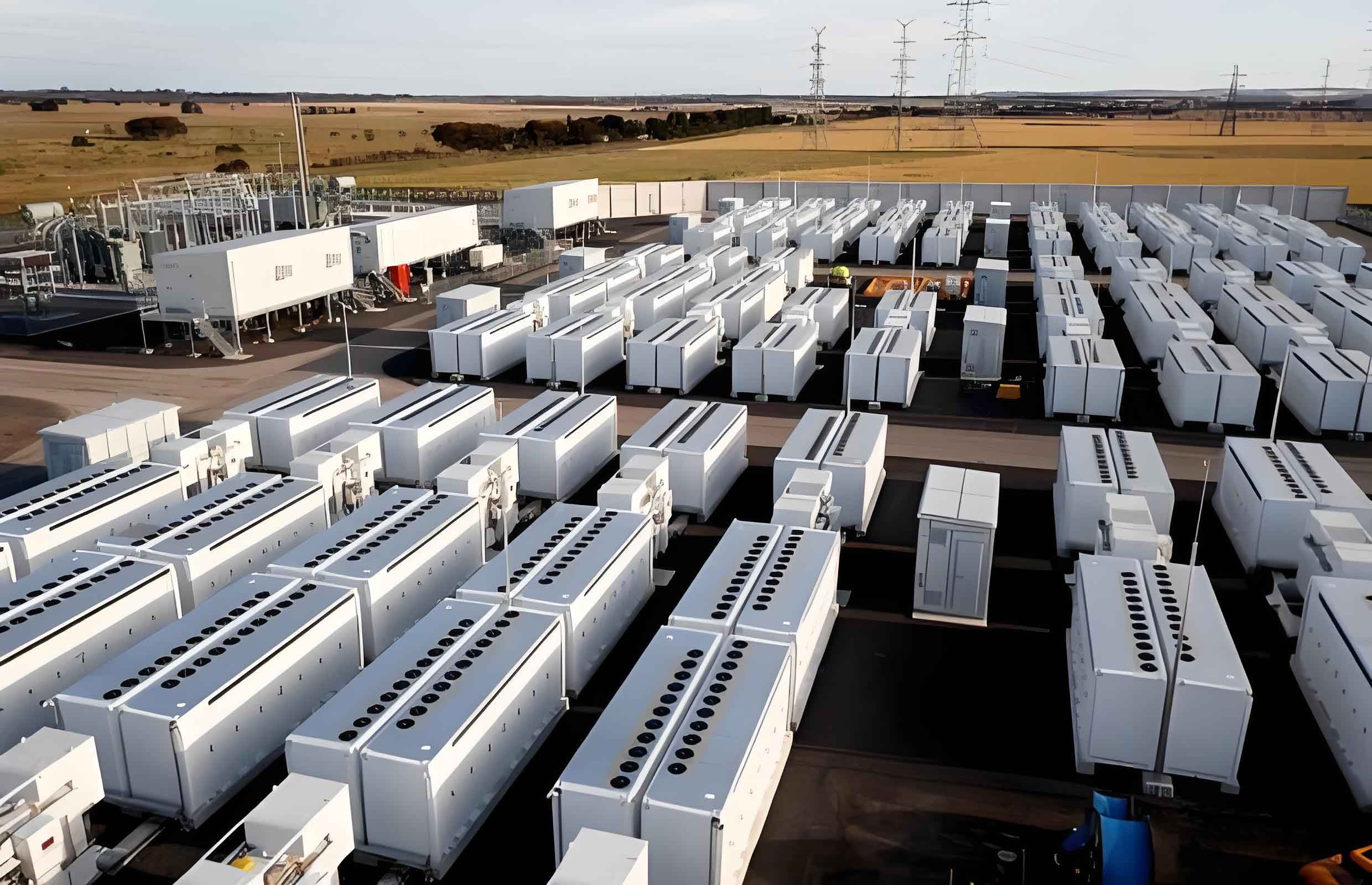
1. Repair and Regeneration Technologies for Service-Life Extension
Repair and regeneration refer to techniques applied to degraded or failed batteries to restore electrochemical performance. For a battery energy storage system, implementing timely in-situ or partial-disassembly repairs can counteract performance fade caused by increased internal resistance, electrolyte depletion, or component aging, thereby extending useful service life. Since many retired batteries from energy storage applications still retain 60-80% of their initial capacity, effective regeneration can defer retirement, alleviate end-of-life pressure, and enhance resource sustainability. The feasibility of repair is intrinsically linked to the dominant failure modes of each battery chemistry.
1.1 Lead-Acid Batteries
Lead-acid batteries, a mature technology often used in backup and some stationary battery energy storage system applications, commonly fail due to irreversible sulfation, water loss, active material shedding, and positive grid corrosion. Studies indicate that over 70% of failures are attributable to sulfation and water loss. Regeneration techniques are broadly categorized into chemical and physical methods.
- Chemical Repair: Involves replenishing the electrolyte (water) or adding activators to dissolve lead sulfate crystals (PbSO4) back into the active material. This is effective for mild sulfation but may offer limited long-term recovery.
- Physical Repair: Utilizes pulsed currents to break down sulfate crystals. Techniques include negative pulse, high-frequency pulse, and resonant pulse charging. A composite resonant pulse method has been reported to achieve over 90% recovery for batteries with capacity fade primarily from sulfation, without severe grid corrosion or active material loss.
The effectiveness depends on accurately diagnosing the root cause. Batteries with only 3-5 years of service showing moderate capacity fade (to 60-80% SOH) and increased resistance are prime candidates. A combined approach of electrolyte adjustment, controlled charge-discharge cycles, and pulsed repair can often restore capacity above 80% of the nominal value. Future development should focus on integrated diagnostic-repair protocols and the incorporation of advanced carbon additives at the design stage to mitigate sulfation fundamentally.
| Failure Mode | Repair Technique | Key Principle | Challenges |
|---|---|---|---|
| Irreversible Sulfation | Resonant Pulse Charging | Electrochemical dissolution of PbSO4 crystals via pulsed currents. | Optimizing pulse parameters; identifying suitable state for repair. |
| Water Loss / Electrolyte Depletion | Electrolyte Replenishment | Restoring electrolyte volume and concentration to optimal levels. | Requires disassembly; managing hydrogen gas evolution during refill. |
| Capacity Imbalance (in strings) | Equalization Charging | Bringing all cells in a battery energy storage system to the same state-of-charge. | Time-consuming; can cause overcharging in healthy cells. |
1.2 Lithium-Ion Batteries
Lithium-ion batteries are the dominant choice for modern grid-scale and commercial battery energy storage system due to their high energy density and efficiency. Their degradation is multifaceted, including growth of the solid-electrolyte interphase (SEI), loss of active lithium inventory, electrolyte decomposition/drying, transition metal dissolution, and particle cracking. In-situ repair targets reversible factors like electrolyte loss, resistive SEI overgrowth, and localized active lithium loss.
Conventional methods for small-format cells include electrolyte replenishment and “re-conditioning” cycles, which can reduce polarization and recover 20-30% of lost capacity. A promising avenue is the compensation of active lithium loss. For example, using a third electrode to directly plate lithium onto a degraded graphite anode has been shown to recover a significant portion of lost capacity. More recently, redox shuttles like I−/I3− have been employed to chemically “recycle” isolated (dead) lithium back into the active cycle, extending cell life.
However, the compact, sealed design of prismatic or cylindrical cells in typical battery energy storage system presents a major hurdle for uniform electrolyte replacement or lithium replenishment. Non-uniform repair can exacerbate cell-to-cell inconsistencies within a pack. This has spurred interest in novel, serviceable battery designs. The lithium slurry battery concept, featuring a flowable electrode, allows for electrolyte exchange and even integration of a third electrode for in-situ SEI modulation and lithium replenishment. The maintainable capacity over multiple repair cycles can be modeled as:
$$C_{maintained}(n) = C_0 \cdot (1 – \alpha_d)^{N} \cdot (1 + \beta_r)^{n}$$
where $C_0$ is initial capacity, $\alpha_d$ is the average degradation rate per cycle before repair, $N$ is the number of cycles between repairs, $\beta_r$ is the fractional capacity restored per repair event, and $n$ is the number of repair interventions. This approach highlights the potential for drastically extending the service life of a lithium-based battery energy storage system.
1.3 Vanadium Redox Flow Batteries (VRFBs)
VRFBs are a leading candidate for long-duration battery energy storage system due to their decoupled power and energy. Their primary failure modes during long-term operation are capacity decay from electrolyte imbalance and increased stack resistance. Electrolyte imbalance, caused by differential ion migration and side reactions (like hydrogen evolution), leads to a state-of-charge (SOC) divergence between the positive (V4+/V5+) and negative (V2+/V3+) tanks.
Regeneration focuses on periodic electrolyte rebalancing. The optimal point for intervention is when the SOC of both half-cells deviates beyond a threshold, which can be monitored in-situ. A common method is the remixing of a portion of the charged positive electrolyte (rich in V5+) with the discharged negative electrolyte (rich in V2+), chemically reducing V5+ and oxidizing V2+ to restore the V4+ state in both tanks. The efficiency of this chemical regeneration process is crucial for the operational economics of a VRFB-based battery energy storage system.
1.4 Other Chemistries: Na-S and Ni-MH
Sodium-Sulfur (Na-S) Batteries: High-temperature Na-S faces challenges like solid electrolyte (β”-Al2O3) fracture and sulfur electrode corrosion, which are often catastrophic and irreparable. Room-temperature Na-S R&D is in early stages, focusing on mitigating polysulfide shuttling—a primary failure mode. While in-situ repair concepts are not yet reported, the fundamental degradation mechanisms suggest limited near-term feasibility for field repair in a large-scale battery energy storage system.
Nickel-Metal Hydride (Ni-MH) Batteries: Common failures include electrolyte depletion, corrosion of the hydrogen-absorbing alloy, and oxidation of the positive electrode additives. Similar to lead-acid, electrolyte replenishment combined with reconditioning cycles can reduce internal resistance and recover capacity. However, repair technologies are less developed compared to recycling efforts.
| Battery Chemistry | Dominant Reversible Failure Modes | Promising Repair Techniques | Feasibility for BESS Application |
|---|---|---|---|
| Lead-Acid | Sulfation, Water Loss | Pulse Desulfation, Electrolyte Refill | High (Mature, cost-effective) |
| Lithium-Ion | Active Li Loss, SEI Growth, Electrolyte Dry-out | 3rd Electrode Li Replenishment, Electrolyte Exchange (Novel Designs) | Medium-High (Requires new cell design paradigms) |
| Vanadium Redox Flow | Electrolyte Imbalance (SOC divergence) | Chemical Remixing, Electrochemical Rebalancing | High (Inherently part of system maintenance) |
| Sodium-Sulfur | Polysulfide Shuttle (RT), Electrolyte Fracture (HT) | Largely undeveloped | Low |
| Nickel-Metal Hydride | Electrolyte Depletion, Alloy Oxidation | Electrolyte Replenishment | Medium (for specific backup applications) |
2. Recycling and Regeneration Technologies for Retired Batteries
As the first generation of large-scale battery energy storage system approaches end-of-life, efficient and sustainable recycling becomes imperative. The recycling process generally involves three stages: pre-treatment (discharge, dismantling), component separation (mechanical/physical processing), and material recovery (metallurgical or direct regeneration). The goal is to maximize the recovery of valuable materials like lithium, cobalt, nickel, manganese, lead, and vanadium, while minimizing environmental impact and energy consumption.
2.1 Lead-Acid Battery Recycling
Recycling for lead-acid batteries is highly mature, with lead recovery rates exceeding 99% in regions with strict regulations. The core process involves breaking batteries, separating components, and recovering lead from the paste.
- Pyrometallurgy: Traditional smelting of paste produces lead bullion but emits SO2 and lead dust.
- Hydrometallurgy: More environmentally friendly. Processes involve desulfurization of paste (converting PbSO4 to PbCO3 or PbO) followed by electrolysis or leaching in citrate/fluosilicate solutions. Recovery rates >98% are achievable under mild conditions. The overall reaction for carbonate desulfurization can be represented as:
$$ \text{PbSO}_4(s) + \text{CO}_3^{2-}(aq) \rightarrow \text{PbCO}_3(s) + \text{SO}_4^{2-}(aq) $$
Future development aims at hybrid pyro-hydrometallurgical processes and “atom-economical” methods to further reduce energy use and emissions from recycling this workhorse of many historical battery energy storage system installations.
2.2 Lithium-Ion Battery Recycling
Recycling of lithium-ion batteries from electric vehicles and battery energy storage system is a fast-evolving field. The two main strategic pathways are hydrometallurgical recovery of valuable metals and direct cathode material regeneration.
2.2.1 Hydrometallurgical Recovery
This is the dominant industrial approach. After mechanical pretreatment, the “black mass” (cathode and anode active materials) is leached in acid (e.g., H2SO4) often with a reducing agent (H2O2, NaHSO3) to dissolve valuable metals:
$$ 2\text{LiCoO}_2(s) + 3\text{H}_2\text{SO}_4(aq) + \text{H}_2\text{O}_2(aq) \rightarrow 2\text{CoSO}_4(aq) + \text{Li}_2\text{SO}_4(aq) + 4\text{H}_2\text{O}(l) + \text{O}_2(g) $$
The leachate undergoes sequential solvent extraction and precipitation to recover purified salts of Co, Ni, Mn, and Li. While efficient, the process consumes large amounts of acids/alkalis and generates wastewater, driving research towards greener lixiviants (e.g., organic acids) and closed-loop processes.
2.2.2 Direct Cathode Material Regeneration
This approach bypasses complex metal separation by directly restoring the stoichiometry and crystal structure of the spent cathode. It is particularly attractive for lithium iron phosphate (LFP), which has low intrinsic metal value. The process typically involves:
- Relithiation: Supplementing the lithium deficit by solid-state sintering with a Li source (Li2CO3, LiOH).
- Structure Repair: Heat treatment to repair cation disorder and crystal defects.
For NCM cathodes, a hydrothermal or molten-salt assisted relithiation method can effectively restore performance. The direct regeneration efficiency $\eta_{reg}$ can be defined as the ratio of the recovered capacity to that of a pristine cathode:
$$ \eta_{reg} = \frac{C_{recovered}}{C_{pristine}} \times 100\% $$
Reported $\eta_{reg}$ values can exceed 95% for suitably treated materials, offering a potentially lower-cost and lower-emission recycling route for the battery energy storage system industry.
2.3 Recycling of Other BESS Chemistries
Vanadium Redox Flow Batteries: Recycling is relatively straightforward. The electrolyte itself, containing the valuable vanadium, can be purified and reused directly. Carbon felt electrodes and membranes can be cleaned and potentially regenerated. The high inherent recoverability of components makes VRFBs a highly sustainable choice for long-duration battery energy storage system from a circular economy perspective.
Sodium-Sulfur Batteries: Processes involve safe discharge, recovery of elemental sulfur from the cathode, and recovery of sodium (often converted to NaOH). The ceramic electrolyte and casing materials can also be recovered.
Nickel-Metal Hydride Batteries: Recycling focuses on recovering nickel, cobalt, and rare-earth elements from the hydrogen storage alloy using hydrometallurgical techniques similar to those for Li-ion batteries.
| Recycling Target | Primary Methods | Key Outputs | Advantages & Challenges for BESS Recycling |
|---|---|---|---|
| Li-ion Cathode (NCM/LCO) | Acid Leaching + SX/PPT; Direct Regeneration | Li/Co/Ni/Mn Salts; Rejuvenated Cathode Powder | High metal value. Challenge: Complex separation, chemical waste. |
| Li-ion Cathode (LFP) | Direct Regeneration; Hydrometallurgy | Rejuvenated LFP; Li3PO4, FePO4 | Lower economic drive for metal recovery; Direct regeneration is promising. |
| Lead-Acid Paste | Hydrometallurgical Desulfurization + Electrowinning | Refined Lead | Mature, high yield. Challenge: Managing environmental footprint. |
| VRFB Electrolyte | Purification, Chemical Rebalancing | Reusable Vanadium Electrolyte | High intrinsic recyclability; Minimal material degradation. |
3. Conclusion and Future Perspectives
The sustainable scale-up of battery energy storage system is inextricably linked to reducing its life-cycle cost and environmental impact. Regeneration technologies offer a dual-path strategy: extending the profitable service life through repair and maximizing resource recovery through efficient recycling.
For service-life extension, targeted repair based on accurate failure diagnosis is key. While pulse repair for lead-acid is commercial, advanced concepts like in-situ lithium replenishment and electrolyte replacement for Li-ion require further development and, crucially, supportive cell and system designs that enable maintenance. The future of repair may lie in “design for regeneration,” where battery energy storage system are engineered with serviceability in mind, such as incorporating fluidic channels or accessible third electrodes.
For end-of-life recycling, the landscape is moving beyond mere metal recovery. Direct cathode regeneration presents a paradigm shift, especially for LFP-dominated battery energy storage system, turning waste directly back into functional material. The ultimate goal is to develop closed-loop, low-energy, and environmentally benign processes that can handle the heterogeneous mix of future retired battery energy storage system streams.
Looking forward, the integration of sustainable principles at the design stage—such as using easily separable components, standardized cell formats, and materials with high regenerative potential—will be crucial. Furthermore, the concept of a “renewable” or “circular” battery energy storage system, where materials are continuously cycled between use, repair, and reuse with minimal virgin resource input, represents a compelling long-term vision. Advances in both repair and recycling technologies will be fundamental pillars in making electrochemical energy storage a truly sustainable cornerstone of the future carbon-neutral grid.