
The integration of renewable energy sources has intensified frequency stability challenges in modern power systems. This article systematically explores the application of energy storage batteries in secondary frequency regulation through theoretical analysis, control strategies, and practical implementations.
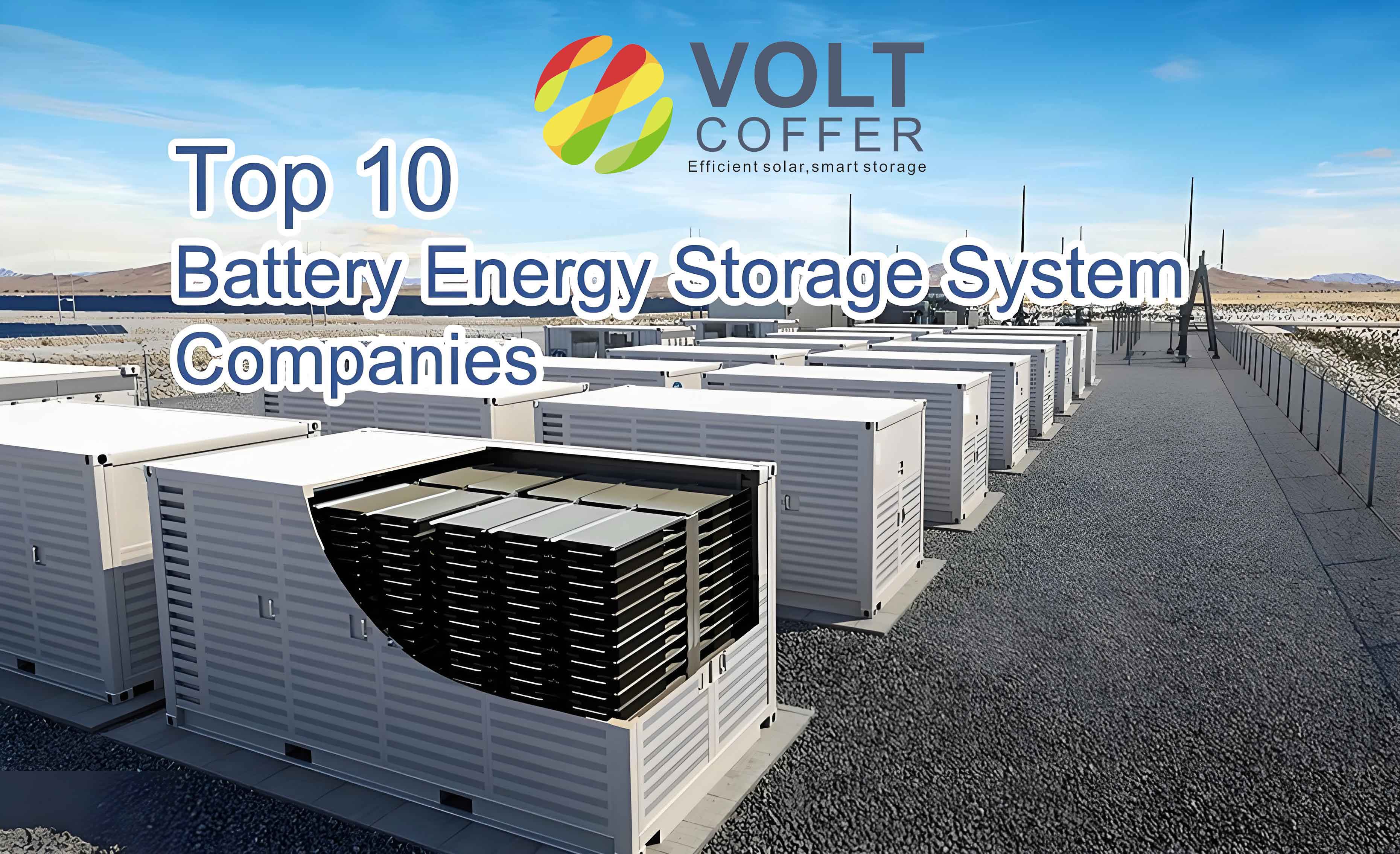
1. System Architecture
Large-scale energy storage battery systems typically consist of multiple modular units with the following components:
| Component | Function | Key Parameters |
|---|---|---|
| Battery Module | Energy storage medium | Capacity: 50-500 kWh |
| BMS | State monitoring & protection | Voltage tolerance: ±1% |
| PCS | Power conversion | Efficiency: 95-98% |
| Controller | Frequency regulation | Response time: <100ms |
2. Fundamental Principles
The power exchange between energy storage batteries and grid follows:
$$
P = \frac{E_a U_a}{X} \sin \delta
$$
$$
Q = \frac{E_a U_a}{X} \cos \delta – \frac{E_a^2}{X}
$$
Where \( E_a \) and \( U_a \) represent grid and converter voltages, respectively. The phase angle δ directly determines active power flow for frequency regulation.
3. Advanced Control Strategies
Modern control approaches for energy storage batteries include:
| Strategy | Advantages | Limitations |
|---|---|---|
| Fuzzy Logic | Adaptive SOC management | Requires expert tuning |
| Model Predictive | Optimal power allocation | Computationally intensive |
| Distributed Control | Scalable coordination | Communication latency |
The state-space model for multi-battery coordination can be expressed as:
$$
\dot{x} = Ax + Bu + Fd
$$
$$
y = Cx
$$
Where \( x \) represents SOC states and \( u \) denotes control inputs.
4. Multi-Objective Optimization
A typical optimization framework balances frequency regulation performance and battery longevity:
$$
\min \left( \alpha \int \Delta f^2 dt + \beta \sum_{i=1}^N (SOC_i – SOC_{ref})^2 \right)
$$
$$
\text{s.t. } P_{min} \leq P_{ESS} \leq P_{max}
$$
Weighting factors α and β determine operational priorities for energy storage batteries.
5. Case Study: 100MW Regional Grid
| Parameter | Before ESS | With ESS |
|---|---|---|
| Frequency deviation | ±0.25 Hz | ±0.05 Hz |
| AGC response time | 45s | 800ms |
| Annual maintenance | $1.2M | $0.4M |
6. Challenges and Solutions
Key technical barriers for energy storage batteries include:
- Cycle life degradation: \( N_{cycle} = k_1 e^{k_2 DOD} \)
- Capacity fade: \( C_{loss} = \alpha T + \beta I_{rms}^2 t \)
- Economic viability: \( LCOE = \frac{C_{cap} + C_{O\&M}}{E_{throughput}} \)
Emerging solutions incorporate hybrid energy storage systems combining batteries with supercapacitors:
$$
P_{total} = P_{bat} + P_{sc} = K_p \Delta f + K_i \int \Delta f dt
$$
7. Future Directions
Next-generation energy storage battery systems will feature:
- AI-driven predictive maintenance
- Blockchain-enabled energy markets
- Solid-state battery integration
The evolution of energy storage battery technology continues to redefine grid stability paradigms, offering unprecedented flexibility in renewable energy integration.