
The reliable operation of modern energy storage systems, electric vehicles, and portable electronics is critically dependent on the accurate monitoring of key parameters for their core component: the lithium-ion battery. Among these, the State of Charge (SOC) and State of Health (SOH) are paramount. SOC indicates the remaining usable capacity, analogous to a fuel gauge, while SOH reflects the battery’s aging condition and its remaining useful life. Accurate estimation of these states is essential for performance optimization, safety assurance, and maintenance scheduling.
Estimating SOC and SOH presents significant challenges due to the battery’s complex, nonlinear, and time-varying electrochemical characteristics. Traditional methods often rely on simplified models or direct measurements with inherent limitations. For instance, coulomb counting is simple but error-prone due to current sensor drift and unknown initial SOC. Model-based filters like Kalman filters require precise battery models whose parameters change with aging. This interdependence between SOC and SOH—where SOC calculation itself depends on the current maximum capacity defined by SOH—necessitates a unified approach.
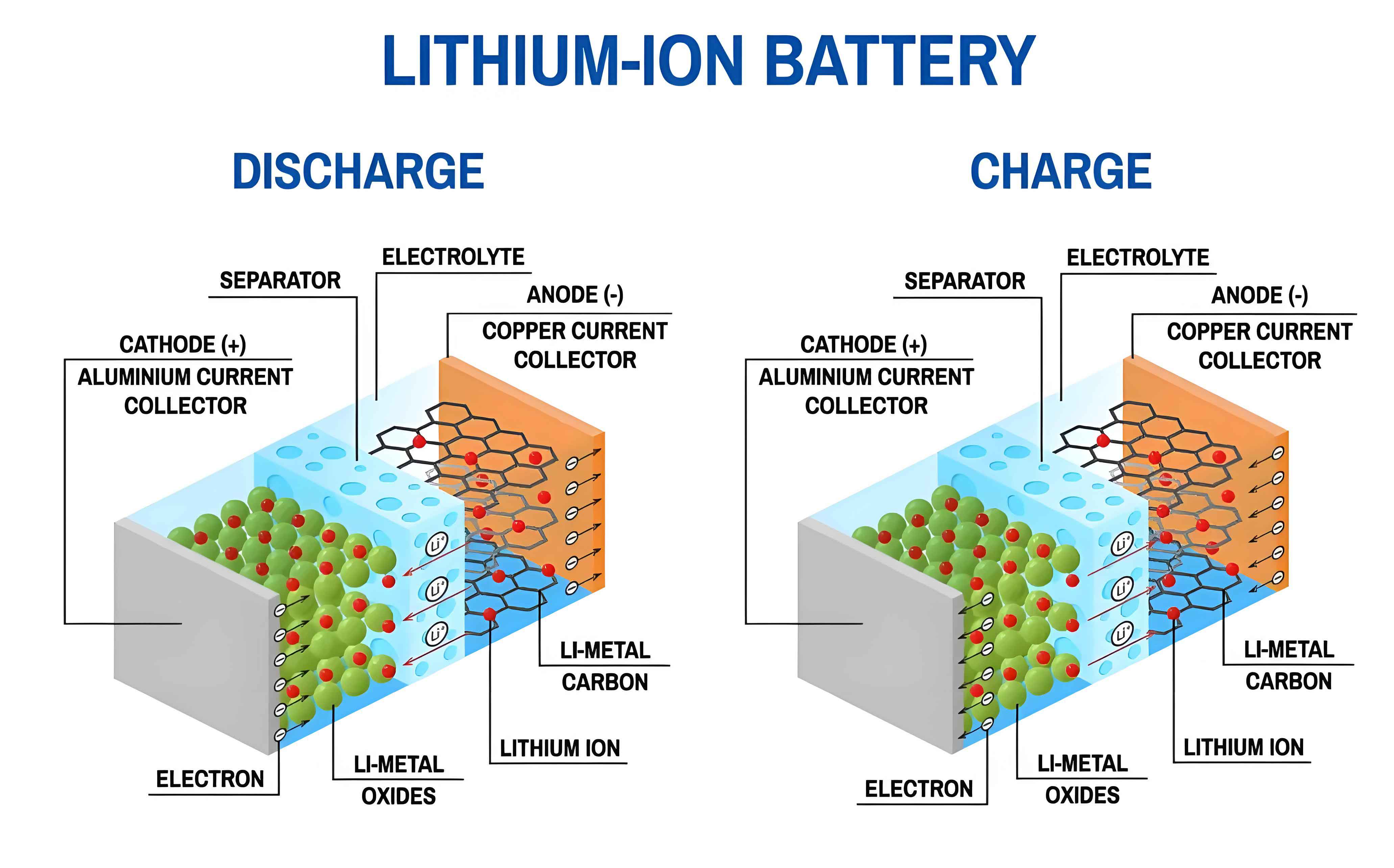
Recent advances in data-driven techniques, particularly deep learning, offer a powerful alternative. These methods learn the complex mapping from easily measurable signals like voltage, current, and temperature to the battery’s internal states directly from historical data, bypassing the need for explicit physical models. This work proposes a novel joint estimation framework for the lithium-ion battery SOC and SOH based on a deep recurrent neural network architecture called the Simple Recurrent Unit (SRU).
Fundamental Definitions: SOC and SOH
The State of Charge (SOC) of a lithium-ion battery is defined as the ratio of its current remaining charge to its present maximum charge capacity. For practical online estimation, it is typically calculated based on the discharged capacity:
$$ \text{SOC}(t) = \left(1 – \frac{\int_{0}^{t} I(\tau) d\tau}{C_{m}}\right) \times 100\% $$
where \(I\) is the instantaneous current (positive for discharge), \(\int_{0}^{t} I(\tau) d\tau\) is the total discharged capacity from time 0 to \(t\), and \(C_m\) is the battery’s current actual maximum capacity.
The State of Health (SOH) quantifies the aging-induced degradation of the lithium-ion battery, commonly defined from a capacity perspective as:
$$ \text{SOH} = \frac{C_{m}}{C_{0}} \times 100\% $$
where \(C_0\) is the nominal or initial rated capacity of the fresh battery. A SOH of 100% signifies a new battery, while a typical end-of-life threshold is 80%.
The intrinsic link between SOC and SOH becomes clear by combining the two equations:
$$ \text{SOC}(t) = \left(1 – \frac{\int_{0}^{t} I(\tau) d\tau}{C_{0} \times \frac{\text{SOH}}{100\%}}\right) \times 100\% $$
This equation reveals that an accurate SOC estimate inherently requires knowledge of the current SOH (i.e., \(C_m\)). Conversely, information about capacity fade is embedded within the dynamics of the SOC trajectory. This coupling forms the foundation for the proposed joint estimation strategy.
The Simple Recurrent Unit (SRU) Architecture
Estimating battery states is a sequential problem; the state at any moment depends on its history. Recurrent Neural Networks (RNNs) are naturally suited for such time-series data. However, standard RNNs suffer from vanishing/exploding gradients, making it hard to learn long-term dependencies. While Long Short-Term Memory (LSTM) and Gated Recurrent Unit (GRU) networks solve this with complex gating mechanisms, they involve substantial sequential computation, slowing down training.
The Simple Recurrent Unit (SRU) is a more recent RNN variant designed for faster training while retaining powerful temporal modeling capabilities. The key innovation of the SRU is to simplify the gating mechanisms to enable a high degree of parallelization during training. The computations within an SRU cell at time step \(t\) are as follows:
$$ \begin{aligned}
\tilde{x}_t &= W x_t \\
f_t &= \sigma(W_f x_t + b_f) \\
r_t &= \sigma(W_r x_t + b_r) \\
c_t &= f_t \odot c_{t-1} + (1 – f_t) \odot \tilde{x}_t \\
h_t &= r_t \odot c_t + (1 – r_t) \odot x_t
\end{aligned} $$
where \(x_t\) is the input vector, \(f_t\) and \(r_t\) are the forget and reset gates, \(c_t\) and \(h_t\) are the internal cell state and the final output, respectively. \(W\), \(W_f\), \(W_r\) are weight matrices, \(b_f\), \(b_r\) are bias vectors, \(\sigma\) is the sigmoid activation function, and \(\odot\) denotes element-wise multiplication.
The critical feature is that the gates \(f_t\) and \(r_t\) depend only on the current input \(x_t\), not on the previous hidden state \(c_{t-1}\). This separation allows the computationally expensive parts (the matrix multiplications for all time steps) to be processed in parallel across a sequence, akin to a convolutional layer. Only the lightweight element-wise operations for updating \(c_t\) and \(h_t\) remain sequential. This makes SRU significantly faster to train than LSTM or GRU while often achieving comparable or superior accuracy, especially when multiple layers are stacked.
Proposed SOC Estimation Model Using SRU
The core of the proposed method is an SOC estimation model built upon the SRU architecture. The goal is to create a model that can accurately estimate SOC across the entire lifespan of a lithium-ion battery, i.e., under varying SOH conditions. To achieve this, the model must learn the aging-invariant mapping from operational data to SOC.
Input Data Construction: The Data Unit
Using a single instantaneous voltage or current sample is insufficient to capture the dynamics needed to disambiguate the effects of aging and SOC. Therefore, we adopt a “data unit” concept. A data unit is a short, contiguous sequence of measurements. For this model, the input is a data unit comprising the last 10 sampled voltage values. This sequential input provides the SRU network with the local trend and curvature of the voltage profile, which contains critical information about both the present SOC and the underlying battery health.
Network Architecture
The SOC estimation model consists of two main components:
- SRU Layers: This is the core sequential processor. We use a stack of two SRU layers, each with 300 hidden units. The input shape is (sequence_length=10, feature_dim=1). The SRU layers process the voltage sequence to extract high-level temporal features.
- Fully Connected Network (FCN) Regressor: The output from the final SRU layer (a 300-dimensional vector) is fed into an FCN for dimensionality reduction and final SOC value regression. The FCN has the following structure:
- Input Layer: 300 nodes (matching SRU output).
- Hidden Layer 1: 150 nodes, followed by a ReLU activation function.
- Hidden Layer 2: 50 nodes, followed by a ReLU activation function.
- Output Layer: 1 node (the estimated SOC).
Training Strategy and Data Preparation
To ensure the model learns to be robust to battery aging, the training dataset must encompass data from batteries at various stages of degradation (i.e., different SOH levels). Crucially, the target labels (SOC) for training are calculated using the true, current maximum capacity \(C_m\) of the battery at the time of the test cycle, as per the coupled SOC-SOH equation. This teaches the model the correct SOC trajectory for each specific health condition.
Before training, input data (voltage sequences) are normalized to the range [-1, 1] using min-max normalization to stabilize and accelerate the training process. The model is trained to minimize the Mean Squared Error (MSE) between its predictions and the true SOC values. The Adam optimizer is used with an initial learning rate of 0.001 for 1000 epochs.
The workflow is straightforward: for every new voltage measurement, a new data unit (the latest 10 voltages) is formed and fed into the trained model, which outputs a real-time SOC estimate.
Joint SOC and SOH Estimation Framework
A model trained as described becomes inherently aware of battery health because it has learned to map voltage sequences to SOC for various SOH levels. We can exploit this property to extract an SOH estimate. The process for joint estimation within a single discharge cycle is as follows:
- Real-time SOC Estimation: The trained SRU-based model continuously estimates SOC(t) throughout the battery’s discharge cycle.
- SOH Calculation Post-Discharge: Upon completion of the discharge cycle, two specific SOC estimates and the total discharged ampere-hours are used to compute SOH. Let \(t_1\) be a time index after the model’s initial transient (e.g., corresponding to the 10th data unit, or a point where SOC is reliably known, e.g., ~95%). Let \(t_2\) be the time at the end of discharge (EOD, e.g., SOC ~0%). Using the fundamental relationship:
$$ \text{SOC}(t_1) – \text{SOC}(t_2) = \frac{\int_{t_1}^{t_2} I(\tau) d\tau}{C_{0} \cdot (\text{SOH} / 100\%)} \times 100\% $$
We can solve for SOH:
$$ \text{SOH} = \frac{\int_{t_1}^{t_2} I(\tau) d\tau}{C_{0} \cdot \left( \frac{\text{SOC}(t_1) – \text{SOC}(t_2)}{100\%} \right) } \times 100\% $$
The terms \(\text{SOC}(t_1)\) and \(\text{SOC}(t_2)\) are the estimates from our model at the selected times. \(\int_{t_1}^{t_2} I(\tau) d\tau\) is the discharged capacity between those times, obtained via current integration. \(C_0\) is the known nominal capacity. This method effectively uses the model’s SOC estimation curve, whose slope is inversely proportional to SOH, to back-calculate the health state. By choosing \(t_1\) and \(t_2\) far apart, the impact of small SOC estimation errors is minimized relative to the large SOC difference.
This framework provides a seamless joint estimation: the same core model facilitates continuous SOC monitoring and periodic SOH updates after each major discharge cycle.
Experimental Validation and Results Analysis
The proposed method was implemented using the PyTorch deep learning library and validated on two publicly available benchmark datasets featuring different lithium-ion battery chemistries and aging tests.
1. Datasets Description
Two key datasets were used to train and test the model’s performance and generalizability.
| Dataset | Battery Type | Test Protocol | Key Aging Characteristic |
|---|---|---|---|
| Oxford Dataset | LCO, 740 mAh | Cycling at 40°C with dynamic discharge profiles. Reference capacity tests every 100 cycles. | Gradual, consistent capacity fade across 8 cells. |
| NASA Dataset | 18650, 2 Ah | Cycling at room temperature with constant current discharge. Different cutoff voltages for cells. | Presence of capacity regeneration (“rise”) phenomena during aging. |
To ensure a rigorous evaluation, the data was split so that the model was trained on one set of batteries and tested on completely unseen ones. All training data covered the full lifecycle from SOH=100% down to near 80%.
| Dataset | Training Cells | Testing Cells |
|---|---|---|
| Oxford | Cell1, Cell2, Cell3, Cell4, Cell5, Cell6 | Cell7, Cell8 |
| NASA | B0005, B0006 | B0007 |
2. SOC Estimation Performance
The model was trained separately on each dataset. Its performance was evaluated on the test cells over their entire aging trajectory. The results demonstrated high accuracy and robustness.
Quantitative Results: The following table summarizes the overall SOC estimation error across all cycles for each test cell, using Root Mean Square Error (RMSE), Mean Absolute Error (MAE), and Maximum Absolute Error (MAX).
| Test Cell | RMSE (%) | MAE (%) | MAX (%) |
|---|---|---|---|
| Cell7 (Oxford) | 0.93 | 0.78 | 3.01 |
| Cell8 (Oxford) | 0.92 | 0.73 | 3.40 |
| B0007 (NASA) | 0.95 | 0.79 | 4.05 |
The errors remain consistently below 1% for RMSE and MAE, with worst-case errors under 5%. This confirms the model’s ability to provide reliable SOC estimates regardless of the battery’s SOH, successfully learning the aging-adaptive mapping. The performance on the NASA dataset, which features nonlinear capacity regeneration, proves the model’s robustness to complex aging patterns.
3. SOH Estimation Performance
Using the joint estimation framework, SOH was calculated after each full discharge cycle of the test cells. The model’s SOC estimates at the beginning and end of discharge were used in the derived SOH formula.
The SOH estimation results are summarized in the table below:
| Test Cell | SOH RMSE (%) | SOH MAE (%) | SOH MAX (%) |
|---|---|---|---|
| Cell7 (Oxford) | 0.76 | 0.71 | 1.29 |
| Cell8 (Oxford) | 0.79 | 0.70 | 1.70 |
| B0007 (NASA) | 0.93 | 0.84 | 2.30 |
The SOH estimates closely track the true degradation curve. The low RMSE and MAE values (all below 1%) indicate high precision. Notably, the method handles the differing fade rates between Oxford cells and the more erratic capacity regeneration in the NASA cell effectively, with maximum errors contained within 2.3%. This validates the practicality of extracting accurate health information from the learned SOC estimation model.
Conclusion
This work has presented a novel, data-driven framework for the joint estimation of State of Charge and State of Health in lithium-ion battery systems. The core innovation lies in leveraging a fast and efficient recurrent neural network, the Simple Recurrent Unit, to build an aging-adaptive SOC estimator. By training the model with data spanning the entire battery lifespan and using a sequential data unit as input, the model internalizes the relationship between operational voltage patterns, SOC, and underlying health degradation.
The subsequent SOH estimation is elegantly derived from the model’s own SOC output, creating a tightly coupled and efficient joint estimation scheme that requires no separate health indicator extraction or model. Extensive experimental validation on two distinct public datasets demonstrates that the method achieves high accuracy (SOC RMSE <1%, SOH RMSE <1%) across the full battery lifecycle and for different battery types. The model shows robustness to complex aging phenomena like capacity regeneration.
The proposed method offers a powerful, unified solution for battery management systems, reducing computational complexity compared to maintaining separate estimation pipelines while providing reliable, real-time state information crucial for the safe and efficient operation of any system relying on lithium-ion battery technology.