
As an energy analyst deeply invested in renewable energy transitions, I find India’s rooftop solar photovoltaic initiative to be a pivotal step toward sustainable development. The Indian government, through the Ministry of New and Renewable Energy (MNRE), has unveiled the second phase of its grid-connected rooftop solar program, aiming to deploy 22 gigawatts (GW) of rooftop solar capacity. This ambitious plan is part of a broader target to achieve 38 GW of rooftop solar installations by 2022, with 4 GW earmarked for the residential sector and 34 GW for commercial, industrial, and other sectors. In this article, I will delve into the intricacies of this incentive scheme, emphasizing the role of solar systems in India’s energy landscape. I will utilize tables and formulas to summarize key aspects, ensuring a thorough understanding of the policy’s mechanisms and implications.
The promotion of domestic solar cell and module manufacturing is a core objective, mirroring the strategies for ground-mounted solar projects. This focus on local production not only boosts the economy but also enhances the reliability and affordability of solar systems across the country. As I explore the details, I will highlight how the incentive structure is designed to accelerate adoption, particularly in residential areas, while fostering innovation in solar technology.
To begin, let’s outline the overall deployment targets for rooftop solar systems under this plan. The following table summarizes the capacity goals by sector:
| Sector | Target Capacity (GW) | Percentage of Total |
|---|---|---|
| Residential | 4 | Approximately 10.5% |
| Commercial, Industrial, and Others | 34 | Approximately 89.5% |
| Total | 38 | 100% |
The second phase focuses on 22 GW of this total, with two main components: Central Financial Assistance (CFA) for residential projects and performance-based incentives for distribution companies (DISCOMs). I will break down each component, using mathematical models to illustrate the subsidy calculations and incentive mechanisms. The widespread adoption of solar systems is crucial for reducing carbon emissions and enhancing energy security, and this policy aims to make that a reality.
First, let’s examine the CFA component, which supports up to 4,000 MW of residential rooftop solar systems. DISCOMs and their local offices are key nodes for implementation, ensuring grassroots reach. The subsidy rates vary based on system capacity, encouraging smaller installations while accommodating larger needs. For a residential solar system with capacity $S$ (measured in kilowatts, kW), the CFA subsidy amount $A$ can be expressed using piecewise functions. Assume $C$ is the average cost per kW of installing a solar system, which typically ranges from $1,000 to $1,500 USD, depending on technology and location. Then, the subsidy is calculated as follows:
For individual households:
$$ A = \begin{cases} 0.4 \times C \times S & \text{if } S \leq 3 \\ 0.4 \times C \times 3 + 0.2 \times C \times (S – 3) & \text{if } 3 < S \leq 10 \end{cases} $$
This formula ensures that solar systems up to 3 kW receive a 40% subsidy, while larger systems up to 10 kW get a tapered benefit. For example, if $C = 1200$ USD per kW and a household installs a 5 kW solar system, the subsidy would be:
$$ A = 0.4 \times 1200 \times 3 + 0.2 \times 1200 \times (5 – 3) = 1440 + 480 = 1920 \text{ USD}. $$
This reduces the upfront cost significantly, making solar systems more accessible.
For collective housing societies and welfare residences, the CFA subsidy is capped at 20% for projects powering common facilities. The eligible capacity is limited to 10 kW per house, with a total cap of 500 kW per project, including existing installations. This encourages community-scale solar systems, which can optimize space and resources. The subsidy amount $A_c$ for such projects can be modeled as:
$$ A_c = 0.2 \times C \times S_c, $$
where $S_c$ is the installed capacity, subject to $S_c \leq 500$ kW. This structured approach ensures equitable distribution of incentives across different residential setups.
To summarize the subsidy rates, I present the following table:
| System Type | Capacity Range (kW) | Subsidy Rate | Remarks |
|---|---|---|---|
| Individual Household | $S \leq 3$ | 40% of system cost | Full subsidy on entire capacity |
| Individual Household | $3 < S \leq 10$ | 40% on first 3 kW, 20% on excess | Graduated subsidy to promote larger solar systems |
| Collective Housing | Up to 500 kW total | 20% of system cost | Capped at 10 kW per house; for common facilities |
The second component of the plan involves incentives for DISCOMs based on their achievements in deploying grid-connected rooftop solar systems. Initially, 18,000 MW of capacity is targeted for incentives. DISCOMs must report cumulative installed capacity by March 31, 2019, and rewards are calculated based on exceeding baseline standards. Let $C_{\text{actual}}$ be the actual capacity deployed by a DISCOM, and $C_{\text{baseline}}$ be the baseline capacity required. The incentive $I$ is then determined using a tiered approach:
If the excess capacity $E = C_{\text{actual}} – C_{\text{baseline}}$ falls within 10% to 15% above the baseline, the incentive is 5% of the cost for the excess portion. If $E$ exceeds 15%, the incentive is 5% for the first 15% excess and 10% for any additional excess. Mathematically, this can be expressed as:
$$ I = \begin{cases} 0 & \text{if } E \leq 0 \\ 0.05 \times C \times E & \text{if } 0 < E \leq 0.15 \times C_{\text{baseline}} \\ 0.05 \times C \times (0.15 \times C_{\text{baseline}}) + 0.10 \times C \times (E – 0.15 \times C_{\text{baseline}}) & \text{if } E > 0.15 \times C_{\text{baseline}} \end{cases} $$
Here, $C$ represents the average cost per MW, which might be around $1,000,000 USD per MW for rooftop solar systems. This incentive model motivates DISCOMs to surpass targets, driving rapid deployment of solar systems across their networks.
To illustrate, assume a DISCOM has a baseline of 100 MW and deploys 120 MW. Then $E = 20$ MW, which is 20% above baseline. Since 20% > 15%, the incentive is calculated as:
$$ I = 0.05 \times 1,000,000 \times (0.15 \times 100) + 0.10 \times 1,000,000 \times (20 – 0.15 \times 100) = 0.05 \times 10^6 \times 15 + 0.10 \times 10^6 \times 5 = 750,000 + 500,000 = 1,250,000 \text{ USD}. $$
Such financial rewards can significantly boost DISCOM engagement, ensuring that solar systems become integral to the grid infrastructure.
The Indian Prime Minister approved this second phase in March 2019, with the central government allocating approximately 1.66 billion USD as CFA for capacity building, service charges, and DISCOM incentives. This funding underscores the commitment to scaling up rooftop solar systems, which are essential for meeting renewable purchase obligations (RPOs) and reducing dependence on fossil fuels. As I analyze further, I will explore the technical and economic dimensions of solar system adoption.
Solar systems comprise photovoltaic panels, inverters, mounting structures, and balance-of-system components. The efficiency $\eta$ of a solar system can be modeled as:
$$ \eta = \frac{P_{\text{output}}}{P_{\text{input}}} \times 100\%, $$
where $P_{\text{input}}$ is the solar irradiance (typically around 1000 W/m²) and $P_{\text{output}}$ is the electrical power generated. For a rooftop solar system with area $A$ (in m²) and panel efficiency $\eta_p$, the annual energy generation $E_{\text{annual}}$ can be estimated as:
$$ E_{\text{annual}} = A \times \eta_p \times G \times 365, $$
where $G$ is the average daily solar irradiation (in kWh/m²/day). In India, $G$ ranges from 4 to 7 kWh/m²/day, making solar systems highly viable. For instance, a 5 kW solar system covering 40 m² with $\eta_p = 18\%$ and $G = 5$ kWh/m²/day would generate:
$$ E_{\text{annual}} = 40 \times 0.18 \times 5 \times 365 = 13,140 \text{ kWh/year}. $$
This can power an average household while feeding excess into the grid, enhancing energy independence.
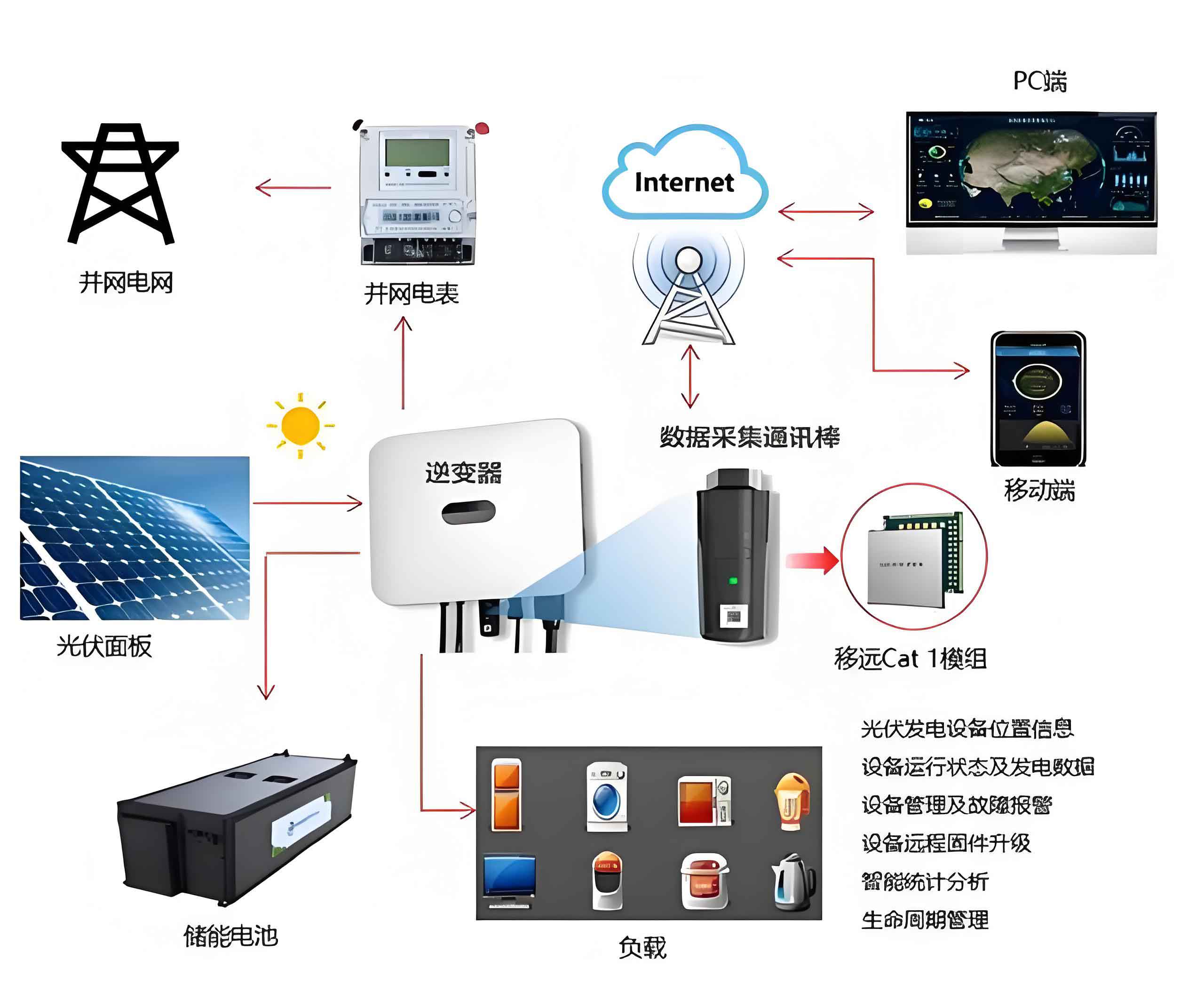
The visual representation above highlights the installation of solar systems on rooftops, showcasing their integration into urban and rural landscapes. Such images reinforce the practicality and aesthetic appeal of solar technology, encouraging public participation in the incentive plan.
Now, let’s consider the economic impact of widespread solar system deployment. The levelized cost of electricity (LCOE) for a rooftop solar system can be calculated using:
$$ \text{LCOE} = \frac{\sum_{t=1}^{n} \frac{I_t + M_t}{(1+r)^t}}{\sum_{t=1}^{n} \frac{E_t}{(1+r)^t}}, $$
where $I_t$ is the investment cost in year $t$, $M_t$ is the maintenance cost, $E_t$ is the energy produced, $r$ is the discount rate, and $n$ is the system lifetime (typically 25 years). With subsidies reducing $I_t$, the LCOE becomes more competitive. For example, if a 10 kW solar system costs $12,000 USD upfront and receives a 20% subsidy on excess capacity, the effective cost drops to $9,600 USD. Assuming annual maintenance of $100 USD, energy production of 14,000 kWh/year, and a discount rate of 5%, the LCOE approximates to $0.05-0.07 USD per kWh, lower than grid tariffs in many regions. This economic advantage accelerates the adoption of solar systems, driving down carbon footprints.
To further analyze the incentive plan, I have compiled a table comparing the key parameters of the two components:
| Component | Target Capacity | Financial Mechanism | Key Actors | Expected Outcome |
|---|---|---|---|---|
| CFA for Residential | Up to 4,000 MW | Direct subsidies (40% for ≤3 kW, 20% for excess) | Households, DISCOMs, MNRE | Increased residential solar system installations |
| Incentives for DISCOMs | Based on 18,000 MW baseline | Tiered cost rewards (5% or 10% of excess capacity cost) | Distribution companies, government | Rapid grid integration of solar systems |
The success of this plan hinges on DISCOMs submitting detailed proposals by March each year, outlining their deployment strategies. The allocation of CFA will depend on DISCOM demand and RPO fulfillment needs, creating a responsive framework. As I reflect on this, I believe that solar systems are not just energy sources but catalysts for social change, empowering communities through job creation and reduced electricity bills.
Beyond the immediate incentives, the plan fosters domestic manufacturing of solar cells and modules. This aligns with India’s “Make in India” initiative, potentially reducing import dependence and boosting technological innovation. The production capacity $P_{\text{domestic}}$ for solar components can be modeled as a function of time $t$:
$$ P_{\text{domestic}}(t) = P_0 \times e^{kt}, $$
where $P_0$ is the initial capacity and $k$ is the growth rate driven by policy support. With the incentive plan, $k$ could increase, leading to a surge in local solar system production. This, in turn, lowers costs and enhances supply chain resilience.
Another critical aspect is the environmental benefit of deploying solar systems. The reduction in greenhouse gas emissions $\Delta \text{CO}_2$ from a solar system can be estimated as:
$$ \Delta \text{CO}_2 = E_{\text{annual}} \times \text{EF}_{\text{grid}}, $$
where $\text{EF}_{\text{grid}}$ is the emission factor of the grid (e.g., 0.8 kg CO₂/kWh for India’s coal-dominated grid). For the 5 kW solar system example earlier, annual emissions reduction is:
$$ \Delta \text{CO}_2 = 13,140 \times 0.8 = 10,512 \text{ kg CO}_2 \approx 10.5 \text{ metric tons}. $$
Scaling this to the 38 GW target, the cumulative impact is profound, contributing to India’s climate commitments under the Paris Agreement.
However, challenges remain, such as grid stability with intermittent solar output and the need for energy storage solutions. The integration of battery storage with solar systems can be modeled using:
$$ E_{\text{storage}} = \eta_b \times \int (P_{\text{solar}} – P_{\text{load}}) \, dt, $$
where $\eta_b$ is battery efficiency (around 90%), $P_{\text{solar}}$ is solar generation, and $P_{\text{load}}$ is demand. Policies could evolve to include storage incentives, enhancing the reliability of solar systems.
In conclusion, India’s rooftop solar incentive plan is a multifaceted strategy to accelerate the adoption of solar systems across residential and commercial sectors. Through CFA subsidies and DISCOM incentives, it addresses financial barriers while promoting local manufacturing. The use of formulas and tables, as I have demonstrated, helps quantify the benefits and mechanisms, providing clarity for stakeholders. As solar systems become more prevalent, they will transform India’s energy matrix, driving sustainable growth and resilience. I am optimistic that this plan will serve as a model for other nations seeking to harness solar power for a greener future.
To further elaborate, let’s consider the long-term projections for solar system adoption beyond 2022. Assuming a compound annual growth rate (CAGR) of 15% for rooftop solar installations, the cumulative capacity $C_{\text{cum}}(t)$ in year $t$ can be predicted as:
$$ C_{\text{cum}}(t) = C_0 \times (1 + r)^t, $$
where $C_0 = 38$ GW (2022 target) and $r = 0.15$. By 2030, this would yield:
$$ C_{\text{cum}}(2030) = 38 \times (1.15)^8 \approx 38 \times 3.06 \approx 116 \text{ GW}. $$
Such growth underscores the transformative potential of solar systems in achieving energy independence.
Additionally, the economic multiplier effect of solar system deployment should not be overlooked. Each installation creates jobs in manufacturing, installation, and maintenance. The total employment $J$ can be estimated as:
$$ J = \alpha \times C_{\text{installed}}, $$
where $\alpha$ is the employment factor (e.g., 10 jobs per MW). For the 22 GW phase, this could generate up to 220,000 jobs, stimulating local economies.
In summary, the incentive plan is a cornerstone of India’s renewable energy strategy. By leveraging solar systems, the country can reduce its carbon footprint, enhance energy access, and foster industrial growth. I encourage policymakers to continue refining such schemes based on real-time data and stakeholder feedback, ensuring that solar technology reaches every corner of the nation. As we move forward, the integration of smart grids and digital monitoring will further optimize the performance of solar systems, making them indispensable in the fight against climate change.