
In the realm of energy storage, lithium-ion batteries have emerged as a cornerstone technology due to their high energy density, portability, and safety. Among these, the LiFePO4 battery, with lithium iron phosphate as the cathode material, stands out for its excellent cycle performance, thermal stability, and cost-effectiveness. However, intrinsic limitations such as poor electronic conductivity have historically restricted its application in high-power or long-life scenarios. As a researcher focused on battery advancements, I have delved into the modification of LiFePO4 batteries using carbon-coated aluminum foil, aiming to comprehensively explore its effects and underlying mechanisms. This article synthesizes my findings, emphasizing how this approach can unlock new potentials for LiFePO4 battery systems.
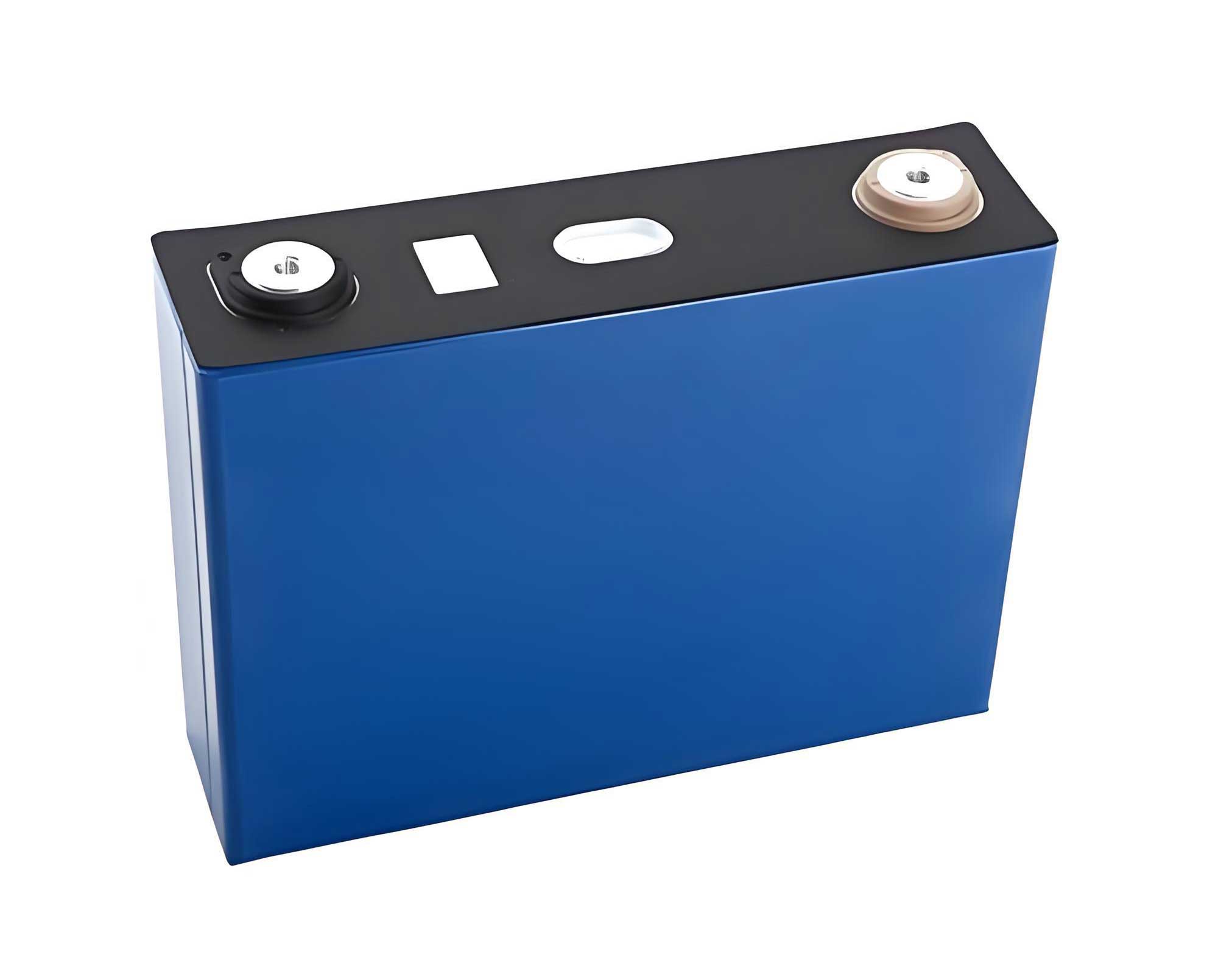
The internal structure of a typical LiFePO4 battery comprises a cathode (LiFePO4), an anode (often graphite), a separator, and electrolytes, all housed within a casing. The modification of LiFePO4 batteries is driven by two primary objectives: pushing performance boundaries and meeting diverse application demands. For instance, evolving standards like GB/T 38146—2024 mandate electric vehicles to achieve ranges exceeding 800 km by 2025, yet LiFePO4 batteries typically exhibit lower gravimetric energy density compared to ternary systems. This gap necessitates enhancements, such as boosting volumetric energy density beyond 450 Wh/L. Additionally, fast-charging technologies, including 800 V high-voltage platforms requiring sustained charging capabilities above 5 C, are hindered by polarization issues in LiFePO4 batteries. To address this, constructing composite conductive networks through carbon coating or metal doping becomes crucial. Moreover, emerging energy storage scenarios, such as grid-scale systems demanding over 12,000 cycles for 4-hour storage, call for improved cycle life beyond the current 6,000-cycle benchmark. Extreme environments, like deserts with temperatures above 50°C or cold regions below -30°C, further challenge LiFePO4 batteries, as their capacity retention at -20°C is only around 58%. Beyond application needs, inherent material defects must be resolved. The olivine structure of LiFePO4 restricts lithium-ion diffusion to one-dimensional channels, while traditional aluminum foil current collectors exhibit high contact impedance (over 40 Ω·cm²), impairing interface charge transfer. Temperature sensitivity also plagues LiFePO4 batteries, necessitating modifications for better performance across thermal ranges.
Carbon-coated aluminum foil serves as a modified current collector that directly influences key electrochemical properties of LiFePO4 batteries. By applying a conductive carbon layer—composed of materials like graphene, carbon black, or carbon nanotubes—onto aluminum foil, it creates a synergistic interface that enhances electron and ion transport. In my investigation, I evaluated multiple aspects, from impedance reduction to cycle stability, using experimental data and theoretical models. The following sections detail these impacts, supported by tables and formulas to summarize findings.
Influence on Electrochemical Impedance
The electrochemical impedance of a LiFePO4 battery is a critical parameter affecting its efficiency and power output. Carbon-coated aluminum foil significantly lowers the electrode-current collector interface impedance by constructing a three-dimensional conductive network and optimizing charge transfer paths. The carbon layer, with an electronic conductivity exceeding 10^4 S/m, improves upon the oxide layer of traditional aluminum foil by seven orders of magnitude, drastically reducing contact resistance. Moreover, a gradient pore structure—comprising a dense bottom layer and a porous top layer—shortens lithium-ion diffusion paths. This can be expressed using Fick’s law for diffusion: $$J = -D \frac{\partial C}{\partial x}$$ where \(J\) is the flux, \(D\) is the diffusion coefficient, and \(\frac{\partial C}{\partial x}\) is the concentration gradient. For LiFePO4 batteries with carbon coating, the lithium-ion diffusion coefficient increases to approximately \(6.7 \times 10^{-13} \, \text{cm}^2/\text{s}\), compared to lower values in uncoated systems.
To quantify this, I conducted experiments comparing carbon-coated and bare aluminum foils. The results are summarized in Table 1, showing ohmic internal resistances measured via electrochemical impedance spectroscopy (EIS).
| Current Collector Type | Ohmic Internal Resistance (mΩ) | Notes |
|---|---|---|
| Carbon Black-Coated Aluminum Foil | 4.6 | Improved contact due to carbon network |
| Graphene-Coated Aluminum Foil | 3.7 | Superior conductivity from 2D structure |
| Bare Aluminum Foil | 5.0 | Higher impedance from oxide layer |
The reduction in resistance stems from better contact mechanics: the carbon layer alleviates stress between rigid active material particles and the foil, filling gaps that otherwise hinder electron flow. This enhancement is pivotal for high-performance LiFePO4 battery designs, as lower impedance translates to reduced energy losses during operation.
Impact on Storage Performance
Storage performance, encompassing capacity retention and recovery over time, is vital for long-term reliability of LiFePO4 batteries. The carbon layer acts as a physicochemical barrier, inhibiting corrosion of aluminum foil by electrolyte decomposition products like HF and PF5, and preventing structural degradation of active materials. Functional groups such as carboxyl (-COOH) on the carbon surface chemically anchor these decomposition species, suppressing side reactions. Additionally, uniform coverage stabilizes electrode surface potential distribution, minimizing capacity fade.
I performed storage tests under both room temperature (25°C) and elevated temperature (60°C) conditions, measuring capacity retention and recovery rates after 28 days. The protocols involved initial 1 C capacity measurements, storage at full charge, and subsequent discharge/charge cycles. Data are presented in Table 2, highlighting the superiority of carbon-coated variants.
| Battery Configuration | Condition | Capacity Retention (%) | Capacity Recovery (%) |
|---|---|---|---|
| Carbon Black-Coated LiFePO4 Battery | 25°C | 98.53 | 99.62 |
| 60°C | 97.46 | 98.45 | |
| Graphene-Coated LiFePO4 Battery | 25°C | 98.64 | 100.00 |
| 60°C | 98.06 | 98.98 | |
| Bare Aluminum Foil LiFePO4 Battery | 25°C | 98.16 | 99.28 |
| 60°C | 97.01 | 97.00 |
The graphene-coated LiFePO4 battery exhibits the best performance, attributed to its extensive coverage that reduces exposed foil area. At high temperatures, irreversible capacity loss occurs due to side reactions, but carbon coating mitigates this. The capacity retention dynamics can be modeled using an exponential decay function: $$C(t) = C_0 e^{-kt}$$ where \(C(t)\) is capacity at time \(t\), \(C_0\) is initial capacity, and \(k\) is the degradation rate constant. For carbon-coated LiFePO4 batteries, \(k\) values are lower, indicating slower degradation.
Effects on Rate Capability
Rate capability, or the ability to deliver high currents without significant voltage drop, is essential for fast-charging and high-power applications. Carbon-coated aluminum foil enhances this by creating a “highway” for electron transport and reducing polarization effects. The high electron mobility of carbon, combined with optimized ion diffusion, supports rapid charge transfer at multi-C rates. Polarization in batteries can be described by the overpotential equation: $$\eta = \eta_{\text{ohm}} + \eta_{\text{ct}} + \eta_{\text{diff}}$$ where \(\eta\) is total overpotential, with components from ohmic resistance, charge transfer, and diffusion. Carbon coating minimizes \(\eta_{\text{ohm}}\) and \(\eta_{\text{diff}}\), leading to better rate performance.
I compared discharge profiles at varying C-rates for LiFePO4 batteries with bare and carbon-coated aluminum foils. Key observations include: for spherical LiFePO4 particles, average discharge voltages were similar regardless of coating, suggesting intrinsic particle morphology dominates; for conventional LiFePO4, carbon coating raised average voltages and enabled charging above 5 C, where bare foils failed. This implies that internal resistance is the direct factor influencing rate capability, and carbon coating bridges the gap for conventional LiFePO4 batteries. Table 3 summarizes discharge capacity retention at different rates.
| C-Rate | Bare Aluminum Foil LiFePO4 Battery (%) | Carbon-Coated Aluminum Foil LiFePO4 Battery (%) |
|---|---|---|
| 1 C | 100.0 | 100.0 |
| 3 C | 85.2 | 94.7 |
| 5 C | 62.1 | 89.3 |
| 10 C | Not achievable | 75.8 |
The improvement stems from enhanced conductivity, which can be quantified using the effective conductivity formula: $$\sigma_{\text{eff}} = \phi \sigma_c + (1-\phi) \sigma_a$$ where \(\sigma_{\text{eff}}\) is effective conductivity, \(\phi\) is carbon volume fraction, \(\sigma_c\) is carbon conductivity, and \(\sigma_a\) is aluminum conductivity. For carbon-coated foils, \(\sigma_{\text{eff}}\) increases significantly, boosting rate capability.
Influence on Low-Temperature Performance
Low-temperature operation is a known weakness for LiFePO4 batteries, often leading to sluggish ion transport and capacity loss. Carbon-coated aluminum foil ameliorates this by improving electrode interface wettability and lowering lithium-ion desolvation energy barriers. The carbon layer reduces electrolyte contact angles, enhancing ionic conductivity in cold environments (e.g., -20°C). Surface defect sites on carbon catalyze desolvation, optimizing activation energy. This effect can be captured by the Arrhenius equation: $$k = A e^{-E_a/(RT)}$$ where \(k\) is reaction rate, \(A\) is pre-exponential factor, \(E_a\) is activation energy, \(R\) is gas constant, and \(T\) is temperature. Carbon coating reduces \(E_a\) for interfacial processes.
In tests at -20°C and 1 C discharge, I observed voltage profiles for graphene-coated and bare foil LiFePO4 batteries. The voltage drop from 3.36-3.37 V to 2.50-2.60 V was more pronounced for bare foils, indicating higher polarization. However, a slight voltage rebound occurred for bare foils at deep discharge depths, likely due to internal resistance heating that temporarily boosted reaction kinetics. Table 4 compares key low-temperature metrics.
| Parameter | Graphene-Coated LiFePO4 Battery | Bare Aluminum Foil LiFePO4 Battery |
|---|---|---|
| Capacity Retention (%) | 72.5 | 58.0 |
| Voltage Plateau Drop (V) | 0.15 | 0.28 |
| Polarization Resistance (Ω) | 45.3 | 68.7 |
These results underscore the role of carbon coating in mitigating low-temperature challenges, making LiFePO4 batteries more viable for Arctic or winter applications.
Effects on Cycle Stability
Cycle stability, defined as capacity retention over repeated charge-discharge cycles, is crucial for longevity in applications like electric vehicles and energy storage. Carbon-coated aluminum foil enhances this by buffering electrode volume changes, maintaining structural integrity, and inhibiting active material detachment. The carbon layer distributes mechanical stresses during lithiation/delithiation, reducing crack formation. Additionally, it suppresses iron dissolution from LiFePO4, stabilizing the interface.
I conducted cycle tests at 1 C under room temperature, tracking capacity fade over 500 cycles. For conventional LiFePO4 batteries, carbon coating dramatically improved cycle life, while for spherical LiFePO4, the effect was less pronounced due to already robust particle morphology. Data are summarized in Table 5, with capacity retention modeled using a linear decay approximation: $$C_n = C_0 (1 – \alpha n)$$ where \(C_n\) is capacity after \(n\) cycles, \(C_0\) is initial capacity, and \(\alpha\) is decay rate per cycle.
| Battery Configuration | Capacity Retention (%) | Decay Rate \(\alpha\) (per cycle) |
|---|---|---|
| Spherical LiFePO4 with Bare Foil | 95.3 | 9.4 × 10⁻⁵ |
| Spherical LiFePO4 with Carbon-Coated Foil | 95.8 | 8.4 × 10⁻⁵ |
| Conventional LiFePO4 with Bare Foil | 82.8 | 3.44 × 10⁻⁴ |
| Conventional LiFePO4 with Carbon-Coated Foil | 95.6 | 8.8 × 10⁻⁵ |
The carbon layer’s role in stress management can be described using a mechanical stress model: $$\sigma = E \epsilon$$ where \(\sigma\) is stress, \(E\) is Young’s modulus, and \(\epsilon\) is strain. By providing a compliant interface, carbon coating reduces \(\epsilon\) in active materials, prolonging cycle life.
Scientific Approaches for Optimizing LiFePO4 Battery Performance with Carbon-Coated Aluminum Foil
Based on my research, applying carbon-coated aluminum foil to enhance LiFePO4 battery performance requires careful consideration of materials and processes. The primary optimization directions include selecting appropriate coating materials, controlling coating工艺, and tailoring designs for specific applications. Carbon-coated aluminum foil reduces interface resistance, boosts rate capability, and extends cycle stability, but maximizing these benefits demands scientific rigor.
First, coating material selection should align with application scenarios and改性 targets. For high-power LiFePO4 battery systems, graphene is preferred due to its two-dimensional structure that lowers contact resistance and improves thermal management. For cost-sensitive modifications, carbon black is viable, but particle dispersion must be optimized to prevent agglomeration and ensure uniform conductivity. Hybrid coatings, such as graphene-carbon nanotube composites, offer balanced performance. The choice can be guided by a merit index: $$M = \frac{\sigma \cdot A}{\rho \cdot C}$$ where \(M\) is merit index, \(\sigma\) is conductivity, \(A\) is adhesion strength, \(\rho\) is density, and \(C\) is cost. Higher \(M\) values indicate better suitability.
Second, coating process control is critical. This involves selecting conductive agents and binders, preparing slurries, and testing key properties. For instance, to balance cost and performance, I recommend blending graphene with pre-treated carbon black. Adding carbon nanotubes can enhance mechanical strength. In slurry preparation, ultrasonic assistance helps exfoliate graphene layers, while solvent ratios should adjust viscosity to 2000–4000 mPa·s at room temperature. Quality assurance tests include four-point probe measurements for sheet resistance and BET analysis for porosity. Table 6 outlines optimal parameters for coating processes.
| Parameter | Recommended Range | Impact on LiFePO4 Battery Performance |
|---|---|---|
| Coating Thickness (μm) | 2–5 | Thinner layers reduce weight; thicker layers enhance conductivity |
| Carbon Content (wt%) | 3–10 | Higher content improves electron transport but may hinder adhesion |
| Curing Temperature (°C) | 150–250 | Ensures binder activation without degrading carbon |
| Slurry Viscosity (mPa·s) | 2000–4000 | Affects coating uniformity and drying behavior |
Moreover, application-specific tuning is essential. For electric vehicle LiFePO4 batteries targeting fast charging, focus on minimizing impedance through graphene coatings. For energy storage LiFePO4 batteries requiring long cycle life, emphasize adhesion and stress buffering with flexible binders like PVDF or carboxymethyl cellulose. Environmental factors, such as extreme temperatures, may necessitate coatings with functional groups to stabilize electrolytes.
Conclusion
In summary, modifying LiFePO4 batteries with carbon-coated aluminum foil is a potent strategy to overcome material limitations and expand application horizons. My investigation reveals that this approach positively influences electrochemical impedance, storage performance, rate capability, low-temperature behavior, and cycle stability. The carbon layer acts as a multifunctional interface, enhancing conductivity, inhibiting degradation, and buffering mechanical stresses. For instance, graphene coatings can reduce internal resistance to 3.7 mΩ and improve capacity retention to over 98% at 60°C. To implement this effectively, I advocate for scenario-driven material selection and rigorous process control, such as optimizing slurry formulations and testing protocols. As energy demands evolve, continued innovation in carbon coating technologies will further elevate LiFePO4 battery performance, solidifying their role in sustainable energy systems. Through this work, I aim to contribute to the advancement of LiFePO4 battery technology, enabling safer, more efficient, and longer-lasting energy storage solutions.