
The relentless consumption of fossil fuels precipitates not only resource depletion but also severe environmental pollution and climate change. As a clean energy carrier and efficient conversion technology, the lithium-ion battery has emerged as a pivotal alternative, owing to its high energy density, long cycle life, and rapid charge capability. Its applications span from portable electronics and electric vehicles to grid-scale energy storage systems for renewable energy, underpinning the global transition towards sustainable energy and carbon neutrality goals.
Developing novel anode materials is a fundamental pathway to further enhance the performance metrics of lithium-ion batteries. Beyond metallic lithium, conventional anodes operate on three primary mechanisms: intercalation (e.g., graphite, Li4Ti5O12), alloying (e.g., Si, Sn), and conversion (e.g., Fe2O3, CoS). Graphite, the commercial benchmark, offers excellent cyclability and safety but is limited by a modest theoretical gravimetric capacity of 372 mAh g-1. Silicon boasts an ultra-high capacity of 4200 mAh g-1 but suffers from drastic volume changes (>300%) that lead to rapid performance degradation. Conversion-type materials can deliver high capacities through multi-electron redox reactions, yet they often suffer from large voltage hysteresis, poor kinetics, and insufficient cycle stability.
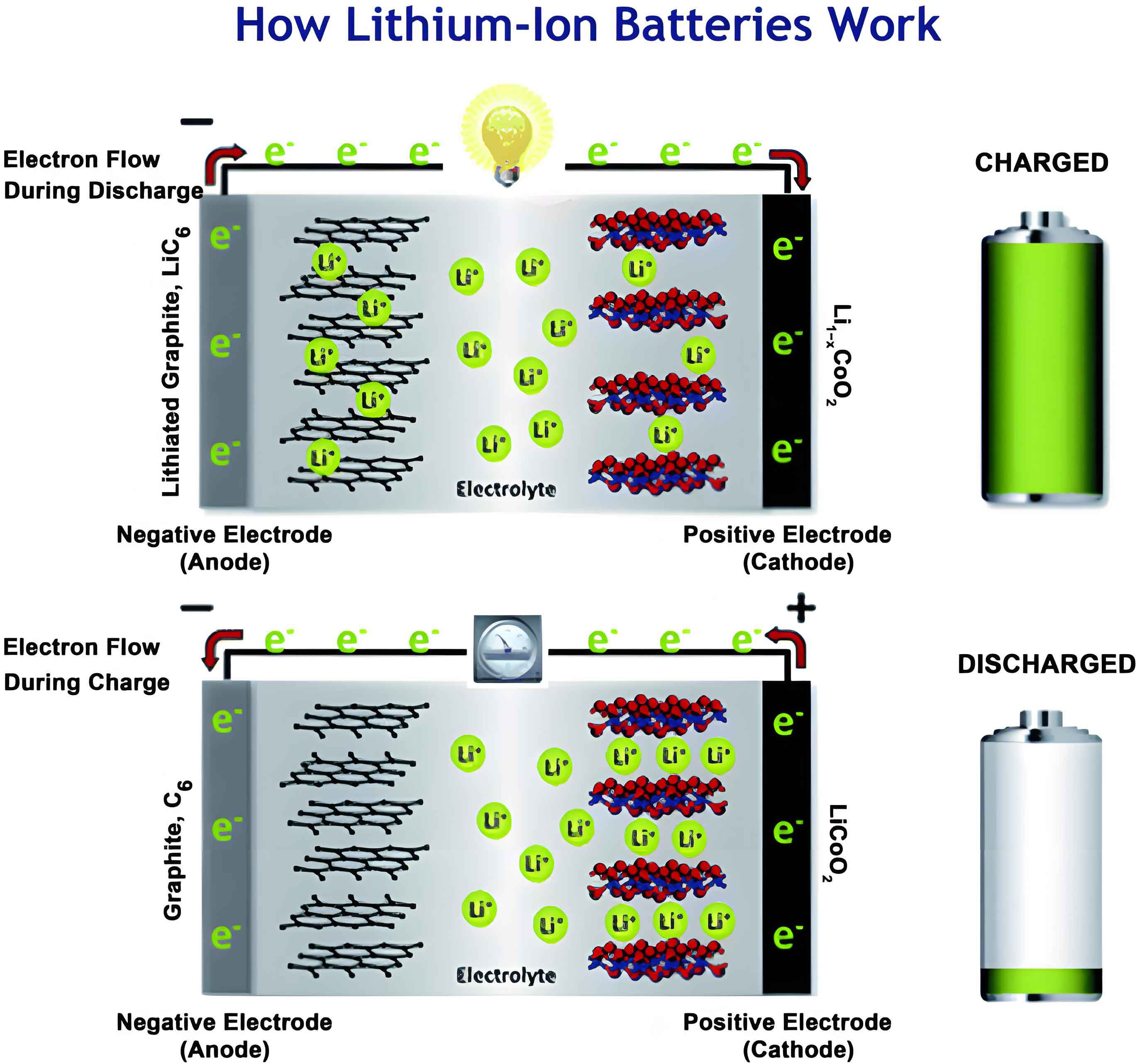
In this context, hydride-based materials, featuring the unique hydride ion (Hσ–), have emerged as a compelling new class of conversion-type anodes for lithium-ion batteries. The seminal work by Oumellal et al. unveiled the electrochemical activity of metal hydrides towards lithium. These materials undergo reversible conversion reactions with Li+ ions, forming LiH and the corresponding metal or alloy. Their principal advantages stem from the low atomic weight of hydrogen, which translates into exceptionally high theoretical gravimetric and volumetric capacities, often surpassing those of oxide or sulfide analogues. Furthermore, the fast diffusion of Hσ– within the lattice can contribute to favorable reaction kinetics and lower overpotentials during charge/discharge.
This article provides a comprehensive, first-person perspective review of the research progress on hydride-based anode materials for lithium-ion batteries. We delve into the structural characteristics, electrochemical mechanisms, and performance of both binary and ternary hydrides. Subsequently, we critically analyze the key challenges hindering their application and systematically explore advanced strategies—including nanostructuring, compositing, catalytic doping, and the employment of solid-state electrolytes—devised to overcome these hurdles. Finally, we offer a forward-looking perspective on the future development of this promising field.
Fundamentals and Electrochemistry of Hydride Anodes
The operation of hydride-based anodes in a lithium-ion battery is governed by a reversible conversion reaction. During discharge (lithiation), the hydride (MxHy) reacts with lithium ions and electrons from the external circuit to form lithium hydride (LiH) and the metallic phase (M or an intermetallic). The reverse process occurs during charge (delithiation). The general reaction can be represented as:
$$ \text{M}_x\text{H}_y + y\text{Li}^+ + y\text{e}^- \rightleftharpoons x\text{M} + y\text{LiH} $$
The theoretical gravimetric capacity (Cg) and volumetric capacity (Cv) are calculated as follows, where F is Faraday’s constant (96485 C mol-1), Mw is the molecular weight (g mol-1), n is the number of electrons transferred per formula unit (y in the reaction above), and ρ is the material’s density (g cm-3):
$$ C_g = \frac{nF}{3.6 \times M_w} \quad \text{(in mAh g}^{-1}\text{)} $$
$$ C_v = \rho \times C_g \quad \text{(in mAh cm}^{-3}\text{)} $$
The electrochemical potential of this reaction is a critical parameter. For a successful anode, the discharge plateau should be reasonably low (preferably between 0.1-1.0 V vs. Li+/Li) to ensure a high cell voltage, but not too low to risk lithium plating. The inherent ionic conductivity of some complex hydrides, particularly for Li+ and Hσ–, can significantly enhance the reaction kinetics. However, the practical implementation faces major challenges: 1) The large volume changes associated with the phase transformation between hydride and metal, leading to particle pulverization and loss of electrical contact; 2) The high reactivity of Hσ– with common organic liquid electrolytes, causing continuous solid electrolyte interphase (SEI) formation and low coulombic efficiency; 3) The sluggish kinetics of the reconversion reaction (from metal + LiH back to the hydride) due to the need for long-range diffusion and nucleation of new phases.
Binary Hydrides: From Model Systems to Engineered Composites
Binary hydrides, consisting of a metal and hydrogen, represent the simplest and most studied class. Among them, magnesium hydride (MgH2) stands out as a prototype material.
Magnesium Hydride (MgH2): Mechanism and Initial Performance
MgH2 crystallizes in a rutile-type structure (space group P42/mnm) at ambient conditions. Its theoretical capacity is remarkably high at 2038 mAh g-1 based on a 2-electron transfer. Early studies in conventional liquid electrolytes (e.g., LiPF6 in organic carbonates) confirmed its electrochemical activity, demonstrating a discharge plateau around 0.34 V vs. Li+/Li and achieving initial reversible capacities exceeding 1400 mAh g-1. However, detailed mechanistic investigations revealed a more complex reaction pathway than the simple one-step conversion. The overall process involves multiple stages:
- Initial Conversion: MgH2 + 2Li+ + 2e– → Mg + 2LiH
- Alloying with Residual Lithium: The formed metallic Mg can further alloy with lithium to form a Li-Mg solid solution, contributing to additional capacity but also complicating the reversibility.
$$ \text{Mg} + x\text{Li}^+ + x\text{e}^- \rightleftharpoons \text{Li}_x\text{Mg} \quad (x \leq \sim0.35) $$
Despite the promising initial capacity, rapid fading was observed within a few cycles. This failure is primarily attributed to the disintegration of the electrode structure due to volume changes, the continuous parasitic reactions between the highly reactive Mg/LiH surfaces and the electrolyte, and the kinetic limitations of the back-conversion to MgH2.
Strategies for Enhancing MgH2 Performance
To address these issues, a multitude of strategies have been employed, as summarized in the table below, focusing on improving electronic/ionic conductivity, mitigating volume strain, and stabilizing the interface.
| Strategy | Material/Approach | Key Effect/Mechanism | Outcome |
|---|---|---|---|
| Carbon Coating/Confinement | Amorphous carbon coating via sputtering; Vapor-Grown Carbon Fibers (VGCF) | Provides conductive network; Limits particle aggregation and buffers volume changes; Enhances electron transport. | Increased first-cycle coulombic efficiency (~48%); Improved rate capability; Better capacity retention. |
| Catalytic Doping | Transition metal oxides (e.g., Nb2O5); Fluorides (e.g., TiF3) | Catalyzes the hydrogenation/dehydrogenation kinetics; Lowers activation energy for Hσ– and Li+ diffusion. | Enhanced reversible capacity; Lower polarization; Improved cycling stability. |
| Composite Formation | MgH2-TiH2 nanocomposites | TiH2 provides fast H-transport pathways and suppresses coarsening of Mg particles during cycling. | Superior rate performance and cycle life compared to pure MgH2. |
| Solid-State Electrolytes | Replacing liquid electrolyte with LiBH4 | Eliminates detrimental anode/electrolyte side reactions; Provides high Li+ and Hσ– conductivity. | Dramatically improved cycling stability (e.g., ~1100 mAh g-1 after 10 cycles at 120°C). |
| 2D Material Support | MXene (Ti3C2Tx) frameworks | Flexible, conductive scaffold accommodates volume strain and prevents active material aggregation. | Significantly improved long-term cycling stability. |
The transition to solid-state batteries using hydride-based solid electrolytes like LiBH4 represents a paradigm shift. The compatibility between the hydride anode and the hydride electrolyte minimizes interfacial resistance and side reactions. For instance, a MgH2-Nb2O5 composite anode paired with a LiBH4 solid electrolyte demonstrated a stable capacity of ~924 mAh g-1 after 50 cycles with a high coulombic efficiency of ~95% at 120°C, a performance unattainable in liquid systems.
Ternary and Complex Hydrides: Expanding the Horizon
Ternary hydrides, containing two or more non-hydrogen elements (e.g., Li, Al, Na, Mg, Ni), offer greater compositional and structural diversity. They often exist as complex hydrides with tetrahedral (AlH4–) or octahedral (AlH63-) anions, providing even higher hydrogen content and theoretical capacities.
Aluminum-Based Complex Hydrides (Alanates)
Alanates such as LiAlH4 and NaAlH4 are prominent members of this family. Their electrochemical reactions are multi-stage and involve intermediate phases.
Lithium Alanate (LiAlH4): Its lithiation proceeds via an irreversible first step to Li3AlH6, followed by the reversible conversion of this intermediate.
$$
\begin{aligned}
&(1)\quad 3\text{LiAlH}_4 + 6\text{Li}^+ + 6\text{e}^- \rightarrow \text{Li}_3\text{AlH}_6 + 2\text{Al} + 6\text{LiH} \quad (\text{Irreversible}) \\
&(2)\quad \text{Li}_3\text{AlH}_6 + 3\text{Li}^+ + 3\text{e}^- \rightleftharpoons 3\text{LiH} + \text{Al} \quad (\text{Reversible})
\end{aligned}
$$
The formed Al can further alloy with Li (Al + Li+ + e– ⇌ LiAl). LiAlH4 has a staggering theoretical capacity of 2119 mAh g-1 (considering all steps). However, in liquid electrolytes, its strong reducing power leads to severe and continuous electrolyte decomposition, resulting in poor reversibility.
Sodium Alanates (NaAlH4, Na3AlH6): They follow a similar conversion path, often forming mixed Li-Na-Al-H intermediates like LiNa2AlH6. Their high capacities (1985 mAh g-1 for NaAlH4) are equally plagued by instability in liquid media.
Metal-Intermetallic Hydrides (e.g., Mg2NiH4, LaNi5H6)
These hydrides, well-known for hydrogen storage, also exhibit electrochemical activity. Mg2NiH4 undergoes a reversible 4-electron conversion:
$$ \text{Mg}_2\text{NiH}_4 + 4\text{Li}^+ + 4\text{e}^- \rightleftharpoons \text{Mg}_2\text{Ni} + 4\text{LiH} $$
With a theoretical capacity of 963 mAh g-1. Computational studies suggest favorable Li-ion diffusion coefficients. LaNi5H6 provides a capacity of 369 mAh g-1 via a similar 6-electron process.
Breakthroughs via Solid-State Integration and Nanostructuring
The true potential of complex hydride anodes is unlocked in all-solid-state lithium-ion battery configurations. Replacing the liquid electrolyte with a compatible solid electrolyte like LiBH4 circumvents the parasitic reduction reactions. Pioneering work demonstrated that LiNa2AlH6 could function effectively as an anode with LiBH4 electrolyte.
A revolutionary strategy involves the in-situ formation of nanocomposite anodes via electrochemical pre-lithiation. For example, a short-circuit reaction between LiAlH4 and Li metal through a LiBH4 electrolyte can create a nanocomposite consisting of Al nanoparticles dispersed within an amorphous Li3AlH6 matrix (termed Li-Al-H). This structure ensures excellent ionic/electronic contact and accommodates volume changes. The resulting all-solid-state cells delivered an exceptional initial capacity of 2266 mAh g-1, a high first-cycle coulombic efficiency of 88%, and remarkable capacity retention of 71% after 100 cycles.
Further innovation includes creating multi-component hydride composites. Reacting Na3AlH6 with LiBH4 yields a Li3AlH6-LiBH4-NaBH4 composite anode. The incorporated NaBH4 and LiBH4 enhance overall ionic conductivity and improve interface stability, leading to better cycling performance compared to physically mixed components.
For intermetallic hydrides like Mg2NiH4, an elegant approach is the in-situ construction of a dual-conductive framework. Hydrogenating a Nd-Mg-Ni alloy generates MgH2 and Mg2NiH4 nanoparticles confined within a continuous, highly conductive Nd-hydride (Nd2H5) matrix. This framework provides simultaneous pathways for rapid electron and ion transport, while effectively buffering volume strain, resulting in significantly enhanced rate capability and cycle life.
Comparative Analysis and Performance Summary
The following table synthesizes the electrochemical properties of key hydride-based anodes, highlighting the impact of different modification strategies, particularly in solid-state versus liquid cell configurations.
| Anode Material | Theoretical Capacity (mAh g-1) | Avg. Voltage (V vs. Li+/Li) | Cell Configuration & Key Modification | Reported Performance (Best Case) |
|---|---|---|---|---|
| MgH2 | 2038 | ~0.34 | Liquid electrolyte (baseline) | ~1480 mAh g-1 (1st cycle), rapid fade to ~200 mAh g-1 in 10 cycles. |
| MgH2-Nb2O5 | ~2018 | ~0.50 | All-solid-state with LiBH4 electrolyte | ~1650 mAh g-1 (1st), ~924 mAh g-1 after 50 cycles at 0.1 A/g, 120°C. |
| MgH2-VGCF | ~2000 | N/A | All-solid-state with LiBH4 electrolyte | Stable cycling with 75.6% capacity retention after 50 cycles in a limited voltage window. |
| LiAlH4 | 2119 | ~0.74 (1st plat.) | Liquid electrolyte (baseline) | ~1180 mAh g-1 (1st cycle), poor cyclability. |
| Li-Al-H Nanocomposite | >2000 | Multiple plateaus | All-solid-state, in-situ formed from LiAlH4 | 2266 mAh g-1 (1st), 88% CE, 71% retention after 100 cycles at 0.1 A/g. |
| Li3AlH6-LBH-NBH* | ~1600 | N/A | All-solid-state composite | 1722 mAh g-1 (1st), 990 mAh g-1 after 150 cycles. |
| Nd-Mg-Ni-H Framework | ~1352 | ~0.45 | All-solid-state with dual-conductive framework | 1191 mAh g-1 (1st cycle) with good rate performance. |
| *LBH: LiBH4, NBH: NaBH4 | ||||
Conclusion and Future Perspectives
The exploration of hydride-based materials as anodes has opened a new and promising avenue for developing high-energy-density lithium-ion batteries. Their exceptional theoretical capacities, derived from the light weight of hydrogen and multi-electron conversion reactions, position them as strong contenders beyond conventional materials. Research has progressively moved from demonstrating basic electrochemical activity to engineering sophisticated nanostructures and composites that address the intrinsic challenges of volume change, poor kinetics, and interfacial instability.
The synergy with hydride-based solid electrolytes, particularly in all-solid-state lithium-ion battery architectures, has been a game-changer. This combination effectively suppresses detrimental side reactions, leverages possible coupled ion (Li+/Hσ–) transport, and enables the design of stable, high-capacity anode composites through in-situ or mechanochemical methods.
Looking forward, several key research directions are critical to transition these materials from laboratory breakthroughs to practical applications:
- Deepened Mechanistic Understanding: Employing advanced in-situ/operando characterization techniques (TEM, XRD, NMR, XPS) is essential to unravel the precise phase evolution, Li+/Hσ– transport pathways, and degradation mechanisms at the nanoscale, especially in solid-state configurations.
- Advanced Material and Electrode Architecture Design: Future work should focus on designing hierarchical porous structures, core-shell nanoparticles, and graphene/MXene-supported composites to better manage mechanical stress. The exploration of new, lightweight hydride chemistries beyond Al and Mg (e.g., borohydrides, other complex hydrides) and their composites with alloying materials (Si, Sn) could yield further performance gains.
- Interface Engineering and Electrolyte Optimization: While LiBH4 is a promising solid electrolyte, its narrow electrochemical window and stability with high-voltage cathodes remain concerns. Developing modified hydride electrolytes (e.g., doped, anion-substituted) or designing artificial interfacial layers to enhance compatibility and stability across the entire cell is paramount.
- System-Level Integration and Practical Evaluation: Research must progress towards fabricating full all-solid-state lithium-ion battery cells with hydride anodes, compatible cathodes, and minimal inactive material. Evaluating performance under realistic conditions (temperature range, pressure, cycling protocols) and scaling up synthesis methods are necessary steps for practical assessment.
In conclusion, hydride-based anode materials represent a vibrant and fast-evolving frontier in battery research. By continuing to innovate in material design, leveraging the unique advantages of solid-state ionics, and deepening fundamental understanding, we can unlock their full potential to power the next generation of high-performance, safe, and sustainable lithium-ion batteries.