
The relentless pursuit of efficient, cost-effective, and scalable energy storage solutions has positioned sodium-ion battery technology at the forefront of post-lithium research. As a conspecific element to lithium, sodium shares similar electrochemical properties but is distinguished by its crustal abundance and significantly lower cost. The working principle of a sodium-ion battery mirrors that of its lithium-ion counterpart, revolving around the shuttling of Na+ ions between a cathode and an anode during charge and discharge cycles. However, the larger ionic radius of Na+ (≈1.02 Å) compared to Li+ (≈0.76 Å) introduces intrinsic challenges, including sluggish ion diffusion kinetics, larger volume variations in host materials, and often, inferior structural stability. These factors collectively impede the rate capability, cycle life, and overall energy density of sodium-ion battery systems.
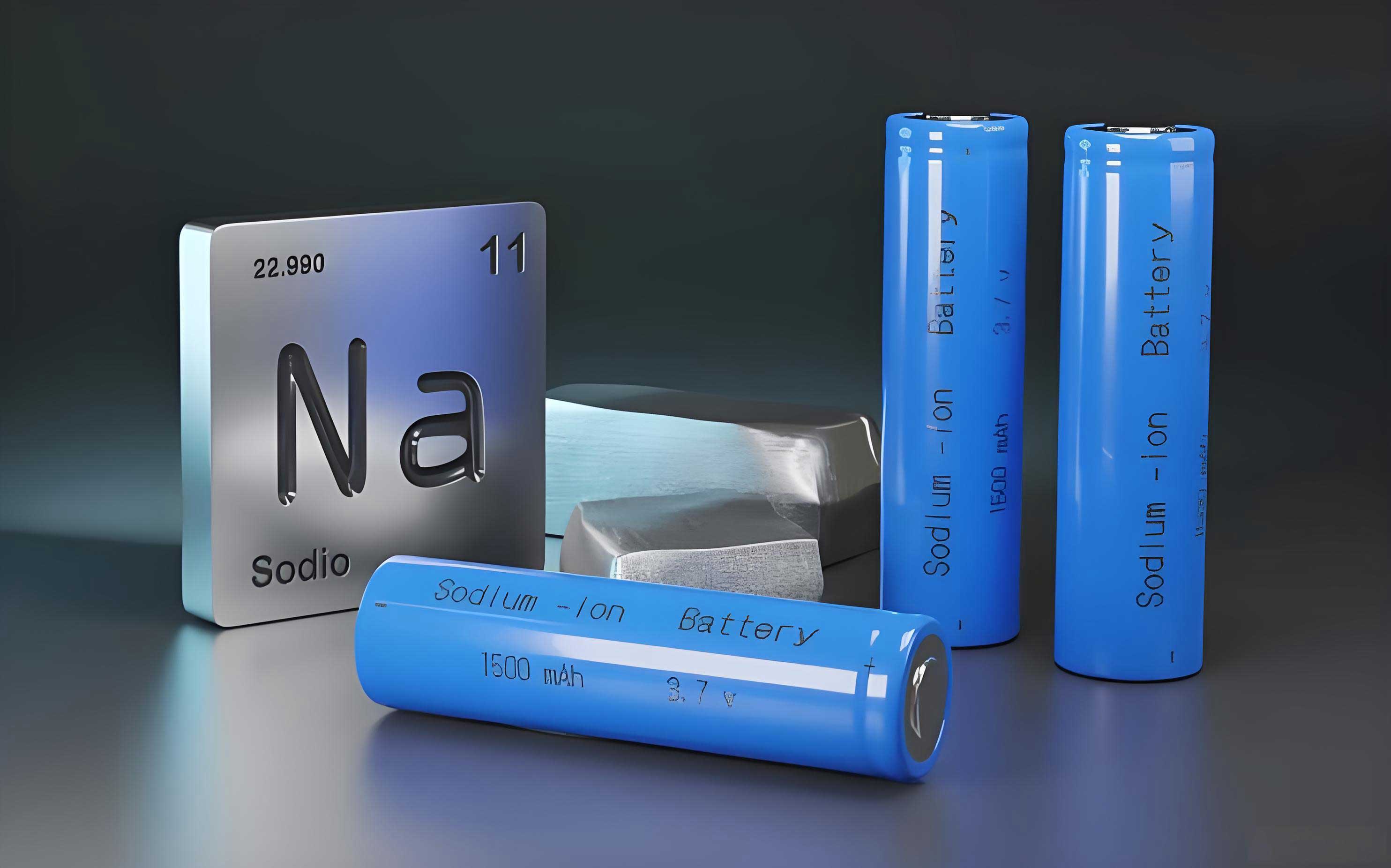
The cathode material is a decisive component in defining the performance ceiling of a sodium-ion battery. It governs key parameters such as operational voltage, specific capacity, and long-term cyclability. Three principal families of cathode materials have emerged as the most promising for sodium-ion battery applications: layered transition metal oxides (TMOs), Prussian blue analogues (PBAs), and polyanionic compounds. Each family presents a unique set of advantages and inherent drawbacks. A pervasive issue across many of these materials is their limited electronic conductivity and structural degradation upon repeated sodium (de)intercalation. To mitigate these limitations, elemental doping has proven to be a potent and versatile strategy. By substituting a fraction of the host metal ions with foreign ions, the local electronic structure, crystal lattice stability, and Na+ diffusion pathways can be effectively tailored. Among various dopants, copper (Cu) has garnered significant attention due to its unique attributes: favorable ionic radius, potential for multivalent redox activity (Cu2+/Cu3+), and its inherent role in enhancing electronic conduction. This article provides a comprehensive review of the recent progress in employing Cu doping to enhance the electrochemical performance of the three major cathode material classes for the next generation of sodium-ion battery technology.
I. Copper Doping in Layered Transition Metal Oxide Cathodes
Layered oxides with the general formula NaxTMO2 (where TM = Mn, Ni, Co, Fe, etc.) are highly attractive for sodium-ion battery cathodes due to their high theoretical specific capacity and straightforward synthesis. They are primarily classified into two polymorphs based on the coordination environment of Na+ ions: the prismatic (P-type) and octahedral (O-type) structures, with P2 and O3 being the most common notations (the number indicates the number of TMO2 layers in a unit cell). The electrochemical performance is intrinsically linked to these structural frameworks.
The P2-type structure offers wide Na+ diffusion channels but suffers from inevitable phase transitions (e.g., P2 to O2) at high voltages, leading to rapid capacity fade. The O3-type structure typically provides higher initial Na+ content but exhibits poorer rate capability due to more tortuous diffusion paths. Copper doping has been strategically employed to address these specific weaknesses.
1.1 Stabilizing the P2 Structure and Inhibiting Phase Transitions
A primary benefit of Cu doping in P2-type oxides is the suppression of detrimental phase transitions. The larger and more polarizable Cu2+ ion (ionic radius ~0.73 Å for high-spin) can act as a structural pillar. When substituted for ions like Ni2+ (~0.69 Å) or Mn3+ (high-spin, ~0.645 Å), it can stabilize the TM-O bond lengths and reduce the drastic slab gliding that triggers the P2-to-O2 transformation. This effect is often correlated with a decrease in the change of the lattice parameter *c* during cycling. The enhanced stability can be quantified by the phase transition suppression factor (PTSF), a conceptual metric derived from in-situ XRD data, where a lower intensity of new phase peaks indicates higher stability.
$$ \text{PTSF} \propto \frac{1}{I_{\text{(O2 phase)}} / I_{\text{(P2 phase)}}} $$
Where $I$ represents the integrated diffraction peak intensity.
Furthermore, Cu can introduce additional redox activity. While Ni2+/Ni3+ and Mn3+/Mn4+ are common redox couples, the Cu2+/Cu3+ couple can become active at high voltages (~4.0-4.3 V vs. Na/Na+), contributing to the overall capacity of the sodium-ion battery cathode without compromising structural integrity, provided the doping level is optimized.
| Cathode Material | Key Effect of Cu Doping | Electrochemical Performance Improvement |
|---|---|---|
| Na0.67Ni0.33-xCuxMn0.67O2 | Inhibits P2-O2 phase transition; Activates Cu2+/Cu3+ redox. | Higher capacity retention (e.g., ~80% after 100 cycles vs. ~60% for undoped). Improved average voltage. |
| Na0.75Mn0.6Fe0.2(CuxNi1-x)0.2O2 | Suppresses Fe migration at high voltage; Stabilizes redox mechanism. | Enhanced high-voltage stability; Increased energy density and cycling life. |
| Na0.67Mn0.6Ni0.2Co0.2O2 (Surface-doped) | Forms a Cu-rich surface layer, reducing Mn dissolution and side reactions. | Superior cycle life (>90% retention after 200 cycles); Better rate performance. |
1.2 Enhancing O3-Type Oxide Performance
For O3-type cathodes, which are often based on earth-abundant Fe and Mn, challenges include poor electronic conductivity and irreversible multi-phase evolution during cycling. Cu doping in these systems, such as in O3-Na[Mn0.6Fe0.4]1-xCuxO2, serves multiple purposes. It can increase the inter-slab spacing slightly, facilitating Na+ ion transport. More importantly, the presence of Cu2+ modifies the local electronic environment, often leading to an increase in the electronic conductivity as described by a simplified model for small polaron hopping:
$$ \sigma_{dc} = \frac{A}{T} \exp\left(-\frac{E_a}{k_B T}\right) $$
where $E_a$ is the activation energy for hopping, and Cu doping is found to effectively reduce $E_a$. This enhancement directly translates to improved rate capability for the sodium-ion battery. Doping also mitigates the irreversible phase changes by strengthening the TM-O bonds, leading to a more robust framework that withstands repeated Na+ (de)intercalation.
II. Copper Doping in Prussian Blue Analogue Cathodes
Prussian blue analogues (PBAs), with their open-framework structure and general formula AxM[M'(CN)6]y·nH2O (A = Na, K; M, M’ = transition metals), offer large interstitial sites and 3D diffusion channels ideal for accommodating sizable Na+ ions. They are particularly appealing for sodium-ion battery applications due to their low-cost synthesis and high theoretical capacity stemming from dual redox-active metal centers. However, their performance is frequently plagued by two major issues: (i) the presence of [M'(CN)6] vacancies and coordinated water molecules in the lattice, which reduce crystallinity and active sites, and (ii) phase transitions and framework distortions during cycling.
2.1 Mitigating Defects and Enhancing Structural Integrity
Incorporating Cu into the PBA framework, typically by partially substituting Fe in the N-coordinated site (often denoted as the “low-spin” site in Fe-based PBAs), has a profound effect on reducing defects. The Cu2+ ion has a strong tendency to form stable coordination complexes. During the co-precipitation synthesis of PBAs, the presence of Cu2+ ions can promote a more complete crystallization process, effectively decreasing the concentration of [Fe(CN)6] vacancies and the amount of zeolitic/crystal water. This leads to a material with higher compositional purity and a more robust framework, which is crucial for a stable sodium-ion battery cathode. The relationship between capacity retention and defect concentration can be conceptually modeled as:
$$ \text{Capacity Retention (\%)} \propto \frac{1}{[\text{Vacancy}] + \alpha[\text{H}_2\text{O}]} $$
where $\alpha$ is a coefficient representing the detrimental impact of water.
2.2 Stabilizing the Framework and Modifying Redox Activity
Beyond defect reduction, Cu ions integrated into the lattice act as structural stabilizers. Their bonding characteristics help maintain the cubic framework integrity during the insertion and extraction of Na+ ions, suppressing large volume changes and detrimental phase transitions. This is particularly evident in in-situ XRD studies, where Cu-doped PBAs show significantly reduced peak broadening and shift compared to their undoped counterparts. Furthermore, Cu doping can subtly modify the electronic structure of neighboring Fe ions, potentially enhancing the electrochemical activity of the Fe2+/Fe3+ redox couple. In multi-metal doped systems (e.g., Cu, Co, Ni co-doped PBAs), the synergistic effect, especially with an optimized Cu ratio, results in minimal lattice parameter variation during cycling, ensuring exceptional long-term stability for the sodium-ion battery.
| Material / Strategy | Primary Function of Cu | Resulting Benefit for Sodium-ion Battery |
|---|---|---|
| Cu-doped Fe-PB (NaxFe[Fe(CN)6]) | Reduces [Fe(CN)6] vacancies and H2O; Stabilizes framework. | High initial capacity (~127 mAh/g); Excellent cycling (0.047% decay/cycle over 500 cycles). |
| FeCuPB@CuO Composite | Core doping reduces defects; CuO shell provides conductive interface and extra porosity. | Enhanced Na+ diffusion kinetics; Improved rate performance and cycle life. |
| Cu, Co, Ni Co-doped PBA | Cu provides framework stability; Optimized ratio minimizes volume change. | Superior structural resilience; High capacity retention after long-term cycling. |
III. Copper Doping in Polyanionic Compound Cathodes
Polyanionic compounds, characterized by strongly covalent (XO4)n- polyanions (X = P, S, Si, etc.) linked to MO6 octahedra, represent another cornerstone for sodium-ion battery cathodes. Their key strengths include remarkable structural and thermal stability, high operating voltage induced by the inductive effect, and safety. The NASICON-type structure, exemplified by Na3V2(PO4)3 (NVP), is particularly noteworthy for its robust 3D framework with interconnected channels for fast Na+ migration. However, their widespread application is limited by intrinsically low electronic conductivity.
3.1 Boosting Electronic and Ionic Conductivity
Doping V3+ sites in NVP with Cu2+ introduces a fascinating dual mechanism for conductivity enhancement, which is critical for the power performance of a sodium-ion battery. First, to maintain charge neutrality, the substitution of V3+ by Cu2+ can be accompanied by the formation of charge-compensating species. One prevalent model is the creation of oxygen vacancies (VO••) or the partial oxidation of adjacent V3+ to V4+. Both phenomena introduce charge carriers. Oxygen vacancies can act as shallow donors, while V4+ ions facilitate small polaron hopping between V3+ and V4+ states, significantly enhancing electronic conductivity ($\sigma_e$).
$$ \text{Doping Reaction: } 2\text{V}^{3+} + \text{O}^{2-} \xrightarrow{\text{Cu}^{2+}} 2\text{Cu}^{2+} + V^{4+} + V_O^{••} + \frac{1}{2}\text{O}_2 $$
Second, the smaller ionic radius of Cu2+ (~0.73 Å) compared to V3+ (~0.64 Å) in octahedral coordination can lead to lattice contraction and/or distortion, which may optimize the Na+ migration pathways. The Na+ diffusion coefficient ($D_{Na^+}$), often calculated from galvanostatic intermittent titration technique (GITT) or electrochemical impedance spectroscopy (EIS) data, typically shows an increase with optimal Cu doping levels. The overall enhancement in rate performance stems from the combined effect of improved $\sigma_e$ and $D_{Na^+}$.
3.2 The Pillaring Effect and Optimal Doping Concentration
Even though Cu2+ may not be electrochemically active in certain voltage windows within these compounds, it serves a vital mechanical role. Acting as a “pillar” in the NASICON framework, it helps to buffer the volume changes associated with the V3+/V4+ redox reaction during charge/discharge. This reduces mechanical strain and particle cracking, thereby improving the long-term cyclability of the sodium-ion battery cathode. It is crucial to note that the doping level must be carefully optimized. Excessive Cu doping can overly distort the lattice, narrowing the Na+ migration channels and potentially decreasing $D_{Na^+}$. Research consistently indicates an optimal doping threshold (often around x = 0.03-0.05 in Na3V2-xCux(PO4)3/C) where the benefits of conductivity enhancement and structural stabilization are maximized without introducing kinetic bottlenecks.
| Material | Proposed Mechanism | Electrochemical Outcome |
|---|---|---|
| Na4VMn0.9Cu0.1(PO4)3/C | Cu doping increases electronic conductivity (confirmed by DOS calculations). | Enhanced rate capability and cycling stability. |
| Na3V2-xCux(PO4)3/C | Generates oxygen vacancies & V4+ (↑ $\sigma_e$); Acts as a structural pillar. | Optimal performance at x=0.05: High capacity retention (~90% @ 1C), excellent rate (84 mAh/g @ 20C). |
| Na3V2(PO4)3/C with varied Cu% | Induces shorter V-O bonds and oxygen vacancies, promoting Na+ diffusion. | 5% Cu sample shows best performance: 111 mAh/g at 1C, 101 mAh/g at 10C after 300 cycles. |
IV. Summary and Future Perspectives
The strategic incorporation of copper as a dopant has unequivocally demonstrated its efficacy in advancing the performance of cathode materials for sodium-ion battery technology. Its multifaceted roles—spanning from structural stabilizer and phase transition suppressor to electronic conductivity enhancer and redox activity contributor—address the core challenges faced by layered oxides, Prussian blue analogues, and polyanionic compounds.
In layered oxides, Cu doping primarily stabilizes the crystal structure against detrimental phase transformations (P2-O2) and mitigates transition metal dissolution, thereby extending the cycle life of the sodium-ion battery. In Prussian blue analogues, Cu integration is key to synthesizing low-defect, high-crystallinity frameworks, reducing lattice water, and enhancing the structural robustness during Na+ (de)intercalation. In polyanionic compounds, particularly NASICON-types, Cu doping ingeniously creates charge carriers (V4+/oxygen vacancies) to boost electronic conductivity while simultaneously acting as a structural pillar to improve cycling stability.
Looking forward, the exploration of Cu doping in sodium-ion battery cathodes is poised to move beyond single-element modifications. Future research should focus on:
- Synergistic Co-doping Strategies: Combining Cu with other functional ions (e.g., Mg2+, Al3+, Ti4+, F–) could yield complementary effects. For instance, Mg/Cu co-doping might further stabilize the layered structure while optimizing the redox activity, pushing the energy density of the sodium-ion battery higher.
- Advanced Characterization and Theoretical Modeling: Deeper insights using in-situ/operando techniques and high-fidelity computational methods (like DFT and AIMD) are needed to precisely map the local environment of Cu ions, their dynamic behavior during cycling, and their direct impact on Na+ diffusion barriers.
- Engineering at Multiple Scales: Integrating atomic-scale Cu doping with nano-structuring (e.g., designing porous architectures, core-shell particles) and carbon compositing will be essential to fully unlock the potential of these materials, achieving cathodes that combine high capacity, ultra-long life, and exceptional power for practical sodium-ion battery applications.
In conclusion, copper doping stands as a powerful and versatile tool in the materials engineering toolkit for developing high-performance, cost-effective, and durable sodium-ion battery cathodes, bringing the vision of large-scale energy storage a significant step closer to reality.